98. A pediatrician’s warning about American pediatrics
Sean (00:01.351)
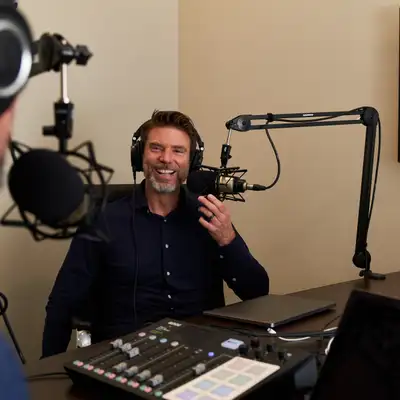
Welcome to the radically genuine podcast. I'm Dr. Roger McFillin. Sean, welcome back in the studio, brother. It's good to be back. You missed me, didn't you? We did just wasn't the same energy in here. Actually, I was listening to the Brooke interview, I thought your energy was much higher. Maybe it was having Kelly back. Yeah, that was the addition, you know, so we lost you but brought Kelly back. So that raised the entire quality of the podcast. One day, all three of us will be here. And I can coast again.
I'm glad, I'm really glad that I have you here today, especially on a lot of the things we're going to talk about, about our medical system, being a father of a young child, I think a lot of these topics are going to be really of interest to you. So I think you're going to come from a perspective that's I think really necessary to the conversation. I think we are facing a catastrophic loss of trust in public health community due to a long train of abuses with.
and increasing hesitancy to trust our doctors. According to the CDC in the United States, more than 40% of school-age children and adolescents now have at least one chronic health condition. There are catastrophic increases in the prevalence of autism, a condition that was diagnosed at 0.5 per 1,000 during the 60s and 70s, as opposed to these whopping 23 per 1,000.
In 2021, 13% of all American teenagers were taking a psychiatric drug. And we've seen a rise in preschool kids taking psychiatric drugs. Our population is mentally and physically sick and our medical community really doesn't have any answers. In fact, many question if they're contributing to the problem. Parents are questioning the vaccine schedule. Drugs is healthcare.
nutrition advice, all made by pediatricians. And there's legitimate concern that our medical professionals have lost their ability to act independently, instead controlled by major medical organizations with political and financial motives. It has been near impossible for me to find a pediatrician to discuss these issues publicly, although I've spoken to many privately. So today's
Sean (02:25.567)
guest is willing to tackle some of these controversial issues. I had to go to the great state of Texas to find him. I want to welcome Dr. Adrian Gady, who is a pediatrician from Texas outside of Austin. He's a Harvard graduate, went to medical school at Northwestern's Feinberg School of Medicine. He also writes for the Federalist and has a substack titled unofficial pediatrics. And I was intrigued by him.
after I read his article, Prescription for Parents. Vet your child's doctors, they no longer deserve your trust.
Dr. Gaty, welcome to the Radically Genuine Podcast.
Adrian Gaty (03:09.331)
Thank you so much. It's a true honor to be here. I'm, I'm really new to this whole area and, um, my wife and I were big fans of like the alley best Stucky podcast and we were listening to that and then, um, we heard you did a two parter with her and I was just hooked. I mean, it was amazing. So I started telling all these people, my readers, my friends, like, have you heard of this Dr. McFeeling guy and they're like, yeah, he's got like this huge pocket. Anyway, so I'm new to you. I've become a big fan. Um,
and going through your archives and it's, yeah, it's just an honor. And thank you for having me.
Sean (03:42.155)
Well, I appreciate all the recommendations. It seems like you and I may share some similar concerns about the trajectory of our younger generations and the overall health and wellbeing of kids and teens. I wanna ask you a question. Why do pediatricians no longer deserve our trust?
Adrian Gaty (04:02.319)
I don't know if they ever have in a way. I was trying to gather my thoughts before coming on, kind of what I wanted to big picture takeaways. And one of the things is that the medical community just needs a lot more humility. Our training is kind of a simulacrum of knowledge that takes a base of ignorance and covers it up with all sorts of science sounding things.
but we're just basically ignorant know-it-alls is what that creates. And we have a really lack of understanding of the history of medicine and of some of the heavily morally tinged crimes or decisions that doctors have been involved in over the years where it's all, we kind of like to think of ourselves as just neutral scientists or something like that and divorce ourselves from the moral element of our profession. But if you...
take a look at our, at the history of medicine and, and those kinds of things, you'd notice that, that there's a lot of wonderful things, but a lot of terrible things. And we just kind of in our training are totally ignorant about all of it. And we step into these really, really murky moral waters, drugging kids to pay attention in school, drugging kids, you know, as you're just talking about with your, another guest about, um, if you're
suffer a tremendous loss and you're sad, drugging them for that sadness. And we kind of justify it and make it seem really medical and above board by having Vanderbilt forms, questionnaires, rating scales, and it makes it this appearance of neutrality and scientific research, but it's on a foundation of nothing, of sand. And we're just so deep in
the details in the minutiae. It's like you're kind of a really good used car salesman who's like, has you thinking past the sale where he's telling you about like, where do you think you're gonna drive this car? Are you gonna drive to the Grand Canyon, to the Rockies or something? And you should be asking like, do I even need a car? And we're kind of like going into those details of like, what specific kind of ADHD do you have? Do you need a short acting stimulant, a long acting one, a combination? And you can literally spend your whole career a productive-
Adrian Gaty (06:29.659)
Ivy league career, getting research grants and stuff, you know, looking into the details of how to wean off one stimulant and go to the other. What's the best perfect chemical formulation without ever once in your life asking like, is a teacher even worth paying attention to? And so that's kind of what a lot of medical training is where we just use the science without a basis of morality. And we just become captivated by the science.
and don't ask big picture questions. One of the things that I get into a lot in my writing is that I just, I don't wanna be rude or something, but I just don't know if like these people have ever read a book outside of a science textbook. Just like some basic, like science, just read Frankenstein. There's like these moral questions that have been surrounding the power, the great power that comes with medicine for centuries. And
medical community seems like completely ignorant of them. And so we just keep repeating like the evil scientist trope over and over again.
Sean (07:36.635)
Well said, I mean, I have a lot of follow up questions to that. I think one of the things that I've been much concerned about within my field is the manner in which medical professionals think about the human experience. So I think this speaks to morality, philosophy, history, cross-culturally, how people live. There's, to me that there's a normalization that we should be
Sean (08:06.963)
progress through life. There's a lot of important questions for us to ask. Our relationship to suffering, our relationship to emotional pain, how we communicate the value of varied emotions and experiences, the diversity of all of us. Like the one of the things that is just, I think when you step back, I am just fascinated how society integrates together. You have the engineer, you have the medical professional,
have the psychologist, you have the person who's interested in constructing homes working with their hands, like there's just such a diversity in which we all integrate. Somewhere along the line, our medical field has distorted the range of normal. And we have walked down this very dangerous path, where we think about the experience of being human and all its vast diversity and all the
the feelings and emotions and thoughts that one might have to be symptoms of something that is disordered. And so I always asked a greater question is how did our medical field transition from healers who would adhere to the Hippocratic oath of first do no harm, and then we transition to a point of allopathic medicine.
where we're seeing our science as a decrease in some symptoms without seeing the greater complexity of the human being, including the impact that a lot of these medical interventions and drugs have on the way the rest of the body in the system respond. So it's somehow along the line, the training and the thinking about restoration of health has become altered.
I'm just curious to know how that has happened, your opinions on.
Adrian Gaty (10:06.395)
I mean, I think it goes back to that lack of humility. And my view is that medicine should be about healing the sick, not engineering the healthy. But that's what it's turned into. I wish there were some sophisticated answer I could give you of why we're treating symptoms and why we're treating humanity instead of treating illness. I think the straightforward one that I see in the history of these drugs and how they're used
Is it because the drugs exist? Like literally that's why the diagnosis exists. If there were a drug that made you something complete, like one of the examples I gave was that if there was a humor pill, then all of a sudden pediatricians, American Academy of Pediatrics would be handing out humor deficiency questionnaires, because we can. If it exists, we can drug it, we somehow can't say no to that. We have to like are compelled.
to turn it into a condition. And then there's always gonna be that extreme case, the one kid who's really, really not funny and that like their mom will go on TV and be like, no, you guys, he's so lame.
Adrian Gaty (11:25.243)
He like, he has no friends. Nobody thinks he's funny here. And then so, you know, they'll be like, all right, we'll make this guideline where you really have to score really, really high on this unfunny test. And then we'll give you the humor pill. But then it like, it always, there's mission creep. And then it goes to the next kid and the next kid, and then there's money in it. And yeah, it's just been corrupted by the profits of the pharmaceutical companies. And soon there's gonna be commercials on TV of like,
Did you hear the one about like the man who walked into the bar? And if not, here's this drug, ask your doctor about it. And then they end up, they end up medicating everybody. I mean, that's lit. You think I'm kind of exact. That's literally what happened with ADHD. They didn't, there was no ADHD beforehand. They just came up with a drug, found out it made kids act, you know, less fidgety in school, and then like 30, 40 years later, they're like, okay, here's a diagnosis we can, you know, use this on. And then like.
Sean (12:08.154)
Yeah.
Adrian Gaty (12:22.539)
years and years go by and each year more and more kids diagnosed, more and more pharma advertising about it, more and more infiltrating of the experts who make the guidelines. And then all of a sudden we just take it for granted that, yeah, like 20, 30, 40% of kids are on fidget pills.
Sean (12:40.115)
Dr. Gaiti, I have a question. You've been practicing as a pediatrician for about 15 years. Is that correct?
Adrian Gaty (12:46.239)
I mean, in private practice, only like six years, since residency.
Sean (12:49.585)
Okay. Um, I'm curious, I'm interested in the person before med school, uh, your thoughts, your perceptions about the medical field and now having worked in it and being exposed, how has your perceptions changed and is it leading to a lot of your concerns and being vocal in certain areas?
Adrian Gaty (13:09.339)
Yeah, I think my big problem was I wasn't pre-med. I never wanted to be a doctor. And so I was always a bit, it's something I came to too late in life after I already graduated undergrad as like a history and literature major. And then I was like, you know, I shouldn't waste my life in the ivory tower. I should like, you know, do something worthwhile, help people. And then so after that, I kind of went into med school and then found myself.
you know, mostly with people who were pre meds their whole lives. And there's just, it's just a different perspective on things, I guess, is why. Um, and, and then, yeah, I say, I I've been very much disillusioned. I used to be all on, you know, because you just do what you're trained. And so I just used to be all on board with like the ADHD thing and the questionnaires and, and the, cause that's just what like, okay, it's like, it's in the guidelines, it's in the training.
It's my job to do like the standard of care, but then the more and more I thought about it, the worse and worse it seemed. And then looking into the pharma influence, one of the other articles on the Federalist I wrote about was about how back in the 90s, this is impossible for anyone listening today to believe that medical students from across the country marched on Pfizer headquarters. Like not.
parade in support of Pfizer, but opposed to Pfizer. Like that's how much they were worried about the influence of pharma companies on education. And then, you know, COVID happened and some other things happened. And now it's like all those dissidents have been crushed.
Sean (14:52.92)
In fact, I was reading that article, they used to provide some score for medical schools, right where, where they would determine how much they were duly influenced by the pharmaceutical companies with gifts and other things.
Adrian Gaty (15:06.423)
Yeah, they used to be, the med students used to do, the major med student association used to do this score list that came out every couple of years. And it was meant to kind of expose pharma's influence on medical education. And they were focused on things like, you know, the pharma reps would come by with free lunches or they were really upset about pens, you know, those like labeled pens. And they're like, they're giving us these pens. Okay, fine, you can be upset about that. But then...
All of a sudden the pharma company signed multi, multi-million dollar, like, you know, Hank, what's his name? Hank Aaron or Aaron Judge kind of contracts with, with the medical schools where it's like Pfizer does a partnership with some medical school for 10 years of research, hundreds of millions of dollars. And then the scorecard stopped happening. I don't know. I don't, I, I'm just saying what happened. I don't know if that was one led to the other, but there's no more scorecards. You're not hearing about pens anymore. And.
Sean (15:54.026)
Mm.
Adrian Gaty (16:03.259)
There's a lot more pharma money in medicine and the med student associations all of a sudden are really quiet about it.
Sean (16:10.539)
I want to get an idea about the culture of your, of your field right now. I've been pretty outspoken about how 80% or more of psychiatric drugs for children and adults are prescribed in primary care. What is the influence of the pharmaceutical industry in your clinical practice now?
Adrian Gaty (16:31.203)
I think one of the main reasons why so much is in primary care, a couple of things. One, it's just so hard to get into psychiatry. I mean, I don't know in your neck of the woods, in our neck of the woods, there's huge waiting lists. Because kids are pretty much more miserable than they've ever been. Every study that tracks long-term mental health in kids is at its worst ever. So there's a lot more unhappy kids who you'd think would be referred to a psychiatrist. But.
but they just, they can't get in. And so it's kind of up to the.
Sean (17:02.944)
That seems even more dangerous to me, right? Because a psychiatrist is gonna see almost everyone as mentally ill in need of drugs. I mean, when your only tool is a hammer, everyone's a nail. And so that's even, no, I don't think the answer is, let's just have more psychiatrists to send them to. There's something else going on here, right?
Adrian Gaty (17:05.325)
Yeah.
Adrian Gaty (17:12.969)
Exactly.
Adrian Gaty (17:18.937)
Exactly.
Adrian Gaty (17:26.059)
Oh, not at all. I'm just saying that that's why most of the drugs are by the primary care, because we can't even get them into the psychiatrist to give them the same drugs that we would give them. The other thing.
Sean (17:35.891)
Wouldn't, wouldn't that then slow Dr. Gady? Wouldn't that then slow down the prescriptions? Cause I would think a doctor who, um, as a pediatrician may not feel fully equipped to immediately jump into a drugging of, of children, why not take a watchful waiting approach and see if they could get in with a psychiatrist. So let me jump in there, right? Cause I think you bring up a very important point because Dr. Gady mentioned humility. Why is it that doctors feel like they have to have all the answers?
Adrian Gaty (17:52.325)
This.
Sean (18:05.683)
Like they have to have all the answers. I had a physician lie to me yesterday, like flat out lie. And I was on the phone with her and I said, well, I'm reading a paper right in front of me. That's not true. And it was regarding like a response by stopping a drug. She was telling me, oh, nothing's going to happen. I've been practicing for this many years and I've never seen it. I said, doc, like I'm reading a paper. You have a medical intervention for that long. And then you just abruptly stop it to have...
no effect on the body makes no sense. Right. And it's almost like they have to have all the answers why about the culture of your profession. Why do the why do doctors have to have the answers?
Adrian Gaty (18:48.411)
I'll answer that in a minute. Let me just, the second part of the why the drugs are so high from primary, it is not the lack of psychiatrists, it's kind of the lack of counselors like you guys. And I think a lot of it is insurance. Insurance will cover the pills, it won't cover Dr. McPhil in sessions. Maybe for some people it will, for most of my patients, I wanna get them in with great counselors, and it's just the...
it's not paid for it. They can't afford it, but the drugs they can get for free covered by insurance. In terms of your latest question about why do they have to get everything right? This is kind of related to why the whole ADHD thing and why I'm a bit different is that these are mostly pre-med who have been excellent students their whole lives.
They did great in high school. They did get all the answers right in high school. They got all the answers right in college. That's how they got into good colleges. They got all the answers right that on the MCATS, that's how they got into good med schools and so they're, they've had their whole lives of just getting the right answers and so part of that is a kid walks into their office and he gets B's and C's they look at that as an illness because it's like, it's so foreign to like, yeah, like you, you need, you need, you need drugs or something.
And so when you've been teacher's pet your whole life, it's really hard to turn that off, you know, at age 30 or whatnot.
Sean (20:21.635)
I'm concerned about the American Academy of Pediatrics and their influence. So I want to get an idea from you how the American Academy of Pediatrics is viewed within your profession. And what kind of role do they have in day-to-day clinical practice?
Adrian Gaty (20:42.895)
For a long time, I just rolled my eyes at the AAP because I just saw them as like a kind of super partisan organization where, okay, whatever is happening, they're gonna give, you know, and I don't wanna get political, I'm not really political, but they would just give like Democratic Party talking points. And so I remember during the Trump presidency, almost,
you know, a week wouldn't go by without the AAP putting out a press release about children on the border. And so it was like that was like their big thing. And then when Trump, you know, wasn't president anymore, those kind of go away. And so there's kind of example after example of those little partisan points. And. I just kind of rolled my eyes at it, whatever, like I'm used to partisan organizations. The problem lately is that.
they've really gone beyond just like partisanship to really neglecting their duty to children where they've let these ideologies corrupt their souls so thoroughly that they're willing to castrate children and neglect their duty to them. They're willing to drug children. They're willing to give children these COVID shots for no reason, just because again, I don't know if it is ideology, if it's money or what. So yeah, they've...
What was once kind of laughed at is like, okay, just some partisan organization is now like a really dangerous force because the role in pediatrics is that they're the, the imprimatur they're, they're the guidelines and what they say goes. And even if you think it's crazy, like that's the standard of care. And if you disagree with it, then, you know, depending on the state or whatnot, you can get in trouble.
Sean (22:34.527)
Yeah, there's a number of guidelines that I think are absolutely dangerous. I've completely went through the American Academy of Pediatrics guidelines for the treatment of adolescent depression.
Sean (22:52.243)
primary care physicians. They cherry picked research, they left out research that conflicted with the idea that the drugs would be safe and effective. And I'm concerned about how this information gets filtered down to our practicing physicians. How do pediatricians stay on top of science in their field? And do you have like the time to really be on top of this? Cause you're...
You're generalists, right? And you're kind of gatekeepers in the entire system. It's very hard to be, you know, to have specialized skills in one area. How are you, how is this information being filtered to pediatricians?
Adrian Gaty (23:33.335)
You can't know everything. You have to trust authorities. You just have to, you have to know what the right way is to treat depression, what the right way is to treat ear infections. If the guidelines change, you have to keep up about it. And we have like, every few years kind of tests we have to do that are based on updated guidelines, a lot of the questions and the guidelines that come from the American Academy of Pediatrics and related groups. And so...
if their guidelines are poisonous, it's really hard for each individual pediatrician. You don't have all the hours in the day to like go through every guideline and see how it's corrupt in this way or that. You just, you have to take it on faith that like the guidelines are decent, but because they're poisonous, that means that all of our practice is poisoned. And yeah, it's just really, really hard to know what to do now. We just have to kind of start from scratch.
Sean (24:34.399)
So my follow up question to that is how do you, how are you approaching it? Knowing that those guidelines are somewhat influenced. Are there certain areas where you're focusing more of your attention? Because it's a bigger problem right now in the practice where you work.
Adrian Gaty (24:52.619)
I, maybe this is wrong. I try, I assume the guidelines on how to treat ear infections are good. That's so I'm treating ear infections the same way I have for years, but really anything where it comes away from, from health to humanity to social engineering, I'm just now very, very wary of it. And I just kind of try to have more open and honest conversations with the parents.
Um, and if the children, if they're old enough about like, you know, the values involved and things like that, um, because yeah, I don't, I just don't trust, trust the guidelines on those areas anymore.
Sean (25:35.652)
So how do you approach the mental health crisis that we've been experiencing with teens? I recently spoke to a pediatrician who told me that he was fearful if he acted outside the bounds of those guidelines, that if something would happen, unfortunately to that teenager, that his license would be at risk. And that was a, that was an answer to a question.
I had regarding the safety of antidepressants since they more than double the risk of a suicide event for a teenager, why would we be prescribing them for someone who is presenting as suicidal? So I'm curious to know how you navigate that.
Adrian Gaty (26:15.723)
I'm just blessed, lucky. I fear God more than I fear the AAP and like the pediatric board. So I just, I'm trying to DGAF what they would do to me. Like I'm not gonna poison kids and violate God's law in my conscience. How I approach it, I was thinking of this as I prepared. I wanted, if I can, tell you all a story of a young lady.
This was not a patient of mine, but this was a real woman. She was a princess. Her dad was a king of Hungary. The entire country had incredible wealth and power, and his daughter, the princess, could have had a life that would have made even Meghan Markle jealous and incredible luxury. And what did she do? She gave it all away. She...
She sold all her jewelry, gave the money to the poor. She spent her whole, she built a hospital and didn't just run it like an administrator, but she was in there among the sick and the dying, cleaning their wounds, washing their feet. The children, if they would have to be alone in the hospital at night, she wouldn't allow that. She'd come have them sleep in her bed with her so she could take care of them, take them to the bathroom overnight. She loved them. She poured out love and caring.
on these people, on these poor suffering people. And that was Elizabeth of Hungary, St. Elizabeth. And this was like in the 1200s. And if you asked her like, on a, you know, the PHQ-9, are you happy? Are you sad? What's your rate, you know, one to five, like your contentment for the, like it wouldn't even enter her mind because that's not how people used to think. And that's certainly not how.
the saints we used to teach our children about used to think. It's about others. It's about serving and laying your life down for others, because that's what God did for us. And so how do I approach this mental health crisis of today? I think it's pretty inevitable. I mean, we're living in an unprecedented culture. The first one in the history of the world that doesn't have a foundation of sacredness to it, and where instead of having meaning,
Adrian Gaty (28:41.143)
in the world, meaning that comes out from outside of us that we participate in. We're all told to kind of make our own meaning, invent ourselves, invent purpose. And of course that's not going to work. It's never worked before. And so people are falling apart. And so I'm just trying to do the best I can. I can't do it for everyone. And it's not really up to me, but of just trying to point families and patients and readers back.
to the source of truth and goodness and joy. One of the problems we have right now is, and not like to insult you or any, it's just part of the profession. It's like we talk about happiness and happiness. It's not about happiness. Happiness is fleeting and superficial. It's about joy. Happiness is to joy. It's like optimism is to hope. I mean, optimism, okay, it's good to see the glass half full, whatever, but that's not gonna be worth much. You need hope. That's something.
which a firm assurance on some solid ground that you can stand on and you need joy, not happiness. I don't know if Elizabeth of Hungary was happy, but she was filled with joy and her only regret, towards her dying days was that she said, I wish I could have done more to help other people. That was a princess who tried her best to live like a pauper. And today instead we have a bunch of, pauper's who just are jealous of these social media princesses and wanna live like them, our whole.
worldview has been turned on its head. I'm just trying to point people back to God who turned it the other way again.
Sean (30:18.711)
I totally agree with you. I do think it's a crisis of meaning and purpose because life in itself, you know, obviously we're going to face so many trials and tribulations, but you know, what is, what is the means to the end in that, you know, how, how do we connect that for something that is greater or bigger than ourselves and
You know, the secular nature of our culture and society is certainly contributing to it. We have a crisis of narcissism. We, what is unprecedented right now is the rise in technology and social media exposure. It's kind of altered the way that we view each other and the use of social media, especially for young people. And I think that's probably one of the most dangerous predictors of mental health problems is screen time.
and dedication to social media at a younger age because it distorts your perception of what is reality. We have young people who are creating these brands for themselves, and it's feeding social comparison, narcissism, and this idea that the purpose of living is to somehow fuel your own sense of attractiveness or...
uh, receiving attention from others. That I've never met anyone who really did experience joy, who was completely focused on themselves. It's almost like we, we are designed to be creators, to be givers. That we are to, we are to create, uh, what has been provided to us through our own inborn talents and skills and to create community and assist others. And when our attention is driven outwards, that's when we are the happiest. That's when we are f*****.
We are kind of fulfilling that purpose and mission. And then what happens is the culture right now, which is driving isolation and fear and narcissism, you report that to somebody, and now they're saying there's something wrong with you. You're diseased. You have a disorder. And so how do we even begin to course correct?
Adrian Gaty (32:24.275)
So this is great, because this is kind of my focus. You talk really well, and I really appreciate your work. And this is what most people do, even in the skeptical of medicine community, is on the kind of the individual effects on individual people of these drugs. Like your great substack just recently about how emotions are a good thing. And like,
They can be like a warning sign to you and a helpful thing. They tell you when something is going wrong. And so to numb those emotions on an individual level, um, can be really harmful to you because what if it's a sign, what if you're not meant to be living the life you are, and this is like, you're, you know, God telling you pursue something else and instead you're going to, you know, turn that warning sign off with a drug. That's all, all true.
What I'm kind of asking people to consider is not the individual effect, but the mass effect on a population-wide level. When you have 1% of the population in a certain culture on an antidepressant, okay, we can talk about the individual level. And yes, of course, the individual matters most of all, but once you're at 20%, 25, 30%, certain demographics, I just recently did a post something like 56% of young liberal women have a...
think they have a mental illness, when you have like 50% of a group on a psychiatric medication, now we're thinking society level effects, mass level effects. And so to give you an illustration of what I mean, we're talking today about ADHD, depression, anxiety. Do you know what was the most common widespread psychiatric diagnosis of the 19th century?
Sean (34:17.833)
No.
Adrian Gaty (34:19.115)
It was something that you can't find in any textbook today, in any medical lecture. It was something called hysteria. And it was totally fake. It's a made up thing. It was a fraud. But that's what countless women were being treated for in the 19th century. Doctors made their whole livings, their careers, prominent physicians dedicated their lives to this treatment of hysteria, which basically was just treating women who
were being forbidden from pursuing their interests. They weren't allowed to go to school. They weren't allowed to pursue their careers. I have nothing against at all stay at home moms. I'm a big fan of them. But in this case, these women were being forced into it. And so that was kind of making them miserable. And then the doctors, an all male medical establishment was like, well, women are inferior. Their brains aren't as developed as ours. Their emotions are fragile. And so this is an illness and we're gonna treat them for it. And then the only...
way hysteria went away was not because the medical community successfully treated it, it's because the medical community was so bad at treating it that eventually, because these women weren't cured, there wasn't any successful Prozac in the 19th century. And so they actually had to fight for change and the suffragist movement and equal rights and so forth. And so it was the lack of pharmaceuticals that allowed on a population level wide basis for the change to happen.
And right now, my big worry is that we're destroying childhood. And in any normal pre-pharmaceutical society, this would cause such misery and such outrage that there would be no choice but to reform. And the problem we're having is that these drugs mask that misery. And so we're destroying childhood, but we're going to be stuck in this rut forever because instead of parents in society seeing how miserable these kids are,
we're masking those symptoms with drugs. And so we're never gonna get the change to childhood that we need. So I mean, in terms of what I would just, if we started getting rid of the drugs, then that really soul sickness would be much more obvious and then we would be much more driven to reform our schools and the nature of childhood and the nature of our society. But as long as we're using this,
Adrian Gaty (36:46.755)
Band-aid of Pfizer products, you know, I'm just worried we're never gonna get there
Sean (36:53.131)
Um, Dr. Gaity, um, I can sense that your, your religious beliefs really connect to your personal values and I kind of love the St. Elizabeth story because it's really about service and purpose. And even in the, um, some of the recovery space, they always talk about service to others as being a great, uh, motivator in terms of like staying in, in recovery, but when it comes to skepticism in the medical field, you know, where can a parent be directed? To.
as a reputable source for information when it comes to risk benefits. And maybe we can transition to vaccines because I'm kind of curious in this area as a parent and a father of a three year old, I feel like this area is, especially in the last three years has provided, um, a lot more skepticism personally. So I'm curious. Um, you're also a father. That's correct. I'm curious, um, what your thoughts are on this as you approach your practice and how to apply it.
Adrian Gaty (37:43.843)
Yes, sir.
Sean (37:52.075)
appropriately. And can I jump in there too, because there's some specific questions I was going to ask regarding that because I don't know how to make sense of the astronomical rise in autism. And right now in the news, Robert Kennedy Jr. has been kind of really outspoken about the possibility that the vaccine schedule, the increase in the number of vaccines could be implicated in the rise of autism.
I have no idea about this. That's, I think, where the skepticism comes into play. Right. And that's the thing. I have no expertise in this area at all. And I don't want to speak like I do. But I'm concerned about the numbers. It seems like Robert Kennedy is a good man and has decades in this as a prosecuting attorney and has a lot of science at his disposal.
My concern is the reaction from the medical authority, the left in this country who want to dismiss it and just call you an anti-vaxxer. And that is anti-science to me. Like when we correlation I know does not equal causation, but when we see the increase in the vaccine schedule in the nineties or late eighties, early nineties, and then we see this dramatic rise and we have parents reporting that my kid was different after this vaccine.
then I think these are legitimate questions for a free society to be able to ask and require information from its scientists. So I wanna put all that together and give Dr. Gadey- That's a loaded, loaded question with a lot of layers, but do your best. Yeah, I wanna give him the opportunity to kind of reflect on this because he is the pediatrician who is making recommendations.
Adrian Gaty (39:41.435)
There's a few things to say. One, I always took the vaccine schedule again on trust. I just believe, you know, I believed, I believe my teachers, I believed the guidelines and I just thought the process, you know, FDA authorization, CDC putting it on the childhood immunization schedule was above board. And then I lived through COVID and I saw it in real time and I know for a fact that that...
there was something, I don't know if it was financial corruption, it just was not in the best interest of children to put the COVID vaccine and boosters on the immunization schedule for babies. That's madness. And then that, the whole world saw that. And then so understandably, that makes everybody doubt the rest of the schedule. That was in fact one of my main reasons and a lot of people who aren't really opposed strongly to other vaccines was like
you're gonna ruin the credibility of the whole thing by powering this through. And sure enough, that's exactly what happened. So then it's like, well, was this the FDA? Was this also corrupt back in like the 70s and 80s when they were putting these other, these more older vaccines on the schedule? I don't know. I asked that question, Dr. Bhattacharya, who's been a great outspoken.
opponent of the COVID vaccines for children. I asked it to him on his sub stack and he was very generous and kind and took the time to answer it. And his take was that he stands by the other vaccines, that those were based, you can look at, you know, large scale studies in Europe and so on and so forth. I don't know. I get the question a lot. I think that the only reasonable thing to do, and I don't know if it will ever be done.
would be just to redo the trials publicly and just with transparency so we know what's going on there. That would be one thing. The other aspect is that there's a lot in medicine that's very complicated that you just don't know. And to go back to the humility thing, sometimes you just have to say you don't know. I'll give you one example not related to vaccines, but related to kind of reflux medicine.
Adrian Gaty (42:06.871)
you know, a lot of babies will have this really painful kind of reflux. And so for a long time, the standard practice was to put them on, on acid blocker medicine. You know, this is like baby versions of like pepsi, basically. And it seems logical, like, you know, block the acid, the baby seemed, you know, in less pain, makes sense. And then like, we still don't understand a lot, but more and more research lately is emerging about this, like gut microbiome and how if you change,
Like in a baby, the acid levels, different bacteria will grow in their tummies, and then this actually affects the brain and wellness. And so like decades down the road, maybe, or maybe not, it's, it's kind of early field of research, you may be more prone to like psychiatric problems and, or to like obesity or thing. And so how could anybody have known that there's like no reasonable way to have known that, cause we're just, we didn't even know this gut microbiome existed. And so.
You just have to approach it with humility. My issue with the pro-vaccine side, maybe there's a better spokesman lately, but whenever it's hard to watch these debates, I mentioned Ali Bestaki earlier. She did a fantastic one. This was a couple of years ago where I think it was RFK Jr. himself was on her show. And then she had after him a pro-vaccine advocate and they're just arrogant and obnoxious and they shut down debate.
And so maybe they're right. I can understand being so frustrated where you know you're right. And you're just tired of all these annoying parents and skeptics, always asking you questions, but they need to change their approach. They need to have some humility. They need to be willing to, to open up their files and, and maybe be more transparent about stuff because otherwise I'm just sorry, even if they're right, nobody's going to trust them.
Sean (44:01.433)
I feel like we have a crisis of research and science here in the United States. Certainly there's been a degradation of trust. As we speak here today, recent news, Stanford University president was fired due to academic misconduct. And this is again around fraudulent research and data.
You talked about Jay Bhattacharya, one of his colleagues at Stanford. I think his name is John Ioannidis. We've talked about his research here about, you know, close to 50% of the, of the research that's communicated in the medical field. Like the conclusions aren't even based on the data. So there's like misrepresentation of the data that is being communicated to our physicians. We just had Lexapro approved for child anxiety.
as young as age seven, based on a trial that had a six-fold increase in suicidality compared to placebo. And the differences between the treatment group and the placebo group were so negligible that actually by taking the drug, you're more likely to become suicidal than have a decrease in any anxiety. But yet this drug was approved. So this is another...
aspect of this when we talk about restoring any type of public trust, I think it's systemic. It's a loss of trust in institutions, institutions that we need to rely on to be able to make decisions. And that's where the challenges for you as a practicing physician is there has to be some degree of blind trust that the FDA or the CDC is going to act in the best interest of the American populace.
And I don't think we have evidence anymore that we can trust them to do that.
Adrian Gaty (45:53.727)
exactly right. And here's where I'm going to lose a lot of the audience. You talked about Lexapro. I've got a pill. I've got a happy pill for y'all to sell from Big Pharma. This is a happy pill that will have your rate of like decreased by one half your rate of mental illness. It will make you among the happiest people in the country today. It will give you purpose and joy.
and happiness and it's guaranteed, it's way, way better, more likely to work than Lexapro in any trial. And that pill is just going to church every week and exercising and eating right. And I'm not joking. Like that stuff is proven to improve your mood and to help you. I mean, I don't go to church to improve my mood. I go to church because God tells me to, but it's a pretty nice side effect that
And so happens that people who go to church regularly are the happiest, most well-adjusted people in the country. If Lexapro did that, they wouldn't shut up about it. It would be on every billboard in the country. And yet you never hear that from the American Academy of Pediatrics or from the FDA. You don't hear that from sources. Instead, you hear about things like Lexapro that increase your risk of suicide. You hear about the hormonal birth control that makes you sterile.
and increases your risk of suicide. And so where I'm losing the audience is, I just think that they're trying to kill you and make you, you know, barren. I just think there's like a spiritual force here at work where the very obvious answer is one that they fear and they hate, and then the one, the answer that they like, which, you know, makes them a lot of money, also ends up, you know, with a lot of death. And so anyway, I think...
I think it's as much of a spiritual battle as it is a battle of medical reform. So, um, that's why I get y'all get yourselves to church people.
Sean (47:56.939)
Well, yeah, let's kind of let's stay on that topic. Yeah, I'd actually like to make a connection here as well. I know Roger just mentioned that I got back from a trip I was away for some time and I was visiting my grandfather. And our grandfather is going to be turning 95 years old this year. And we were raised Catholic and like some Catholics, he moved away from his faith based on the last 20, 30 years. And and he's a talker.
He's got that Irish gift of gab so I can sit around and he can tell stories all day long. To the point where if he's outside, someone said he's surprised he doesn't get sunburn on his tongue. He he's been sharing a lot of stories. And you know, there's a lot of wisdom we can learn from our grandparents and our elderly, if we just sit down and spend some time with them. He was a workaholic. And I've noticed that since our grandmother passed how his stories have changed from
talking about work to more talking about the areas of his life where he has some regrets and those regrets are always around the loss of connection to friends and the missed out opportunities on family growing up. So when he shares his stories with me, it's more about how important these years are, you know, raising my soon to be three year old and being a part of his journey into adulthood and not losing touch with the people in my life that are friends.
So like reconnecting and sharing conversations was one of the big things about this trip that I was just on seeing people that I hadn't seen for like three or four years. And the one area where I was surprised is he has moved back towards, um, a faith. And he wanted to connect with people just for the purpose of socialization and conversation, and he went to a church, which was, uh, close down the street from him because he stopped driving.
And he realized that their Bible study group was no longer meeting in person. So he decided to open up his home on Mondays to invite people in for conversation. And while I was there, there was like five or six people that showed up and they just sat around talking and drinking coffee and having, you know, some sweets. And, and I realized that his, his spirit was lifted since the last time that I saw him, mostly because of that social connection. So, you know, you go back to St. Elizabeth and service and purpose.
Sean (50:23.163)
human connection has a lot of power, whether it's done in the underneath the chapel or in a church, or if it's done outside anywhere else, your point is very valid. And I think if we're connecting to human beings, we would all be a lot more joyous in our life. But I also want to jump in there too, because so you know, I don't want to become too religious on this podcast, because I want the message to be open to
all people and I work with people who are who are Christians, people who identify as spiritual, who identify as atheists, who are questioning. And so I want to make sure that the conversation, the dialogue, especially when it's of mental health, that it's not related to any idea ideology. But there's something that Dr. Gady is saying that is like really important. And it is this, it is this concept that there's that
There's something that is much greater and bigger than us that allows us to feel connected to something that is much larger than the moment or maybe the physical body that we're in. So do we talk enough about the soul, for example, that we are not just, we are not just a body. We, we are, we are a soul that is, that is eternal. And I think one of the things, and I told Sean about
you know, having Dr. Gady on here and I'm well aware, you know, of your Christian beliefs. And I said, I'll tell you what, it's going to, it's going to require a physician who, um, whose, whose commitment is to his faith and to his God, not to a medical authority to be able to speak out. Because I think ultimately it does come down to like connection with purpose. Like why, why are you here? Right. And what are the messages, the core messages of
The Bible and a lot of religious texts are about love, right? It is about service to all people. And there is something about that, that is mental health treatment, right? That is mental health treatment. So the more we become disconnected from, you know, our faith and our purpose and how we're all connected and our soul's purpose, then I do think that we feel lonely, we feel isolated.
Sean (52:43.987)
We feel disconnected and there's no way to fill that. There's no way to fill that with the material goods and the ego of this life. What do you think, Dr. Gady?
Adrian Gaty (52:55.591)
sorry I have to object you mentioned the soul I can't hear that with my stethoscope it doesn't exist it doesn't show up on MRI there's no AP guidelines about it so I mean that's just not a real thing if you want to be as open as possible and not you know I won't do any altar calls or anything there's a fantastic book that's really a synthesis of atheist historians and sociologists
Sean (53:00.555)
Laughter
Adrian Gaty (53:23.395)
Maybe you've heard of it, I brought it because I thought it would be important for us. It's called The Rise and Triumph of the Modern Self. It's by Carl Truman. Really any counselor listening to this, this should read it. And it gives a good overview using these famous academics, Philip Reif and Charles Taylor, who are kind of looking at the history of human civilization.
And that's kind of what I open with where it's never, there's never before been a culture that has operated without the sacred. It's a contradiction in terms, the very definition of culture is kind of what the society deems sacred, what it deems not sacred. And this is an unprecedented age we're living in where nothing is sacred, there is no sacred. And so, yeah, at the very least, if it's not,
your local church, if it's some pagan ritual or something. But I don't know, but at least the pagans had meaning in the world that they believed that there was meaning there. And we're the first society ever that believes there is no meaning. And it's not it's not going well, by any measure. And so yeah, y'all should look into that book, look into those non believing historians and just kind of get a sense of where we're at. But yeah, absolutely.
It's just one of those things where I get back to the thing about how doctors just don't read books, you know, other than text, but like only connect. We talked about human connection. One of my favorite books, you know, I was the history literature student is Howard's End and that's like the moral of the book is only connect. And so It used to be that some of our great doctors were great writers and one of my favorites is Walker Percy.
But, but even Arthur Conan Doyle, um, uh, I think was a, it was, it wasn't a doctor as well. And so the problem we're having is like, you know, you talked about that doctor you spoke to yesterday who insists on being right. The education system is all wrong. We can go back into the whole ADHD rant, but they're being siloed into this only like very limited restricted worldview. They don't have a sense of the great literature and they definitely don't have a sense of the soul. And
Adrian Gaty (55:48.023)
That's why education has become soulless. And then we're drugging kids to conform to the soulless education because doctors don't even believe a soul exists. And so until you, you start exposing yourself to that and opening up yourself to that possibility, even in a non-traditionally Christian way, I mean, medicine is not going to, um, you know, be saved.
Sean (56:12.583)
Yeah, I mean, I have no idea how to work with people who are struggling with loneliness and emptiness and depression and fear without entering into the conversation about finding meaning and purpose and connection. Like I really would not know how to do it in any other way, since I think that is often the source of their distress. But I want to transition because you said something a little bit earlier that I would, if I, if I ignored it, I wouldn't be radically genuine. And so it is about the
you know, what is the what is the purpose of what is happening? Kind of globally here with I don't know if I want to call it on the left or, you know, some of the democratic policies or the policies of the World Economic Forum. We are vice president just slipped a couple days ago by talking about, you know, the need to depopulate. So
There is something that is concerning about how there seems to be a lack of concern for human life in multiple ways, and certainly in the medical system. And you'd question that some of the policies, and if we're thinking about both financial and ideological, there certainly seems to be a belief that
the world is going to be a better place if we decrease our population. Now the world economic forum and the billionaires of Davos and so forth are pretty open about this and are writing about it. So it's not like this is a conspiracy theory at, at any point. When you talk about, uh, concerns about the, the planet and climate and equity and food and a number of things, we, the planet's not going to be able to, you know,
continue to grow according to them, and for us to be able to meet all those needs. In your opinion, are some of these ideologies and recommendations on the medical end, are they part of a greater depopulation movement?
Adrian Gaty (58:31.779)
I don't know if it would be willingly. One of, going back to the books, a fantastic book by C.S. Lewis is called That Hideous Strength. And in it, he paints a picture of this university where there's really some evil things afoot, but 99% of the people involved are not complicit in the extent of the evil.
it's really just a few people at the top. And the others are kind of blinded by, you know, the desire to get a promotion, to make more money. And so they kind of fall into that system, not knowing, you know, the true sinister nature of it. So I'm not here to read other people's minds. I don't know if like your local pediatrician is a child's sacrifice or, but I think they have a lot of similarities and they might be working kind of for the same goal, whether they realize it or not.
So yeah, it's very worrisome. The depopulation thing, it doesn't make sense to me. I don't understand why you care more about hypothetical future, you know, what the climate is like in 200 years if you don't care about people today. Like, why do you care if life has no meaning? Why do you care how hot it is in 200 years if you don't.
care who is around to enjoy or not enjoy that heat. I just logically doesn't make sense to me. People talk about the hypocrisy of it. And I think the best way to reduce your carbon footprint is to give up all your possessions. So just do that. And then things will be fine. Move to Africa, get a lower carbon footprint, and then stop lecturing us about it and stop killing our babies.
Sean (01:00:26.683)
Yeah, and so much and this always goes back to me with deductive reasoning and so much doesn't make sense. So I'm certainly want to jump into another podcast of this with my with my brother at another time. But if we were concerned about carbon, what would we do? We would plant more trees, we would be on a global level, we would be much more concerned, not with deforesting, but with restoring forests around the world. Even if the United States
Sean (01:00:57.303)
It would do nothing to the world's carbon emissions because some of the countries that you know, our greatest emitters like India and China, why would these large organizations be in bed with China? They're emitting the greatest pollution that's affecting carbon emissions. So none of this really makes sense, right? And whether it's purposeful or not, they're...
is a decrease in fertility. We are becoming unhealthy. There's going to be a fertility crisis because we're having decrease in sperm counts, testosterone. You know, there's a number of things that you can account for medically, scientifically that would say that we're just getting sicker. And it's going to impact our ability to populate, to be able to have children.
Even in my field, one of the most common side effects of an SSRI is post SSRI sexual dysfunction. PSSD is a debilitating condition and that is rarely discussed in informed consent in our medical settings. So rarely are the consequences of these medical interventions being clearly discussed with people.
And since the American Academy of Pediatrics, the American Medical Association's developed guidelines, there has to be some reason to distort them. Oral contraceptives, basic hormone therapies, psychiatric drugs, a number of these things were just like, our patient populations are being told that they are safe and there aren't a lot of consequences and the scientific data shows otherwise.
So no matter what is going on, the information as it's filtered down to all of us is distorted and the consequences are we are more sick, we're less fertile. Our emotional health has certainly declined dramatically. We've become more isolated, we've become more divided, we've become more angry. And I think the trajectory of American culture is...
Sean (01:03:21.251)
is certainly one that I think we all have to be concerned about the next generation and our grandkids. And so I don't know how we how we course correct, but like having conversations like this are part of it, because I do think on one end, there's a global awakening that can be positive. And I do want to kind of conclude today's podcast on something of instilling hope, because
There's a number of things that are changing and changing rapidly. So we're able to communicate information more rapidly and communicate with each other. That's the benefit of social media. That's the benefit of alternative media, like a podcast that we can connect with a pediatrician in Texas and start having these types of conversations that we can start looking at information and data from Sweden and communicate with
epidemiologists from Nordic countries. Like all these things allow us as people to be able to take more agency for our own health and our own lives. If we're able to have these type of conversations.
Adrian Gaty (01:04:33.511)
So to conclude on a hopeful note and kind of to tie this all together, this sounds weird, but it's not stay with me here with the decline in fertility that's linked to ADHD rise and to depression and anxiety. Because if you come from much smaller families, if there's no children around, you don't know what normal kids are like. How many of these teachers pushing this diagnosis don't have kids themselves or maybe have one kid.
who is like constantly supervised and can't even act out. And so when children are just acting like normal children, because we've forgotten what the laughter and joy of childhood is like, because there's not that many kids around, you know, that's how the ADHD diagnosis thrives. And then your Sean was talking about the importance of connection. Well, what about connecting with siblings and having that support system of big families?
Now, if you're just only children, if you're like the official, like one child per family, and we're getting, of course you're going to be lonely and disconnected and depressed and anxious, you're not going to have that support system. So to end on hope, if you guys want to, to fight, um, anxiety and depression, ADHD, and you don't have the power to tear down the FDA, have kids have lots of babies. That's how to fight it. You know, raise, raise your kids. Right.
Sean (01:05:49.538)
You're just trying to feed your pediatric practice. No, but
Adrian Gaty (01:05:52.419)
That's true. Come see me, pay the copay and all that stuff. But yeah, have children, amen.
Sean (01:05:59.187)
That, that is a, that's a great point because, um, you know, one of the things that you speak to is that we're losing our understanding of what is normal, what is typical and that happens with social isolation and disconnection. Um, and that, that also happens when you get a lot of your information from the quote unquote expert culture. And, uh, we have to think, move far away from the expert coach culture.
Adrian Gaty (01:06:23.291)
Well, we have experts in helmet safety, we have experts in car seat safety, experts in playground safety and swim safety that are destroying childhood because we don't have experts in a normal childhood and that's what we need is a normal childhood again.
Sean (01:06:38.159)
All right, I'm volunteering as the next expert for that. Dr. Gady, where can people find you? Take a look at your work. I think, you know, I'm hoping that we got you early in this and that you can continue to have a greater voice in the things that you believe in and to speak out against a lot of things that are happening within your medical field. Where can people find you?
Adrian Gaty (01:06:40.492)
Yeah.
Adrian Gaty (01:07:01.792)
I really appreciate it. Um, it's my sub stack. It's just gady.substack.com G A T Y. That's unofficial pediatrics and that's kind of the easiest place.
Sean (01:07:13.031)
All those links, of course, in the show summary, everybody scroll down, click. Dr. Adrian Gady. Thank you for a radically genuine conversation.
Adrian Gaty (01:07:23.833)
Thank you.
Creators and Guests