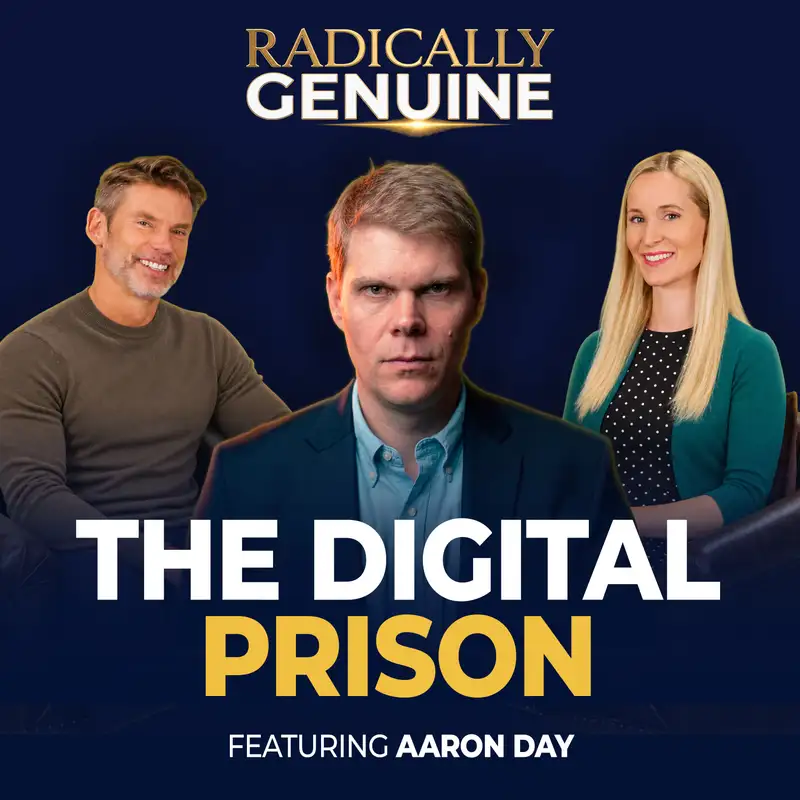
Technocracy Has Taken Over Your Life (You Just Don't Know How) | Aaron Day
00:00:00:07 - 00:00:32:01
Speaker 1
New York City, 1932. America is in crisis. Banks are failing. Millions are out of work, and trust in politicians and financial institutions is collapsing. Inside Columbia University, in a basement. A group of engineers is working on a radical idea. What if society itself can be engineered? What if politics can give way to technical management? And what if production, consumption, and resources can all be managed and measured scientifically?
00:00:32:03 - 00:01:04:06
Speaker 1
At the center of this movement was Howard Scott. He was charismatic, controversial, and there were serious questions about his credentials. But his idea was gaining attention. Modern society. Scott and collaborators argued, had become too complex for politicians. Experts could manage it better. Production can be measured. Resources could be allocated. Consumption could be tracked. Politics could become engineering. And they called it technocracy.
00:01:04:08 - 00:01:42:12
Speaker 1
And technocracy did not present itself as something sinister. Quite the opposite. It promised efficiency, abundance, stability. Less waste, less chaos, more predictability. And that's exactly why this conversation today matters. Because systems of control do not always arrive looking like control. Sometimes they arrive looking like solutions. Nearly a century ago, technocrats were already imagining an economy based on energy accounting, a system that could measure production and consumption and allocate access to those resources.
00:01:42:17 - 00:02:15:13
Speaker 1
The technology at the time was primitive, but the idea was not. And there is historical coincidence here that I find fascinating. The same year, technocracy burst into the public view. Aldous Huxley published Brave New World, 1932. Huxley imagined a society that was ordered, efficient and deeply managed. People are conditioned from birth, their roles assigned, their desires, shaped and controlled, depended less on force than on comfort, stability and compliance.
00:02:15:15 - 00:02:44:03
Speaker 1
This is what makes brave new world, such as striking parallel to technocracy. Both human life is optimized by systems designed to to reduce uncertainty and disorder, and then to make resistance feel unnecessary. More than 20 years earlier, in 1909, E.M. Forster wrote The Machine Stops. Forster imagined people living mostly alone, communicating through screens. Information coming through a technological system.
00:02:44:04 - 00:03:13:12
Speaker 1
Entertainment came through it. Even their basic needs were provided through it, and the system was simply called the machine. Eventually, people became so dependent on it that living without it became almost unimaginable. The danger was not simply that the machine became powerful, it was that people forgot how to live without it. The technocracy movement itself eventually faded from public attention, and the word largely disappeared, but the underlying idea did not.
00:03:13:13 - 00:03:37:05
Speaker 1
For decades, much of what those early technocrats imagined was simply beyond the technology of their time. They didn't have modern computers. They didn't have global digital networks. They didn't have smartphones or artificial intelligence, or the ability to collect and process enormous amounts of behavioral data. But we do. That initial movement may have faded, but the technology has finally caught up with the idea.
00:03:37:07 - 00:04:03:03
Speaker 1
There is one more strange historical thread here. Elon Musk's maternal grandfather, Josh Haldeman, was a prominent figure in Canada's technocracy movement. Now, this does not dictate necessarily what Elon himself believes, but it is a remarkable connection between a largely forgotten movement of the 1930s and one of the most influential technological figures of our time. And this may be why Black Mirror feels so unsettling for those of us who have seen it.
00:04:03:05 - 00:04:29:10
Speaker 1
The best dystopian fiction does not invent something completely alien. It just takes something we've already accepted, and it turns the dial a few clicks forward. A convenience becomes expectation and expectation becomes infrastructure. Infrastructure becomes dependance, and then dependance stops feeling like a choice. I've confronted versions of this question throughout my own work. I've seen it with my work through the Amish farmer Amos Miller.
00:04:29:12 - 00:04:53:12
Speaker 1
His case became a fight over raw milk, food regulation, and the limits of state authority over private food choices. I watched an Amish man and his customers collide with powerful institutions over a very basic question. Who gets to decide what we eat? Do we? Or do experts and institutions make that choice for us? I've also seen it with my work around the Roger ver case.
00:04:53:14 - 00:05:19:09
Speaker 1
Roger was one of the earliest and most outspoken advocates for Bitcoin. His ordeal made me think deeply about the relationship between money, descent, state power, and individual sovereignty. It also made me think about what happens when people build systems outside conventional financial structures, and about how much freedom those systems really provide once they collide with government authority. These experiences change the questions I ask.
00:05:19:13 - 00:05:40:09
Speaker 1
I'm less interested now. And what political faction should control the machinery? I'm much more interested in why we assume so much machinery is necessary in the first place. I think one of the greatest illusions of modern life is this we think coercion always looks like force. It does not. Sometimes it looks like convenience. Sometimes it looks like safety.
00:05:40:11 - 00:06:05:03
Speaker 1
Sometimes it looks like efficiency. And sometimes we're told this is just how things work. What if it's not? What if some of the systems we think are unavoidable are only unavoidable because we've never seriously considered trying to live without them? And then there is the deeper question. Technocracy depends on prediction. The more information a system has about us, the more I can anticipate what we will do.
00:06:05:09 - 00:06:36:12
Speaker 1
Our movements. Our purchases. Our fears. Our habits, our relationships, our preferences, our behavior. And once behavior can be predicted, it can also be influenced. So where does free will enter this picture? What happens when people are treated as data points when the human behavior is modeled, nudged. Optimized. Managed. Controlled? And what if our desires are already being shaped by fear, by conditioning, convenience and the need for approval?
00:06:36:13 - 00:07:01:03
Speaker 1
If this is the case, how much external controls even necessary? And this is where this becomes much bigger than technology and it becomes a question of consciousness, responsibility, authority, sovereignty. Our guest today is Aaron Day. Aaron has spent years confronting these questions. What makes him especially interesting is that he's gone beyond the theory. He has completely exited the traditional banking system.
00:07:01:06 - 00:07:23:05
Speaker 1
He has also completely exited the health insurance system. He has tested the assumption that participation in these systems is unavoidable. And his life raises a question I think deserves far more attention. How much of what we call necessity is actually learned? Dependance. Maybe the most important lesson of technocracy is not that a movement emerged at Columbia University century ago.
00:07:23:07 - 00:07:45:13
Speaker 1
Maybe it's that the underlying idea itself never disappeared. Idea that data can eliminate uncertainty. That enough systems can eliminate disorder, that enough experts can make better choices for us. That human life itself can be optimized but optimized for what and by whom, and what happens to the parts of us that cannot be reduced to data. What about conscience?
00:07:45:13 - 00:08:13:07
Speaker 1
Intuition? Creativity? Free will? What about consciousness itself? Maybe the deepest question is not whether technology will become powerful enough to control human beings. Maybe the question is whether human beings will remain conscious enough to choose for themselves. And that is the conversation we are having today.
00:08:13:09 - 00:08:16:11
Speaker 1
Aaron Day. Welcome to Radically Genuine.
00:08:16:12 - 00:08:18:00
Speaker 2
Thank you for having me.
00:08:18:02 - 00:08:22:16
Speaker 1
So getting right into it. What is technocracy?
00:08:22:18 - 00:08:54:20
Speaker 2
Technocracy is a political ideology that basically says we are too stupid to manage our own lives, and that we need scientists and engineers to make decisions for us. So it gets it gets rid of the idea of property rights. It gets rid of the idea of individual rights. And it creates a system where all of our decisions are made from the top down, and it even changes the entire economy from being a price based economy to one where you actually trade energy credits.
00:08:54:22 - 00:09:10:21
Speaker 1
This is this is wild because I think most people don't have any clue what a market without price signals would look like. How do you think this would work? And do we have some version of it already?
00:09:10:23 - 00:09:37:04
Speaker 2
Well, I mean, we're getting very close to having this. I mean, you've probably seen over the last a decade or so, there's been a big push for carbon credits. And I think the big push towards carbon credits is getting people acclimated to the idea of, you know, trading in energy. And once you get people used to that idea, then maybe at some point in the future you can translate that to an energy credit based system.
00:09:37:06 - 00:10:07:18
Speaker 2
But it wouldn't be that difficult. I mean, we already used digital, you know, most of our currency is digital. Even though we're not using central bank digital currencies, the dollar itself is 95% digital. You're not usually dealing with cash. You're sending money through the banking system. So this is just simply, you know, changing the, you know, fake money that we have that's printed out of thin air with something that's an energy credit based system that is captive and determined in terms of the supply from the top down.
00:10:07:20 - 00:10:16:10
Speaker 1
Are there any countries right now that are ahead of the US in getting toward technocracy?
00:10:16:12 - 00:10:41:13
Speaker 2
There are many countries. In fact, there are a lot of countries in the Middle East. I mean, you actually see Saudi Arabia and a number of other, you know, wealthy Middle Eastern countries that have adopted a lot of the UN agenda 2030. So they're starting to build these smart cities, and they're moving very aggressively towards digital cash, towards an AI surveillance based system.
00:10:41:15 - 00:11:07:21
Speaker 2
China is obviously far ahead in this regard as well. They already have a very robust social credit system, which varies by province, but they control all aspects of human behavior, whether you can go into or out of your local area. They can even track what you are thinking about buying in the grocery store. So let's say you put two bottles of alcohol in your shopping cart and only end up buying one.
00:11:08:01 - 00:11:42:12
Speaker 2
They can actually see that and control your behavior at that level. So it's very granular. And they are tracking behaviors that you wouldn't wouldn't expect you know. Did you visit your elderly parents or not. And so so if you look at the overall technocratic philosophy, it's being implemented in various places all around the globe. And I think what you're seeing is a coordinated effort of countries to come up with common frameworks to be able to interrelate and implement this digital control grid.
00:11:42:13 - 00:12:06:09
Speaker 3
Aaron, I'm speaking on behalf of the novice here, and I believe a lot of people who are listening to our show today maybe understand technocracy as simply the evolution of technology and being able to essentially an a convenient way or a more efficient way in order to, to be able to interact, to be able to use our money and so forth.
00:12:06:09 - 00:12:20:19
Speaker 3
And when we when they speak of other countries, such as Communist China, they believe that could never happen here. What do you say to those people who just believe technocracy is just an evolution of technology?
00:12:20:21 - 00:12:46:05
Speaker 2
Yeah, a lot of people have never heard of the word technocracy. They don't actually realize it is a political ideology. In fact, there's often just confusion for it being technology itself. And so this is a common a common mistake. As to the question of, you know, whether it could come here or not, we are already much further along than people want to imagine.
00:12:46:05 - 00:13:03:11
Speaker 2
And in fact, if you look at what's going on right now in the world, you know, Communist China and the US look very similar. It's not communist China isn't what people think it is. We have this picture from the 60s or 70 where, you know, I remember when I was growing up, people would say, well, you better finish your food.
00:13:03:11 - 00:13:22:21
Speaker 2
There are starving children in China. Like this was a common thing, but you actually look at what's going on in China. There are businesses in China, there are companies that form in China. In fact, I think it would be interesting to compare based on the regulation and government involvement. You know, how much freer is it in China versus the United States?
00:13:22:23 - 00:13:46:22
Speaker 2
But we talk about something like a social credit system, where, as I said, in China, they're using AI, they're using a digital camera system to track your behavior, track your movement all over the place. Well, it turns out the US has more security cameras per capita than China. And when it comes to a social credit system, I like to describe it as we already have a social credit system.
00:13:46:22 - 00:14:09:10
Speaker 2
So what is a social credit system? It's a system of penalties and rewards that is determined from the top down by the government. Well, we have a 75,000 word. 6 million. Excuse me, 75,000 page, 6 million word tax code. Well, what is the tax code? It is a set of penalties and incentives which nobody could read. All of it.
00:14:09:12 - 00:14:23:16
Speaker 2
And you, if you don't comply with it, you go to prison. So I would say in some respects, the tax code itself is the basis of a social credit system. And the difference between China and the United States is they have an app and we don't.
00:14:23:18 - 00:14:26:04
Speaker 1
That's not a very big difference.
00:14:26:06 - 00:14:43:08
Speaker 2
No, no, it's not a big it's not a big difference at all. And people aren't aren't paying attention to this. You know, for instance, we can talk, you know, we can go into a whole bunch of directions here. But people are concerned about digital IDs that, you know, track all of your transactions, track your location, so on and so forth.
00:14:43:08 - 00:15:07:15
Speaker 2
We have the basis of that. Now in the United States, it's called real ID, and within the first 120 days of Trump's second term, this is something people have been fighting for 20 years. It's now in effect and real ID is digital in 14 states. The plan is it is for it to be fully digital by 2028. So we already have many of the of the components in place.
00:15:07:19 - 00:15:29:12
Speaker 2
Also during this, you know, there was this all of this excitement about Doge. It was going to come in and save all of this money. Well, it didn't save the money, but what it did do was connect Palantir, which is a CIA funded AI surveillance company, to all of the major departments of the US federal government, including the IRS.
00:15:29:18 - 00:15:44:05
Speaker 2
So what's going on, actually, even just within the last two years, is breathtaking in terms of the amount of control that the federal government is taking, taking in terms of tracking us and implementing these digital systems.
00:15:44:07 - 00:16:10:22
Speaker 1
For those who aren't familiar with Palantir, Palantir is a Peter Teal company and so part of the PayPal Mafia, if you will. And Palantir is named for the seeing stone from the Lord of the rings that belongs to, I believe, Saruman, and it is a stone that allows him to look and see everything that anyone is doing essentially anywhere in, on, on the earth, on middle earth.
00:16:11:00 - 00:16:37:18
Speaker 1
And Peter Thiel took the name of this, of this seeing stone that allows you to see anything, and then decided to name his software after this. Palantir isn't hiding what it's doing, and Palantir is now deep in the NHS in England, as you said it is. It has the data from the IRS, from many federal agencies. What is the consequence of this for the average American, that there's one system that houses so much of their private data?
00:16:37:20 - 00:16:56:04
Speaker 2
Well, I mean, this this is where you end up with a social credit system and a complete AI surveillance state. And this is already going on. I mean, you already have Palantir, as you mentioned, they are in the NHS. In fact, they won the single contract to build the database for all of the citizens of the UK to build that healthcare database.
00:16:56:10 - 00:17:25:01
Speaker 2
Well, they're also doing this in the US. They're built their connecting hospitals, and they also work with startups that produce medical devices and these types of innovations. And they're already working behind the scenes to come up with predictive models and scoring for your health. And so this is something that is moving at very, very fast pace. We've heard a lot about private insurers like UnitedHealthCare and others that are using AI to kind of immediately deny claims.
00:17:25:01 - 00:17:47:12
Speaker 2
In fact, I believe there's a class action lawsuit going on there. But this same technology, the same use of AI is moving into the Department of HHS. So this is coming to Medicare. It's coming to Medicaid. And you have Palantir right there in the middle, you know, already making claims about what they're going to be able to predict based on the data that they have about your health.
00:17:47:12 - 00:18:08:03
Speaker 2
So it's incredibly scary because, I mean, they're even involved in connected with schools. They're connected with law enforcement at the local level where they're doing predictive policing. So if anybody has seen the movie or read the book Minority Report, you know, this idea of a of a Precrime is is something that they're actually working on with local law enforcement.
00:18:08:06 - 00:18:35:18
Speaker 2
They're also working with the military and the CIA on figuring out, you know, where to where to target bombs. And so it truly is a kind of an all seeing eye. And they've been granted access to the US federal government. And so this should be a serious concern for people. And when we talk about technocracy, some of the biggest technocrats are people like Peter Teal, Elon Musk and JD Vance.
00:18:35:20 - 00:18:57:00
Speaker 2
And so this is this is something that, you know, a lot of people look at these as these are successful businessmen that are involved in, you know, creating innovative technologies. But when you dig underneath the hood, a lot of this is through government contracts. Some of this is funded by the CIA and they are not captive to any specific government.
00:18:57:00 - 00:19:00:02
Speaker 2
These are all multinational corporations.
00:19:00:04 - 00:19:28:00
Speaker 3
Proud to announce that my book is now available. The awakening. They cannot medicate. It's an exposing the anti-human agenda behind the mental health industry and more importantly, reclaiming our own abilities to transform and heal. It's full of stories of my awakening, and the goal is for a paradigm shift, a paradigm shift to alter the way that we understand the human experience, that we can heal and help each other.
00:19:28:05 - 00:19:36:06
Speaker 3
Go to doctor McFarlane. Com or Radically genuine.com. It's also available on Amazon or wherever you buy your books.
00:19:36:08 - 00:19:56:06
Speaker 1
It's interesting pointing out here that Elon Musk's grandfather maternal grandfather, was one of the leaders of Technocracy Inc in Canada decades ago, so this has been a part of his family's vision for a very long time. And I don't think that's coincidental. When you look at the policies that he is pushing.
00:19:56:08 - 00:20:17:12
Speaker 3
Well, I can I jump in here because I think it's also important for our audience to understand when what are the origins of this? Aaron, you've become one of the foremost experts in this area. When did you first become a when did your attention go to this, that this is a serious issue facing humanity? And how long can we trace this back to?
00:20:17:13 - 00:20:46:12
Speaker 2
Well, you know, I stumbled into this. I got into this kind of a longer story, but at some point, it just it occurred to me around 2020 that 2020, 2021 that CBDC central bank digital currencies were a major threat. So the idea that you could have central banks and governments programing your money, having complete control over your money, they can program how you can spend your money, they can track your money, they can censor your money and shut it off.
00:20:46:12 - 00:21:09:01
Speaker 2
So to me, this all of a sudden became like a this is a big threat to human liberty. Well, as I started studying CBDCs, that's when I learned about technocracy. And so I actually the I think the godfather of kind of studying this is a guy by the name of Patrick Wood, who I've collaborated with now. He's written several books on technocracy.
00:21:09:01 - 00:21:37:11
Speaker 2
He's been following it for decades. The actual movement itself goes back to the 1930s. It started in a basement at Columbia University, and this was a group that would meet, and you can actually see pictures where everybody would wear gray suits, men and women alike. They would have these big conferences. I mean, it almost kind of looked like a pseudo, you know, Nazi rally kind of thing, but it was to the point where they actually came up with a GM, came up with a color of Technocracy Gray.
00:21:37:12 - 00:22:06:14
Speaker 2
And so this became a pretty big movement in the 1930s. It actually imploded on itself. They had an internal civil war, and it really picked back up in the early 1970s with David Rockefeller in Brazil when they formed the Trilateral Commission. And that's where it really has kind of that's the springboard. And there's a direct line between that and the formation of the Trilateral Commission with these technocratic principles and UN agenda 2030.
00:22:06:16 - 00:22:10:10
Speaker 3
Can you describe agenda 2030 to us?
00:22:10:12 - 00:22:40:17
Speaker 2
Just describe agenda 2030 is it's basically a a plan for global government where basically everything on earth, they have 17 sustainable Development Goals. And these 17 sustainable Development goals cover everything from where you live, where you would work, health care, education. They regulate the land, the air, the sea. This is basically a a top down system that is pushed through the UN.
00:22:40:17 - 00:22:59:12
Speaker 2
And so you have seen a lot of things, a lot of the movement for things like carbon credits and, and movement on things like digital IDs, even this whole thing that came about, you know, several years ago where people were starting to put pronouns in their name. This is something that started out through the UN. It was pushed through the UN.
00:22:59:13 - 00:23:17:03
Speaker 2
This this fits into one of their 17 Sustainable Development goals. And so their goal is to have, you know, this system in place where they're basically controlling everything from the top down by by 2030. They haven't hit their goals, but they've actually made a lot of progress in many of the areas.
00:23:17:05 - 00:23:35:13
Speaker 1
When I read the Sustainable Development Goals as written by the UN, they sound good. They sound like, oh, these are these are things I would want to ending poverty, equality between the sexes. All of this sounds great. What are we missing if we just read it the way they have it written.
00:23:35:15 - 00:23:53:03
Speaker 2
Well, it looks great. And they present it as, you know, 15 minute cities. And so you see these sketch drawings of, you know, you live in this beautiful, you know, place with gardens and you won't have to travel very far and so on and so forth. It's just that it's it's not based on any sort of objective reality.
00:23:53:03 - 00:24:15:00
Speaker 2
And it's not it's not how the economy works. The whole purpose of it is designed to be a control system. And the UN was created to become a one world government people. Actually, you should go back and look at the founding documents and some of the ideology behind this. So this entire system is about control. And to me it's kind of the end of of free will.
00:24:15:01 - 00:24:31:18
Speaker 2
Because if if you get to the point where you don't have any say over anything in your life, again, where you live, you know who you can interact with, what pronouns you have to use, then you're essentially giving up, you know, the essence of of what it means to be human.
00:24:31:20 - 00:24:44:14
Speaker 1
What would be some of the documents you'd recommend people go back and look at? Because I'm sure for a lot of people, the idea that the UN was founded to be a one world government is at, you know, a new idea. What should people go and look at?
00:24:44:16 - 00:25:07:06
Speaker 2
You can go back and Google. I mean, just Google UN, you know, founding documents and you can actually look at some of the the work from all this. Huxley. Excuse me, not Aldous Huxley, Julian Huxley, his brother, who was the first head of Unesco, which was the scientific, was the scientific wing of the UN, where he was a very much a eugenicist.
00:25:07:08 - 00:25:32:14
Speaker 2
And so you can go back and look at the actual original charter, and you can look at the initial conversations and minutes and discussions of the organization itself. And so it's not hidden. You know, this is the thing about with everything that we're talking about here, it's all out in the open. This is the probably the scariest part about this is that they don't hide their their documents.
00:25:32:14 - 00:25:45:19
Speaker 2
I mean, sure, they use propaganda to explain it, but this has been something that's been going on post World War two. And, and they don't even attempt to hide it at this point.
00:25:45:21 - 00:26:07:07
Speaker 3
Erin, you piqued my interest when you mentioned free will, and this reminded me of a quote I think it was got to who said that the most hopeless of slaves are the ones who actually don't know that they're enslaved. And so my question here is regarding free will. To what extent right now is there an illusion of such?
00:26:07:11 - 00:26:12:20
Speaker 3
And can you describe where that illusion exists?
00:26:12:22 - 00:26:33:12
Speaker 2
Well, yeah, I mean, there is an illusion of free will on multiple levels. I mean, our, our we are very much programed in a variety of different ways as we develop. I mean, from the time we're 0 to 7, we have no conscious filters. So our brain is at this alpha wave state. So everything that comes in goes directly in and kind of isn't process.
00:26:33:12 - 00:27:02:01
Speaker 2
So if we're, you know, told negative things about ourselves and, you know, we have these limiting beliefs that are installed, we really don't have an ability to control that. Then we go from that to public schools where we get a healthy dose of, you know, government indoctrination. Then we have the media and we have entertainment and news, so on and so forth, and then corporate culture and how that influences our attention and what we see.
00:27:02:03 - 00:27:25:16
Speaker 2
And so this is a has been a big issue. And it's become worse with big tech because what is governing a lot of our attention today are these algorithms that are driven by big tech. What you see when you are browsing social media or on YouTube, what pops up in your feed, that is all determined by an algorithm.
00:27:25:18 - 00:27:50:00
Speaker 2
And so, you know, your entire universe of of what you see is already highly preprogramed for you and filtered for you by someone with whatever their agenda happens to be. It just so happens that most of these big tech companies happen to be run by technocrats is an example. People think that Elon Musk saved free speech with X.
00:27:50:02 - 00:28:24:19
Speaker 2
But Elon Musk is a technocrat and this idea of, well, it's, you know, freedom of speech, but not freedom of speech. Well, I mean, at the end of the day, what's the difference if if he's determining who can see what I mean? Essentially it's very it's a very sophisticated form of, of censorship. And so this is the probably the biggest area of, of a threat that we have to our ability to control what information comes in and control what we're making decisions about on a day to day basis.
00:28:24:21 - 00:28:57:09
Speaker 1
I think when most people think of being trapped in a system like this, you'd picture a very overt control, very overt, manipulation of the population much more 1984, where, you know, that Big Brother has his boot on your face, but this feels much more brave new world. What are the areas where we are potentially unknowingly giving up our freedom, and where are we allowing convenience to become the thing that cages us?
00:28:57:11 - 00:29:17:19
Speaker 2
I mean, we're doing this in almost every area, and it's every area where big technology is kind of at the center, which is now everything. So we've done this with money. You know, as I said, our money is already digital. We're using, you know, credit cards or debit cards or whatever it happens to be for our transactions. All of that information is tracked.
00:29:17:19 - 00:29:41:01
Speaker 2
And in some cases it's it's programed. So something like a, you know, a lot of people like to say, well, I have I have a free market health insurance option, I use a health savings account. Well, a health savings account is kind of a kind of a social credit system. It's the government saying, okay, you can take a certain percentage of your money and use it on a, you know, tax free basis to buy a predetermined set of things.
00:29:41:03 - 00:30:21:20
Speaker 2
That's kind of a kind of a social criticism. Food stamps are the same way. They're debit cards that can only be used to buy certain items. So I don't think people realize the level to which the money that we already have is already controlled, and they're moving towards making it much, much more programable, through either central bank digital currencies, which are, you know, a form of digital money that is issued centrally from the central bank or now what are called stablecoins, which are basically private versions of, say, a digital dollar, except that they're regulated and controlled by the government, meaning that it has the same ability to be tracked, programed and censored.
00:30:21:20 - 00:30:47:23
Speaker 2
So that's one huge area is, is, is financial. But this, you know, actually all aspects of, of life, you know, health care is something that is now, you know, highly captive and is moving more towards AI, but you have very few choices or you within the health insurance system, you have very few choices in terms of what medical treatment you can get.
00:30:47:23 - 00:31:12:01
Speaker 2
Which is why, by the way, I stopped using a personal bank account in 2019 and stopped using insurance health insurance several years ago. I mean, there are options to get out of these systems, but I think most people don't even consider that they can opt out of the system itself. Their universe of choices are whatever the 2 or 3 choices are that are within the system, and that's what they believe choice is.
00:31:12:02 - 00:31:31:18
Speaker 2
And this is the case in all of these areas, whether it's, you know, are you picking Facebook or are you picking X or are you picking up, you know, Samsung or Apple? Are you picking UnitedHealthCare or Cigna? And in reality, you can opt out of all of those systems entirely. But I think most people don't realize that.
00:31:31:20 - 00:31:52:23
Speaker 1
I definitely want to get into that further later in this interview, because you're one of the few people I know that has fully opted out of these systems, and I want you to go in later into how you've done that and how this can work for people. But first, I wanted to talk a little bit more about ownership and privacy, because I think a lot of people think they own a lot more than they do.
00:31:53:01 - 00:32:18:15
Speaker 1
And I think a lot of people don't understand quite why privacy matters. There's this myth of, look, I don't have anything to hide. Why does my privacy matter? Well, in a technocratic system, every bit of data that you leak can be used against you, used to nudge you use to profile you. And we're doing that constantly through our apps, through our digital purchases, through our phones, tracking us everywhere.
00:32:18:18 - 00:32:26:05
Speaker 1
Can you get into kind of what the privacy landscape actually is, is today and why it matters?
00:32:26:07 - 00:32:55:00
Speaker 2
Yeah, I put together a website called Own nothing.com and I did this. I was, I was doing research on, I think it was CBDCs. And I started to explore what are called click rap agreements. And we all signed these click rap agreements. So every time you, you know, you get a new computer or the operating system or you sign up for an Amazon account or a bank account or a brokerage account, or even, you know, you get a rental car agreement, you know, these are these things that we scroll to the end and click accept.
00:32:55:02 - 00:33:17:12
Speaker 2
Well, you know, I decided to kind of look into, well, what are we signing away? And I was blown away by this. So the average American signs about 200 of these click rap agreements a year. And if you were to actually read these agreements, it would take two hours a day, 365 days a year, just to read the agreements.
00:33:17:12 - 00:33:33:14
Speaker 2
So of course, no one's going to do it. I mean, it's kind of and by the way, even if you read these agreements, you can't modify them anyway. It's not like if you don't like the Microsoft Terms of Service, you can mark it up with a red line and send it to their lawyer. It's it's presented as a take it or leave it proposition.
00:33:33:17 - 00:33:55:11
Speaker 2
So some of these agreements are 50, 60, 70, 100 pages long. And what's in these agreements I would argue cloud Schwab statement of you'll own nothing and be happy. We already probably 80 to 90% own nothing. We've given it away through these contracts and we don't realize it. We've given away our privacy in some cases. We've given away our economic ownership.
00:33:55:12 - 00:34:14:09
Speaker 2
We've given away our ability to dispute if if there is some harm done from from the agreement and probably the worst of all, by the way, because as I started trying to document and creating a site where people could, you know, you could put in a link and see what the contract actually says and get an evaluation around a bunch of different dimensions.
00:34:14:09 - 00:34:44:00
Speaker 2
But health care is the worst. Health care comes with these, you know, these prescription drugs come with package inserts, which are, you know, the terms and conditions are like wrapped up, like origami. You have to like open these things up. The whole thing is fine print and you're subject to it whether you sign it or not. So I started with this idea of trying to figure out how to document how much we've given up, and I gave up on the process of even trying to collect all of that because I realized, wow, we basically don't don't own anything already.
00:34:44:00 - 00:35:14:19
Speaker 2
And I'll give you the most ridiculous example. There was a doctor that got food poisoning and died eating at a restaurant on a Disney property, and Disney actually tried to use his Disney Plus online services agreement to get out of the legal liability. So, in other words, the service his kids use to watch Mickey Mouse. The agreement is so broad and so all encompassing that they believed that they could actually use those terms to get out of this liability.
00:35:14:21 - 00:35:40:12
Speaker 2
And so this is a massive problem. And so people should start once people become aware of this. I did an analysis of just the terms of service on X, and I posted it and it went viral. That was sort of surprising, you know, to, to must credit most of my stuff, kid shadow band. But I actually, you know, took apart his own terms of service, and it got 5 million views.
00:35:40:12 - 00:35:55:05
Speaker 2
And people were upset. People were saying, oh, well, these new terms that go into effect, it, you know, it was like the next month. I'm not signing up for that. I'm going to get off of this service. But what they don't realize is very little changed. I just posted the new terms of service. The new terms of service were 98%.
00:35:55:05 - 00:36:17:06
Speaker 2
Similar to the previous terms of service. People were already subject to this. They just didn't realize it. I mean, and it's really horrendous. Like you, you if you have a dispute with X, the maximum you can get in damages is $200. And there's only one court in this small place in Texas where you can file the dispute. So so this has been how they've gotten this.
00:36:17:08 - 00:36:33:11
Speaker 2
And to me, this has been a fascinating thing that happened over the last two decades. We signed more and more of these agreements. We give away more and more of our rights, and then things move and become more digital. And then, you know, one day we wake up and we truly don't own anything. And we're in a digital prison.
00:36:33:12 - 00:37:02:12
Speaker 3
And one of the ways the opposition uses to discredit voices such as yours or even ours to an extent, is they use this term conspiracy theory. So when we start talking about the collective, they who who are we referring to? Those that are doing this to us, these technocrats, is there some large global multinational national corporation or these families that we could trace back for centuries?
00:37:02:12 - 00:37:04:11
Speaker 3
Who are these people?
00:37:04:12 - 00:37:27:05
Speaker 2
I mean, it's actually an evolving network of people. It's not like there's one particular group. When you dig down to the end and find it's this group or that group, it's a changing group. But I'll give you an example. The Trilateral Commission itself, when I was writing my, my first book, The Final Countdown, I actually reached out to Patrick Wood, who I mentioned his his written several books on this, and he wrote about the Trilateral Commission.
00:37:27:05 - 00:37:52:00
Speaker 2
And this is one of these groups where people, you know, you say Trilateral Commission and, you know, they've done a good job of marketing that if you even talk about it, it must be a conspiracy theory. But this is a group that exists that trilateral means, you know, North America, Europe and Asia, and it is a group of about 400 to 450 people that that serve on this board that rotate terms.
00:37:52:00 - 00:38:12:16
Speaker 2
They have 2 or 3 year terms. And Patrick has actually been keeping a database of this for 20 plus years. And I actually called him and asked him to send me a copy of it, and he actually sent me a copy of the, you know, current members of the Trilateral Commission. And he gives a breakdown who's on, who's on it, by the way, in terms of which geographies and then what positions do they hold?
00:38:12:17 - 00:38:31:14
Speaker 2
So I think I want to say I could be wrong on this, but there's something like 50% of the of the people that are part of the Trilateral Commission are in business and industry executives. There are people like Jamie Dimon, the CEO of JPMorgan Chase, or Larry Fink, who is, I believe, currently on, who is the the CEO of Blackrock.
00:38:31:16 - 00:38:49:12
Speaker 2
But there are people that are involved in politics that are on the Trilateral Commission. Jeffrey Epstein was part of the Trilateral Commission. You have people from media and people from academia who are part of this. And so this is kind of a so it is a it is truly a global network of people. It is the definition of a conspiracy.
00:38:49:12 - 00:39:01:09
Speaker 2
It is a group of people that are working together for a common cause. But it's not it isn't just one, you know, family. It is a it's a group in that group changes over time.
00:39:01:11 - 00:39:07:12
Speaker 3
To what degree do you think D population is part of their ultimate agenda?
00:39:07:13 - 00:39:36:19
Speaker 2
Depopulation is is explicitly part of the agenda. And you can actually see this going all the way back to again, the eugenics movement and some of the earlier conversations around the formation of the UN. But then there's another group called the Club of Rome, which is also involved in this. They have been specifically out there pushing ideas, and they created a lot of, of the climate alarmism, specifically to help push this narrative.
00:39:36:19 - 00:40:02:18
Speaker 2
In fact, it's subsequently been found out that, you know, they knew that there wasn't a climate crisis, that they were brewing up in the 1970s. The whole thing was designed to be a way to generate fear and to start pushing this depopulation narrative. So it is part of the problem. And, you know, technocracy is ultimately about materialism. You know, I wanted to give you an example of so, like, what is the end state of technocracy?
00:40:02:18 - 00:40:21:19
Speaker 2
What is it like when you live, if you were to live under a technocracy and I'm going to give you this is the utopian version of it. And when I say utopian version, this is the version that that Elon Musk actually talks about. He talks about. There's this book by Ian. Ian M banks. It's a series of books, culture books.
00:40:21:20 - 00:40:47:08
Speaker 2
It's I think they're like nine of them. And the whole idea of it is that it's basically giant artificial minds run everything. Nobody works because the machines do it all. No money, no property, no laws. You live for centuries. Implanted glands release any drug you choose. Calm, euphoria. Focus. You change your sex on a whim. Life is games and parties while the machines decide everything that matters.
00:40:47:08 - 00:41:15:11
Speaker 2
And fans call it fully automated luxury communism. This is actually what Musk is saying should be the end goal. And so it's all completely about materialism. Well, as you start pushing this and it ends up being all about materialism, then you have, you know, technology and humans kind of merging and humans become, less significant in this future world under technocracy.
00:41:15:11 - 00:41:32:06
Speaker 2
And by the way, again, this is the utopian version. This is a world without purpose. And this is what they're selling, not this is they're not selling this as being a dystopia. This is they're selling this as being the end state. But that's this is the the high end version of it. I think the lower end version of it is.
00:41:32:07 - 00:41:44:00
Speaker 2
Yeah, humans aren't even necessary anymore. And we end up either merging with machines or become replaced by machines. And so there's a wide range of comes here.
00:41:44:02 - 00:41:53:02
Speaker 1
So for those who do not want that future, what does the first thing you would tell them to change.
00:41:53:04 - 00:42:09:23
Speaker 2
Oh, the first thing that I would say change is one understand it and not comply. You know, we don't have to comply with this. There are people that think, oh, well, there's nothing we can do to stop this. And by the way, I'm also not anti-technology, which is going back to the technology and technocracy being, you know, confused.
00:42:09:23 - 00:42:45:23
Speaker 2
You can use technology in a way that enhances your free will, enhances your ability to make decisions and where you are in control of it, as opposed to being a passive participant of it. From my perspective, the reason that I stopped using a bank account is that I believe that the heart of the control system is money itself, and if you can exit that system and use alternatives, whether it's cryptocurrencies or gold or silver, then you take away one of their big areas of of control.
00:42:45:23 - 00:43:12:23
Speaker 2
I think in my in my view, money and healthcare are the two top drivers, although there certainly are many others. But healthcare is a big one. I mean, we live in a country now where there are people that have jobs they hate for healthcare that won't actually protect them when they get sick. Also that they can earn, you know, retirement in companies and have for one, in companies that are building their digital prison.
00:43:12:23 - 00:43:34:01
Speaker 2
This is kind of the standard mode of life right now in America. So if you can untethered yourself from the monetary system and break free from your belief that you need to be in this healthcare system in order to maintain your health, then a whole new universe of possibilities becomes available to you.
00:43:34:03 - 00:43:43:01
Speaker 3
What are the practicalities of this? Like how do you break free from the banking system and continue to support your family?
00:43:43:03 - 00:44:06:00
Speaker 2
Well, I'm not going to say that it's easy. I mean, everything, you know, everything starts somewhere at the beginning. And, you know, there are a lot of people that have have started to do this. You know, it's not a it's not easy, in part just because of the government, you know, desire to block people from using these types of things.
00:44:06:00 - 00:44:27:09
Speaker 2
But the actual technology itself, I remember I don't support Bitcoin now for a whole variety of reasons, but I remember when I did receive my first Bitcoin in 2012, it was better, faster, cheaper money than using the bank. I mean, there's money came to me instantly. There was no bank involved. There were no third parties. It was cheap.
00:44:27:09 - 00:44:50:21
Speaker 2
I could use it anywhere in the world. So the technology actually has a lot of capacity. But but to me, I guess I live kind of differently now. I've come to the conclusion that it's just I view following my my principles and and my morals, and doing what I want to see in the world is more important than, necessarily maximizing the amount of money.
00:44:50:21 - 00:45:11:01
Speaker 2
So I could never have a job that I don't care how much it pays. That was not in conjunction with, with my belief system. And so it turns out the more of your energy you put towards what you want to see in the world, and you find others that are doing the same, that starts to get momentum because people are actually passionate about that.
00:45:11:01 - 00:45:29:01
Speaker 2
People aren't passionate about having a 9 to 5 job in a company that they don't like. For this health insurance, there's no passion there. It's just kind of a they were programed into it and it's kind of the default. But people that are actually breaking out of the system, there's real energy there. And, and those people will find each other.
00:45:29:03 - 00:45:47:18
Speaker 2
And as the technology evolves and becomes more scalable, you know, at some point people are going to be faced with the decision. Either you have to take this central bank digital currency or you lose all of your money. Right? It's kind of like, you know, with Covid, people were faced with, well, if you don't take this shot, you're going to lose your job.
00:45:47:18 - 00:46:07:22
Speaker 2
Well, these this there's going to be that inevitable decision point. Right now, the more of us that start using these alternatives in building these parallel systems, then when that time comes. We can say to people, look, you actually have a choice. You don't have to pick. You know, it's the choice isn't just I have to take the shot or I'm going to lose my livelihood.
00:46:07:22 - 00:46:21:11
Speaker 2
There are alternatives and you need to jump into that unknown. And you will greatly appreciate having done it, even though there's that initial fear of the uncertainty at the beginning.
00:46:21:12 - 00:46:44:03
Speaker 1
It sounds like it would be hypothetical, this idea of being cut off from your money. But you and I both know several people who have been debunked, who have lost access to their bank accounts or just received a letter from their bank saying you no longer meet the profile of our customers. We know people who have been debunked over and over and over again, until there is no bank left that will work with them and who are forced to live outside the system.
00:46:44:05 - 00:47:04:16
Speaker 1
And so the people like you who are intentionally doing this to discover the ways it can be done and how it can work, the people who are actively building the financial tools that would allow someone to do this are heroes to me. How does it work though, on a daily basis? How do you exist outside the financial system?
00:47:04:16 - 00:47:10:10
Speaker 1
What do you use? How do you pay your electric bill? How do you buy groceries?
00:47:10:12 - 00:47:34:13
Speaker 2
So I mean, I use and I've migrated, by the way, this changes from time to time as the technology has changed. But I've moved into using privacy cryptocurrencies. I use something called Zeno and something called freedom dollar. Freedom dollar is what's called a privacy stablecoin. It's it's pegged to the value of the dollar. So one f USD is the ticker symbol for one f USD equals $1.
00:47:34:15 - 00:47:59:06
Speaker 2
And and what I can do is either, you know, I've developed a network of people that will actually, buy and sell things directly with these currencies. That's not a huge part of it, but it is an increasing part of it. So I'm increasingly just doing transactions peer to peer. But in other cases, you can do things like by gift cards that, you know, with your cryptocurrency, then you can exchange.
00:47:59:08 - 00:48:22:16
Speaker 2
And I have something that's called, it's called a debit card, where I can actually load my cryptocurrency onto a prepaid debit card and then use that wherever you debit cards are available. So I mean, it's essentially almost everywhere. And then there's another service that I use called Spritz Finance, where you can actually pay a number of bills. They've actually connected.
00:48:22:18 - 00:48:50:07
Speaker 2
You can pay, you know, mortgages, electricity, student loans. It's they have thousands and thousands and thousands of connections where you pay with crypto and and then they handle handle it on the other end. But it's a gradual migration even those solutions. I mean, there's still some touch point with a third party that's touching the financial system. So I'm increasingly trying to move towards finding vendors that will take cryptocurrency directly.
00:48:50:07 - 00:49:09:09
Speaker 2
So finding local farms that will take cryptocurrency directly. So it's kind of a it's again when you're pioneering something like this, it's it's kind of the process of of of you know, everywhere you go in every transaction you do your introducing people to it. I also have something I thought I had on my desk. I also use something called a gold back.
00:49:09:09 - 00:49:30:12
Speaker 2
It's actually a physical. It's a bill that's in made out of gold. It's 1/1000 of an ounce is the smallest denomination. And so I'll often go somewhere and I'll tip people using a gold back and then, you know, give them a card that explains what a gold back is to start introducing to other people the idea of alternative currencies.
00:49:30:14 - 00:49:51:18
Speaker 3
Aaron, it's very clear that the two party system in the United States is a failed one. Pretty much. We have a unit party who supports this. What do we do as the American public, or are we calling for a revolution at this point? What is mass resistance look like to try to stop the trajectory of this?
00:49:51:20 - 00:50:20:03
Speaker 2
Yeah. So for the last several years, you know, if you were going to ask me what my tagline is, I would say it's exit and build. So, you know, stop using their systems and just build parallel systems. This that's been my my focus. But then I what I found was the people that are really good at, you know, promoting and developing these things were targeted by the federal government, were being thrown in prisons, in particular, many people in the cryptocurrency world, including people that I know personally, were targeted.
00:50:20:03 - 00:50:39:18
Speaker 2
And so I came to the conclusion that exit and build isn't enough. We need to inform, obstruct, exit and build. And I spent a lot of time in politics. There was a there was a period of time where I actually thought we could fix the system from within. I thought we could change it politically, and I spent a lot of time on it.
00:50:39:18 - 00:51:04:03
Speaker 2
And I'm in New Hampshire, part of the Free State project, huge political activism here. I realized that wasn't the case. But what I realized is you can't obstruct the political system and you can use and we have to because one of the things that's going on right now is technocracy. You know, if I go back to before 2024, there were a lot of people that got caught up with this idea.
00:51:04:05 - 00:51:21:21
Speaker 2
At the time, I was saying, I don't know where you get get to this, but that Trump was going to save Western civilization. And people were saying things like, well, you know, Klaus Schwab and all of these global organizations like the UN are going to be stopped because Trump is going to come in. He's going to put America first.
00:51:22:02 - 00:51:45:07
Speaker 2
And I said, guys, I don't I don't think that's what's going to happen. And and sure enough, it hasn't happened. Unfortunately, people haven't gotten the memo. So I would argue technocracy has actually accelerated under Trump in his second term because we have real ID, which is a digital ID 20 for 20 years that was thought and and held off.
00:51:45:07 - 00:52:07:04
Speaker 2
And Trump did it in 120 days, and people celebrated it as something that was going to help with, you know, illegal immigration or something that could help with voting. He put in something called the Genius Act, which is a backdoor CBDC. It it really pushes us towards a digital dollar at a much faster rate than we ever would have been.
00:52:07:06 - 00:52:41:22
Speaker 2
He brought Palantir into the federal government. And so now all of this information and data about us is being captured. He has worked with these AI companies in a variety of different ways, you know, to, to push AI. And I'm not against AI, just like I'm, you know, with digital currencies, you can have a CBDC, which the government can control your behavior, or you can have a privacy coin like Zeno or, or Freedom Dollar, where you can actually buy and sell things without anybody in the middle and without anybody being able to see what you're doing.
00:52:41:22 - 00:53:04:18
Speaker 2
So AI isn't itself bad, but the AI policy being pushed by the Trump administration is one that gives the federal government complete control. The latest that's being pushed is the idea that for AI to be released, the Department of Energy would have to sign off on it. There's another branch. The FTC will determine whether or not the AI is politically biased or not.
00:53:04:20 - 00:53:26:16
Speaker 2
So the whole thing becomes censored and the whole thing becomes a surveillance system. So all of this has happened under Trump. And so, so what I've said is from a political standpoint, we can't fix the system, but we need to slow it down. So you can use third parties to, to basically change the balance of, of power in Washington, DC to slow it down.
00:53:26:16 - 00:53:48:08
Speaker 2
We need gridlock. And so, you know, you can support third party candidates that will actually change the outcome. So whereas it might be a Republican that would win, if all of a sudden you have a libertarian or another third party, they'll they won't win, but they might take off enough votes to change that outcome. And then you end up with a situation where you have gridlock in Congress, which is better than having single party rule.
00:53:48:09 - 00:53:58:07
Speaker 2
It at least slows them down, because if we keep on going where we're going, you know, 20, 30, you and agenda 2030 is going to arrive by 2028.
00:53:58:09 - 00:54:13:19
Speaker 3
Do you believe that our politicians have any power at all? Is this just an illusion? They're just puppets for the most part. And then I guess my second question is, with this technology, how can we even trust that we have free and fair elections?
00:54:13:21 - 00:54:33:07
Speaker 2
Yeah, whether we have free or feral, I don't know if we have free and fair elections, even from a technical standpoint. But even beyond that, you know, having been involved in elections, I saw there was a recent study that I think two thirds of Americans can't identify all three branches of government. Even if you had free and fair elections.
00:54:33:09 - 00:55:00:03
Speaker 2
One of the foundational principles of this country is that you actually had an educated electorate. And we're at the point right now where most people who vote are low to no information. They don't even understand how the form of government works. And most of elections are now determined purely by propaganda. You have the political parties that spend billions of dollars using AI to target political messaging, and I won't go into all the details, but I've seen how this works up close.
00:55:00:03 - 00:55:09:17
Speaker 2
And so so these elections are not are about as far away from informed consent as you could could possibly imagine.
00:55:09:19 - 00:55:27:11
Speaker 1
Hey, fans are radically genuine. If you're looking for more content like this, please come join us at Radically genuine.com. We have two exclusive membership tiers for you to choose from. Our community members have access to the aftershow, which is a deep dive Roger and I do following every guest episode. Members of our inner circle are those who desire more.
00:55:27:15 - 00:55:53:21
Speaker 1
You'll have access to our Hidden Knowledge Secret Wisdom series, as well as content around spirituality, consciousness, health, and the development of alternative systems. You'll have access to exclusive private Q&A and special private events. Radically genuine is much more than just a podcast. It's a revolution. Come join us at Radically genuine.com. This really brings me to the idea of external sovereignty versus internal sovereignty.
00:55:53:23 - 00:56:22:12
Speaker 1
And how much can we be free, even if we appear to be free on the outside? How much are we truly free if we aren't informed, but more if we aren't aware? In a spiritual sense, to of how reality actually works and the degree to which were being manipulated and nudged using that data that you know, that we're freely giving up, which is then used to try to get decisions and out of us that we might not otherwise make.
00:56:22:14 - 00:56:43:22
Speaker 2
I mean, this is the challenge. And by the way, this is accelerating again, where AI algorithms are going in the amount of data that's being processed. Most of what we're seeing, if you actually consider where you're spending your time and where you're spending your attention, most of it is being curated for you by these algorithms. So, you know, you want to take control of your own technology.
00:56:43:22 - 00:57:00:13
Speaker 2
And as I say this, I have, you know, one foot and one world and one foot in the other. But, I mean, I have a Google phone that I use. And then, you know, the technology that I use to create things and to learn is, you know, it's open source technology, technology that I have on my own computer.
00:57:00:13 - 00:57:22:06
Speaker 2
But it's very alarming because the big tech side of this is, you know, when I started my first company or actually I've been involved with tech for a while, and when search engines came out, they used to be it used to be that you could actually type things into the search box and actually get results, and there was no censorship involved.
00:57:22:06 - 00:57:48:18
Speaker 2
And now we know, you know, from Covid era and everything else. You had this whole entire censorship industrial complex. Well, AI, which, you know, most people are using or will be using very soon, has become more censored more quickly than even search engines. And so people need to learn how to kind of exit and pick which platforms they're using to get information and control what information you are consuming.
00:57:48:18 - 00:57:56:01
Speaker 2
Consciously control what information you're consuming. Don't just passively accept what's put in front of you.
00:57:56:03 - 00:58:40:12
Speaker 3
I think the allegory of the cave was very prophetic, and from my perspective, it appears that we're in a battle for our own consciousness and free will. And so where our attention goes, our energy ends up going, and we are creating an existence or a reality that is is based upon what we are internally experiencing. And so in that regard, how do you find a balance for, you know, fear driven attention to where our government is trying to enslave us versus trying to create something within that allows us to live in a completely different world.
00:58:40:14 - 00:59:00:15
Speaker 2
Yeah, that that is, that is a challenge. I mean, I know from my perspective, I, you know, there's a point in time if if you had met me ten years ago, I might have been on the track to be supporting technocracy. You know, I remember when I first heard about, you know, the singularity and some of these ideas, I thought, oh, this is this is interesting.
00:59:00:15 - 00:59:18:09
Speaker 2
And then, you know, I kind of went through an experience in 2019 where, you know, at a whole bunch of things, hit all at once and just took a step back and then all of a sudden found myself, you know, questioning my own beliefs, which I thought were, you know, rational, right? I mean, I was an atheist.
00:59:18:09 - 00:59:40:02
Speaker 2
I thought, oh, well, you know, I don't believe in any of this stuff. I've got it all figured out. And I actually started to question this, started to meditate and went through, you know, kind of an entire process and where I just kind of like, all right, well, I'm, I'm done with all of that. And, but then went through this period of trying to figure out what is my purpose and what is what is meaning.
00:59:40:03 - 01:00:03:18
Speaker 2
And so I where I've landed is kind of kind of doing both at the same time. So you can spend time kind of working on your, your internal development. But while realizing we are fighting this battle for free will and that there is this massive technocratic movement out there that is moving unchecked, people are celebrating these technocrats. And I didn't answer your question earlier.
01:00:03:18 - 01:00:27:22
Speaker 2
You asked, are these politicians puppets or are they really in control? They're absolutely not in control at all. And they're being driven and controlled, you know, now largely by technocrats. There have always been people behind the scenes. But to give you an example, Peter Thiel is heavily involved in politics. And I've actually tracked this. I created a site called Technocracy Atlas.
01:00:27:22 - 01:00:52:12
Speaker 2
But I mean, he's funding political parties in multiple states. He is the reason Peter Thiel is the reason JD Vance is vice president. So this is probably the clearest example of where you have a puppet and who is pulling the strings. So JD Vance, you know, came out of nowhere. And, you know, the story is that JD Vance met Peter Thiel at some talk at Yale.
01:00:52:12 - 01:01:13:04
Speaker 2
Well, all of a sudden Peter Thiel hires JD Vance. He has no experience, you know, working in investments or whatever. Peter Thiel pushes him and gets him a job as a chief operating officer of a biotech company where he has no experience. And and basically, when he had this job, what has been written is that he never worked.
01:01:13:06 - 01:01:47:05
Speaker 2
He was basically out doing a book tour. So his entire biography was basically being manufactured through these Peter Teel connections. Then Peter Thiel funded him becoming a US senator, I think contributed $15 million to his Senate run from Ohio. And then it was Peter Thiel who introduced JD Vance to Trump. Previously, JD Vance had been a Never Trumper and said something to the effect of Trump is America's Hitler, and then all of a sudden becomes Trump's running mate.
01:01:47:05 - 01:02:08:15
Speaker 2
When Teel and others hold this big fundraising event in Silicon Valley. So this is an example. So. So JD Vance isn't calling the shots. JD Vance is is is a completely manufactured person that has been put into this position. But we can now actually see how that how that worked with, with Peter Thiel and Peter Thiel is doing this with other politicians.
01:02:08:15 - 01:02:22:13
Speaker 2
He's not putting all of his eggs just in, you know, the JD Vance basket. And so this this is how it works. These politicians have they're usually people that have low moral character and can be easily controlled.
01:02:22:15 - 01:02:25:16
Speaker 3
Is this ultimately a spiritual battle?
01:02:25:18 - 01:02:44:20
Speaker 2
It's absolutely a spiritual battle. This is a, you know, good versus evil light versus dark battle, for sure. And and it's a challenging one. And we're in kind of I don't know I don't know what stage we're in, but it seems like we're kind of a late, later stage of it from my perspective.
01:02:44:22 - 01:03:05:01
Speaker 1
What can people do from a spiritual perspective? We'll get to the practical as well, because I want to leave people with some very practical things that they can do. But from a spiritual perspective, what can people do to be less controlled, to be more conscious of their own minds so that they aren't just being a manipulated automaton into the world?
01:03:05:01 - 01:03:10:03
Speaker 1
That the Peter Thiel's and the Elon Musk's want?
01:03:10:05 - 01:03:28:01
Speaker 2
Yeah. I mean, there are a lot of ways to do this. And, I mean, I put together a website, Daylight Freedom, to to try to help people reclaim their sovereignty in a number of areas, including, you know, your mind, your privacy, AI, so on and so forth. And so there are a lot of different ways to get there.
01:03:28:01 - 01:03:58:06
Speaker 2
I actually found meditation was incredibly helpful. And again, this is coming from somebody that was, you know, actually ran an Objectivist organization in Rand organization. And so the idea that I'm doing meditation and going to these week long meditation retreats, I would be I would have been laughing at myself, you know what I mean? But but truly, I found that meditation is a great way for you to to become present and to to be able to cut the noise.
01:03:58:06 - 01:04:20:12
Speaker 2
And so, and there, you know, some people like meditation. There are a whole variety of different things that you can do. I'm not going to, you know, state that there's one particular way to do it, but I have found that that's kind of a game changer in terms of your ability to to reclaim your, your attention. But it's easy to get distracted and it's easy to fall back.
01:04:20:13 - 01:04:36:03
Speaker 2
It's this is something that it's not. A lot of people think, oh, well, I did a meditation. And so now I can go the rest of the day doing, repeating all of the same behaviors and think that somehow, you know, you're enlightened. And that's not that's not how it works.
01:04:36:05 - 01:05:03:10
Speaker 3
Yeah. I think, I think meditation is a lot more than what has been sold to the public. A lot of people think it's kind of quiet your mind and de-stressing and improving your focus and attention, a number of things, but I actually see this as an energetic universe and ultimately that when we're aligned with that highest form of energy, which is love, God energy, a Christ energy, we are omitting a force of energy into the into the world.
01:05:03:10 - 01:05:30:03
Speaker 3
And one of the things that I'm always reflecting upon on these systems is they are managed and controlled entirely by fear. Almost every aspect that we discussed today is the fear of loss. Loss of your money, loss of your livelihood, loss of your health care. It's loss of the convenience, loss of your connection. Because so much of the human experience now is a digital connection, a social media connection.
01:05:30:08 - 01:05:53:10
Speaker 3
And the only way that I see us reversing course is almost returning to some ancestral roots, that it is a connected community in person, outside the digital gulag, outside the control network, and being more divinely connected to your intuitive state, your intuitive sense.
01:05:53:12 - 01:06:16:04
Speaker 2
Yeah, I think there's definitely something to that approach because I mean, again, technocracy is about materialism and matter is the lowest vibrational, you know, state of energy. Right? So so they really are trying to keep us captive at a lower energetic state. And so I think what you're saying is, is absolutely true. And I think it is important to understand that that is what they're trying to do.
01:06:16:05 - 01:06:30:04
Speaker 2
They are trying to keep us captive in this just solely material realm. And that is their end state. Even their utopian visions of it are are really that narrowly defined.
01:06:30:06 - 01:06:55:18
Speaker 3
I do think the transhumanist movement is spiritual in that way. I think Aaron is really speaking to the shift in consciousness. That is, we're going through that transitory state right now, a shift to what's five dimensional unity or even Christ consciousness. And the degree that there are energetic forces at play here is something that is becoming much more mainstream.
01:06:55:20 - 01:07:04:05
Speaker 3
Tracy, I've been hearing on popular podcasts where now people are actually talking about the spiritual nature of this, of this realm.
01:07:04:07 - 01:07:22:21
Speaker 1
Yeah, this is true. And, you know, it's something that I, I hope more people wake up to because, you know, there is a universal lot that the the higher is stronger than the lower. And that if we want to experience something in the physical realm that is different from what we are actively experiencing, that we need to create it.
01:07:22:23 - 01:07:46:07
Speaker 1
And creation begins in the heart and the mind. Of course, it then must precipitate into action. So one does not just create it in mind and then go back to acting in a different way. Those two have to align. But to me, you are a beautiful example for me of somebody who has taken a creation in consciousness, what you desire to experience, and you are giving all your action to that being created.
01:07:46:09 - 01:08:10:21
Speaker 1
And I've been, you know, you and I met a few years ago, I've seen your work, I've seen the impact of your work. And you're the one who activated me to go take the Roger Vivier case. You created an energy on a podcast on James Corbett's show. That hit me in my heart. And I got a very clear activation to go and try to help this man, who is now a dear friend of both of us.
01:08:10:23 - 01:08:38:04
Speaker 1
And he is somebody who is free today because you created in consciousness the possibility that he could be and activated me to take an action other I otherwise had no intention of of taking. And so this is something I want people to understand is we can create things in our hearts, communicate them to others, inspire others, and we can see a completely different world than the one that appears we're walking toward right now.
01:08:38:06 - 01:09:04:00
Speaker 1
We're at a crossroads. One end goes, at best to a meaningless existence. It's the soma of a brave new world where there is a state of dopamine hits, but no meaning and no true joy. That's the best case scenario of that crossroad. At worst, it is a life of complete and utter physical and mental slavery. The other route is completely different.
01:09:04:00 - 01:09:23:10
Speaker 1
It's a route without fear. It's a route of love. It's a route where we learn to care about for each other and live with utter respect for each other's sovereignty, where we no longer coerce each other, where we no longer try to control each other, where we do not agree to top down rulership anymore and find an entirely new way of being humans together.
01:09:23:12 - 01:09:43:19
Speaker 1
I know which world I desire to experience, and I know that most people in their hearts. The answer is clear. It's just how would I even start to get there? And so if you were talking to someone who's listening to this show right now who wanted to know, what are some concrete steps I can take and where can I go to learn more?
01:09:43:21 - 01:09:51:12
Speaker 1
Where have you collected this information? Where can people find out more about what you're doing and what are concrete steps they can take?
01:09:51:13 - 01:10:18:17
Speaker 2
I mean, I have information spread out all over the place, but the main place is Daylight freedom.org, which links to a number of different websites. But Daylight freedom.org itself has links to different steps you can take to, you know, take control of your mind, take control of your privacy, take control of your AI, health, money, etc.. So there's a kind of an initial set there.
01:10:18:20 - 01:10:43:16
Speaker 2
I you know, this is I'm I'm glad we're having this conversation because this is actually what I want to do. I, I kind of bounce around in these different areas of expose, obstruct, exit and build. And it's just, you know, this is actually the area that ultimately I want to get to. And as had been pushing in that direction, the obstacles that I've come up with come up with encountered, I've tried to kind of push push through and they're numerous.
01:10:43:16 - 01:11:02:07
Speaker 2
So I kind of go where, you know, I seem to be guided to go. But if if I could say one thing, it's kind of, you know, like even working on the the Roger ver case, like I never started out with a, hey, my, you know, I'm going to find myself spending 50% of my time trying to advocate for, for crypto prisoners.
01:11:02:07 - 01:11:21:06
Speaker 2
What I do is just, you know, figure out what what is it that I'm actually passionate about and then pursue it without fear. And I mean, that is the key. The key is love. And the key is, is not having fear because you can approach these things. I mean, I've had people say, well, you're going around talking about them, tracing you as well.
01:11:21:06 - 01:11:43:23
Speaker 2
You're going around talking about, you know, these people that are facing prison sentences and everything else. Aren't you worried that you're speaking out and that you're going to get in trouble? And it's like, there's no there's no value in having that fear. Having that fear is what will hold you back. There's no need to have the fear. Just go towards the thing that you want with with full passion.
01:11:43:23 - 01:12:11:08
Speaker 2
And I don't know, I, you know, for me, whether it's meditating, you know, meditation isn't necessarily just something where you're sitting down or whatever with a particular ritual. Over time, you realize how to get in that state when you're walking, when you're going about your, your normal day. But for me, a lot of it is, you know, when I'm walking, that's where I'm thinking about what I it's not even just thinking about what I do feeling, you know, what is it that I'm trying to accomplish?
01:12:11:11 - 01:12:33:17
Speaker 2
You know, if you know, if if the goal is to get a crypto prisoner free, the goal for me, it's like, all right, what will it feel like when that person is united with their family? You know, what will you know? So it's it's it's an emotion and an intention. It's not it. And so the more you can open your heart towards the things that you want to do.
01:12:33:19 - 01:12:53:12
Speaker 2
I don't know how to say it other than that you'll you'll manifest it. You still have to take the action, but you have to get into that state. And if you can maintain that state, then your actions will line up around it. And when you let fear in, it will it will become an obstacle and it will add friction to what you're trying to do.
01:12:53:12 - 01:13:07:16
Speaker 2
And I know this is not not a very concrete plan for how how to do something, but I found it that simply it's just, you know, people like, why? Why are you doing this? Whatever. I'm like, I'm just, I'm doing this. I'm not going to be bogged down by the fear of it or whatever. This this is where we're going.
01:13:07:18 - 01:13:30:07
Speaker 2
It. We'll figure it out. I don't have a thousand step plan for how it's going to happen. I just know this is what the end state is and, the energy will rally around it. And so it but it works. I mean, it it truly does work. And, I, you know, I hope more people can I, you know, I don't know the right way to engage people in it.
01:13:30:08 - 01:13:54:13
Speaker 2
You know, I mentioned, you know, I went to this experience in 2019 and all of a sudden I'm meditating and reading books and frankly, studying a lot of this stuff. This is where I, you know, this is one of the things I feel like when you do realize how much of your personality has been constructed by these outsourced outside forces, once you realize that, recognize that and let that go.
01:13:54:14 - 01:14:13:12
Speaker 2
You get a massive amount of energy. You get this massive jolt of energy. I don't know how to describe it in that I was literally leading two books a day doing all this stuff, going through just this massive period of growth that's kind of, you know, fueled by that. And it's, I don't know, just take the first step.
01:14:13:13 - 01:14:31:22
Speaker 2
Don't don't be afraid. And, and, you know, try to figure out what it is that you really want, not what you what the expectations have been of what you're supposed to be. What is it that in your heart you're really passionate about and start and move in that direction?
01:14:32:00 - 01:14:50:04
Speaker 1
You said something so important here and that is what is the desire in your heart in the Way of mastery, which is a channeled text that came through in the 1990s. That's from Jeshua Ben Joseph for Jesus. This is actually one of the first things Jesus points people to is look in your heart and ask, what are your desires?
01:14:50:04 - 01:15:05:21
Speaker 1
Because you keep praying to this God outside you saying, God, show me what you want for my life. And then God puts a desire in your heart and then you're like, okay, not what I want. God, what do you want? And this idea that that God communicates with us, that universe communicates us through the desire of our heart.
01:15:06:02 - 01:15:30:13
Speaker 1
And so when we follow the desire of our heart, it is our souls highest path and listening, becoming quiet enough to listen, to know what that desire is, and then having the courage and the love to follow through on it rather than allow fear to stop us. I've had the same thing said to me that you know, that you were saying have been said to you of when you're advocating for these people, are you not afraid you will be targeted too?
01:15:30:15 - 01:15:55:03
Speaker 1
And I think anyone in this space confronts that question eventually. But you have to reach the point at some point where you say, I would far rather take that risk if it exists, that is far preferable to me to follow the desire of my heart, because the prison of not doing what I came to this earth to do is far more miserable and far more confining than taking anything a human being would consider a risk.
01:15:55:05 - 01:16:27:10
Speaker 1
And that's beautiful to me to see that, to see you stand up. I've watched you advocate for all of these men who are facing prison for designing the privacy software that is enabling the possibility of freedom, and watched you for years now live outside the banking system, not just to prove that it can be done, but to to lay the path that others who are being debunked can then follow so that those who are being forced into the banking the bank system will actually have a means of doing it.
01:16:27:14 - 01:16:44:06
Speaker 1
What you're doing with health care, where you are laying out for people. If you want to get out of the health health insurance system, here are ways you can affordably get care. It's beautiful, and I know these are the result of you following the desire of your heart and putting it into action.
01:16:44:08 - 01:17:11:12
Speaker 2
Yeah, I appreciate that. And you know, I live in New Hampshire and and our state motto is live free or die. But the the longer statement from General John Stark was live free or die. Death is not the worst of evils. And I think a lot about the death is not the worst of evils. And I think about how many people live lives of quiet desperation where they do know what's in their heart and and then they actively don't do it.
01:17:11:18 - 01:17:32:21
Speaker 2
And it's this demoralization. This is really one of the big wedges that they use against us, is when they can trap us into a situation where we are making the choice to do the wrong thing, the thing that is against what is in our hearts. And so but it takes so few people to stand up to make a massive difference.
01:17:32:23 - 01:17:50:12
Speaker 2
That's the thing. You know, a lot of people say, well, because I've been talking about technocracy, and even as I've been describing it here, I mean, it's, you know, if you ask me, how is it going? Well, you know, we've got yours, Palantir, you know, here are these drones, you know, they're rebuilding, you know, Palestine to be a digital prison and our politicians are involved in it.
01:17:50:12 - 01:18:09:07
Speaker 2
And so sometimes, you know, it's not great, but but then, you know, I realized that it takes so few people to stand up. I mean, really, it's not even 3%. I mean, this is the this is the thing. I mean, most people are just on autopilot and they're not expecting the people that are pushing this are not expecting resistance.
01:18:09:07 - 01:18:25:11
Speaker 2
They're expecting that they've manufactured choices for us. We're going to pick red or blue. We're going to pick Coke or Pepsi. We're not going to think outside of that. And so we can get the ball rolling. I'm incredibly optimistic that, you know, we'll win in this white versus dark battle that we're in.
01:18:25:12 - 01:18:58:02
Speaker 3
Aaron, I had a similar time period of awakening. I was a cognitive behavioral psychologist. Really understood the world to be material. Thought that, you know, our minds were were really meant for rational decision making, survival, problem solving. And when I had the spiritual awakening, it broke up everything about my understanding of what reality is. And I began to start thinking about life more or less as a game, meaning that myself, I, I in my heart, I have this desire.
01:18:58:03 - 01:19:28:17
Speaker 3
My soul has this purpose to come here, to be able to move towards unconditional love. And the way to do that is you have to really overcome fear, the fear of limitation, the fear of lack and move away from the ego. And that's really hard to do because we have this amnesia both individually and collectively. We believe that we're here to survive, to take care of our families, and we're scared of that ultimate worst outcome, which is to lose somebody close to you or to die yourself.
01:19:28:20 - 01:19:55:14
Speaker 3
But it was a remembrance that we are eternal. We never do die. Energy just transforms. So part of what we have to do on the individual basis is be able to transform the ego and understand that your soul is here for something much, much greater. And when you do that, you're the authorities that only rule through fear. They become, let's just say, much less scary.
01:19:55:18 - 01:20:13:23
Speaker 3
And when the collective begins to to learn this, they understand that there's a lot more of us than there is of them, that that a moral noncompliance is absolutely powerful. It changes everything, and it's what they're most scared of.
01:20:14:01 - 01:20:32:15
Speaker 2
They are the most scared of it. And and again, they're actually not that hard to beat. I mean, they've, they've put in place these bureaucracies in these systems. But, but the people that are operating these things, they're not passionate about what they're doing. Most people that are that are doing what they're doing haven't questioned why these structures work the way that they do.
01:20:32:15 - 01:20:54:06
Speaker 2
I'm actually reading your book now. I have it in the, in the back. But you know, I love it. So far, what I've read, I think read the first couple of chapters, but once you understand how these systems work, you realize, you know, most people, most people think they're doing the right thing. I mean, we're at a point where our institutions have been structured where they they have a nice sounding.
01:20:54:07 - 01:21:12:19
Speaker 2
I mean, it seems like, oh, well, the medical community, they're there to improve our health. But what if they're not? Right. But but everybody, you have these institutions been around for hundreds of years. They have their hierarchies. And everybody just assumes that this is the way that it's supposed to be. But there aren't malicious there. There is not a huge force of malicious people.
01:21:12:19 - 01:21:38:00
Speaker 2
There are very few people that are actually pushing this, this agenda. And so, so yeah, it doesn't it doesn't take, it takes very few people to, to break the system and to kind of wake other people up. And part of that is also when you go through this because it is about unconditional love. It's it's, you know, to not not hate these people.
01:21:38:00 - 01:21:57:12
Speaker 2
Most of the people that are involved in this, you know, it's just like, all right, well, if I woke up, you know, seven years ago, it would be ridiculous for me to judge somebody that that hasn't woken up or that's just somewhere on that on that journey. Right? We're all kind of on this on this journey. So you have to have a lot of forgiveness for others and for yourself.
01:21:57:12 - 01:22:19:21
Speaker 2
And and that really does fit into the importance of moving towards unconditional love. And that's not easy. And I'm not going to say that there's a linear path to get there, but that I have found that that I used to not be that way. You know, again, like I said, if I compared myself ten years ago to to today, it's it's completely different person.
01:22:19:23 - 01:22:47:19
Speaker 1
Well, this is beautiful. I mean, I was just Roger and I were just having this conversation earlier today where, you know, there's someone we both know who's kind of at a difficult point and as a result of being in a difficult point is, is being a little difficult. And I was telling him earlier today, you know, if I there younger and I said, if I think of myself at that person's age, you know, mid 20s, I was not remotely the person I am now.
01:22:47:23 - 01:23:13:12
Speaker 1
I had no idea yet why I was here. I was in many ways and angry and bitter person, and could be quite unpleasant to be around. And why would I for a moment think then, that I could judge anyone else really, of any age? Given that, you know, I've had long periods in my life where I was in no way knew what I know now and was not on this path.
01:23:13:14 - 01:23:38:21
Speaker 1
And I'm trying more and more to live by the belief that everybody is doing the best with what they have right now. You know, I don't think Elon Musk or Peter Teal have been through the awakenings we've been through. They haven't tapped into that incredible power of unconditional love that we've glimpsed and experienced. And so how can I expect them to treat the world and approach the world the way I do?
01:23:38:23 - 01:23:45:12
Speaker 1
That's unreasonable, unreasonable expectation. What I can do is try to spread.
01:23:45:14 - 01:24:04:13
Speaker 1
The knowledge of how to find this way of of seeing the world and finding this way of living and just knowing the more of us who find it, the frequency of this planet shifts the way our society shifts, and then the ripples that come from that are that more and more people wake up. The more people who wake up, the more people change.
01:24:04:15 - 01:24:06:02
Speaker 1
It's a ripple effect that goes out.
01:24:06:03 - 01:24:28:22
Speaker 3
Yeah, I, I even wonder if they're purposely here for our moral development. There has to be an opponent where how can you have a game? Right? You just show up and there's there's really no challenge, there's nothing to win. And so if we kind of look at it as that, that dark side exists as really the mirror, it is kind of a projection of aspects of ourselves.
01:24:28:22 - 01:24:50:00
Speaker 3
Either this lives or previous ones that we probably have acted out or manifested and lived in some way. It's almost a requirement to have that force there in order for us. There's got to be something to overcome, something to face. And so if we look at it that way, not like there, this all encompassing boogie monster that can control us all and they enslave us.
01:24:50:02 - 01:25:04:20
Speaker 3
But we really do see the power that exists within us, and we need to keep them in their place. We cannot continue to give them the power that they believe they have. And once we collectively realize that, they just don't even exist anymore.
01:25:04:22 - 01:25:29:19
Speaker 1
There is there is some Emperor's new clothes aspect to this, isn't there? Because they are human beings who sleep at night, you know, use the bathroom, get hungry, get sad, have families. They aren't these arch villains. There are people just like we are, and we tend to give them far too much power by treating them like there's something other or more than that.
01:25:29:21 - 01:25:56:09
Speaker 2
Yeah, that's that's absolutely the case. And people will manufacture and create all of these stories. I mean, these are people that, you know, certainly are are infallible. And and they get into an echo chamber. I mean, once you get to the point where, I mean, if you are a billionaire, if you if you're Peter Thiel or Elon Musk, there aren't many people surrounding those guys that are telling them no or necessarily giving them adversarial views.
01:25:56:10 - 01:26:12:10
Speaker 2
So it becomes, you know, so it becomes reinforcing for them. And so, yeah, we know we should not give them this, this kind of power. They are they are just, you know, humans after all. Some people say that they're not. But some people try to claim that they're not. But but they are.
01:26:12:12 - 01:26:32:12
Speaker 1
Yeah. I mean, and even if they weren't, they're still beings that are of of God and are here. So, you know, even even if Steele manning this, we go the reptilian route or something. Everything is of God. Everything. I do believe that strongly. And the other thing I would say to anyone listening to this today is you are here at this time period.
01:26:32:12 - 01:26:58:09
Speaker 1
It's not a coincidence. It's not an accident. You're here in this moment when humanity faces a divide. What do you desire the outcome to be? Live as it is a foregone conclusion that your team wins. Because that's how we do. So I have I have no doubt in my heart that the light wins in the end. I don't know what curls and turns the path is going to take as we get there, but I have a certainty that that will be what happens.
01:26:58:12 - 01:27:12:19
Speaker 1
And I know that I want to end this life with a knowing and a peace that I contributed to that. That I did everything I could to see humanity to a better place than it was when I entered this world. This time around.
01:27:12:21 - 01:27:35:20
Speaker 3
Can can we end this podcast? I'd like him to put on his prognosticator cap here, but I also believe there's something of like planting seeds and consciousness. Right? There's I think there's real incredible work that Aaron's doing by shining light on that darkness, because it brings that awareness and we see where humanity is walking down. And I do believe that we have multiple or probably infinite amount of timelines.
01:27:35:22 - 01:28:04:03
Speaker 3
So on one end, I'd want to know with everything, Aaron, that, you know, if we continue on this current path, what does the period of 2027 through 2032 look like? And the reason I use that particular period is because we have had the benefit of, of authors, of chandlers, of profits from for hundreds of years, being able to in some ways prophesies a period of time which it looks like we're dangerously close to.
01:28:04:04 - 01:28:26:21
Speaker 3
Edgar Casey is somebody we have recently looked into, where he, with tears running down his eyes, channeled a period between 2027 and 2032 where there's where there's a great degree of crisis and that may, may be the case and it may be necessary in order to, you know, shift humanity to the new Earth. So I do want to get a sense of what that would look like from your perspective.
01:28:26:22 - 01:28:45:05
Speaker 3
But then I also want to know if we do build these parallel systems and we do we do mass resist and then we create. We create in community. We create collectively what that type of earth could look like.
01:28:45:07 - 01:29:05:00
Speaker 2
Yeah. You know, I've I've stopped trying. You know, everything is about probabilities and it depends on what we do. Right. Obviously our actions will. You're right. There are infinite timelines. And we can we can shape things. You know, part of if you have 8 billion people exercising free will, you can't predict what that's going to look like.
01:29:05:01 - 01:29:37:16
Speaker 2
Right. Because and in fact, it will be much better and more incredible than anything that you could possibly imagine. And this has actually been a challenge for me. I wrote a book, I wrote this book, The Final Countdown, and the first chapter of it is I tried to lay out what the world might look like if we continue down the path of you and agenda 2030 and CBDCs, you know, and this is this is a world where you have one global government, where people have social credit scores, or maybe their entire families have a group social credit score.
01:29:37:16 - 01:29:58:14
Speaker 2
And people are essentially, put into almost like a caste system, which is actually how it works in China. You have actually people that it's a scoring system, just like we have a credit system here. But if you're at the lower end of the social credit system that determines what transportation choices you have, what internet bandwidth you have, what schools you can attend.
01:29:58:15 - 01:30:22:13
Speaker 2
So, you know, it kind of looks like that you have and you can see so as you see these elements and you pick and choose kind of how technocracy is developing in different parts of the world, you have the made system in Canada where they are moving towards euthanasia. Right? They're using this Medically Aided Assistance in Dying program, which is now the second leading cause of death in Canada.
01:30:22:17 - 01:30:44:09
Speaker 2
And and they went from, you know, an original presentation of, well, this is compassionate of end of life care. And, you know, there are all these requirements and you have to meet with a medical professional and you have to wait at least ten days to now, you know, people who are 20 years old who are depressed because they can't get a boyfriend or able to to, you know, access this service.
01:30:44:09 - 01:31:06:01
Speaker 2
It's become it's actually horrifying to see how that has, has worked out. So I mean, if it goes the if it goes the wrong way. And by the way, I will say AI is accelerating, I think faster than people appreciate. I mean, I do use it a lot, as I said, you know, open source versions mostly on on my own computer.
01:31:06:01 - 01:31:33:08
Speaker 2
But I will tell you that the, the development of AI just this year is, is mind blowing. And so the implications of this are, we're likely to see an economic collapse. In fact, I mean, we're on the verge of that already in terms of global debt levels and what you're seeing in terms of tension. And then we have within that AI and then what that's going to mean for, displacing jobs.
01:31:33:08 - 01:31:50:09
Speaker 2
And, you know, again, it doesn't have to be a bad thing, but the way that the government will manage it will will turn it into a bad thing. So so we are going to, you know, the default is, you know, I think we have the AI surveillance systems we put in place the digital credit systems and the digital IDs.
01:31:50:11 - 01:32:18:00
Speaker 2
So I would expect to see that digital prison rolled out more aggressively, and, and more quickly. And we're seeing we're seeing how that works in different countries around the world. I mean, England, Australia, these are countries that tend to be doing things like, you know, putting age requirements on accessing the internet and implementing digital IDs. And so you can see where where all of this is coming.
01:32:18:02 - 01:32:44:21
Speaker 2
At the same time, AI is going to create a lot of material abundance. That's also a fact. So I think we're so so I don't know, the next five years are going to be rough in terms of, of I think you're going to see people presented with the choice of giving away, more and more of their liberties and more and more of their free will for perceived convenience.
01:32:44:23 - 01:33:04:13
Speaker 2
It doesn't have to be that way. Now as to what the alternative could be, I don't know. I've thought about that. And in fact, I've. I still don't have an answer. I would say that, you know, one of the things that has made cloud effective and made the World Economic Forum effective is that they they put out this propaganda where it's like, hey, here's what a 15 minute city looks like.
01:33:04:19 - 01:33:28:09
Speaker 2
And so they're trying to get people to believe in this propagandized version of what a technocratic future might look like. And but, you know, I wouldn't want to presume that I could put together an alternative, right? Because if people are exercising their free will, well, it's not there's not one way that that could happen. I mean, there there's going to be a lot of experimentation.
01:33:28:11 - 01:33:56:16
Speaker 2
So I actually haven't, haven't really thought through what that would look like because I intentionally try not to, to see, you know, what people come up with and how it kind of emerges on its own. I know that sounds like kind of a hedge answer, but it's not. I've actually I've actually thought about it, and I've made the explicit, choice to not try to project like, what, you know, alternative to 15 minute cities, because possibility is infinite.
01:33:56:16 - 01:34:02:15
Speaker 2
And I wouldn't want to constrain people's thinking what the future might look like.
01:34:02:17 - 01:34:38:10
Speaker 3
I think that's a wise decision, because I think ultimately we are self-limiting. Our minds are self-limiting in the capacity. The capabilities that we have are when we are connected to that higher force are certainly unknown. But what we we do know is it would be aligned with freedom, it would be aligned with love, and it would be a, an understanding of how we are all interconnected and many of the systems that do harm, the ones that fuel war, division, poverty, those are the systems that will be reclaimed.
01:34:38:12 - 01:34:43:01
Speaker 1
I believe that to be the case. Aaron, thank you so much for joining us.
01:34:43:03 - 01:35:07:18
Speaker 2
Well, if I could, if I could just say one thing. I mean, you mentioned that I, you know, I helped activate you to get involved with Roger ver situation, and my wife is, is really who activated me to go down this entire path. And so she, she was heavily involved in meditation. I mean, she's been meditating for 40 years and and so she really pushed me down this, this direction.
01:35:07:18 - 01:35:27:01
Speaker 2
And so I, you know, I probably would not have gone down this path at all had it not been for her. So I do want to make that make that, you know, clearly known because it's because it is important to understand how much of an impact you can have as one person. Truly.
01:35:27:03 - 01:35:50:21
Speaker 1
This is so true. And I you know, I wonder how many, how many couples are kind of coming in like there's parts of my awakening that came after I met met Roger, and there were some things I had that you had never been exposed to. And we kind of when we came together, we both experienced kind of this explosion of, an increase in our consciousness.
01:35:50:23 - 01:35:59:12
Speaker 1
And, you know, I Lean's amazing. And it sounds to me like you guys experience something of the same thing and that she in many ways activated you.
01:35:59:13 - 01:36:17:20
Speaker 2
Absolutely. And then along the way, you know, the. Yeah, it's definitely been additive and and then I've, you know, pushed her into some new areas and directions. And so it's I highly recommend if you, if you don't have a partner that's kind of aligned in this area, it's, it's really helpful.
01:36:17:22 - 01:36:36:05
Speaker 1
Yes it is. Well, Aaron, thank you so much for coming on. It's this is a discussion I've been really looking forward to because these are topics that often inspire fear. But honestly, they don't have to. They should inspire us to change instead.
01:36:36:07 - 01:36:54:20
Speaker 3
Yeah. Aaron, I can't be begin to tell you how grateful I am. I learned a ton today, as do I. I think most of our audience did, but I, I think it was ending with the, the hope that you inspired in the conversation. So, Aaron Day, I want to thank you for a radically genuine conversation.
01:36:54:22 - 01:36:55:11
Speaker 4
Thank you.
Creators and Guests