How Speed, LSD, and MK Ultra Gave Birth to the Chemical Imbalance Theory
00:00:00:00 - 00:00:13:15
Speaker 1
We know that the CIA has been involved with flooding specific areas with drugs. Saul Snyder's lab at Johns Hopkins completely tied to MKUltra. He's funded by the FBI. People like Sol.
00:00:13:15 - 00:00:31:13
Speaker 2
Snyder were being used. A lot of his colleagues were funded by the CIA via MK ultra. He figures out that amphetamines are inducing psychosis by flooding the brain with dopamine. And that's where he gets the idea for the dopamine hypothesis of schizophrenia.
00:00:31:14 - 00:00:40:04
Speaker 1
All of a sudden, everyone's just interested in amphetamines, a really dark drug that even seems to open up a portal to a side of you that creates aggressiveness, psychosis.
00:00:40:06 - 00:00:50:02
Speaker 3
Amphetamine seem to have almost an opposite effect on people, where it brings out the aggressive, self-centered, violent energy.
00:00:50:03 - 00:01:16:20
Speaker 2
That's the part of the chemical imbalance narrative that I find the most kind of disturbing and dangerous. Once we had the idea of the dopamine hypothesis of schizophrenia, I think it just became very easy for psychiatrist to embrace these other chemical imbalance theories, even when we really didn't have good evidence for them.
00:01:16:22 - 00:01:19:16
Speaker 3
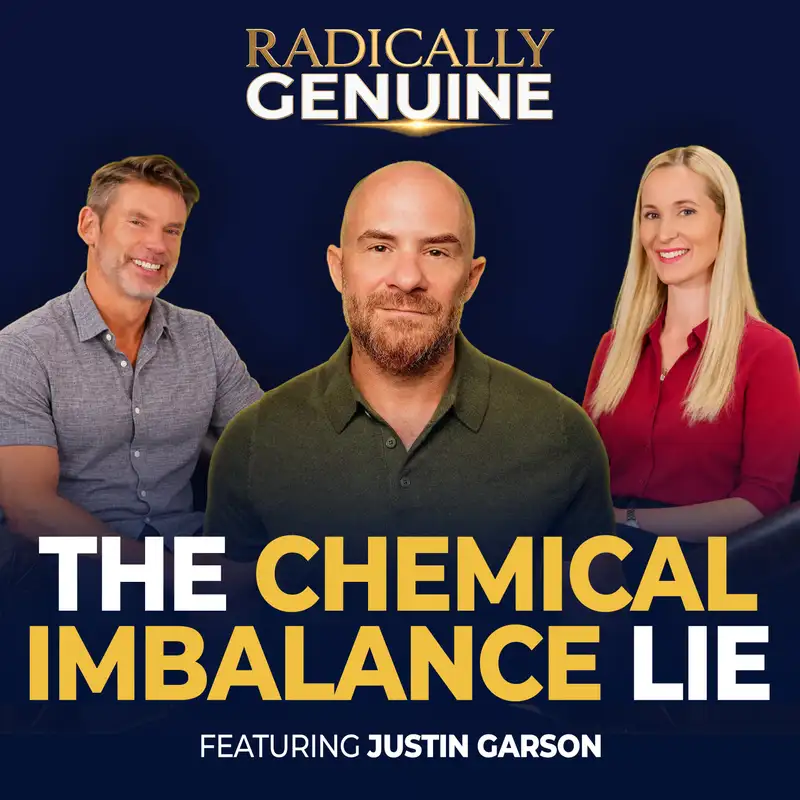
Justin Garson, welcome to Radically Genuine.
00:01:19:20 - 00:01:22:17
Speaker 2
Thank you so much for having me here.
00:01:22:19 - 00:01:25:11
Speaker 3
Could you tell us about your father?
00:01:25:12 - 00:01:27:11
Speaker 4
Yeah. Well, in 19.
00:01:27:11 - 00:02:04:12
Speaker 2
73, I was. About two months old and he was diagnosed with paranoid schizophrenia, which at the time he was working under Richard Nixon. So my understanding is that Nixon made a lot of his staff paranoid. So that probably wasn't incredibly surprising. But he he had given a speech in Paris arguing that, the government needed to put more restrictions on multinational corporations and it needed to regulate their mergers because their mergers could hurt poor countries.
00:02:04:13 - 00:02:33:09
Speaker 2
And he felt like shortly after giving that speech, that's when he started getting wiretapped. That's when he felt that he was being bugged. That's when he felt the apartment was under surveillance. And I wouldn't be surprised if that were true, given Nixon's history and what we now know about the Nixon White House. But I do think his own mental health problems really started to spiral after that.
00:02:33:10 - 00:03:00:19
Speaker 2
I mean, he thought that my mom was a government spy. He thought that, he thought that the Washington Post was writing these stories about him, like coded stories about what he was doing and his whereabouts. He thought that a doctor had inserted a recording device into him. And so at some point, I don't know when exactly he was diagnosed with paranoid schizophrenia.
00:03:00:21 - 00:03:28:13
Speaker 2
But at that time, he, he had read a lot of R.D. Lang. He really loved this kind of existentialist philosophy where we shouldn't think of mental illness as a, like a disease to be cured, but we should think of it more like a start of a spiritual awakening of sorts. And so he was able to find a psychiatrist and pretty prominent psychiatrist in the D.C. area who said, okay, John, I will not give you drugs.
00:03:28:15 - 00:03:48:10
Speaker 2
You'll come in weekly. We'll have talk therapy sessions, I promise. No drugs. And, within several months of that, he was healed. He was back to work. He was, you know, the voices had stopped, the delusions had stopped.
00:03:48:12 - 00:04:26:17
Speaker 2
But about 12 years later, this was 1985. He was still working for the government. He started having similar kinds of episodes. He was hearing voices. He heard God speaking to him. He heard the French actress Catherine Deneuve speaking to him. But what was kind of fascinating to me and disturbing at that time was that by 1985, the idea of finding a psychiatrist who would agree in principle not to give you drugs was out of the question.
00:04:26:19 - 00:04:56:21
Speaker 2
I mean, that probably would have been considered malpractice at the time. And so his life from there, when I was about 12, his life from then on was a cycle of being hospitalized, being put on drugs, changing diagnosis, schizophrenia became schizoaffective disorder, became bipolar disorder with psychotic episodes. And it was all about finding the right combination of drugs that would silence the voices.
00:04:56:21 - 00:05:31:14
Speaker 2
So I've always grown up very, you know, very painfully aware of this paradigm shift in psychiatry from a time when there was a biological perspective, but you could still go to a talk therapist, even if you're diagnosed with schizophrenia or another major mental disorder. Who would say, I won't give you drugs to the mid 80s where everything was centered around diagnosis, drugs, hospitalization, oh, and monitoring, making sure he would actually stay on the drugs that they would give him.
00:05:31:16 - 00:05:58:20
Speaker 1
Yeah, I think your book was absolutely fascinating. It's a great read because it almost presents itself similar to a novel, and you develop some form of connection to the character. And there was a main character that you focused on that most people, myself included, did not fully understand the degree of this gentleman's power and influence.
00:05:58:22 - 00:06:40:02
Speaker 2
Yeah, I got increasingly interested in the history of psychiatry, precisely because I was reflecting on my dad's journey with the mental health industry and just thinking, okay, what happened? Something clearly happened between the early 1970s in the mid 1980s, where this kind of medical, pharmaceutical diagnosis centered paradigm really got locked into place. And a lot of historians have written on this, you know, psychiatry, biological revolution or psychiatry, second biological revolution.
00:06:40:04 - 00:07:06:15
Speaker 2
But yeah, because of those experiences, I got fascinated with psychiatry history and really trying to trace what exactly happened and who were some of these figures that led to this biological perspective? Because, you know, we tend to think, okay, if by the mid 1980s, doctors were centered around diagnosis drugs, it must have been because there was a lot of science behind it.
00:07:06:15 - 00:07:34:02
Speaker 2
It must have been because there are all of these powerful scientific discoveries that led them to that particular paradigm. But my own research suggests that, yeah, there was science, but there was also a lot of outsized personalities. There were a lot of very ambitious people. There were drug companies that wanted new venues for selling their, their products.
00:07:34:02 - 00:07:48:23
Speaker 2
And there is something like a cultural shift where we started thinking that, you know, getting a diagnosis and a drug might be a better way for me to deal with my challenges.
00:07:49:01 - 00:08:07:15
Speaker 3
And so what you witnessed with your father was in your feeling unequivocal that when he was approached as a human being who could get past this, he got past it. And that when he was approached as a broken person who needed drugs, he did not heal.
00:08:07:18 - 00:08:31:18
Speaker 2
Yeah, absolutely. And the main thing that happened in the mid 80s, when he was put on this combination of drugs, one of them was an antipsychotic, one of the first generation antipsychotic drugs. It was called malarial and the other was lithium, a mood stabilizer. And we now know that this combination is neurotoxic. Like nobody should be on that combination of drugs.
00:08:31:19 - 00:08:57:23
Speaker 2
I mean, obviously we discover these things over, over time, but that was incredibly disabling for him. It started affecting his movement. And even through the 90s when we would ask doctors, you know, why is he having trouble with motor coordination? Why is he walking so slowly? Why does he need to be pushed around in a wheelchair when we're in an airport?
00:08:58:03 - 00:09:23:10
Speaker 2
They would just say, well, that's, you know, your father drank a lot and probably destroyed some of his brain with all of the alcoholism and the 80s. So there's nothing we can really do about that. And it wasn't until, I think, the early 2000 that I first became aware that movement disorders are incredibly well known. Side effect of the kinds of medication that he was on.
00:09:23:12 - 00:09:46:18
Speaker 2
But yeah, I think you're absolutely right. Once the paradigm shifted from, you know, you're a person going through some pretty hellish life circumstances, and we want to help you walk through that to you have a broken brain that we need to manage with drugs, the exact same way that we would try to manage a thyroid issue.
00:09:46:20 - 00:10:15:11
Speaker 2
Gradually. Yeah, he kind of embraced this patient identity. I don't think he embraced it like he ever wanted it. But I think over time, this, this kind of identity, you know, I have a broken brain. I'm a patient. Thank goodness that my psychiatrist can give me these drugs because I don't hear these terrible voices anymore. That absolutely contributed to his downfall in some ways.
00:10:15:12 - 00:10:16:05
Speaker 5
Okay. I.
00:10:16:09 - 00:10:50:16
Speaker 1
I think context and history matters. And that's why the history of psychiatry is critically important. Because you're right, there was this pretty profound cultural shift. And I brought up last night that I do not believe that it was organic. And so your book does take us 50s into the 1960s, especially in a specific area of the country with which is the San Francisco Bay area, Menlo Park, the Hate Ashbury clinic, this hippie revolution that occurs.
00:10:50:18 - 00:11:45:01
Speaker 1
And this is fascinating to me, because we have a lot of converging evidence that radically genuine is definitely going to be knee deep in which is the role of intelligence forces, psychological operations, one in particular, MK ultra, and its influence on academic psychiatry in order to develop methods of mind control, influence and drugs that could be used on the population, that could, for the lack of a better way of saying this, could lead a population to become more dependent on authority, and could see themselves in a lot of ways inherently broken, requiring that authority which which we know from various experiments in understanding how human beings commit atrocities, is you create this internal fear that
00:11:45:01 - 00:12:11:00
Speaker 1
someone may have about their own survival, that leads them to look outside themselves for, for a savior in some regards. Now there's this great book by Tom O'Neill which is called chaos, which does speak to just the role of intelligence forces in that particular area, with the Manson murders in particular. But you're on the periphery of this in your book.
00:12:11:02 - 00:12:21:01
Speaker 1
Can you explain to us just your thought process and what you were researching that led you to, like, include this as part of the narrative?
00:12:21:02 - 00:13:00:21
Speaker 2
Yeah, absolutely. So as I mentioned, a lot of historians have written on this biological revolution. What happened in the 1970s that led psychiatry to shift toward the disease centered model, this biomedical paradigm. And historians have emphasized things like, oh, pharmaceutical companies wanting to sell drugs, psychiatrists who wanted to have the prestige of the rest of medicine, who felt like kind of, you know, the ugly stepchild of medicine and felt that the biomedical view would give them this new found prestige.
00:13:00:23 - 00:13:38:15
Speaker 2
You had patient advocacy groups who thought, you know, as soon as people understand that my problems stem from a broken brain, that's going to alleviate the terrible stigma and shame of mental illness. But as I was researching this, increasingly I became aware of a different cause or another kind of a precursor to the biomedical view, which was a community of doctors in the 1950s and 1960s who were fascinated by the idea of using drugs to induce psychosis.
00:13:38:17 - 00:14:11:23
Speaker 2
How can we use drugs in such a way that would induce a schizophrenia like episode in an otherwise healthy person? And there are a lot of reasons that they thought this would be a great thing to have. They thought, okay, if you have a drug that could make an otherwise healthy person become temporarily schizophrenic or psychotic, then a we could take this drug ourselves and better understand what our patients are going through.
00:14:12:01 - 00:14:50:22
Speaker 2
And b we would have a new tool for understanding the biochemical basis. So, you know, if, if large quantities of amphetamines could induce psychosis, then all we need to do is figure out what exactly the amphetamines do to the brain. And maybe we would understand the origin of psychosis itself. But this takes us right back to MKUltra and some of these really kind of nefarious projects, because a lot of this started in the 1950s with the CIA using drugs like LSD as a, you know, looking for a mind control substance.
00:14:51:00 - 00:15:17:17
Speaker 2
And so a lot of the the group of doctors that I was following during the 1950s and 1960s and kind of tracing their trajectory, some of them were working for the CIA, and some of them were coming directly out of this MKUltra program. But I think at least some of them did want to use it for more beneficial therapeutic ends.
00:15:17:19 - 00:15:32:05
Speaker 3
So when you want to induce psychosis in a human being in order to study it, how did they go about doing that? And did everyone who was being experimented on know that this was happening to them?
00:15:32:07 - 00:15:52:02
Speaker 2
The doctors that I wrote about in this book were generally people who were experimenting on volunteers. You know what I mean? I mean, I use the word volunteer loosely because obviously there are a lot of pressures. You know, the author, Ken Kesey, was doing some of these LSD experiments and Menlo.
00:15:52:02 - 00:15:53:09
Speaker 3
Park Over the Cuckoo's Nest.
00:15:53:12 - 00:16:28:11
Speaker 2
Yes. Yeah. Under a guy named Leo Hollister who many believe I couldn't find direct evidence. But many people have claimed that Leo Hollister was getting money from the CIA for the MK via the MK ultra, program. But a lot of the folks, the doctors that I was looking at, were experimenting on college students who signed up to to do these tests, sometimes experimenting on patients in mental hospitals, which clearly would not have been, fallen tree.
00:16:28:12 - 00:16:28:20
Speaker 1
But a.
00:16:28:20 - 00:17:02:07
Speaker 2
Lot were volunteers in the 50s. The primary drug was LSD in the 60s at their interest started shifting toward amphetamines and okay, LSD maybe could work as a drug that would induce psychosis. But increasingly in the late 60s, the emphasis was on amphetamines. And again, it was it was largely volunteers, undergraduate students with the amphetamines. Sometimes it was people who were already amphetamine users.
00:17:02:08 - 00:17:13:18
Speaker 2
And they said, hey, you know, we'll give you some money and we'll put you in a safe place and we will give you amphetamines until you become psychotic. And they signed up for it.
00:17:13:20 - 00:17:46:13
Speaker 1
Let's stay with the LSD story first, because Saul Snyder, who is really the one that you're focusing on this book as kind of the father of this movement in so many ways, did take LSD and did experiment himself under what we would say would be more safe doses. Right. And he came to some conclusions, and it was just an interesting part in your book that he would come to these conclusions, and then the rest of his career doesn't necessarily follow what he kind of experience.
00:17:46:13 - 00:17:52:11
Speaker 1
But can you share with us what he what he went through when he was taking LSD? Yeah, absolutely.
00:17:52:11 - 00:18:15:12
Speaker 2
So Solomon Snyder and he's still alive. And I was very fortunate to have the chance to talk with him as I was working on this book. So he did his medical schooling in the late 1950s, early 1960s. He was a Freudian. He was committed to using psychoanalysis. He looked at biological psychiatry, and he just thought, yuck. I don't want to have anything to do with that.
00:18:15:13 - 00:18:50:13
Speaker 2
Lobotomies and electroshock therapy. He thought it was kind of barbaric. And so it's funny because he wasn't particularly interested in exploring drugs and using drugs as a therapeutic technique, but he's finishing medical school in 1963. He moves out to San Francisco for a year in San Francisco. There's already you have the beatniks. So you have this culture of using, you know, LSD, pot, amphetamines in this casual way.
00:18:50:15 - 00:19:12:18
Speaker 2
And so he and his wife and a few friends got hold of LSD from a lab. And you have to remember, at this time it was still legal. So you didn't have the the sense of we're doing something illegal, we're doing something bad, we're doing something wrong that didn't color their LSD trip at all. And so the way he described it to me was funny.
00:19:12:18 - 00:19:22:02
Speaker 2
They first took a dose and they waited half an hour. Nothing was happening. So they thought, you know, must not have worked. Let's take a second dose.
00:19:22:03 - 00:19:23:02
Speaker 3
Oh, that's a rookie error.
00:19:23:03 - 00:19:53:11
Speaker 2
It was a rookie error. It was it was a hilarious. And of course an hour in he's just flying. But he starts having these really extraordinary experiences. And he thinks that time is slowing down. And then he feels like he can look at anybody and just see their emotions as if they're just perceptual experiences. And then at the peak of it, he kind of becomes one with the universe, and he's everybody.
00:19:53:13 - 00:20:30:07
Speaker 2
His friends are getting a little scared at this time, because he's trying to explain to them that they're all one being and, and, but eventually he comes out of this experience. And what's so interesting about it is that some people who had these kinds of experiences, like Alexander Shulgin, had a powerful mescaline experience in 1960, decided that this was the key to the evolution of consciousness, and he was going to devote the rest of his life to manufacturing new psychedelic drugs.
00:20:30:10 - 00:21:08:16
Speaker 2
Saul Schneider, on the other hand, I think because of his scientific background in his scientific training, his first question was, how the hell did the LSD do that to my brain? What exactly did the LSD do to my brain? That gave me an experience that is probably like what my schizophrenic patients experienced. So he took that kind of experience, but went down this very different kind of direction of I experienced psychosis and it was somehow activated by this drug.
00:21:08:20 - 00:21:22:04
Speaker 2
And if I could just understand what this drug does to the brain, I might understand the origin of schizophrenia itself. So it was kind of an accident that he got so wrapped up in the biological side of things.
00:21:22:06 - 00:22:05:04
Speaker 1
Now, I think if we're going to do this episode, we're going to explore to the depths that we require, really do it justice. It has to allow us to at least examine the nature of reality, because this allowed a shift, like a paradigm shift, to understand the human experience, to be more biochemical, to be genetic, even that what one experiences in this physical reality can be traced back to very small, subtle and even unobservable chemicals, neurotransmitters that exist within the brain.
00:22:05:04 - 00:22:50:03
Speaker 1
So all of this is very theoretical, but what is underlying it is a very important belief system, and that is one the brain creates consciousness, and the brain itself is responsible for our perceptual, auditory, a reflection of all senses, like the human experience derives from the brain. Now this is a shift. And we were talking last night about books that reflected on the epidemiology of various forms of distress, depression, anxiety, going back to the 1920s to the 1950s.
00:22:50:05 - 00:23:33:16
Speaker 1
There really wasn't a belief that these were biological conditions, that they were human experiences. For example, less than 1% of the population would ever identify themselves to be depressed in a given year. Fast forward to today. We're talking 25 to 35% of people are going to identify themselves as going through depression over the course of one year. That less than 1% at that given time almost always identified specific circumstances in their life stressors, a major loss, financial problems like just real difficulties that they would understand their lives to be the contributing factor.
00:23:33:19 - 00:23:57:21
Speaker 1
Like I, the way I feel is related to these events in my life, and they will either pass on their own because, you know, that's the human experience. They're episodic. You love somebody, you lose somebody. These things happen. You might have a job, you might lose a job, you struggle. But they're all like these opportunities that, hey, listen, I'm going to feel better once I solve these problems.
00:23:57:23 - 00:24:27:10
Speaker 1
Now here we are. And we're we're considering the human experience to be genetic. Something that's like physical, biological. And it can be served by a medical industry. This is this is new and it seems to come out of nowhere. Now, it's your hypothesis that this is a natural evolution where we have a percentage of population, although rare, that have these this disconnection from reality.
00:24:27:13 - 00:24:50:19
Speaker 1
They're under this umbrella that we'll call psychosis or even madness. It's existed at times throughout the course of history. It's documented that people can act in ways that seem completely disconnected. Often we can look back historically and say, well, there might be some toxic poisoning. There could be something. There certainly could be something that's biological, but it's not a public health concern.
00:24:50:21 - 00:25:16:18
Speaker 1
The level of homelessness didn't exist. We didn't walk down the street and see somebody talking to themselves. It seemed like it was restricted to a small percentage of of our society. They might have been treated in asylums or specific hospitals or just within their families. It did not seem to reach the level of disability that we see right now.
00:25:16:20 - 00:25:50:11
Speaker 1
And so the question that I rose to you last night is, is this an organic evolution, or is there other influences that have potentially a stake in controlling or influencing a society under understanding of reality? So if you have a psychedelic revolution and people are starting to come to the conclusion that we're not separate, there's an interconnectedness of all things.
00:25:50:12 - 00:26:27:21
Speaker 1
How does that affect a foreign policy that post-World War Two was very interventionist, a large war complex. Of course, we know what happens in the 1960s and entering into East Asia and so forth. It seemed like there was something very threatening about that potential idea, and there needed to be a way to shift Americans, or at least create a division or a fear around this particular movement that was occurring in the San Francisco Bay area and expanding throughout the 1960s.
00:26:27:23 - 00:26:55:16
Speaker 2
Yeah, I mean, one of the so Sol Snyder was working on LSD from about 1963 to 1966. He was fascinated with what is this drug due to the brain, and he genuinely thought it would have powerful therapeutic benefits. And there were a lot of doctors at the time who thought that LSD or mescaline or other psychedelics really would be the key toward transforming people.
00:26:55:16 - 00:27:24:15
Speaker 2
Instead of giving people a drug like an antipsychotic drug that they would take forever. The idea is that you would give them a powerful, transformative experience and that things would start to change for them. So he's studying how LSD works, but again, partly because of just this scientific biological interest, but partly because he does want to develop a drug that will help people in in the clinic, a psychedelic drug.
00:27:24:17 - 00:28:04:05
Speaker 2
1966 comes around and LSD is almost suddenly outlawed in all 50 states. Research on LSD becomes almost impossible, even if you're a scientist who just wants to study what it's doing to the brain, it becomes almost impossible to do anything with this, with with this drug. And so that's when his research with LSD came to an end. There were people like Alexander Shulgin who somehow managed to keep making these, who had this, kind of vision of human evolution, and he wanted to keep making these drugs.
00:28:04:07 - 00:28:40:03
Speaker 2
But the FBI continued to raid his. And we all know about Timothy Leary. I mean, that whole era was marked by the idea that people taking LSD and believing that they've become enlightened is a massive threat to the government. It's a massive threat to the military. It's a massive threat to the economy. If people are going to Harvard to become lawyers or doctors or engineers, and they're taking LSD and dropping out to go live on a commune, they consider that a serious threat.
00:28:40:06 - 00:28:55:15
Speaker 2
So, yeah, absolutely. Saul Snyder's work was, in some ways, he was a victim of this kind of need to stomp out LSD and other psychedelic drugs because they were they were upsetting somebody.
00:28:55:17 - 00:29:30:17
Speaker 3
Now, when we were talking last night, we were talking about the difference on a psychological, but also potentially a spiritual level between the impact of LSD on a person and the impact of amphetamines. And, you know, I've never used amphetamines. I have, I have used LSD, and my experience of it was similar to Saul's experience of it stripped away my sense of being a separate, a completely separate person, and gave me the deepest, utmost empathy for anyone who is present.
00:29:30:17 - 00:29:58:23
Speaker 3
And also this sense of dissolving into into a oneness that made any idea of hurting another person ludicrous on its surface. And so I can see, having used this, that while I'm already, you know, I'm already somebody who would never support warfare. But in that moment, you're the visceral reaction to the idea of of causing harm to another is so, so strong.
00:29:59:01 - 00:30:35:19
Speaker 3
It's not the same with amphetamines. Amphetamines seem to have almost an opposite effect on people, where it brings out the an aggressive, self-centered, hyper confident, even violent energy in a person that couldn't be more different from what many people do experience on LSD. And there's a there's a line you had in your book on what the Japanese army called amphetamines, because, of course, militaries around the world have used these on their on their soldiers.
00:30:35:19 - 00:30:47:02
Speaker 3
I noticed none of them seem to be using, you know, the love drugs on their soldiers. You know, let's not think too hard about why that what might be. But can you can you tell me again what that line was?
00:30:47:04 - 00:31:13:19
Speaker 2
Yeah. So during World War Two, all of the major governments were giving amphetamines to their soldiers with the idea that they were either making them better soldiers or at least just boosting, morale, boosting vigor, allowing them to fight for 18 hours a day. And the Japanese, I don't remember the term they use, but it translates roughly into drugs that inspire the fighting spirit.
00:31:13:23 - 00:31:57:19
Speaker 2
That's how they saw amphetamines. And going back to the hate Ashbury and the you know, we think of the Summer of love in 1967, and I do I think it's a beautiful thing, this idea that there's this experiment going on where we're expanding our consciousness together. Timothy Leary wanted to drop LSD out of airplanes. Like, we just need to get everybody on this drug, and then they're going to wake up, and then they're going to see the evil of warfare, and they're going to see the evil of even hating your neighbor, who is just the same person as you spiritually.
00:31:57:21 - 00:32:19:19
Speaker 2
And before I wrote the book, I didn't really know, okay, what happened in the Haight-Ashbury? How did that kind of grand, beautiful experiment come to such an abrupt end? And part of it is, of course, the police harassing people. And part of it is, you know, hippies who had moved out there for the summer, going back home and going off to college.
00:32:19:21 - 00:32:52:09
Speaker 2
But a huge part of it was amphetamines. Amphetamines began taking over the Hate Ashbury neighborhood. It's well documented that there is a ship. When you look at hospitalizations in the fall of 1967, hospitalizations due to LSD trips drop plummet, hospitalizations due to amphetamine skyrocket. And what happened was that the people who used the amphetamines were known as the speed freaks.
00:32:52:10 - 00:33:22:07
Speaker 2
I don't know if they called themselves speed freaks, or that was just the name that the culture gave to them. But the hippies were terrified of these people because the speed freaks were aggressive, they were paranoid. They were dangerous, they were hedonistic. They would start fights. They would carry around guns or knives. And one of the doctors that I talked with when I was writing this book, his name was Doctor Dave, Doctor David Smith.
00:33:22:09 - 00:33:51:16
Speaker 2
In the 60s, he set up the Hate Ashbury Free Clinic because he wanted to help the hippies. One of the things that he told me was that the speed users effectively drove all of the hippies out of the Haight-Ashbury, drove them into communes, or made them flee back to their parents homes. And so there was something.
00:33:51:18 - 00:34:17:08
Speaker 2
Terrifying and horrendous. I can't imagine what it must have been like living there in the fall of 67, in the spring of 68, where you're just watching the hippies leave this place, this grand experiment ending and the street flooded with amphetamine and increasingly, heroin use as well. It's a different kind of energy that.
00:34:17:10 - 00:34:24:01
Speaker 1
And we know that the CIA has been involved with flooding specific areas with drugs.
00:34:24:02 - 00:34:50:05
Speaker 3
Oh, yeah. No question. I mean, it's the the Black Panthers II. Growing up, I knew some of the, you know, a group with some people who had been Black Panthers and they would talk about this. And at the time it was a new concept to me. But I looked into it when I was older and without question, the CIA was active in the flooding of particularly of black neighborhoods with illegal drugs that destroyed community.
00:34:50:07 - 00:35:27:09
Speaker 3
And that was not an accidental decision. It was a calculated decision to break a culture break. What was best about a culture. And it does make me wonder whether that there was something similar that played a role in Haight-Ashbury, in the the amphetamines entering in that way. You know, and for people who haven't, who haven't looked into this look, you can look into this, but, the role of the CIA in drug running, they may be some of the greatest drug runners in U.S. history.
00:35:27:11 - 00:35:44:07
Speaker 3
Everywhere you look, where there is a cartel running drugs, you'll find the CIA's fingerprints somewhere in it. And part of that is to fund their black operations so that it's off the budget. But it's also an incredible tool of control, of control of the population.
00:35:44:09 - 00:35:46:10
Speaker 3
Did we.
00:35:46:12 - 00:36:27:16
Speaker 1
We we never get past some of these points. And I want to bring in the, the raffle. Casey. Why question that. I think we just got to continue to bring into our, our podcast because you said something I thought was was profound and historically accurate. If there is that desire of the US government or maybe it's, you know, not on the, the, the bureaucracy in which we understand government to be, but, you know, maybe the people who are really, influencing policy decisions, then what would be the reason for intelligence services to create that disruption in American communities?
00:36:27:18 - 00:36:54:02
Speaker 3
Well, within the black community? I can't speak for that community, obviously, but I see a community that had the power to establish themselves as fully and completely independent, proud and able to assert themselves politically and culturally in a way that they hadn't yet in history.
00:36:54:04 - 00:37:19:00
Speaker 3
That was dangerous to some very racist policymakers. And it was also very dangerous to anyone that wants us divided. It's much better for keeping division between us. If you can convince, the white community that the the back community is dangerous and, and, you know, malfunctioning in some way. And it's very useful if you can convince the black community that the white people hate them.
00:37:19:02 - 00:37:43:00
Speaker 3
So there's also very good evidence that much of the KKK activity in the South had strong intelligence ties to. And again and again, we see the role of a few people in seeding the sense of division between all of us, where if you went out your door and you met your neighbor, you who was a different skin color, a different belief, and you actually just talked to them, you would find out, we're not that different.
00:37:43:04 - 00:38:02:01
Speaker 3
We breathe the same air. Our kids go to the same school, we want the same things in life. But if you stayed inside and you watched your TV, you could be convinced that the people living down the street from you hated you and were your enemy. And it feels like this is one of the oldest playbooks used against us.
00:38:02:03 - 00:38:11:19
Speaker 3
And the role of these drugs could be to give evidence for these these plots, for these beliefs, these efforts to divide us.
00:38:12:01 - 00:38:44:00
Speaker 2
Yeah. I mean, that's that's so interesting because what was going on in the Haight-Ashbury in 66, 67, not just kids taking LSD and becoming enlightened, but this idea that we need to start a new kind of society. We need to become self-sufficient. You know, if we have a problem with homelessness. There was a group called the diggers. They said, you know, we're going to help homelessness by going dumpster diving every day, and then we're going to have a big soup kitchen in Panhandle Park every evening, and we're going to feed people.
00:38:44:01 - 00:39:08:23
Speaker 2
The idea was that we need to take assert autonomy over our own lives, and rely less and less on asking the government to feed us, to house us, to regulate us. And I think part of, you know, you have so many people taking these mind expanding drugs who think, wait a minute, we could just do this ourselves. We can end homelessness ourselves.
00:39:08:23 - 00:39:39:17
Speaker 2
And I think you're right that that's an incredibly threatening message. And I've never looked into the question that you're asking like, well, how did the hate Ashbury come to be flooded with amphetamines? How did it come to be flooded? We have all these kids on LSD and other psychedelic drugs. How did did become flooded with a drug that makes people aggressive, hedonistic, paranoid, violent?
00:39:39:17 - 00:40:05:03
Speaker 2
And it's a great question to to ask. I mean, I've never thought about it. And now that you mention it, I'd love to do some research on it, because, you know, when we were having our conversation last night about this stuff, I think you're right that when you see a very, very rapid social change of that magnitude, it's probably not an accident.
00:40:05:03 - 00:40:27:11
Speaker 2
It probably wasn't just this kind of organic change where some of the speed freaks thought, whoa, all these hippies, we should really move to hate Ashbury and start causing trouble here. That might have been part of it, but it does make me wonder whether there was some deeper explanation for how these drugs just took over and destroyed this experiment.
00:40:27:16 - 00:40:38:14
Speaker 1
I think one of our theories here is they're not organic, and you brought up something that was probably new to both of us, which has to do with the Occupy Wall Street movement.
00:40:38:16 - 00:41:19:10
Speaker 3
Yeah. So we were talking about this last night and, I brought up that, you know, Occupy Wall Street, which has, if anything, has been erased from the American memory. I think that has. When do you hear about that anymore? But the Occupy Wall Street movement was one of the first uprisings in generations that peacefully protested and resisted the control of the 99.9% by the point 1% that entire generations are being screwed financially for the benefit of very, very few through financial policies by the top bankers of the world.
00:41:19:12 - 00:41:42:03
Speaker 3
And of course, this is post 2008. I come from that generation. I come from the the the couple years that were graduating college right at that time and who were estimated to have being cost 1 to $5 million in income over their lifetimes simply because they entered the workforce in, in the year of the, you know, the Great Recession.
00:41:42:05 - 00:42:05:01
Speaker 3
And so people of all cultures, all walks of life were coming together and saying, hey, this is this is wrong. They gathered at and, you know, in Wall Street and they were you could make some arguments that there were some similarities to the hippie movement, in the sense that it was people coming together, looking after each other from a place of, of love and cooperation and resistance to something that's wrong.
00:42:05:03 - 00:42:39:00
Speaker 3
That movement got shut down pretty, pretty thoroughly. Much of the mainstream press turned against it. And then something very interesting happened right afterwards. The term systemic racism had almost never been heard before. In the mainstream press, those two words together. And if you do a word, search for this for the Washington Post, The Wall Street Journal, The New York Times, and these other mainstream papers, you'll see a sudden and rapid uptick in the use of that terminology right after Occupy Wall Street.
00:42:39:02 - 00:43:12:16
Speaker 3
And if we look at things like Operation Mockingbird, which is a now declassified CIA program where the CIA has assets in each of these mainstream publications to to push messaging that is handy to the government. The government and the major banks are in bed with each other. That should be pretty well established for people. And, you know, we had a guest on recently called Leslie, Leslie Elliot Boyce, who mentioned this cartoon that I love, where it's a king talking to his advisor, and the mob is at the gate, and what do we do?
00:43:12:16 - 00:43:38:22
Speaker 3
And he's like, it's really easy. Just turn the pit. You know, the pitchfork for people against the the torch people. Right. And so I seriously wonder if the that rise of astroturf systemic racism language was not to turn Americans horizontally against each other, to concentrate on the division, on things that we can do literally nothing about. I don't choose my skin tone.
00:43:38:22 - 00:43:55:20
Speaker 3
You don't choose your skin tone. We don't choose, you know, we don't seem to choose how we're born in these ways. But to get us to concentrate on our differences from each other, to prevent us from coming together, to cooperate together and say, you know, no, we're not going to accept an exploitative system that leaves so many in poverty anymore.
00:43:55:22 - 00:44:10:20
Speaker 3
We want something different. If we can be turned against each other, we never become effective in working together to build something parallel, to build something better, to build something that actually works for all of humanity and not just the few.
00:44:10:22 - 00:44:35:17
Speaker 1
Well, I think the transition here then, is to the moral panic that ensued in the 1960s from psychedelics. And you outlined this in one of your chapters. What then happened? So there was this dramatic shift in expansion of consciousness and a drug that could be used to improve humanity and then fear.
00:44:35:19 - 00:45:05:12
Speaker 2
Well, what happened after that? I mean, I can tell you about Soul Snyder in his research, where he wanted to find a drug that would induce this schizophrenia like state. He couldn't use LSD anymore for that purpose because it just was not almost impossible to do research with it. And I think what happened is that a lot of people were getting fascinated with, amphetamine psychosis.
00:45:05:12 - 00:45:32:10
Speaker 2
So a lot of the when amphetamines started taking over and the hate Ashbury, same kind of thing was happening in New York and in Los Angeles. Speed was kind of displacing LSD as the main street drug. You had a lot of these kids who had been taking amphetamines, sometimes for days at a time, and becoming psychotic and becoming psychotic to the point where they would be misdiagnosed with schizophrenia.
00:45:32:12 - 00:45:56:12
Speaker 2
So I think it was just a matter of time before Solomon Snyder effectively said, okay, well, wait a minute, maybe I was wrong about LSD. LSD isn't the drug that makes people psychotic. It's, amphetamines. And so there are a number of doctors who started getting very interested in using amphetamines to induce a psychosis.
00:45:56:16 - 00:46:02:10
Speaker 1
Now, Justin, I don't think that's a coincidence. So.
00:46:02:12 - 00:46:05:12
Speaker 1
Operation. It's Bluebird, right?
00:46:05:13 - 00:46:08:05
Speaker 3
Bluebird was the. Yeah. This, like a psychiatric.
00:46:08:05 - 00:46:12:12
Speaker 1
One all of a sudden you see these major news publications throughout?
00:46:12:15 - 00:46:13:07
Speaker 3
Yeah.
00:46:13:09 - 00:46:14:02
Speaker 1
It's my favorite.
00:46:14:02 - 00:46:16:17
Speaker 3
We have Bluebird and mockingbird are both applicable here.
00:46:16:18 - 00:46:45:18
Speaker 1
Okay. Yeah. Mockingbird. We have these major publications that are pushing stories about people taking LSD, jumping out of fifth story windows, staring at the sun and going blind. Right there is this like fear that is provoked throughout the country, while at the same time there is something pushed in the communities that these are much higher doses than the typical psychedelic or LSD that they were using safe doses.
00:46:45:23 - 00:47:15:01
Speaker 1
And some of them are actually mixed with amphetamines. So if we're going on the theory that this is not organic, and this was pushed by intelligence forces who are actually experimenting with understanding how drugs impact a population is, they induce this in communities and then they use their assets within the New York Times, The Wall Street Journal, The Washington Post, NBC news, and now they flood the United States with fear about psychedelics.
00:47:15:01 - 00:47:42:15
Speaker 1
Before you know it, bang! It's now illegal, so there's no longer investigation into it. It's interesting now that psychedelics is making another push for healing. That's another topic for another day. And now all of a sudden, everyone's just interested in amphetamines, a really dark drug that even seems to open up a portal to a side of you that creates aggressiveness, psychosis, and Saul Snyder's lab at Johns Hopkins.
00:47:42:17 - 00:48:03:14
Speaker 1
Johns Hopkins as a university completely tied to MKUltra. He's funded by the FBI. Now, I'm reading this, I'm following this along, and I'm like, this is so obvious, right? But you didn't go in that direction. You didn't make that connection that this was government funded. So of course he's going to go in this direction.
00:48:03:16 - 00:48:35:18
Speaker 2
Yeah. I mean, I think part of it is I'm not a very conspiratorial person. So when I mean, maybe that sounds naive, but when I read about Saul Snyder, I read first of all, about a guy who loves science and a guy who's passionate about healing mental illness. But you're absolutely right. I mean, he was coming out of a context where a lot of his colleagues were, at least some of his colleagues had been funded by the CIA via MKUltra.
00:48:35:20 - 00:49:24:21
Speaker 2
And then in the late 1960s, he starts getting funded by the FBI to do research on a particular drug that's flooded the hate Ashbury, which, incidentally, is a mix of psychedelics and amphetamines. So yeah, I do and kind of depict him as and it's probably because I just spent so much time learning about him, talking with him, talking with the people in his community, who I saw as, first of all, scientists and second of all, people who were very idealistic, who thought that if they just did a little bit more work with these kinds of drugs, they would cure schizophrenia, they would cure depression, they would cure anxiety.
00:49:25:03 - 00:49:53:17
Speaker 2
So, I mean, it's absolutely possible that people like Sol Snyder were being used in ways that they didn't fully understand and by forces that they didn't fully get, like when the FBI called Saul Snyder and they said, hey, we're really worried about this drug called STP that's flooded the hate. Ashbury seems to be a kind of mix of LSD and amphetamines.
00:49:53:19 - 00:50:18:12
Speaker 2
We want you to study this drug. We want you to see whether this drug can make people psychotic so that we can outlaw it. So he gets together students from Johns Hopkins, and he gives them this drug, STP, and he notices that some of them are starting to hallucinate or have disorganized thinking. He has a colleague named Leo Hollister who was at Menlo Park.
00:50:18:12 - 00:50:49:23
Speaker 2
Leo Hollister had given LSD to Ken Kesey in the early 1960s, and many people believe that he was getting money from the CIA through MKUltra. So Saul Snyder is working with Leo Hollister to show that this drug, LSD, can induce psychosis like experiences, and suddenly his lab is getting flush with cash. He has more money than he knows what to do with thanks to the FBI.
00:50:50:01 - 00:51:15:23
Speaker 2
So yeah, I don't I mean, you're right. It may look naive of me in some ways to just look at this guy as, you know, a brilliant scientist and very opportunistic, you know? Well, if the FBI, if they want to give me money to study a drug that I'm already interested in, sure, I'll take their money. So I better pursue my science and to pursue my therapy.
00:51:15:23 - 00:51:29:13
Speaker 2
But yeah, I like to I'd like to think of him as kind of maybe the, the, the hapless, the the hapless victim being used by forces perhaps he didn't fully fathom.
00:51:29:15 - 00:52:05:09
Speaker 1
And it's completely plausible that he was being used and his him and other scientists, other psychiatrists were being funneled down a certain direction. And that direction was clear. What chemicals can we use to induce various states of mind and states of consciousness that we can use for methods of control? You would think that it was going to be used on your own people, but this is actually evidence that there was mass experimentation done on the American public, often without our consent.
00:52:05:12 - 00:52:41:00
Speaker 1
And then these same interventions were likely being used overseas. When we're attempting a regime change and we're trying to influence revolution, you know, this idea that we're going to create division, fear, provocation, we have various ways to do that through media, through specific personalities, and through just creating what amounts to be chaos in a population. Because when there's chaos, when there's fear, then you need the police state, then you need the control mechanism, then you need and the people do they desire order.
00:52:41:02 - 00:53:02:12
Speaker 1
And this is how you get authoritarian regimes in place, because there's always the promise of law and order. And that only takes place if there's fear of the other. If you can create the crime, if you can create the conditions that can create such disorder in chaos, then of course, then you can support the police state.
00:53:02:17 - 00:53:29:18
Speaker 3
And, you know, there's significant evidence that Charles Manson was an asset. We were talking about this last night, and I believe that was familiar as a concept to you as well. The book chaos that Roger mentioned earlier is an excellent book for those who are interested in diving into this. Manson kept committing these crimes in San Francisco, and he had a parole officer who only had one parolee to his assign, and that was Charles Manson.
00:53:29:20 - 00:53:50:19
Speaker 3
And whenever Charles Manson was about to get in trouble and potentially go away, his parole officer with only Charles Manson to be responsible for, would step in and make sure he was back out on the street. That has all the hallmarks of someone who's some form of asset who, look, we need to look after him, make sure he's out there doing what we've asked him to do.
00:53:50:21 - 00:54:25:15
Speaker 3
For. So the idea is that Charles Manson was involved in MKUltra. And when you know that the things that Manson and his the Manson family did look very different, if you know that he was likely being used for drug experimentation, you ask more questions and then you look at things like Helter Skelter for for the people who were listening to this that might be younger and not know about this, these girls who were known as the Manson Family, that that followed him as a cult leader, were heavily using drugs that he was providing.
00:54:25:15 - 00:54:54:01
Speaker 3
I believe it was likely a combination of not just LSD, but and amphetamines. They went on to commit some pretty horrific crimes that it looked like they were attempting to blame on, African Americans to start a race war. Now, if you know that Charles Manson was working with intelligence forces, it leads to a very serious question of was that simply something that he and these girls cooked up?
00:54:54:01 - 00:55:13:11
Speaker 3
This idea of doing something to try to stoke racial tension in the US? Or once again. Was it the same playbook being played to try to stoke one group of Americans against another group of Americans? So we wouldn't ask the questions of how are you actually different from me? How are we actually the same? Why are we? Why would we hurt each other?
00:55:13:14 - 00:55:52:06
Speaker 3
Why would we be bigoted against each other? Why are we going overseas to Vietnam and killing our other human brothers and sisters? We instead got the Watts riots. We instead got a lot of violence erupting throughout this country, and I believe most people at heart don't want that. If we involve ourselves in it, it's because of fear. It's because we have believed somebody or something that has convinced us that other human beings are somehow different from us, and that we're not all inherently at our, you know, at our root, souls that have far more in common than we have against each other.
00:55:52:08 - 00:56:19:12
Speaker 3
And so my real concern with these drugs continuing to this day, is the role of government agencies in turning us from the potentially beautiful uses of things like LSD and psilocybin, the actual, you know, in their original form, especially the plant based ones like psilocybin, but being used in ways that can control people and direct behavior where we sow division and not unity.
00:56:19:13 - 00:56:20:15
Speaker 3
00:56:20:17 - 00:56:44:12
Speaker 2
Yeah. I mean, Charles Manson was fascinating. So I've never read the book chaos that we're talking about. And I know very little about the connections that they lay out in that book between the CIA and Charles Manson. I did talk to it when I talked to Doctor Dave, David Smith, who ran the Haight-Ashbury Free Clinic. He knew Manson.
00:56:44:13 - 00:57:08:06
Speaker 2
He, you know, saw Manson and his girls. This would have been this. Well, certainly 67, I believe Manson was still in San Francisco. And the way he described it to me was that, well, when Manson was in San Francisco, he was mainly into LSD and things were okay. He was getting into trouble. But it wasn't he wasn't turning into violence.
00:57:08:10 - 00:57:39:12
Speaker 2
We weren't getting these just really weird, terrifying delusions about the White Album and the race war. And, the way he described it was that once Manson and his group went to LA and I guess took up residence outside of Los Angeles, that's as his doctor explained it to me. That's when he started using amphetamines, and that's when amphetamines and the psychedelics were being used kind of indiscriminately.
00:57:39:14 - 00:57:59:17
Speaker 2
And then once you have that, it kind of makes sense to me that if that his viewpoint would start getting just more violent, more strange, more messianic, more I think the Beatles are talking to me through the White Album, but it's a history I'd love to know more about for sure.
00:57:59:19 - 00:58:00:08
Speaker 5
Okay, let's.
00:58:00:09 - 00:58:17:07
Speaker 1
Continue to progress with this, because the story ultimately leads us to the dopamine hypothesis of schizophrenia, which is so powerful in what we term today as somebody has a chemical imbalance. Take us from there.
00:58:17:12 - 00:58:53:06
Speaker 2
Yeah. So Saul Snyder, this is 1969. He still wants to find a drug that will induce psychosis in an otherwise healthy volunteers. He comes to the conclusion that amphetamine is that drug by giving somebody massive quantities of amphetamines, sometimes over a day or two at a time, he realized that you can induce a state that is so similar to schizophrenia that psychiatrists would routinely misdiagnosed amphetamine users with schizophrenia.
00:58:53:08 - 00:59:18:07
Speaker 2
And so he goes back to what he did best, which was, what exactly are these drugs doing to the brain? He figures out that amphetamines are kind of an ingenious series of experiments on rats. He figures out that amphetamines are inducing psychosis by flooding the brain with dopamine. And that's where he gets the idea for the dopamine hypothesis of schizophrenia.
00:59:18:10 - 00:59:43:23
Speaker 2
He thinks, well, wait a minute. What if schizophrenia itself is just a disease of excessive dopamine? Than he does a lot more research. He wants to know how antipsychotic drugs work. He actually gets a few million dollars from Nixon's White House to study on the pretense that he's going to study heroin addiction, he builds a device that allows him to study antipsychotic drugs.
00:59:43:23 - 01:00:16:19
Speaker 2
He understands that he comes to show that all of these antipsychotic drugs work by blocking dopamine. And so by 1975, 1976, he has this beautiful, simple theory of schizophrenia. He says, well, if you flood somebody's brain with dopamine, you can make them schizophrenic if you block their dopamine transmission, you can alleviate schizophrenia. So maybe schizophrenia is just a disorder of excess dopamine.
01:00:17:00 - 01:00:48:22
Speaker 2
1976 he writes this watershed paper, the Dopamine Hypothesis of schizophrenia. And even though he acknowledges that the dopamine hypothesis, it is a hypothesis, we have not found direct evidence of dopamine abnormalities in patients with schizophrenia. I think it was the paper that kind of lit the fuze for the biomedical view. I think there are a lot of psychiatrist who wanted to take psychiatry into this more biomedical direction.
01:00:49:00 - 01:01:28:11
Speaker 2
And the dopamine hypothesis of schizophrenia. The paper and the research, again, ingenious research that he had done to back up his theory. I think it gave psychiatrist exactly the kind of open door that they wanted. Let's embrace this new biomedical conception. And I think one thing it did, I think the dopamine hypothesis did two things. One, I think it really led psychiatry toward brain research, toward thinking, you know, let's find the smoking gun, evidence that dopamine abnormalities are what's ultimately causing schizophrenia.
01:01:28:13 - 01:02:23:08
Speaker 2
Let's do postmortem, postmortem autopsies. Let's do do neuroimaging. So it kind of led us in this brain center direction. But I think the success of the dopamine hypothesis also created a lot of copycat chemical imbalance theories. By the 80s, we had the serotonin theory of depression. By the 90s, we had the Nora Drennen theory of ADHD. And so for me, one of the most powerful and problematic legacies of the dopamine hypothesis was not necessarily how it changed schizophrenia research, though that's something that's worth thinking about, but how it kind of, just normalized this idea that we should think about our mental health problems in terms of chemical imbalances in the brain and how it
01:02:23:12 - 01:02:42:06
Speaker 2
in a sense, once we had the idea of the dopamine hypothesis of schizophrenia and we had a lot of evidence for then, I think it just became very easy for psychiatrists to embrace these other chemical imbalance theories, even when we really didn't have good evidence for them at all.
01:02:42:08 - 01:03:14:23
Speaker 1
So there's this reductionist view that we can improve the human condition by intervening on a specific neurochemical. And then there's a range of psychiatric conditions that become more pronounced in American culture. So depression becomes this disease that can be treated like insulin for diabetes. We see this explosion of a condition called ADHD. We start identifying anxiety and fear to be a symptom of a greater condition.
01:03:14:23 - 01:03:37:07
Speaker 1
All that can be treated in our medical centers. Now, used a word before you said you were in conspiracy. Conspiratorial, right. And I want to I want to take a pause here, because that term in itself was used as mass propaganda. And I'm going to turn to Tracy again because Tracy seems to have the curriculum.
01:03:37:10 - 01:03:39:09
Speaker 3
Conspiratorial expert.
01:03:39:11 - 01:03:42:21
Speaker 1
You have done some deep dives into this. Historically.
01:03:42:22 - 01:04:10:10
Speaker 3
I spent good a good ten years doing a an informal PhD and a lot of this stuff. I guess when I was, when I was disabled, I had a lot of time to just mainline this information. So what I learned was that that term conspiracy theorist actually first appears in a CIA document after the Warren Commission report on the Kennedy assassination, when they were trying to figure out how do we discredit the people who are questioning the conclusions of the Warren Report?
01:04:10:10 - 01:04:43:13
Speaker 3
And the suggestion was refer to them as conspiracy theorists. And so the irony of it is that the term itself is literally a conspiracy theory. And it was developed specifically to get people to not express opinions that there was potential that government agencies would be less than forthcoming with the truth, which, you know, I don't really know anyone that would tell you if you ask them, do you think government agencies always tell the truth?
01:04:43:15 - 01:05:12:15
Speaker 3
Do politicians always tell the truth? Like, no, obviously not. Right. There's a reason we have that phrase like, you know, a politician is lying when their lips are moving. But it was such an effective play on on the American population to take this term and just use it to, to, shut the mouths of people who would consider expressing skepticism about, government edicts on, on any given topic.
01:05:12:17 - 01:05:45:11
Speaker 1
Yeah. So let's let's take that idea that if we start to explore something outside the accepted narrative, that it's not conspiratorial, that it's critical thinking, that it's analysis. So we have the hindsight right now to like, kind of reflect on 20, 30, 40 years of this. And so we can examine by its fruits, like, what is the objective evidence of such an idea that, okay, we, we we know MKUltra is true.
01:05:45:12 - 01:05:45:23
Speaker 1
Okay.
01:05:46:02 - 01:05:50:11
Speaker 3
We know they destroyed most of the documents. So we know there was much more to it than we even know.
01:05:50:12 - 01:06:14:15
Speaker 1
Like 90% of the documents were destroyed, but they leave like 10%. It's like a breadcrumb for us, which I think is purposeful too, by the way. Conspiracy theorist, of course. So we know that the US government and intelligence forces were very interested in influencing a population both at home and abroad. They wanted to develop drugs that could influence the minds and consciousness of large groups of people.
01:06:14:17 - 01:06:37:20
Speaker 1
And we always have to ask ourselves, who benefits? Well, one, psychiatry has always been the arm of governments, so we can like reflect back into World War Two, World War one. They used to use doctors, psychiatrists to claim a dissident to be mentally ill. They could use that for incarceration.
01:06:37:22 - 01:07:07:11
Speaker 3
And we don't have to go back even that far. There's very recent examples during Covid, and I'm kicking myself right now because I don't remember the doctor's name. But there was there was a gentleman who was questioning the Covid policies. I believe he was a doctor himself, and he was sent to a psychiatric facility and diagnosed with Covid hysteria, I believe, which I, I don't claim to know the DSM by heart, but I don't think that one's in there.
01:07:07:12 - 01:07:37:02
Speaker 3
And it was used to do then prevent him from continuing to speak out and treat patients who were being affected. Soviet Union, sluggish schizophrenia was the assigned diagnosis. And of course, okay, so you have a label thrown at you, but it's much more than a label. It is a permission stamp to lose for the state to take your freedom, lock you up, inject things into your body and keep you in a prison that is worse than many high security prisons.
01:07:37:06 - 01:08:02:14
Speaker 3
And so the idea that a medical specialty would be given this authority is should be disturbing to anyone that values freedom. And it should also lead to questions about about that specialty and whether there would be a strong tendency because of that, that ability for it to be used by authoritarian governments and by the state in general to suppress dissidents.
01:08:02:16 - 01:08:04:07
Speaker 6
Yeah. I mean, I guess it's always.
01:08:04:07 - 01:08:12:08
Speaker 2
Seemed to me, and I don't mean conspiratorial in a bad way. That's just not how I when I see something happen.
01:08:12:10 - 01:08:12:23
Speaker 1
You know, like.
01:08:12:23 - 01:08:33:09
Speaker 2
The amphetamine flooding the Haight-Ashbury, my first thought is like, wow, I wonder why. Why people got so excited about speed. And my first thought isn't, okay, who who might have engineered that? It's just my own kind of thought process. But when I.
01:08:33:09 - 01:08:35:08
Speaker 6
Look at.
01:08:35:10 - 01:09:09:02
Speaker 2
The 1980s, we have Prozac, we have the serotonin hypothesis of depression. We have just the sheer explosion of the idea that every day mental health challenges, depression, anxiety, being seen as a difficult person by others. These are chemical abnormalities to be cured with drugs. And when I think about, okay, what caused that, what led to this paradigm shift where now everyday problems of life are a chemical abnormality?
01:09:09:03 - 01:09:27:22
Speaker 2
And incidentally, I was hospitalized at the age of 16. This was 1989, shortly after Prozac came out. I was hospitalized for six weeks for depression and put on Prozac. And so I was I was right there at the beginning of this, transition.
01:09:28:00 - 01:09:30:23
Speaker 6
But when I think about causes, I think, well.
01:09:31:01 - 01:10:00:23
Speaker 2
You don't even have to think about government interference yet. You have a perfectly coherent narrative where you have at least these three forces. You have pharmaceutical companies who are very excited about opening new markets for their wares, and they have the freedom to market these ideas very aggressively. I mean, listening to Prozac and Newsweek, Prozac was depicted as the modern miracle cure.
01:10:01:01 - 01:10:04:23
Speaker 2
You have psychiatrist who.
01:10:05:01 - 01:10:06:00
Speaker 6
In the 50s.
01:10:06:00 - 01:10:32:22
Speaker 2
And. 60s and even 70s, felt very insecure about their profession. They knew they were not considered real doctors by the cardiologist and by the way, they needed to do something to improve their public image. And so I do think that the drug centered, disease centered, DSM centered model kind of gave them a natural foothold to say we are a legitimate branch of medicine.
01:10:33:01 - 01:10:49:03
Speaker 2
We are the branch of medicine that treats illnesses of the mind. And then, of course, also in the 80s, you have these very powerful patient lobbying organizations like Nami, who I think very well intentioned, who thought.
01:10:49:09 - 01:10:49:23
Speaker 6
Okay, as.
01:10:49:23 - 01:11:24:02
Speaker 2
Soon as the world accepts that depression is a chemical imbalance that can be cured with drug, that's going to alleviate all of the terrible stigma and shame associated with mental illness. So I tend to think of kind of the Prozac revolution as almost the very predictable consequence of drug companies, psychiatrists wanting kind of legitimacy, and patient advocacy groups who genuinely thought that this chemical imbalance picture would help erase stigma.
01:11:24:04 - 01:11:24:13
Speaker 5
Yeah.
01:11:24:14 - 01:12:12:17
Speaker 1
And I know that's the accepted narrative, but Nami is funded by the pharmaceutical companies. Yes, the pharmaceutical companies are multinational corporations like multi multi-billion dollar multinational corporations. We know that there are large scale organizations of world leaders, cross nations, who desire more of a global order, almost the elimination of borders. One could argue that the US, what we identify as U.S. intelligence forces, are not really U.S. intelligence forces, that there is also a multinational intelligent ring intelligence ring arm that are representing these oligarchs.
01:12:12:19 - 01:12:35:04
Speaker 1
These multinational corporations are really the ones that have the major global influence that all of our politicians are pretty much bought and sold. They're paid actors in this regard who have to implement a specific foreign policy that serves their end goals. So we we know the, The.
01:12:35:06 - 01:12:35:20
Speaker 5
GS.
01:12:35:22 - 01:12:38:02
Speaker 1
Me names, the Economic Forum, the.
01:12:38:03 - 01:12:38:12
Speaker 5
World.
01:12:38:14 - 01:13:09:09
Speaker 1
The World Economic Forum kind of publishes these things pretty clearly and directly about their vision, their version of what a a one global world may look like. And they use many different, sustainable potential goals that they identify to be what's best for the planet or what's best for our world health. But ultimately, what what they do is they reduce the human being to various sets of parts.
01:13:09:11 - 01:13:38:18
Speaker 1
And this is where, you know, you consider the role of psychiatry and the reductionist version of how we can inject ourselves with something or, or take a pill, and then that creates a better version of ourselves. So we've slowly been able to create that reality through mass marketing, direct to consumer marketing push. It's not just like, it's not just like certain authors or books or academic thought leaders.
01:13:38:20 - 01:14:10:15
Speaker 1
I mean, Hollywood push these ideas. We all of a sudden were flooded with this idea that if someone is crazy, they have a chemical imbalance like that narrative became associated. If you're ill, there's a chemical imbalance. Now, I can't go on a show and I can't talk on another podcast without delay. Person just saying, well, there are people out there who have a chemical imbalance because we all walk the streets of major cities and were exposed to homelessness, and we're exposed to that person who was they're just talking to themselves.
01:14:10:17 - 01:14:41:12
Speaker 1
But the degree in which we were able to create that through pharmaceuticals, that we were able to flood communities, that we're able to create these exact pharmaceuticals that would produce that outcome ultimately gets tied back to these exact operations. And I can't I can't erase that from my memory. I can't deny those potential facts. And I can't also deny that we have a quarter of the population ingesting this various chemicals, that we have a chronic disease epidemic, that we have a mental health epidemic.
01:14:41:15 - 01:15:07:12
Speaker 1
And now you go into this virtual world that you go on to social media, and people now identify with these disorders, these diseases. And what is absolutely shocking to me is that a profession like psychiatry, that is not based on any sound science, that we do not have evidence that suggests the chemical imbalance theory for any of these conditions actually exist.
01:15:07:12 - 01:15:39:14
Speaker 1
In fact, we have to reduce the human experience to dumb it down, to sell it to the public, that they have authority and they have validity. Despite any of the scientific evidence that we value. In fact, where else can someone just say we're going to be thought police? That if you have an idea, a belief system that is outside what we sell to you in this material world, then we have the ability to incarcerate you.
01:15:39:16 - 01:16:09:11
Speaker 1
What's coming into my mind right now is Britney Spears. This is a story I wish I would have done much more on. I mean, there was an early, radically genuine podcast episode on Britney Spears that she entered into the psychiatric system very, very early and was drugged at the peak of her fame. And she obviously acted in a very bizarre way and continues to act in a very bizarre way.
01:16:09:12 - 01:16:39:08
Speaker 1
But you can trace her behavior back to this control mechanism that was placed upon her by people around her. She was making a lot of money and she had a lot of influence. This stuff is not new. The CIA influences over the music industry, over, you know, the Hollywood movie industry. It's really intertwined and interconnected to push things into the zeitgeist, to put things into ideas.
01:16:39:12 - 01:17:03:11
Speaker 1
So the chemical imbalance idea of mental illness, to me is not an organic one. It's one that has been created in the collective consciousness. And when it becomes accepted into the collective consciousness now, we no longer have sovereignty over our own minds. Things can happen to us that we have absolutely no control over. What does that produce? It produces fear.
01:17:03:12 - 01:17:19:14
Speaker 1
You end up becoming afraid of your own mind. And when you're afraid of your own mind, any of these thoughts that we begin to identify now as intrusive or.
01:17:19:16 - 01:17:42:03
Speaker 1
Outside of the realm of acceptable thought, can very easily be categorized as some potential mental illness that requires you to seek professional help. And call me conspiratorial, but this certainly seems dangerous in a free society.
01:17:42:05 - 01:18:08:00
Speaker 2
Yeah. I mean, I think that you're absolutely touching on the core harm that I see with a chemical imbalance narrative is the way that it disconnects people from themselves and the way that it disconnects me from my own mind, my own brain. I mean, I grew up with this idea, okay? My dad was diagnosed with schizophrenia. There's something in my genetics that probably makes me disposed to this.
01:18:08:02 - 01:18:28:12
Speaker 2
And I was telling you both last night that, you know, from about the age of 18 to the age of 30, I thought, okay, if it's going to happen, it's going to happen. And when I made it to 30, I thought, who seemed to have made it through without a psychosis? But, I mean, I've been on antidepressant drugs, I've been on anti-anxiety drugs.
01:18:28:12 - 01:18:48:08
Speaker 2
And I, for such a huge part of my life, had this idea that I couldn't trust my mind, that I couldn't trust my brain, that my brain was just going to take me in dangerous places, and that I needed an expert to kind of come in and fix me. You know, the depression is not something I can fix myself.
01:18:48:10 - 01:19:01:20
Speaker 2
I need a doctor. Anxiety is not something I can fix myself. I need a doctor. And to now, I think that's the part of the chemical imbalance narrative that I find the most.
01:19:01:22 - 01:19:28:10
Speaker 2
Kind of disturbing and dangerous. This idea that my mental health problems, I have this passive relationship to them, and I need an expert to come and fix them. Whereas, you know, I think we're on the same page with this now. I see depression as that's your mind's wake up call. That's generally I mean, there are some cases of depression, I'm sure, due to organic brain dysfunctions, but.
01:19:28:12 - 01:19:29:16
Speaker 1
Conditions, things like that.
01:19:29:17 - 01:19:51:19
Speaker 2
Absolutely. But I think by and large, when somebody is depressed, it's because part of their mind is saying, look, the life that you've chosen for yourself or the relationships that you've chosen, or the career you've chosen or the goals that you're pursuing are not right for you. And instead of listening to that and saying, I wonder what my depression is trying to tell me.
01:19:51:20 - 01:20:14:04
Speaker 2
It's my brain, is mouth malfunctioning, my brain is misfiring, and I need this drug. So I think that that the awfulness of the chemical imbalance narrative is that it actually prevents us from getting in touch with ourselves and kind of being empowered to make those kinds of positive life changes.
01:20:14:06 - 01:20:24:18
Speaker 3
Do you believe that it's possible that not just as the chemical imbalance theory wrong, but that the materialist paradigm around all mental illness might be incomplete?
01:20:24:20 - 01:20:26:16
Speaker 2
That's a. Oh, did you have more.
01:20:26:16 - 01:20:26:22
Speaker 6
To say?
01:20:27:03 - 01:21:01:15
Speaker 3
No, I was I'm curious because I've got stories on this and I'm I'm guessing you may too, I, I have a friend who's a psychiatrist, and this this person told me that he has he's a person of faith. Right. And it's this is far from his first line of treatment, if you will. But he has some people come to him that he ends up concluding are possessed or have some form of entity that is not of the light that is attached to them.
01:21:01:17 - 01:21:31:02
Speaker 3
And he told me that, tragically, it often seems to be people who were badly sexually abused repeatedly as children, that often these seem to be the people for whom this happens. And he he told me he was wondering if it was possible that, the abuse, the person abusing them basically opened a portal and allowed something to attach to a child, which is a very dark thing to consider.
01:21:31:04 - 01:21:52:11
Speaker 3
But he told me that when he concludes, this might be what's going on, when nothing else he's doing for a patient works, what he'll do is he will just sit in silence in the patient's presence and insight in his heart. He will say, you know, basically be gone, Satan or something equivalent to that. He will start praying for the person and that, you know, sometimes nothing happens.
01:21:52:11 - 01:22:18:16
Speaker 3
And he goes, okay, well, I guess that's not it. But sometimes the response is the person lunging toward him, speaking in a different voice, their eyes changing, and he is not praying out loud. There's no way in the materialist paradigm that this person would know what he's doing internally in that moment. And that's the moment where he concludes, there's there's something going on here beyond, what psychiatry has an explanation for.
01:22:18:18 - 01:22:46:22
Speaker 3
And in those moments, he will usually call in, an exorcist to try to help. And he mentioned one story where there was a woman was very similar to the situation just described, repeat sexual abuse as a child who, after an intervention, a spiritual intervention, walked outside and saw that the sky was blue and just starts describing basically surprise at the level of saturation of color that she's seeing.
01:22:47:00 - 01:23:13:02
Speaker 3
And they realized she was seeing some form of grayscale almost all of her life until this moment. And this is a highly educated individual, not someone who's prone to flights of fancy. And I believe what he's telling me that he's experienced this and not not just once. And that leads me to to feel that the paradigm itself is potentially wholly incomplete.
01:23:13:04 - 01:23:17:22
Speaker 3
And I'm curious if if you've heard of stories like this as well.
01:23:18:00 - 01:23:21:23
Speaker 6
Yeah. I mean, that's so initially when I started.
01:23:21:23 - 01:23:46:12
Speaker 2
This research into, okay, where has psychiatry gone wrong? What happened that led psychiatry down this kind of reductionist biomedical diagnosis drugs model? My focus was on these changes that I describe in my book happening in the 1960s, in the 1970s and the dopamine hypothesis and drug companies.
01:23:46:13 - 01:23:47:05
Speaker 6
But more.
01:23:47:05 - 01:24:40:07
Speaker 2
Recently, I've started to think at least part of the problem that we're seeing goes back to the scientific revolution of the 1700s, goes back to, you know, Copernicus, Galileo, Kepler, Newton, this increasing idea that all scientific explanations must be couched in purely material terms. And the reason I started thinking of that as a problem, not just drug companies taking over psychiatry in the 80s, but something about this kind of scientific world view that kind of took over in the 1700s, 1800s is the way that it completely, eliminates any conceivable spiritual framework for making sense of your problems.
01:24:40:07 - 01:25:12:10
Speaker 2
And so at this point, I've met enough people who were diagnosed with schizophrenia or schizoaffective disorder or some psychosis related condition, hospitalized, given drugs, came to reinterpret their experiences as a kind of spiritual awakening that they didn't have guidance for, and they didn't have the kind of mentorship that would have given them the kind of help that they needed.
01:25:12:12 - 01:25:41:22
Speaker 2
But eventually they did find some kind of a spiritual tradition, like the spiritual emergency tradition or another tradition that sees what we call psychosis as a kind of spiritual awakening. Really, you need a mentor and a guide, not a doctor. So I've I've met enough people who have benefited from these kinds of spiritual frameworks. There's a great documentary, by the way, called Crazy Wise, which explores just this idea.
01:25:41:22 - 01:26:09:09
Speaker 2
And the centerpiece is a young woman who is diagnosed with schizophrenia, and, and comes to believe that she was having a spiritual awakening, and she becomes a shaman. She lives in Baltimore, and now she practices shamanism. And that's given her, you know, exactly the kind of meaningful narrative that is useful to her. So I do think that.
01:26:09:11 - 01:26:32:02
Speaker 2
Yeah, something is gone deeply wrong when psychiatry and the mental health professions as a whole have completely lost any connection to a spiritual explanations, a spiritual reality, or even just spiritual frameworks, you don't have to be a spiritual person to say, well, these people seem to benefit from these frameworks, so why not promote them?
01:26:32:03 - 01:26:36:10
Speaker 3
And what is the spiritual emergency tradition that you mentioned? I've never heard that before.
01:26:36:12 - 01:26:43:12
Speaker 2
Okay. This is and now the name is going to escape me. I know it's Groff. It's the last name of a couple.
01:26:43:13 - 01:26:44:03
Speaker 1
Stand is off.
01:26:44:03 - 01:26:44:10
Speaker 2
Groff.
01:26:44:11 - 01:26:45:05
Speaker 1
Thank you.
01:26:45:07 - 01:27:13:10
Speaker 2
Yes. And I believe his wife, who developed this spiritual emergency tradition out in California. Of course, where a lot of these really interesting and kind of progressive mental health movements were happening. But it was exactly this idea that mental health crises are spiritual problems and need to be dealt with in spiritual ways. We need a broader spiritual framework to address them.
01:27:13:11 - 01:27:44:17
Speaker 1
Yeah. Let me jump in with some other evidence. Another great book, Ethan Waters. It's called Crazy Like Us, and it reviews how what happened to other cultures when Western ideas around these psychiatric problems began to emerge within those cultures? So you're already embedded whether you're talking about eastern cultures, outside of the Western model, who were more integrated into all of nature, countries that we would identify as Third World.
01:27:44:18 - 01:28:25:06
Speaker 1
Even when you begin to bring these ideas about what you're experiencing internally or disconnected from that natural world and the cultural context in which you're in, and you push these to be purely medical problems, you see the predictable response of a complete increase of psychiatric problems and decrease in functioning. Great examples of this included when someone would have, quote unquote, a break from reality and some of these indigenous cultures, they would view that as a spirit, an emergence of a spiritual gift that required that mentorship that you were referring to.
01:28:25:12 - 01:28:48:15
Speaker 1
And in that mentorship, you know, you would be able to almost turn the dial on a frequency or an energy that would allow you to receive healing capacities and to have information that the rest of the material world who were kind of cut off from that. You're just limited in what you see. In reality. These were gifts. We drug them.
01:28:48:18 - 01:29:20:13
Speaker 1
We call them schizophrenia, a number of other things. When there was the synonymy in Thailand, what was typical of their culture would be to come together and support each other and love each other. We brought in all these counselors and even psychiatrists, and we started to intervene by making them talk about it. And what we saw was a huge increase in what's PTSD symptoms and somewhat of a breakdown of their interconnection.
01:29:20:15 - 01:29:47:02
Speaker 1
We saw this in Japanese culture as well when we started to provide antidepressants and other drugs. You see this emergence of suicide. So bottom line is what we're saying is we're taking an idea that arose in a specific like capitalistic, western view of the human experience to be separated from each other and separated from nature. And we pushed pharmaceutical drugs and medical ideas without a lot of evidence.
01:29:47:02 - 01:30:21:12
Speaker 1
And we've just seen the emergence of mental health crises by its fruits. You shall know it. Take a look at statistics. Science should be the search for truth. The paradigm has to be flawed. The paradigm has to be wrong because we don't see an improvement in mental well-being. We see exactly the opposite. And so by stopping free thought, by understanding that we are in an inert, connected, natural world that includes the unseen.
01:30:21:13 - 01:30:57:12
Speaker 1
If we don't enter into discussion and allowance for those possibilities, then what we are doing is we are actually cutting off the ability for us to transform, you know, human sovereignty, human health, human flourishing, to include things that we know exist that are critical for our well-being. The placebo effect is one of those, obviously, that we know that just through our own internal world, our own internal belief systems, we can affect the physical body or this emergence of post material science, where we recognize that we are all energy.
01:30:57:14 - 01:31:22:12
Speaker 1
And in that energy there's a communication. We're communicating even when we're not talking. Right. So this we are energetic beings that emit a bio field. And in that field we are receiving information. And if we don't recognize it, if we don't see ourselves as accepting information that is outside ourselves, and that could include thought, that could include emotion.
01:31:22:12 - 01:31:44:06
Speaker 1
And we only see ourselves as separate beings, then we are much more likely to pathologies the experience than rather see that as the very important signal that exists. Hardin's first rule of human ecology is you're never intervening with one thing. So you take these drugs, you are intervening in a natural process. But we see this in all of nature.
01:31:44:12 - 01:32:19:00
Speaker 1
You can't intervene in a forest and try to, you know, you know, target some, you know, emergent what we would call like, threatening species without understanding that there is a downstream consequence to doing that. You know, we intervene with the with the the natural way of how forest fires are part of the ecosystem and cleaning off dead brush and allowing for a lot of new foliage to evolve and develop.
01:32:19:01 - 01:32:31:20
Speaker 1
What we create, we create like more larger and out of control, you know, fires. It's like the more we try to intervene with the natural, it's like the worst of consequences.
01:32:31:22 - 01:33:00:13
Speaker 2
Of the in line with that and in line with this kind of almost colonial need to export mental health diagnoses, drugs categories to the rest of the world. There's this thing I kept coming across called the outcomes paradox, which is that people diagnosed with schizophrenia in developing world contexts tend to have better outcomes than people diagnosed with schizophrenia in the West.
01:33:00:13 - 01:33:41:12
Speaker 2
And you start wondering, okay. Why would that be the case? We have all of this medicine, we have all of the psychiatry diagnoses and drugs. And there's a lot of I mean, the there's a lot of the UN and the World Health Organization have studied this outcomes paradox. It's a very well documented thing. But one at least one feature of this, and there's this Harvard anthropologist Tanya Luhrmann, and I'm sure you know of her work, or you've heard about some of the stuff that she's done where she did a lot of field work in places like rural India, rural Ghana.
01:33:41:17 - 01:34:11:21
Speaker 2
I think she and her team have been to rural parts of China. And there when people are hearing voices in the context of schizophrenia, in the context of having been diagnosed with schizophrenia, they tend to interpret their voices as, okay, these are the voices of dead ancestors trying to talk to me, or these are the voices of spirits, and so dead ancestors are trying to talk to you, or benevolent spirits are trying to talk to you.
01:34:12:00 - 01:34:53:07
Speaker 2
They're probably not telling you you should kill yourself. They're probably not telling you you should harm other people. They're probably trying to give you some guidance and wisdom. And so a lot of folks who are diagnosed with schizophrenia have such a different cultural understanding of the meaning of of hearing voices that it works better as soon as people come to believe that their voices are a product of a broken brain, her evidence suggests that they tend to experience those voices as more hostile, as more intrusive, as more alien, as telling them to do terrible things or telling them that they're terrible people.
01:34:53:09 - 01:35:20:01
Speaker 2
And one of the movements that I'm kind of most excited about in this regard, particularly because of my experience with my dad and so many of his problems in the 80s, came from hearing voices is the Hearing Voices Network, which is the support group for people who hear voices. And my understanding is that they're not so much trying to shove one particular theory of voice hearing down everybody's throats.
01:35:20:01 - 01:35:40:18
Speaker 2
But the idea is that we need to be open to all of these different traditions for making sense of what's going on inside of you when you're hearing these voices. And a lot of people, I don't know what percentage of people, but a lot of people have benefited from this to the point where they've stopped taking their antipsychotic drugs.
01:35:40:21 - 01:36:07:07
Speaker 2
And I have always wondered, like, wow, what if the Hearing Voices network had been around for my dad? Would he have learned to interact better with God and Catherine Deneuve? And could he have learned to see his voices as, okay, these are some kind of spiritual or psychological entities that are trying to give me guidance. They're not trying to hurt me.
01:36:07:09 - 01:36:13:05
Speaker 2
I don't have to mistrust them. I don't need to be drugged to to silence them.
01:36:13:07 - 01:36:42:07
Speaker 3
One thing that's interesting is that in the, you know, one of the, one of the spiritual understandings of these things is that the the frequency that you are in dictates who can reach you, right? So that if you're in a state of of love, joy would be considered high frequency, that lower frequency or malevolent or darker entities aren't able to reach you, that you've tuned a dial up and that when you're in fear, anger, hatred, shame, guilt.
01:36:42:08 - 01:37:01:14
Speaker 3
I mean, those are some of the worst that that, that darker forces could reach you. And this is an established tradition. And as you're as you're talking about how other cultures approach this and how the The Hearing Voices network considers this, what immediately comes to me is.
01:37:01:16 - 01:37:37:15
Speaker 3
If you are told that hearing voices is something to fear, your frequency is going to drop. And if this paradigm is correct, and if your frequency drops, what will reach you will be darker polarized forces. You can call it demons, you can call it a darker energy. Whereas if you if you look at it without fear and say, if you know if and you get yourself to a state of of love and gratitude for the experience and say, God or ancestors, if you're trying to talk to me, I'm here, you would be in a completely different frequency.
01:37:37:16 - 01:37:49:10
Speaker 3
And so I genuinely wonder if that is one of the reasons these outcomes are different is that people are turning their frequency dial based on what they are told about these voices, and that would explain it.
01:37:49:12 - 01:38:14:14
Speaker 2
Yeah, I love that picture. I mean, and I think that way with my own, you know, mental health issues, frequency like, okay, I'm, I haven't thought deeply about kind of the metaphysics of it. I've used it as just a helpful metaphor for myself. Like, I'm having a high frequency day or I'm having a low frequency day, and what do I need to do to get myself on a higher frequency?
01:38:14:14 - 01:38:21:06
Speaker 2
Because I realize I'm I'm angry, I'm kind of irritable, I'm pessimistic.
01:38:21:08 - 01:38:35:13
Speaker 3
And if you notice the thoughts that come to you in those moments, they'll be completely different from that day when you're in flow, when you're just love is just flowing through your heart. The set of thoughts coming in are completely different. And this is where I would argue.
01:38:35:15 - 01:39:01:11
Speaker 3
People who are diagnosed gets are hearing the voices on a blatantly. The rest of us are probably having influence from outside of our own minds. We just think it's all ourselves. And so when I'm in a state of, feeling really down or guilty or ashamed, the thoughts coming through my head would be on the same frequency as what these people who are really disturbed by voices would say.
01:39:01:11 - 01:39:23:17
Speaker 3
I'm not identifying it as coming from outside my own mind necessarily, but the thoughts that I'm thinking would be quite negative and even harmful. Harmful, not self-harm necessarily, but they're they're not going to. So good things in my life, I'll put it that way. And I'm whereas when I'm in a state of, of love and I'm in flow, those thoughts aren't there.
01:39:23:19 - 01:39:43:09
Speaker 3
Those negative thoughts simply aren't there. And this is where I wonder if our entire paradigm is broken. And this is, you know, we all know people in our lives who are who are Christian, who would say, hey, anything coming in from outside of you is inherently not to be trusted. That the Satan can masquerade as an angel of light.
01:39:43:09 - 01:40:06:12
Speaker 3
We've all heard this thing, but I genuinely would encourage people to consider when you're in a state of complete love, you know, surrendering to the moment where you feel nothing but the deepest goodwill to everyone around you. What is in your mind at that moment? Do you really think in that moment something dark could truly intrude? And I don't believe it's possible.
01:40:06:12 - 01:40:28:04
Speaker 3
I really do think that that tuning the dial energetically is real. And that it makes a big difference over, you know, if you, if the veil is very thin, which I think maybe will be the case for some people who are diagnosed schizophrenic, convincing them to be afraid of the experience will put them in a state that darker and darker forces would be what reaches them.
01:40:28:05 - 01:40:50:19
Speaker 2
Yeah. I mean, I grew up constantly afraid that I was going to go insane. And, you know, after being diagnosed with depression and hospitalized, constantly having this idea that, okay, if I'm not feeling right, it might be depression, it might be anxiety, it might be your brain disorder coming back. And those thoughts would then fill.
01:40:50:19 - 01:40:52:10
Speaker 3
You with more about it. Right?
01:40:52:11 - 01:41:20:12
Speaker 2
Anxiety and more fear and more panic and more paranoia. And I love that picture of low frequency. It's almost like when you're when you're in that mindset, you kind of attract other thoughts and other feelings that are on the same frequency. You know, it's almost like once you get into that mindset, you become kind of a magnet for other negative thoughts, pessimistic thoughts, hopeless thoughts.
01:41:20:15 - 01:41:49:18
Speaker 1
There's a great meme out there where it shows how, like, we're on phones and everyone right now is hearing our voice, right, that there's this cloud up there. No one knows what this cloud is, right? But it's able to to house this electromagnetic frequency. And then you can play it through your streaming device or through your computer. And so there's all this unseen energetic forces that exist that play itself and manifest itself in something we can see or hear.
01:41:49:20 - 01:42:15:08
Speaker 1
But yet if you start having conversations like this, then it's time for a family meeting. Yeah, that was the meme. And so what I'm trying to suggest to people in my work, and if you read my book, The Awakening that cannot medicate is there's a lot that's unseen. And these energies and these abilities to affect each other are much more profound and pronounced than what we recognize.
01:42:15:08 - 01:42:44:11
Speaker 1
And there's an emerging science base around it. If we can turn the dial not metaphorically, literally, and be able to experience other stimuli, why couldn't we do that? Just like you're speaking, why can't we turn the dial energetically, create a shift within us that would allow for different thoughts, different creations of our mind, and then in turn, different interactions?
01:42:44:12 - 01:42:59:06
Speaker 1
Same respects goes when we are struggling. Who's to say we're not just dialed in to this lower frequency, and then we are exposed to all of that negative thought and belief.
01:42:59:09 - 01:43:01:09
Speaker 3
And becomes a self-fulfilling prophecy.
01:43:01:11 - 01:43:40:20
Speaker 1
Where we all notice this with regards to like mainstream media, social media algorithms, that we tend to get bombarded with lower frequency ideas that create, I think at the very least, a degree of fear about our own safety, but at its worst, create these ideas of this like real emerging danger and threat that creates division. Like, I hate politics in our country because it is like this perfect divide between left and right.
01:43:40:23 - 01:43:45:04
Speaker 1
That's the the pitchfork group against the.
01:43:45:06 - 01:43:45:12
Speaker 3
Torch.
01:43:45:14 - 01:44:12:08
Speaker 1
The torch people like. And now you are like creating. You're just making up an idea of a of a person to be dangerous. And it was all manufactured for us. But when you generally sit in a room with most people, there's not that there's not that distinct difference. You might have subtle like shifts and views on certain cultural issues.
01:44:12:10 - 01:44:36:11
Speaker 1
Right. One person might, you know, certainly say that, you know, I don't believe in the ending of any human life. So I don't agree with abortion as a healthcare procedure. While another person might say, I agree, that's not ideal, but yet I'm more concerned about a government or a law controlling anything that can do with any person's body.
01:44:36:12 - 01:45:00:19
Speaker 1
Right? You can take two people who have these reasonable like differences in how they understand the human experience, but you create the other one to be like really, really dangerous and really threatening. And then they drive who you're going to vote for, and then you believe that that party is going to certainly like restore your culture to some degree of sanity.
01:45:00:21 - 01:45:29:13
Speaker 1
And what happens is we get the same kind of government over and over again, regardless of party more division, more war, more taxes, more disease. And they're always trying to sell to you that they have they have the solution and they don't. They don't at all. In fact, we're just creating a a system that breeds a self off of more fear, more division.
01:45:29:15 - 01:45:56:06
Speaker 1
But we were talking earlier about, well, what's the answer to all this? I think this is the predictable response of all these psychological operations, is you get a larger bureaucratic state that has that is created people to, in so many ways become hopeless because they've been conditioned since they were young that all the answers are outside of themselves.
01:45:56:08 - 01:46:32:13
Speaker 1
And I just think the the answer takes us back to some of the things that were some of these, understandings that were being understood in the 1960s through some of these psychedelic experiences that certainly are occurring now in some psychedelic experiences. That's so much of the answer comes from within us, and that the more we seek this answer to come outside of us, the sicker we become, the more disconnected we are.
01:46:32:15 - 01:47:07:05
Speaker 1
So another view here. Another alternative idea is because we have to create alternative systems, is that our inner state, our inner consciousness, ends up producing the reality, the exact reality. In the physical world, right back to us, that this is some energetic realm where consciousness is fundamental and there's a reason that we're trying to be disconnected from source consciousness, or we're trying to be disconnected from that divine, understanding.
01:47:07:11 - 01:47:53:11
Speaker 1
And there's so much interference from doing it because it gets us to diminish our creative powers, fragment our energy, get us divided, get us distracted, and then what is created is through fear and division and violence. And so that would be really threatening to the order of things. If there is a energetic frequency of light and dark, positive and negative, and we have this imbalance in our culture and we're trying to restore some balance, and that can be done within consciousness and that we're starting to learn about that possibility.
01:47:53:12 - 01:48:01:22
Speaker 1
Then they would have every incentive to make sure we don't realize that potential.
01:48:02:00 - 01:48:26:20
Speaker 1
Now, that sounds crazy, I get it. So I'll pause here because I want to see if you guys jump in. But it's not that crazy because we have emerging science around it. There are labs right now across major universities that do things with random number generators, for example. So series of zeros and ones basically. And over the course of a random generation it's going to be 50/50.
01:48:26:22 - 01:48:49:18
Speaker 1
There'll be short term variance. But you're going to get 5050 on that. So you can statistically map this out. And you have people focus their consciousness, their mind on creating one of those numbers. And then you see it shift that somehow internally in your own minds, you're going to return something in your reality or related to the interconnectedness of all things.
01:48:49:18 - 01:49:20:04
Speaker 1
They will put people in different rooms and in those different rooms you will try to have one person create in consciousness something that can affect the other person, blessing them, light driven towards them, and through an fMRI machine that experience from that other person separated by walls has a reaction in their aspects of their mind. Light up right, letting us know that we may be much more connected.
01:49:20:06 - 01:49:33:04
Speaker 1
And there really is a different understanding and version of reality that says we are one of a greater whole, and we are constantly influencing each other, whether we recognize it or not.
01:49:33:06 - 01:50:01:18
Speaker 3
Yeah. Is it, is it the anticipatory effect where you can watch a person react? In experiments between, I think one in 10s before something occurs. So their body begins to react before the event actually happens. So they don't consciously know something's coming, but their body begins to respond in an experimental setting. Right. The experimenter will know something is coming.
01:50:01:20 - 01:50:34:20
Speaker 3
But the person experiencing it does not. And these are just simply things that, you know, science is going to have to shift to make room for. Science itself, of course, doesn't have to shift because science isn't an established paradigm. But the the whole idea of a scientific consensus is obviously inherently, you know, wrong. But our understandings have to begin to shift to make room for these things that are being proven out in rigorous studies every day.
01:50:34:22 - 01:51:00:08
Speaker 3
And I suspect there are more academics who quietly know these things are going on while the general public remains stuck in the past in the same way that everyone who is academically involved in this field more or less knew that the, the chemical imbalance theory had gone, gone to the wayside. Well, 20 years later, the public is still parroting it.
01:51:00:10 - 01:51:26:10
Speaker 3
I look forward to the day that more people become aware that these things are being shown out, out there, being proven out in rigorous study, that these aren't simply ideas being parroted by by hippies and hate Ashbury in 1960, or a guy who decided to be a shaman for the weekend. Right. That these that these are legitimate and rigorously shown concepts.
01:51:26:12 - 01:52:04:03
Speaker 2
Yeah I love these ideas. I mean I haven't thought that deeply about what would it be like to have a mental health system that focuses on your capacity to control outcomes, your capacity to create the world that you want to live in. But it does make me think that the core issue that I see with this kind of biomedical view, this chemical imbalance paradigm, is anything that takes that away from you, anything that kind of disempower you and makes you think that you have no control over your mental health problems.
01:52:04:03 - 01:52:33:11
Speaker 2
So I'm, I'm for I'm for exploring any paradigm that empowers people to believe that they can change their mental health, that they can, that their choices, that their perspectives, that their outlook can influence their depression and their anxiety. As I see it, that's the core issue. I think people want to rob us of that sense of empowerment.
01:52:33:12 - 01:52:44:17
Speaker 1
As an academic, yourself, as a writer, where's your mind right now? What do you what is next for you and what you're going to explore?
01:52:44:19 - 01:53:08:16
Speaker 2
I mean, I've spent so much time now looking at the history of psychiatry and kind of asking the how did we get here question, how did this biomedical model come to dominate the conversation to the extent that it has? But now I really want to focus on more like what we're talking about, what's the next steps, what's the best direction for the future?
01:53:08:16 - 01:53:47:02
Speaker 2
Because people need guidance with, okay, how do we understand depression? How do we understand anxiety? How do we understand the kinds of experiences that people describe as hearing voices, or as borderline personality disorder, or as bipolar disorder, ADHD? And so I think because when you criticize psychiatry, a lot of times people say, okay, so you want to take us back to the bad old days when kids were just considered to be lazy or undisciplined or stupid.
01:53:47:04 - 01:54:11:12
Speaker 2
Maybe. So what I'm doing now is just focusing on what I see as the future of mental health and health philosophy can fit into that. And one of the ideas I've been thinking a lot about, and I think it resonates with a lot of what we've been saying, is the idea of signals, like thinking of mental health challenges as signals rather than symptoms.
01:54:11:12 - 01:54:48:12
Speaker 2
When I start encountering distress, depression, anxiety, the first question shouldn't be what's wrong with me? But rather, okay, what is this trying to tell me? What does this mean? I should assume that my mind is functioning pretty well and there's a part of my mind, or there's a part of my self that's trying to give me a kind of wake up call, that there's something about my life that the choices that I'm making or the attitude that I'm holding that's not benefiting me and that I need to shift.
01:54:48:12 - 01:54:56:20
Speaker 2
So I'd love to start exploring this idea more in detail of signals rather than symptoms, and how that changes things.
01:54:56:22 - 01:55:42:23
Speaker 1
To take it a step further with our conversation regarding energy, I am interested in. Of course, there's our emotions to be our own. So the signal theory of all this that they're related to events in our lives and work to utilize them, but also our ability to experience energy of others, the role of thought as energy, which you know, can lead to our, you know, telepathic abilities that might be part of our evolving future in humanity and how our inner creative force can lead to our own self-healing and potentially the healing of others.
01:55:43:01 - 01:56:13:21
Speaker 1
I think we're on the precipice here of like, unprecedented discoveries about human potential. As long as that human potential isn't interfered with or taken us off to another direction where entire, you know, DNA and the pure human is aligned with new technologies or innovations that actually cut off our divine connection. So I think it's an interesting time to be alive.
01:56:13:23 - 01:56:48:00
Speaker 1
And my guess is my my assumption here is that people are really hungry for new information. And I saw a recent poll that I think 80 or 85% of Americans believe in, some greater force or greater unseen spiritual power. So although we might identify ourselves generally to be spiritual beings, there's all these organized groups of religion that seem to divide us to some extent, and there's certain dogma that actually become a problem.
01:56:48:03 - 01:57:04:17
Speaker 1
But one unifying aspect of, I think cultures around the world is this belief in the unseen, in a spiritual nature, or a greater connectedness to a loving force outside of us.
01:57:04:19 - 01:57:26:06
Speaker 3
Justin, it's been wonderful to have you here. And could you let us know where people can find you and make sure people know where to find your book? I just want to say, your book, you're writing about a topic that could be academic, but it's written like an adventure novel, which I can't be easy to do. It's a really easy read, and I would recommend it to people who are interested in learning more.
01:57:26:12 - 01:57:50:08
Speaker 2
Yeah, thank you so much. So here's the book here. It's called The Madness Pill. It dives into the history of psychiatry and soul Snyder and drugs like LSD and speed and the birth of biological psychiatry. So you can buy it wherever you buy books. And I just started a Substack to start exploring exactly these kinds of ideas.
01:57:50:09 - 01:58:21:01
Speaker 2
Okay. It's one thing to criticize psychiatry in this biomedical model, but what's the future? And so the Substack is just called Reclaim Your Inner Life. As I see it, it's like our inner lives have been colonized by diagnoses and this kind of disease paradigm. So Reclaim Your Inner Life would take you directly to the Substack page, where I'll be writing weekly essays about exactly the kinds of things we've been talking about.
01:58:21:03 - 01:58:48:11
Speaker 1
Justin Garson, very grateful for your presence today in such a fascinating conversation. Thank you for a radically genuine conversation. Thank you. And for all of those out there who have joined our inner circle or our community, join Tracy and I for the aftershow where we break down this conversation and hopefully expand on it.
01:58:48:12 - 01:58:51:13
Speaker 3
Yeah, find it over at our website. Radically genuine. Com.
Creators and Guests