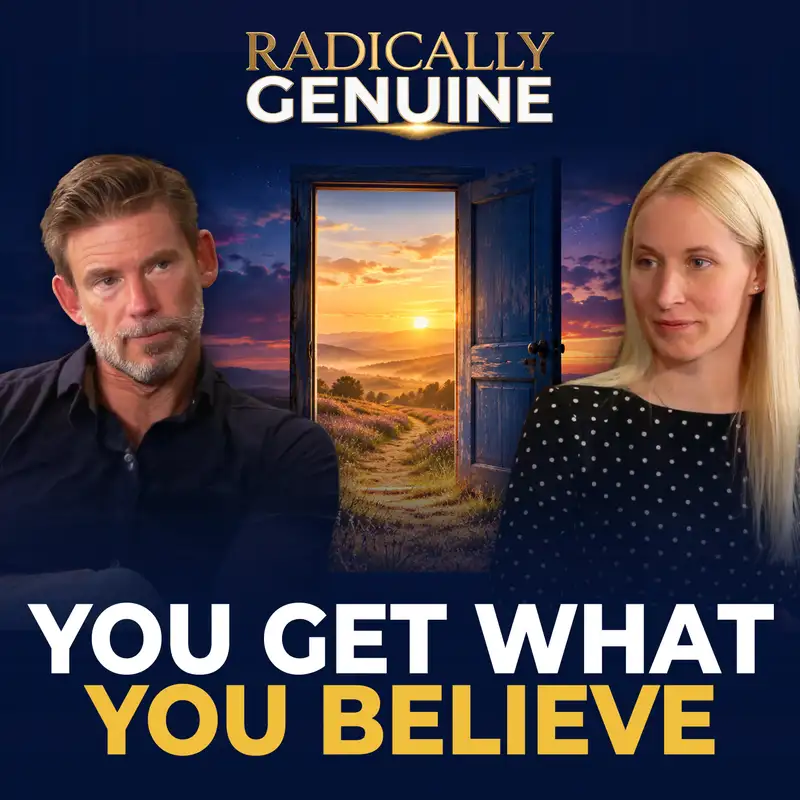
You Don't Get What You Want. You Get What You Believe (The Placebo Effect)
00:00:00:00 - 00:00:14:14
Speaker 1
Genetic determinism is a psychological operation to get you to see your health outside of you. It's a very, very powerful, powerful insert into this game of life. In order to you to think a certain way.
00:00:14:16 - 00:00:23:01
Speaker 2
If you believe it will work for you, it will. If you believe it won't, it won't. And if you believe. If you believe a supplement is harming you, it probably will.
00:00:23:05 - 00:00:31:19
Speaker 1
The world is going to be projected from the inside out and return to you in exactly the way you believe it.
00:00:31:20 - 00:00:43:01
Speaker 2
I think a lot of people actually don't know what they believe. They believe they believe something other than what they truly believe. So they would tell you they believe one thing, but what their actions indicate, they're buying insurance against that.
00:00:43:02 - 00:01:04:21
Speaker 1
We're going to look at it in terms of energy and the creation internally of our own reality coming back to us. What you believe is what you will receive.
00:01:04:23 - 00:01:24:05
Speaker 3
Today is going to be a little bit of a paradigm shift for people. But I want to state this clearly and boldly. I think this is a podcast episode, and the knowledge we're going to share has the potential to completely shift your life.
00:01:24:07 - 00:01:49:17
Speaker 3
Be altering in terms of your health, the quality of your life, and the nature of your existence. And I know that sounds hyperbolic up front, but I'm promising you it is not. Well, mix in some science to provide you an idea of what we're starting to measure.
00:01:49:19 - 00:01:52:06
Speaker 3
And we could probably talk for hours on this. I mean.
00:01:52:09 - 00:01:53:20
Speaker 2
Yeah, we could.
00:01:53:22 - 00:02:20:12
Speaker 3
I mean, we could talk for days. And part of our mission is being able to communicate this information. And within our inner circle, we deep dive a little bit further, but we realize not everyone's ready for it. So we take it in small steps. Kind of a gentle awakening. And for today's topic, we're going to challenge your notion and your understanding of what reality is.
00:02:20:13 - 00:03:01:18
Speaker 3
I think we understand ourselves to be these separate personalities, the entities that come into this world. We live a life that is mainly material in life as a series of events, many of which are kind of outside our control. Sometimes we're just governed by circumstances. Luck. I'm going to make the argument today, Tracy, that it's none of those things, and we have a much more influence over our reality, our physical well-being, our relationships, and what our life becomes than anyone recognizes.
00:03:01:20 - 00:03:15:11
Speaker 3
And in the nature of this existence, there is a concerted effort to have you not realize the nature of this game and how you can be a creator being.
00:03:15:12 - 00:03:26:12
Speaker 2
And the reason we say it's could be life changing is it has changed both of our lives already.
00:03:26:13 - 00:03:51:00
Speaker 3
I'm going to go a step further. I believe people have this knowledge that walk the earth and use it for all different types of purposes. Some good, some people, on behalf of the light. Some positively. Others. I, I, I think it's very kind of hidden and suppressed information and knowledge. So let's just get right to it.
00:03:51:02 - 00:04:19:14
Speaker 3
What we're going to talk about today is the power of what you believe. I'm going to state it plainly. I believe, Tracy, you believe as well that we are creators of our reality? Yes. And I don't mean this metaphorically. I mean literally that what is created inside of you can manifest itself into the physical reality that we are.
00:04:19:16 - 00:04:40:16
Speaker 3
We are here. Our souls have embodied this experience, and part of our awakening is to realize this power, this ability I don't even want to call it in terms of power. It's just the nature of things. When we're in amnesia and we're kind of disconnected and we see everything being separate. There's no way that we could be this could be understood to be this reality.
00:04:40:20 - 00:04:42:17
Speaker 2
So many people still creating that reality.
00:04:42:18 - 00:05:00:12
Speaker 3
And you are still creating this reality. I think people can see this. They see the word manifestation. And it's got a lot of pop psychology, new age stuff that, I think in turns a lot of people off and they think it's nonsense. What I think we have to start off with is how is it, how is it sold to us?
00:05:00:12 - 00:05:25:09
Speaker 3
And then what do we believe it truly is? How have we experienced it? And then I want to go through a series of studies today that demonstrate how this paradigm shift should at least automatically change healthcare. At least it automatically should awaken you to your own power to heal. And I think, by extension, influence others.
00:05:25:11 - 00:06:03:18
Speaker 2
Yeah. So I'm thinking, I don't remember the first time I heard the term manifestation, but it was definitely in terms of, like Instagram vision boards, you know, get the car you want, get the, the, the life you want by, by picturing it and, you know, believing you're going to have it. It seemed to me a little ridiculous and shallow and.
00:06:03:20 - 00:06:06:00
Speaker 2
Laughable, honestly.
00:06:06:02 - 00:06:08:00
Speaker 3
It's like an extension of consumer culture in.
00:06:08:00 - 00:06:22:19
Speaker 2
Some way. Yeah, exactly. It seemed like. It seemed like it was some kind of, get rich quick scheme type idea. And so I, I scoffed and moved on.
00:06:22:21 - 00:06:26:06
Speaker 2
And I don't think that's a coincidence.
00:06:26:08 - 00:06:28:12
Speaker 3
What do you mean by that?
00:06:28:14 - 00:06:51:17
Speaker 2
Well, one of the best ways to inoculate someone against something is to give them a lesser version of it that they recognize, develop a, an immune response to, and then the next time it comes along in a stronger form, you're like, oh, I already know about this, you know? And our immune system works that way. I believe our psychological immune systems do too.
00:06:51:19 - 00:07:19:02
Speaker 2
And so for many people, if you're shown this and told this is what manifestation is this, it's this consumer culture, you know, stick pictures of your dream car around your house and, and keep thinking about it and it will come into your life. You'll, you you may well scoff at it. And then when, if if you ever get to hear about the true version of it, you're much more likely to dismiss it.
00:07:19:02 - 00:07:21:18
Speaker 2
Because I already know about this and it's ridiculous.
00:07:21:20 - 00:07:31:00
Speaker 3
Well, I also think it's it's such a, distorted version of truth that those who attempted it's not going to bring back any results.
00:07:31:02 - 00:07:59:06
Speaker 2
Even if you don't scoff at it, even if you attempt attempt the, you know, stick the, you know, stick the picture of the car on your phone and on your fridge and keep thinking about it. And then you don't have the car three months later like, well, this didn't work. Yeah. And so if, if I knew this was how it actually worked and, I didn't want the general public to figure that out, I would want the fake version out there to convince people that it wasn't real.
00:07:59:08 - 00:08:24:08
Speaker 3
Yeah. I think one of the major best selling books that influenced a culture was The Secret. And I have to, like, extend this conversation a bit, because I don't think you get back in your life what you desire. I think you return into your life what you truly believe. And I don't fully believe that every event in our life is created from within.
00:08:24:10 - 00:08:47:03
Speaker 3
As I mentioned in my book, and I think we've talked about on our Inner Circle episodes, is that we do believe we contract into this experience for some specific challenges and events, and those things are predestined, but they're predestined for our, our growth. So I don't want to be absolutist in this and say, well, you know, two year olds or three year olds are creating their own existence.
00:08:47:03 - 00:08:48:17
Speaker 3
I think it's a little bit more complicated than that.
00:08:48:18 - 00:09:12:16
Speaker 2
I would agree, and I also think, you know, another way to look at it is one did we did create those things, but we chose them before we came here. And they were we created them before we entered amnesia and we created them for learning. But yes, I would never want a scenario where, you know, people people believe that as a small child, something they were doing led to horrific things happening to.
00:09:12:16 - 00:09:36:15
Speaker 3
Them or situations. You know, there's some very challenging experiences being a human being. There's the loss of children. There's pretty severe diseases. There's, you know, violence and so forth. And, it it's, it it's difficult for people to come to the conclusion that they somehow desired that or they created that themselves, but from a greater soul perspective, from an understanding that you're an eternal being.
00:09:36:17 - 00:10:00:16
Speaker 3
There are reasons why we would contract for challenges ahead of time. Yeah. But but other than some major events, I do think that much of our life is determined by how we respond to our existence, to things that are happening around us. But let's define some terms up front. The collective consciousness. Okay. How do you understand that.
00:10:00:16 - 00:10:03:08
Speaker 3
Because that's a major player here.
00:10:03:10 - 00:10:18:12
Speaker 2
So I believe consciousness is is primary consciousness is the actual bedrock of all that exists and that we are individually, we are focal points of that consciousness who forget that we are part of a greater field of consciousness.
00:10:18:13 - 00:10:22:12
Speaker 3
Okay. So you're going to have you're going to have to break that down and people won't know what that means.
00:10:22:13 - 00:10:33:19
Speaker 2
So I believe that that consciousness when I say consciousness is primary, what I mean is that the building block of everything that exists is consciousness. Consciousness isn't.
00:10:33:22 - 00:10:34:22
Speaker 3
What is consciousness?
00:10:34:23 - 00:11:00:13
Speaker 2
Consciousness is is an awareness, a literally a conscious awareness. And that it is an energy that knows that it is. That's the best way I can put it. Okay. So that is what somebody would say. That would be God. Some people would call that source. Some people would call that, creator. Something would call that energy, but that it is aware and that everything is made from that.
00:11:00:16 - 00:11:20:04
Speaker 3
Well, another way to to look at consciousness and how it's, it's studied, you know, in psychology is it is your understanding and awareness of what is in existence. So people are in various stages of, of consciousness, right? So like we've consciously aligned to the idea that this is a table.
00:11:20:06 - 00:11:23:22
Speaker 2
We've assigned the word table to it. We accept that it's solid.
00:11:24:02 - 00:11:34:14
Speaker 3
And it's truth right. But it's much more than that. You know, it's it's waves. This was a substance before it was created into this table.
00:11:34:17 - 00:11:54:19
Speaker 2
Right? This table is made of iron at one point. This iron was likely liquid in a volcano. Before that it was made. And it was. It occurred through supernovas and the creation of stars. This wood was at one point sunlight and water and photosynthesis. Right? It is it it is and has been all these things. But we see it in this form.
00:11:54:19 - 00:11:58:01
Speaker 2
We experience it as solid and inert, and we call it table.
00:11:58:03 - 00:12:27:05
Speaker 3
Yeah. So, you know, consciousness when we say it is it's what you believe, what you see, what you understand, everything is that's your experience. That's your consciousness. Now everything derives from that. So what we would mean by that is what you believe, what you see, what you understand. To be real, to be true is like that's a very important law here.
00:12:27:07 - 00:12:30:06
Speaker 3
What you believe is.
00:12:30:08 - 00:12:41:13
Speaker 2
And you consciously decide to evaluate what you believe and choose it. The overarching beliefs around you tend to set that.
00:12:41:16 - 00:12:43:13
Speaker 3
Yes. So you are influenced.
00:12:43:13 - 00:12:58:23
Speaker 2
To a collective field of of belief. So the beliefs your parents had, you probably took on unconsciously. Yes. And are living living them out as a pattern that is automatic for you that you have never even fully probably considered.
00:12:59:00 - 00:13:21:22
Speaker 3
Okay, so let me give you, you know, examples of this. What we accept as true is so that means what we align to, whether it's true or not, is. So what is true would be always true. Okay. But what I'm going to try to make the case for today is what you believe is true, is your truth becomes that.
00:13:22:00 - 00:13:24:17
Speaker 2
Or it plays out that way in your life.
00:13:24:18 - 00:13:51:19
Speaker 3
Okay, great. So a great example of this would be, let's say you believe that my health is determined by genetics. And let's say you had an ancestor who had cancer and, you had a some form of lineage that makes you susceptible to some disease. It would be your belief in that that would make that true. Now, I want to say that again.
00:13:51:21 - 00:14:00:21
Speaker 2
Yeah. This is radical for for most people, I'm guessing there are many people hearing this who have never even had genetic determinism questioned at all.
00:14:00:23 - 00:14:31:07
Speaker 3
Genetic determinism is a psychological operation to get you to see your health outside of you. It's a it's a very, very powerful, powerful, insert into this game of life in order to you to think a certain way. It serves industries. It's not scientifically grounded. It is to see your health outside of you. And it is a root cause of suffering and disease.
00:14:31:09 - 00:14:57:08
Speaker 3
Remember, what you believe to be true will be true. Let me start off with some of Allie crumbs work, which is the Stanford Mind and Body lab. Okay, we'll start easy. Okay. If you don't believe these things happen, if you don't believe that your your internal understanding of the world and what you align to doesn't create a physical reality, I'm telling you, you are behind, okay?
00:14:57:12 - 00:15:09:18
Speaker 3
That's why you listen to radically genuine. Because you don't want to be behind. You want to be a creator of your own life. You don't want your life to be determined by institutions or, people in some form of authority.
00:15:09:19 - 00:15:16:15
Speaker 2
You know, that's saying that if if you if you do not tell the world who you are, the world will tell you.
00:15:16:17 - 00:15:17:16
Speaker 3
No doubt.
00:15:17:18 - 00:15:29:20
Speaker 2
And this is a great example of that, where you consider these things and decide them for yourselves, they will be decided for you in your own mind and your consciousness, and come true for you based on what other people believe.
00:15:29:21 - 00:16:01:22
Speaker 3
Okay, let's start with the Hotel Housekeeper study of 2007. All right, here's the design 84 female room attendance and seven hotels. Half of them were told with a 15 minute presentation that their daily work already met the Surgeon General's exercise guidelines. Okay, now that's another belief system that's implemented. You do what an authority tells you, right? And then the other half weren't told this at all.
00:16:02:02 - 00:16:04:02
Speaker 2
They were told nothing. They were just a control group.
00:16:04:03 - 00:16:04:22
Speaker 3
Yeah, yeah.
00:16:05:00 - 00:16:05:11
Speaker 2
Okay.
00:16:05:14 - 00:16:40:02
Speaker 3
So the result, which is only after four weeks, the informed group who believed that their work was providing them the exercise for health, had measurable, statistically different biomarkers. Okay. They lost 2 pounds on average. Okay. So if you you take this and you kind of extend it out, right? You know, 2 pounds, you know, every couple months leads to pretty significant weight loss.
00:16:40:04 - 00:16:49:19
Speaker 3
But this is the average. Right. So there's people who lost more, which is fascinating. They lowered their blood pressure by almost 10%.
00:16:49:21 - 00:16:51:01
Speaker 2
That's significant.
00:16:51:03 - 00:17:26:01
Speaker 3
Very significant. In scientific circles. They improved, decrease in body fat, improved BMI scores and weight to hip ratio. And they reported there was no other extra exercise done. Remember they were told that this work was enough. And this tells us, I mean, this is the story. We're going to walk you slowly down this. But just believing something can change your body composition.
00:17:26:02 - 00:17:30:01
Speaker 3
Trust me on this. Now you and I have had this discussion about supplements.
00:17:30:06 - 00:17:54:12
Speaker 2
Oh, we definitely have. Yeah. If you if you believe it will work for you, it will. If you believe it won't, it won't. And if you believe. If you believe a supplement is harming you, it probably will. Now I'm going to I'm going to tell. I tell a story that I hope you don't mind. So you and I had been drinking carbonated water at dinner for quite a while, right?
00:17:54:13 - 00:17:55:13
Speaker 3
Yeah, yeah.
00:17:55:15 - 00:17:59:06
Speaker 2
Enjoying it. And then you read something. Do you remember this?
00:17:59:11 - 00:18:00:04
Speaker 3
Oh, yeah.
00:18:00:10 - 00:18:17:06
Speaker 2
You read something and you were like, you know, it interferes with your digestion. If you drink carbonated water, I'm going to stop drinking it with meals. And I was like, well, I'm very skeptical, I like it. I'm not going to believe that. I think I'm going to keep right on drinking it and I'm going to enjoy it. And then we had a it was one we had one of the guests over for the, for the podcast.
00:18:17:06 - 00:18:34:14
Speaker 2
And you had carbonated water at dinner. Because we had just gotten like one of those new, like soda streams that had a glass carafe. So we didn't have to have plastic involved because we do buy into the plastic is bad for you, believe. And afterwards you were like, I, I feel sick. I think it was from drinking the carbonated water.
00:18:34:14 - 00:18:45:13
Speaker 2
And I'm like, well, I don't. Did you ever feel sick when you, when you had, when you had carbonated water, when you before and you were like, no, like, darn it. Why did I do this to myself?
00:18:45:14 - 00:18:48:19
Speaker 3
The damn X account.
00:18:48:21 - 00:18:59:15
Speaker 2
But it was such a it was just, you know, we you and I watched this play out in our lives. Yeah. When we change our belief about a thing, it changes how it affects us.
00:18:59:21 - 00:19:05:05
Speaker 3
Well, they said that by drinking carbonated water, it's going to affect digestion. And it affected my digestion.
00:19:05:06 - 00:19:11:12
Speaker 2
And I was like, yeah, I don't think that's how that works. I refuse to believe that's how it works. I enjoy it too much with my dinner and my digestion hasn't changed.
00:19:11:13 - 00:19:15:02
Speaker 3
Nope. And I just kind of completely went away from it. I will just drink Stillwater.
00:19:15:02 - 00:19:18:22
Speaker 2
Now I'm sitting there with my sparkling water. Like, this is really good.
00:19:18:23 - 00:19:25:21
Speaker 3
Okay. Yeah. So there's some science to support. This is more of Ali Crump's work at Stanford. This is the milkshake.
00:19:25:23 - 00:19:26:17
Speaker 2
Oh. This is.
00:19:26:17 - 00:19:32:07
Speaker 3
A good one. Yeah, very early on. Radically genuine. My brother Sean brought this in.
00:19:32:09 - 00:19:33:10
Speaker 2
Oh, Sean found this one.
00:19:33:11 - 00:19:53:14
Speaker 3
Yeah, yeah, yeah, he brought this in because we had a very early podcast. But this stuff is too important because we have to extend even beyond what we talked about in that episode. So if you're not familiar with this milkshake study, 46 per participants at Yale drank the same.
00:19:53:16 - 00:20:24:12
Speaker 3
380 calories shake in two occasions a week apart. Okay. So you have two groups. Same shake. One week it was labeled a 620 calorie indulgence drink decadence you deserve. There was whipped cream sirup on the label. Okay. And then the other week it was a 100. This is what they told you. It was a 140 calorie semi shake.
00:20:24:12 - 00:20:50:12
Speaker 3
So is this guilt free satisfaction? So like, you know, almost like you can have this, but, you know, it's good for your diet. Like, it's a low calorie type thing. Okay. But the whole time it was the same shake. So they were drawing blood at baseline. They were drawing it after reading the label. They were drawing your blood, you know, after you drank it.
00:20:50:13 - 00:20:54:01
Speaker 3
Here's the interesting result. So do you know about the hunger hormone ghrelin.
00:20:54:03 - 00:20:57:13
Speaker 2
Yes. Okay. That one goes up when you're tired and when you're hungry.
00:20:57:15 - 00:20:58:18
Speaker 3
Yeah.
00:20:58:20 - 00:21:05:16
Speaker 2
Which is why you get like if you're really tired you can do fridge rating. Don't ask me how I know.
00:21:05:17 - 00:21:38:02
Speaker 3
So so the result here growling which is the hunger hormone drops steeply after they were told it was an indulgent drink. So when they told you this was like way too many calories and you were going to be stuffed afterwards, you were like, now, when the second time around, when they gave the same shake and they said it was only 140 calories, they measured the same hunger hormone and you just became you.
00:21:38:03 - 00:21:39:09
Speaker 3
You were still hungry.
00:21:39:11 - 00:21:41:17
Speaker 2
Did they measure, glucose to do you know.
00:21:41:20 - 00:21:42:22
Speaker 3
Not that I'm aware of.
00:21:43:00 - 00:21:45:22
Speaker 2
Because that would have been really interesting to see if the glucose spikes.
00:21:45:23 - 00:21:46:10
Speaker 3
Yeah.
00:21:46:12 - 00:22:02:11
Speaker 2
You know, if you, you know, if you, if you told me something had, you know, because I don't believe sugar is really good for you. So if I knew I was drinking something that contained, like, chocolate sirup and, you know, sweetened whipped cream, I would bet you my sugar would spike, because I would believe that was in there.
00:22:02:12 - 00:22:42:17
Speaker 3
Yeah. So this is, like, fascinating, like how much we can be influenced by what we believe. And so my thing here is, is why don't we take control over this? Why don't we choose fully our beliefs and use it to our advantage? So let me all my years as being a psychologist, there was so much emphasis on what a person believed, because I saw what a person believes manifest itself into action.
00:22:42:20 - 00:22:59:23
Speaker 3
So on a basic level, okay, forget about, it impact in the physical body. What would happen if you believed that you didn't really deserve, you know, the best of love relationships in your life?
00:23:00:01 - 00:23:23:23
Speaker 2
Oh, man, that's not a that's not a good one. The outcome of that is awful. And I've seen this as well. If you don't believe you deserve it or you you believe you're incapable of having it, what you get back is exactly that. And you can call it a self-fulfilling prophecy. Many would. But what you see is.
00:23:24:01 - 00:23:41:18
Speaker 2
Because the person believes they will lose it even if they find, you know, sometimes they're not even motivated to look for it so they don't get it. But if they do get it, then they experience suspicion that they're, you know, that they may lose it. So they become they they may become more jealous. They may become more clingy.
00:23:41:20 - 00:23:44:19
Speaker 2
They may become.
00:23:44:21 - 00:24:06:11
Speaker 2
More, possessive toward their significant other in a way that causes their significant other to one out. And then they go see, it's true. And they don't even realize that what they're what they're doing is their belief is influencing their actions, and their actions are bringing the belief right back to them as confirmation.
00:24:06:12 - 00:24:45:03
Speaker 3
So I'll go, you know, step further. And you mentioned this self-fulfilling prophecy. There is something called heuristics heuristics or mental shortcuts. And there's also biases okay. So that's what we attend to at the expense of something else. So you are going to focus on and only see what confirms your belief. That's a confirmatory bias right. So if you believe you're unlovable, if you believe you don't deserve a certain type of man or woman in your life, and you can apply that to all areas job, but you can apply it to friendships, right?
00:24:45:05 - 00:25:10:21
Speaker 3
Then you end up almost like disregarding, you know, the people out there. Your attention isn't going to fixate on somebody who stands out because on a very subconscious level, you do not believe that you deserve such things, so you're more likely to stay in relationships that are harmful and then attend to the evidence that confirms your beliefs. So that means simply when somebody treats you poorly, you're going to be more attracted to that.
00:25:10:23 - 00:25:22:02
Speaker 3
You're going to attend to that. So the world is going to be projected from the inside out and return to you in exactly the way you believe it.
00:25:22:05 - 00:25:37:17
Speaker 2
And often people aren't, you know, that binary black and white to treat the person poorly, treat the person good, but within the relationship, what will stand out? What will be remembered? What will?
00:25:37:19 - 00:25:46:03
Speaker 2
Make itself into the story the person tells them? Self will be the details of the relationship that confirm that reality.
00:25:46:04 - 00:25:46:19
Speaker 3
Right?
00:25:46:21 - 00:26:09:08
Speaker 2
So, and I think most of us, if we are truly self honest, we will be able to see this in most relationships in our life. People are complex. They can give us a million data points and we can look through any color of glass. We want rose colored glass or dark colored glass, whatever we want. And we will see things through that filter from that relationship.
00:26:09:08 - 00:26:23:12
Speaker 2
And so even if that person does land up in a relationship with someone who isn't only treating them poorly, what will stand out for them because it matches the story they're telling themselves, are the things that confirm it.
00:26:23:12 - 00:26:47:10
Speaker 3
So let's give a universal law in this game. And all right. First of all, why am I calling it a game? Okay, there's a lot out there about, you know, simulation theory and life as a simulation. I don't ascribe to that in the way I think, you know, maybe some mathematicians or scientists. Scientists do.
00:26:47:14 - 00:26:49:04
Speaker 2
Or technologists.
00:26:49:06 - 00:26:59:11
Speaker 3
I, I view it, I view it a bit differently. But I want to check in with you first. Is there any way that we can refer to this as a simulation or a game?
00:26:59:12 - 00:27:34:04
Speaker 2
I would say yes. And I know that's uncomfortable for some people. And I know it was funny when we first met and I would refer to this as some form of simulation, like you hated it. And we ended up, you know, reaching what that word means to you makes it makes a difference. I don't see this as a simulation necessarily, in the sense that, you know, we are computer generated or anything like that, but I see it as a simulation in the sense that it is a reality simulated by all of our combined beliefs and by our souls choice to come into this, to learn.
00:27:34:09 - 00:27:57:00
Speaker 2
And what I would say it can be called a game, is that I believe this is a a learning environment the soul comes to in order to grow and develop and make, you know, come back to you over and over and over again. And that using the video game analogy, at least for the younger generation, can help people understand what is meant by that.
00:27:57:02 - 00:28:02:14
Speaker 2
So it does not mean we are in a video game. But the analogy can hold in many ways.
00:28:02:16 - 00:28:05:18
Speaker 3
Yeah, so I want to provide a cheat code for the game.
00:28:05:20 - 00:28:06:01
Speaker 2
I love.
00:28:06:02 - 00:28:28:01
Speaker 3
Cheat codes. Yeah, this is a universal law or rule in the game. It's been provided to all of us, but most people do not believe it strongly enough that they experience it, and they do not see it as something that could be just powerful in changing their life. And it's what I give, I receive.
00:28:28:03 - 00:28:32:12
Speaker 2
Oh, that is one of the most powerful of all the cheat codes you can have in this game.
00:28:32:14 - 00:28:59:02
Speaker 3
That is biblical. I think Jesus was telling us that, you know, this is a consciousness. This is a consciousness experience. And you are not separate from your brothers and sisters. And what you give you, you shall receive. And this is something that I want people to understand on a deep level. And Tracy was referring to it. With attentional biases, when what you focus on, you know, grows.
00:28:59:03 - 00:29:26:01
Speaker 3
And this is true, you, you have a partner that you focus on their flaws where they annoy you or their challenges in life and work humans. So we all have them. That's what's going to grow. And you will receive that back into your life. Now, if you are to have the belief that everyone's doing the best they can and we're all fallible and we make mistakes and we grow from them, that's a powerful belief.
00:29:26:03 - 00:29:40:04
Speaker 3
Now you're going to be much more open to attending to what makes your partner special or interesting, or why you love them, and that will be what grows in your consciousness, which is now your reality.
00:29:40:05 - 00:29:55:09
Speaker 2
This is your kids, too. If you focus on, you know, on the on the things that your kids are getting wrong. I mean, every parent has probably experienced this. If you focus on the thing, your kid is getting wrong and that's all your kid hears from you, what do you think you get more of?
00:29:55:11 - 00:29:57:12
Speaker 3
Yeah, yeah.
00:29:57:16 - 00:30:12:21
Speaker 2
And when you focus on what your kid is getting right and you praise them and you love them, and that is what gets your attention. Every parent knows those get approaching your kid that way gets you two totally different reactions. And the reality is, this isn't just your kids. This is for everything in life.
00:30:12:22 - 00:30:36:12
Speaker 3
Yeah, behaviorists will look at this in terms of like reinforcement principles and operant condition conditioning. But we're going to look at it in terms of energy focus and the creation internally of our own reality coming back to us. Okay. What you believe is what you will receive.
00:30:36:13 - 00:30:52:09
Speaker 2
And one of the best beliefs. And you just the one you just mentioned, one of the, one of the easiest, you know, shortcuts in this game to a much happier life is truly believing of everybody around you that they are doing the best they can with what they currently have.
00:30:52:11 - 00:31:14:21
Speaker 3
That's so powerful, absolutely so powerful because you become much more forgiving. You become forgiving of others and you become more forgiving of yourself. Because if you see life as a, as a game, which everything is happening for you and you're attempting to grow and become a better version of who you are, then you see that as an opportunity.
00:31:15:01 - 00:31:44:20
Speaker 3
And if you're blessed enough to have a partner who views the world the same way, then it's a constant. You know, you grow within that relationship. Now, we're not saying this is easy, and this is where the collective field, collective consciousness comes into play because you are influenced by others beliefs. This is true, and we're very clear here that if you grow up in a some adverse conditions, if you have a, let's say, an abusive parent, if you're told routinely.
00:31:44:23 - 00:31:45:18
Speaker 2
That as a child.
00:31:45:19 - 00:31:51:20
Speaker 3
Over and over again, you absorb that not only energetically, but you attain a belief system about why that happened.
00:31:51:23 - 00:31:54:12
Speaker 2
And everyone can overcome those belief systems.
00:31:54:12 - 00:31:54:23
Speaker 3
No doubt.
00:31:55:00 - 00:32:04:01
Speaker 2
But there's no question that some of these are easier for someone who grew up with extremely loving parents in a functional home than it would be for someone who didn't.
00:32:04:03 - 00:32:18:19
Speaker 3
Yeah, this is why genetic determinism is such a horrible and horrific lie, because it's designed to influence the collective field and you absorb it. I see this in, like breast cancer research. Unfortunately, there's the specific gene. You might know the name of it.
00:32:18:22 - 00:32:24:18
Speaker 2
This is a although it's empty, the empty H4 gene is heavily associated with this. And the BRCA is as well.
00:32:24:20 - 00:32:31:08
Speaker 3
Yeah. And and I believe it has justified, you know, the butchering of women.
00:32:31:10 - 00:32:54:08
Speaker 2
It has I, I personally have friends who found out they had this gene and went and got a double mastectomy because they were told they had an 87% chance of developing cancer. And this one particular friend, you know, tried to get implants. They failed. She got horrific infections. And she's permanently, completely disfigured. And if she'd never found out she had that gene.
00:32:54:13 - 00:32:57:12
Speaker 2
How I've always wondered how different her life would have been.
00:32:57:14 - 00:33:20:00
Speaker 3
So this is when we say that, you know, the front lines of this war is for consciousness is because they're trying to influence our understanding of reality. So it's if you believe these things to be true. And and I said this in the beginning of this show, that if you believe it, it is.
00:33:20:02 - 00:33:21:12
Speaker 2
It will be for you.
00:33:21:13 - 00:33:22:08
Speaker 3
It will be for you.
00:33:22:09 - 00:33:24:08
Speaker 2
It is not universal, but for you it will be.
00:33:24:09 - 00:33:33:10
Speaker 3
Yeah. Again, we'll continue to to provide some science here. Let me go on to this next study. This is a 2019.
00:33:33:12 - 00:34:11:14
Speaker 3
This is genetic feedback and and and belief around this. So here's the design. Participants were genetically tested then randomly told they did or didn't carry a gene variant for poor exercise, endurance for low which means fullness, right. Regardless of their actual results. So here's what happened. Those who were told they had the bad exercise gene showed worse cardiovascular capacity on a treadmill.
00:34:11:16 - 00:34:22:21
Speaker 3
They were told that, they had the bad dream. Am I saying that right? You know, it's the that feeling of feeling satiated. Actually, I think it's.
00:34:22:23 - 00:34:27:05
Speaker 2
I think it's satiety, but I don't I don't know, actually, because I've always read the word and not pronounced it.
00:34:27:06 - 00:34:30:00
Speaker 3
Yeah. I think it's the first time I am pronouncing it. It's.
00:34:30:02 - 00:34:41:23
Speaker 2
I always believe when you hear someone use use a word like that and mispronounce it. All you have learned is that this is a person who thinks and reads deeply, and it's not. It should never be laughed at. But that's just my little aside.
00:34:42:04 - 00:35:16:09
Speaker 3
Yeah, here I go again. You know, showing how how poor reader, I am. So yeah. So that that bad gene, you know, showed, you know, weaker fullness hormone response after eating. So the belief about the gene outweighed the gene itself. So this is like a strong study for this. And this is what epigenetic epigenetics begins to to inform us or psych neuro immunology begins to inform us that we do have genes, right.
00:35:16:11 - 00:35:40:03
Speaker 3
I mean, these are passed down generation from generation for generation, probably for some survival mechanism, but they become activated in response to environmental conditions or internal conditions. So the internal one is is the belief of something so that when you when you align either individually or collectively, something you're manifesting itself into physical existence is the way I want you to understand it.
00:35:40:03 - 00:36:06:12
Speaker 3
So if you believe there's something broken about your genetics, you are increasing your susceptibility to that condition. And it all comes down to your degree of alignment to it. A great example to this is like contamination beliefs. I have been able to slowly move myself away from the belief I can catch anything from another person. I believe that's a lie.
00:36:06:13 - 00:36:33:06
Speaker 3
I don't believe you catch germs and that is what makes you sick. I do believe that we have been influenced for decades, centuries on germ theory that when somebody else is experiencing symptoms, that we have a fear response to it, and then we attach a belief to it, and that in itself could create the physical manifestation of it.
00:36:33:08 - 00:36:58:05
Speaker 3
Because I see disease, it's terms of being at at a disease your body no longer at ease, and if you believe something to it, you will experience those symptoms. There's tons of research on this. On on beliefs about how one catches cold determines that or belief in something like a flu vaccine. Like it's not the flu, that I would never get a flu vaccine for a million reasons, and I could be an entire episode on itself.
00:36:58:10 - 00:37:03:23
Speaker 3
But for someone who believes that's going to protect them, they do see a bump in protection.
00:37:04:02 - 00:37:27:10
Speaker 2
Yeah. I mean, and you know, what to me stood out about the study was they were not studying a gene that actually existed. It was a fake gene for which there was, you know, it was like they had the unicorn gene, right? Yeah. It truly didn't exist. And yet the results were so strong that if you believed you had the bad version of the non-existent gene, your life reflected it.
00:37:27:12 - 00:37:33:19
Speaker 3
Yes. So there's a particular supplement that I believe you take. It's called nad.
00:37:33:21 - 00:37:35:11
Speaker 2
And a, I take an n a.
00:37:35:12 - 00:37:38:04
Speaker 3
NAC. All right. What are the differences between a c and.
00:37:38:06 - 00:37:57:04
Speaker 2
And a d? I'm not I don't remember on that one. I know I had at one point in my past taking NAD+ and was associated with anti-aging. NAC is liver clearance for liver. You know, for for any toxins that are in your body. And so I believe that that NAC helps my, my liver detoxify anything in my body.
00:37:57:04 - 00:37:59:00
Speaker 2
And so it does. And so I take it.
00:37:59:01 - 00:38:30:06
Speaker 3
Yeah. So I this morning was exposed to found my fitness podcast where they had a very deep dive into NAD plus. Or resveratrol and being able to like, slow down aging. Okay. And I started doing my own deep dive research into this. And boy it's not really as strong as one would believe. Yeah but I believe this.
00:38:30:08 - 00:38:46:15
Speaker 3
I believe aging is a result of what we accept to be true. I believe it's how you're going to age is going to be a culmination of many factors.
00:38:46:19 - 00:38:50:05
Speaker 2
But it absolutely includes your belief about how people age.
00:38:50:11 - 00:38:56:13
Speaker 3
Yeah, I, I see I see birthdays.
00:38:56:15 - 00:39:09:20
Speaker 3
I see birthdays, celebration of birthdays and constant collective beliefs around what you're supposed to be at a certain age as the opponent in this game.
00:39:09:22 - 00:39:18:19
Speaker 2
So I differ from you on this. I think you can absolutely celebrate birthdays without them being a marker of now you should age.
00:39:19:01 - 00:39:35:06
Speaker 3
Well, it's a marker of a year. So once you do that and you start, you start, entering into the illusion of time and that human beings have a life expectancy. You are aligning with that belief.
00:39:35:08 - 00:39:59:14
Speaker 2
Yes and no. I still think you can. You can, Mark. Because for me, for I'm going to get strange here. So for me, time is geographic. I see I see time as a geography and I see it as, not so much. You're hitting a certain age, you're marking. I completed, I completed a circle. I've reached the end of this circle.
00:39:59:14 - 00:40:18:17
Speaker 2
I look back on the prior circle. I look forward to the next circle. Who do I want? What have I done? What have I achieved? Who have I been? Who do I desire to be? And so for me, it's very much less about you've hit an age. I'm always very surprised when I remember what my chronological age is because I don't I don't relate to it at all.
00:40:18:21 - 00:40:36:05
Speaker 2
But I see I see that date being the completion of a circle and a reason for reflection and for pausing to reflect and for feeling great love in your life. But that is what birthdays mean to me, okay?
00:40:36:07 - 00:40:37:04
Speaker 3
It means your. Yeah.
00:40:37:06 - 00:40:38:20
Speaker 2
Yeah, that's my belief of what a birthday is.
00:40:38:21 - 00:40:44:10
Speaker 3
But what do you mean? To most people, they're my anyone.
00:40:44:12 - 00:41:01:17
Speaker 2
Except my belief on birthdays. They recommend them. It makes them beautiful. And I don't look at, like I'm about to hit a, you know what would be a milestone birthday? Where people would think, you know, like, oh, you've aged. I don't look at it that way at all. I'm like, oh, this is a beautiful opportunity to be with the people I love.
00:41:01:19 - 00:41:06:07
Speaker 2
Look back on a year, say, how have I grown? How have I changed now? Who do I want to be this year?
00:41:06:08 - 00:41:07:13
Speaker 3
Yeah.
00:41:07:15 - 00:41:20:12
Speaker 2
But I recognize that's not how most people, most people looking down a big birthday number will see it as a often we'll see it as a, you know, a mark of getting closer to their grave.
00:41:20:14 - 00:41:43:21
Speaker 3
Yeah. That's not only that. There's expectations at each year on where you should be in life. So that's part of like that collective like understanding. Like if you like, you need to be married by a certain age if you want to have a child. And then there's a certain age where you can't have children. Right. All belief systems that are installed, this is true into your consciousness.
00:41:43:23 - 00:42:00:09
Speaker 2
Yeah. I mean, and I guess some of those I've just, I've forgotten to align to. I wouldn't say it's like I even chose not to so much. I just didn't. And when I, when I recognized that most people would see a birthday that way, that's awful.
00:42:00:11 - 00:42:24:18
Speaker 3
Yeah. We speed up the aging process because of what we have, what has been installed in our consciousness. We have associations of what's going to happen to your body at a specific age. They're constantly pushing susceptibility to disease. They're telling you you need to go into the doctor's office to be able to do preventative care, which means they're going to install that into your consciousness, like at age 40.
00:42:24:19 - 00:42:39:15
Speaker 3
Now you have to start getting colonoscopies and all these other nonsense, right? Listen, to some degree, at points throughout my life, I started to adhere to the same kind of fear based system. And fear is a root cause of disease.
00:42:39:16 - 00:42:49:04
Speaker 2
And it's I think it's it's it's understandable for anyone who had family members who died young of conditions that are declared to be heritable.
00:42:49:06 - 00:43:11:12
Speaker 3
Which was my situation. Right? Yeah. My father died on his 50th birthday of a heart attack. My father's grandfather died of 51 from a heart attack. And so now you you install this belief, you take out all other variables, environments, all these things, and you start installing this belief that the heart can only live for this long. Now, positive impacts on me, right?
00:43:11:12 - 00:43:38:09
Speaker 3
Because I kind of adhered to that a little bit. Well, I really put a lot of time into fitness in my life and strengthening my heart. The closer I got to 50, the more dramatic changes I made in my life. When my dad died, I might not have ever when got my doctorate, you know, because I saw life as time limited.
00:43:38:12 - 00:44:04:02
Speaker 3
Right now, I'm moving away from this because I think times and illusion. And I believe we can slow down aging through consciousness. I think everything is consciousness. So that's why when you say consciousness is primary, it is the existence of what you believe is to be true. Let me give you some more scientific data on this. This is a longevity study published in 2002, in the Journal of Personality and Social Psychology.
00:44:04:07 - 00:44:29:00
Speaker 3
The design was this 600 adults aged 50 plus from from this Ohio Longitudinal study of aging and retirement answered questions about their attitudes towards aging. So, for example, things keep getting worse as I get older, you know, how much do you believe these things to be true? And researchers match them to death records for up to 23 years.
00:44:29:02 - 00:44:50:00
Speaker 3
Here's the result. Those who had more, what we would call positive beliefs about aging. Right. And here's my positively, I'm only going to get better as I get older, or I'm going to prove that we can reverse the clock. I'm going to get stronger as I get older, which I've been able to actually demonstrate. This is truly.
00:44:50:01 - 00:44:51:14
Speaker 2
Yeah, I, I have seen it.
00:44:51:16 - 00:44:57:02
Speaker 3
And my son, who's 20 and the Division one wrestler and who's strong. Right.
00:44:57:05 - 00:44:58:16
Speaker 2
He's larger than you physically.
00:44:58:17 - 00:45:15:17
Speaker 3
Yes. Yeah. He weighs more than me. He looks physically stronger than me in his in his prime. I can pick up heavier dumbbells and bench them. You know, I, I can pick up 100 pound dumbbells and and and rep them out more than he can.
00:45:15:19 - 00:45:17:09
Speaker 2
And you couldn't when you were his age.
00:45:17:11 - 00:45:34:21
Speaker 3
No, I didn't I, I think doing 200 pounds in dumbbells is hard. I mean, it's not like a bench press. Like I played college football so I could bench press 300 pounds when I was 20. That's different than dumbbells. Dumbbells. You have to pick up 100 pounds on each, you know, and you have to balance it. And it's it's a harder exercise to do.
00:45:34:23 - 00:45:39:16
Speaker 3
Now he can do other exercises. You know more than me, of course, but that was the one that I.
00:45:39:20 - 00:45:47:08
Speaker 2
You I remember very clearly when you decided you were like, I am going to do this and I'm going to create it in consciousness. And you went and bought the dumbbells?
00:45:47:11 - 00:45:47:21
Speaker 3
I did.
00:45:47:23 - 00:46:01:22
Speaker 2
And it was only two weeks, I think, if it was even that much. And then I remember like I filmed it so you could send it to your son because you were like, look, you told him you were going to create this. And then within two weeks, you were doing more than you had when you were his age.
00:46:02:00 - 00:46:07:04
Speaker 3
We are self-limiting, folks. We are limiting our potential.
00:46:07:05 - 00:46:20:14
Speaker 2
And this is why, I mean, it's a game. You know, someone could be like, well, of all the things you could focus on in the world, why focus on being able to lift heavier weights? Because you pick that like, you decided to have fun in this game that we're living in and just try and see what would happen.
00:46:20:15 - 00:46:49:12
Speaker 3
Well, let me tell you about the study. Those people who had these positive beliefs, they lived seven in a half years longer on average. And this is after controlling for age, gender, income, loneliness, baseline level. Right. Like the will, the will to live, the desire and belief in your ability to be healthy. All these things have demonstrated. They demonstrate these physical outcomes like there's no question to this type of stuff.
00:46:49:12 - 00:47:01:08
Speaker 3
Tracy. Like you pair this with the genetic study. Like your beliefs are powerful indicators of what you're going to experience in your in your existence.
00:47:01:10 - 00:47:21:05
Speaker 2
Yeah. I mean, I think about the people I've known in my life who believed their old age was going to be awful. And people who would tell me like, oh, I'm actually looking forward to it. I'm going to get to spend time with my grandkids. I'm going to be healthy. I'm going to we're looking forward to this period of their lives.
00:47:21:07 - 00:47:28:11
Speaker 2
And I've watched this play out. I watched the people who believed that,
00:47:28:12 - 00:47:47:10
Speaker 2
You know, the elderly are of lower social value, become old themselves and experience that. Yeah. And those who believe they were going to live their older years, in love, surrounded by people they loved, having a great time. Go on and and do exactly that.
00:47:47:15 - 00:48:02:22
Speaker 3
Well, I think, you know, my father had the belief that, you know, that life is about being young. And I think he looked back at certain times in his life to be the, the peak, the pinnacle. So I think like he loved college you know, and I, I think.
00:48:02:23 - 00:48:08:12
Speaker 2
That's very, very Great Gatsby. Like that character Tom in The Great Gatsby who played college football, which I think your dad did.
00:48:08:12 - 00:48:08:19
Speaker 3
He did.
00:48:08:20 - 00:48:15:08
Speaker 2
Yeah. And who believed his life had peaked when he was playing college football and was therefore always miserable after that.
00:48:15:09 - 00:48:32:14
Speaker 3
He actually made statements to me growing up. It's like it's all downhill from there. I mean, you've heard this, right? Like you graduated from college. It's all downhill. Like all your fun is over, because now you're entering into the workforce and now you're grinding out. That's a powerful belief system. Like, I don't really I don't hear that belief at all.
00:48:32:15 - 00:48:52:06
Speaker 2
I mean, I'm entering I'm about to enter my 40s. I feel like I'm 25. I mean, we joke about this, but I think I'm 25. I'm much healthier than I was at 25 because I had that vaccine injury at 20. So my 20s were my 50s as far as I'm concerned, or maybe my 80s and my 40s or my 20s.
00:48:52:09 - 00:49:18:12
Speaker 2
Yeah, I am far healthier, far younger. I don't think I look anywhere near 40. And people like when we, when we, when we first met, like, it was funny, like you told me later, you had no idea what age I was. And I think it is because I genuinely don't associate numbers with an age I've just always, you know, surprised to find out that my calendar age isn't 25 anymore?
00:49:18:13 - 00:49:23:12
Speaker 3
Yeah, it's a it. When they say age is just a number. That's true to that. I mean, and.
00:49:23:15 - 00:49:36:05
Speaker 2
Yeah, I do look at it that way, I believe, I believe if I want to have children when I'm 50, I will. Yeah. I don't align to this idea that you just go into menopause in your early 40s or mid 40s just because you do.
00:49:36:07 - 00:50:00:20
Speaker 3
Well, I believe that too. And in fact, anyone who tries to install that belief is dangerous. So you're in all likelihood your physician who has been completely indoctrinated by that system. Anyone who starts telling you what you're going to experience when you're at certain age is installing a belief into you. Yeah, yeah. And so this is why there needs to be a paradigm shift.
00:50:01:01 - 00:50:28:14
Speaker 3
We have to realize this. So let me just expand it a little bit differently so we know this stuff to be true. Let's use cancer research. For example, if somebody is told that they have a very slim possibility of surviving, let's say, you know, only 5% of these people with this diagnosis are going to make five years. It's time to get your affairs in order.
00:50:28:16 - 00:50:51:19
Speaker 3
You are installing a belief about, you know, how long you can potentially live. Now let's take another doctor who's aware of this research. The doctor says something to the fact, like, listen, you know, you know, 5% of these of people are going to outlive these diagnoses. In fact, there's going to be a percentage of them who goes in complete remission.
00:50:52:00 - 00:51:15:01
Speaker 3
You are going to be one of those people. We're going to study everything about what makes those people healthy and how they overcome their condition. And you're going to do it as well, right? You're going to now you are going to save lives by that. But that's not what our system does. Our system creates disease and manages disease.
00:51:15:01 - 00:51:18:13
Speaker 3
They do not in any way understand how to be healthy.
00:51:18:15 - 00:51:51:01
Speaker 2
It's so true. I mean, I this you saying this, I wish more doctors understood the importance of how you communicate a diagnosis to a patient. So my mom had been diagnosed with cancer. This is October 2021. It's the morning of my sister's wedding. My mom opens an email from her oncologist, who decided it was appropriate in an email to tell her that her prognosis was extremely poor.
00:51:51:03 - 00:52:11:18
Speaker 2
She opens at the morning of my sister's wedding, and I watched what it did to her. Her stress levels went way up. She became incredibly sad. She held it together well enough that I don't think people outside the very close circle could see, you know, it's just, oh, she's emotional because it's her daughter's wedding day.
00:52:11:20 - 00:52:35:23
Speaker 2
But it could have killed her. It truly could have, because the level of of stress she went into was so high and and stress as a killer, it lowers our immune system and increases our inflammation. It has all these effects. And all of these were done by the doctor giving her this message over an email. And so I was not happy about this.
00:52:35:23 - 00:52:51:11
Speaker 2
And I told my parents, I'm joining you in a medical appointment tomorrow. I'm speaking to this doctor myself because I was so mad at what he'd done to my mom. And so I got in this appointment because she, you know, she was kind of not she was kind of in that giving up almost moment. But she she absolutely didn't give up.
00:52:51:12 - 00:53:08:02
Speaker 2
She, she fought much longer. But I asked the doctor, exactly what did you mean by this? And he said, oh, I meant that the specific test that came back on the specific cancer that you have is one associated with poor prognosis.
00:53:08:05 - 00:53:31:12
Speaker 3
This is see, this is where when you're not conscious and I mean, you're not fully aware and you're not present, and you don't actually consider the power of what you install. And another person's belief systems is you begin to make mistakes like that. Yeah. And I think it's intentional. I think it's a, it's an intention. It's done by dark forces.
00:53:31:15 - 00:53:44:21
Speaker 2
I don't I don't think it's like that. That doctor got up that morning and said, I want to make this woman's cancer worse. But I think his training did not in any way prepare him for how he should actually handle a situation like this.
00:53:44:22 - 00:54:10:05
Speaker 3
And that's what I mean by intentional. Yeah, is when all when this science is available to us, we you have a way you can treat you can train physicians. But when you train physicians in the material and through statistics. And what I think is intentional is that there are darker forces to play in this game. Right? There is a a dark and a light.
00:54:10:11 - 00:54:42:14
Speaker 3
And so I said earlier that some people use this information, for good. And there's those that use it for nefarious purposes. And so the installation of beliefs of your health outside of you is intentional. It can't be any it it is not ignorance, folks. It can't be any other way. It's powerful people making choices. We've seen this play out through Covid as a great example.
00:54:42:20 - 00:54:58:17
Speaker 3
They are trying through the use of media and through authority figures to install a belief system about your your health, the safety of other people, certain products like vaccines. Okay, Ethan, if you can scroll up, I want to go to the the cancer study.
00:54:58:18 - 00:55:05:01
Speaker 2
There was a study where wasn't there one where there was a case study where a gentleman was told something like this.
00:55:05:03 - 00:55:15:04
Speaker 3
All right. Right there. So this is the meter case, 1974. And my eyesight.
00:55:15:08 - 00:55:40:01
Speaker 2
So it's a Clifton meter. It was Nashville, 1974. And he wrote about it in his book Symptoms of Unknown Origin. So, so that the gentleman was called Sam Land, and he was a retired shoe salesman. He was diagnosed with esophageal cancer, which was at that point was considered always to be fatal. He asked meter to get him through Christmas with his wife and his family.
00:55:40:07 - 00:55:59:00
Speaker 2
So the man's goal was to live through Christmas. But he believed he would die shortly after Christmas. And he did. He died on January 2nd, so his body was autopsied. And guess what was found? There was no cancer in his esophagus. There were a few small cancerous spots on his liver and one on his lung, but nowhere near enough to kill him.
00:55:59:00 - 00:56:21:23
Speaker 2
There was nothing on his eyes. So decades later, the doctor wrote, you know, he quote, he died with cancer, but not from the cancer. I thought he had cancer. He thought he had cancer. Everyone around him thought he had cancer. Did I remove hope in some way? So in this case, the doctor's diagnosis killed him?
00:56:22:01 - 00:56:22:10
Speaker 3
Yeah.
00:56:22:12 - 00:56:23:05
Speaker 2
Cancer did not.
00:56:23:06 - 00:56:48:20
Speaker 3
I would say it's the the belief. It is what this gentleman believed about his his health and his life was what killed him. The body played out exactly. The physical manifestation played out exactly to what he believes. So there's, there's more on belief systems here. So if you can again, scroll up, Ethan, a little bit here. Here's the case, a man, and I'm going to have you read this.
00:56:48:20 - 00:56:49:06
Speaker 3
Tracy.
00:56:49:07 - 00:57:05:09
Speaker 2
Yeah, this is another one that I think you and I had talked about this maybe a year ago, and it's always stuck with me. This is a man. He had advanced lymphoid sarcoma. The tumors were the size of oranges. And he. He had begged for an experimental drug that he had heard would help, would help with this condition.
00:57:05:09 - 00:57:28:10
Speaker 2
Called after his first injection with the drug, the tumor shrank dramatically. He believed the drug would work. He had asked for the drug. He got the drug. The tumor shrank. So newspapers then reported that this drug did not work. The gentleman read this, and the physician told him a double strength virgin had arrived and injected plain water into him.
00:57:28:12 - 00:57:49:00
Speaker 2
The tumors receded again. So when he when he heard that it did not work, he got worse. The doctor used the placebo effect to help him, tells him if these are. If you know I'm giving you a double strength, the double strength does work. It was actually water. The tumors shrink. However, then newspapers reported that the drug did not work at all.
00:57:49:02 - 00:57:49:12
Speaker 2
And at.
00:57:49:12 - 00:57:50:15
Speaker 3
That moment.
00:57:50:17 - 00:58:03:07
Speaker 2
He saw it. He read it and he was devastated. At that point, he relapsed. And he died shortly afterwards after he was declared worthless. So he died actually within days of that.
00:58:03:08 - 00:58:12:07
Speaker 3
Yeah. Diagnosis has shock. Like it actually shocks the body to like the belief of what you attach to impacts physiologically.
00:58:12:08 - 00:58:33:08
Speaker 2
And again, energetic shock to the body. Yeah. And so this was this was a single 1957 case report. But it's such a powerful one because it went back and forth repeatedly. Right. He believes it then. He doesn't believe it. He believes it, then he doesn't believe it. And his disease that the progression of the disease matches his beliefs.
00:58:33:09 - 00:59:03:18
Speaker 3
Yeah. So what does this mean? What does this actually mean? And, you know, we talk a lot about propaganda and the role of propaganda, you know, parents who are who are out there and you're raising children. Be very mindful of what belief systems are being infiltrated, what you're accepting to be real, to be true. We see this within the transgender movement is how beliefs are contagious and a social contagion effect exists.
00:59:03:18 - 00:59:11:14
Speaker 3
And it feels real. It's experienced real. Remember, this goes back to if you believe it to be true, it is.
00:59:11:14 - 00:59:12:06
Speaker 2
It will be for you.
00:59:12:07 - 00:59:48:23
Speaker 3
It is. And that's people haven't always understood this. When I go on other shows and they ask me about, you know, people who write in social media and antidepressants saved my life. And I said, if they believe it, then it is. But that's not how we do science, because when we understand that the placebo groups did just as well, now you're not exposing to people to the dangerous effects of both two things, the chemical, you know, which are significant in that drug and the belief system that it's somehow outside of you for a drug.
00:59:49:01 - 01:00:03:01
Speaker 3
Let's take this a little bit further because we said we're going to be bold. Do we have the ability to create intentionally and purposefully in consciousness and then receive that back to us in our lives?
01:00:03:06 - 01:00:25:12
Speaker 2
Undoubtedly. So I would say I've experienced it in my own. So people who have heard the episode I did with did with you before we launched this, this show as co-hosts, we'll know that when I was 20, I had a severe vaccine injury and I was declared. I was told by doctors I was permanently disabled and I believed I was, and so I was.
01:00:25:14 - 01:00:43:10
Speaker 2
I was out on Social Security disability. My heart would stop. When I stood up. I was told there was no fixing, that there were drugs that could help. But this I was done, I was toast, and that's why I say my my 20s were my 80s because I felt like I was 80. Everyone else my age was going on and living, going to college, having adventures.
01:00:43:10 - 01:01:09:10
Speaker 2
And I was in bed, later, during a psychedelic journey, I made a deal with God, and I said, if you heal me, I will spend the rest of my life devoted to whatever mission you gave me. And by making this deal, it meant it was now possible for me to heal. I believed I would, I believed I would heal, and I believed I would heal so that I could go on and help others.
01:01:09:12 - 01:01:36:03
Speaker 2
And what happened? Well, I'm sitting here now. You know me. I'm pretty healthy. And I healed because I believed finally that I would. And, you know, there were there were things that helped me like, raw milk, eating a far healthier diet. And I do believe removing interference from your life does does make a difference. You know, I don't think there's anybody other than maybe some extremely advanced yogis who could drink mercury and be fine.
01:01:36:04 - 01:02:01:12
Speaker 2
Right? Right. So a lot of toxins had been injected into my body that had impacted me. And I did need to I did need to detoxify. I did need to heal. But my belief was the primary requirement for it. And I remember going back to my doctors, some very well-known doctors in the Philadelphia area who could not believe I used to roll in there in a mobility scooter because I could barely stand up.
01:02:01:12 - 01:02:12:07
Speaker 2
And I'm now walking into their office looking like I'm 15 years younger than I am, and I'm the picture of health. And they were completely stunned and wanted to know what I had done.
01:02:12:09 - 01:02:13:17
Speaker 3
Yeah.
01:02:13:19 - 01:02:23:04
Speaker 2
So I would say I can, I can say from personal experience the power of the belief that one can heal being revolutionary to one's life.
01:02:23:06 - 01:02:49:15
Speaker 3
It's a good segue to this final concept and science based work here. It's called Radical Remission. And we mentioned earlier, like if the doctor said, we're going to find out everything that leads people to overcome this condition, for it to go into quote unquote, remission, it's almost fits exactly what you just mentioned. And what we talk about in are in consciousness and understanding of belief and so forth.
01:02:49:17 - 01:03:23:23
Speaker 3
So this was over 1000 cases of what the medical system identifies as unexplained remission. We would say that it's not necessarily unexplained. We can explain it. That's been in published medical journals, but no one asked the survivors or the healers what they thought happened. So, here's the design. A year fieldwork and ten countries interviewing 50 alternative healers and 20 survivors later expanded to 200 plus survivor interviews and 15 1500 plus cases analyzed.
01:03:24:02 - 01:03:29:19
Speaker 3
So radical remission includes healing without conventional treatment.
01:03:29:21 - 01:03:31:14
Speaker 2
Or after the conventional treatment failed.
01:03:31:15 - 01:03:50:04
Speaker 3
Yes, or after it failed. So here's the result of the 75 plus possible factors. They were able to find nine that appeared in nearly every single case, radically changing diet as you did. Did that right? Taking control of your health.
01:03:50:05 - 01:03:50:14
Speaker 2
I did.
01:03:50:14 - 01:03:55:04
Speaker 3
That, which is important. You're not relying on conventional medicine in these doctors anymore.
01:03:55:05 - 01:03:56:14
Speaker 2
I stopped going to them basically.
01:03:56:16 - 01:04:00:08
Speaker 3
Now the now the rest of them following intuition.
01:04:00:10 - 01:04:01:09
Speaker 2
Definitely did that.
01:04:01:10 - 01:04:03:21
Speaker 3
Certain natural herbs supplements.
01:04:03:23 - 01:04:04:14
Speaker 2
We did that.
01:04:04:17 - 01:04:11:14
Speaker 3
Releasing suppressed emotions. This is a this is something that you're going to be able to to.
01:04:11:16 - 01:04:12:15
Speaker 2
I'll speak to that.
01:04:12:17 - 01:04:46:15
Speaker 3
Be part of our. Yeah. It's going to be part of our episodes moving forward. So, a deep dive into this type of stuff is required. Increasing positive emotions, embracing social support, deepening spiritual connection, and having strong reasons for living radical hope, added a 10th. So exercise and movement important. Okay, the right diet important. But here are a number of other factors because it's important to know only two of the nine are physical.
01:04:46:20 - 01:04:58:22
Speaker 3
The other seven are belief, emotion and meaning. Survivors shifted from aligning with the prognosis to aligning with their own path towards health.
01:04:59:00 - 01:05:32:19
Speaker 2
And all. All nine of the words were present in in my recovery. Release of suppressed emotion and focusing on positive emotion and increasing my social. The strength of my social network were huge. I had I had been at the time, a stranger from my family and quite bitter about some aspects of my childhood. And when I did the psychedelic journey that led me to make this deal, the reason I was actually doing it was to find healing and forgiveness of things that had happened in my childhood, so that they would no longer torment me.
01:05:32:21 - 01:05:52:03
Speaker 2
And so I was actually attempting that when I made the deal. And the people who knew me before that and after that will tell you, I'm a I'm a very different person. And so after a decade of my family not being in my life and, you know, my family, they're very, very important to me. They were back in my life.
01:05:52:03 - 01:05:55:09
Speaker 2
And it's no coincidence to me that my health improved at that point.
01:05:55:12 - 01:06:00:06
Speaker 3
Yeah, no coincidence at all. I believe the revolution is required.
01:06:00:08 - 01:06:07:17
Speaker 2
I believe forgiveness of self and others is one of the most powerful healing tools that exists.
01:06:07:19 - 01:06:12:03
Speaker 3
The, you know, the emotional aspect requires, you know, that's.
01:06:12:03 - 01:06:12:05
Speaker 2
An.
01:06:12:05 - 01:06:38:12
Speaker 3
Entire on itself. But a revolution is required because, we require a paradigm shift and a paradigm shift as a shift in understanding, because what is true is always true. So we have to move beyond the simplistic, reductionist material model and understand our power energetically and in consciousness. And that's this kind of introduction today to this is that you are powerful and what you are going to create.
01:06:38:12 - 01:07:02:12
Speaker 3
So you have to be very mindful of what you're lining to unconsciously and automatically. Yeah. And we're asking you to consider open yourself up to the idea that you are the placebo, that you yourself are the one who's going to influence how your body is going to respond. Now, it's not what you desire. It's not necessarily just what you think.
01:07:02:15 - 01:07:12:10
Speaker 3
It's what you believe. So if you come, if you come at this with self-doubt or you're halfway in, you're halfway out, that's exactly what you it's exactly what you're going to.
01:07:12:10 - 01:07:51:03
Speaker 2
Get back. And there's a wrinkle to this. I think a lot of people actually don't know what they believe. They believe they believe something other than what they truly believe. So they would tell you they believe one thing, but what their actions indicate, they're buying insurance against that, the thing happening. Right. And I think that one of the key pieces of this is one actually has to spend time in silence, observing what your mind is doing to know what you truly believe, and that the the keeping us busy all the time prevents us from actually knowing what scripts were were playing out inside.
01:07:51:05 - 01:08:18:10
Speaker 2
I wouldn't have told you before this that I had the level of negative self-belief. That I actually did. How did I start to find that? Well, I started going to a sensory deprivation tank and spending an hour to an hour and a half in their three days a week alone with my own consciousness, and learned a lot about myself in that, that I wanted to change.
01:08:18:12 - 01:08:29:07
Speaker 2
But before that, I was not aware in my conscious thinking mind of half the beliefs that were actually playing out in me.
01:08:29:09 - 01:08:53:12
Speaker 3
I write in detail on this in my book, which is now available, The Awakening. They cannot medicate and you can go to radically genuine.com for two things right now. One, you can purchase my book, and there'll be a, a deep dive episode on this as well, so we can get into more detail of some of the things that I think are critically important and I've observed in clinical practice.
01:08:53:14 - 01:09:01:21
Speaker 3
But what is also available for our inner circle members that we have a series which is titled.
01:09:01:23 - 01:09:22:22
Speaker 2
It is a Hidden Wisdom, Secret Knowledge, and we are putting a ton of time and effort into this series, and we will and continued series, because people who who will commit these this $35 a month, we want that to be more than worth it for you. So we're creating this series where we are going through everything we know about how this actually works.
01:09:22:22 - 01:09:35:20
Speaker 2
We've just scratched the surface here today, but in that series, we will tell you everything the two of us do to create the life we desire to experience and how it's completely transformed our lives.
01:09:35:22 - 01:09:44:15
Speaker 3
$35 may be the best investment that you can make, because if you're able to master this, you'll be able to use it in your own life to create what? Your soul.
01:09:44:21 - 01:09:45:17
Speaker 2
Whatever your desire.
01:09:45:19 - 01:10:07:11
Speaker 3
Yeah, yeah. But again, the power of belief is the foundation of this. And we're not saying it's easy to overcome the collective because you're constantly being influenced. You've been influenced your entire life, and you hold subconscious beliefs about everything in which the the world works. We're here to help you overcome that. You can also go to my new website, which is doctor McFarlane.
01:10:07:12 - 01:10:18:18
Speaker 3
Com and you can understand a little bit about the some of the services that I provide, as well as another place to purchase the book. So we'll see you next time. Thank you.