234. Afraid of Your Own Mind: What OCD Really Is and How People Actually Get Free
Dr. Roger McFillin (00:03.035)
Welcome to the Radically Genuine Podcast. I'm Dr. Roger McFillin. Imagine someone walks into a clinic, terrified by thoughts they can't turn off. They see a family physician, a nurse practitioner, psychiatrist, and they conceptualize it as a medical condition to manage with drugs, the way a diabetic manages insulin. They leave with a prescription and a story about themselves, that they're broken at the level of biology.
There's really not a whole lot they can do about it. Or even they go tell a therapist who wants to discuss the thoughts, analyze the thoughts, talk about their past, search for trauma, wave a finger in front of their eyes. This has become standard mental health care in the United States. Laughable if it was not so serious with detrimental consequences for millions. We live in a world.
Where people are throwing around psychiatric labels and self-diagnosing. We are at the point where so many people have adopted labels that we often lose sight of what some severe conditions may look like and how people should be ethically treated. One of those conditions is what we call obsessive compulsive disorder. It encompasses much more than what gets depicted in popular culture, the severe germaphobe, for example.
And it's much more than just someone who's really organized and cleanly. Today's episode is about dispelling myths and misconceptions about this condition. Although debilitating at times, it's treatable. But if you see the wrong person, you can fall deeper into hell. And this unfortunately has become the standard response. Drugs prescribed, the wrong therapy, or the right type of therapy wrongly implemented.
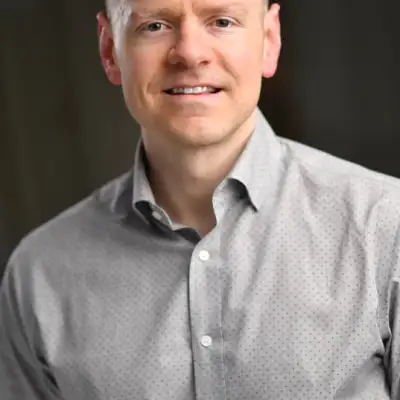
With this burgeoning therapy culture, we have more and more therapists and less and less specialists. My guest today has lived inside obsessive compulsive disorder for 10 years. Then he got out. And he spent the next decade becoming one of the foremost experts in how to treat it. William Schultz is a psychotherapist in St. Paul, Minnesota, an OCD survivor, the president of OCD Twin Cities, and the author of peer-reviewed work that helped.
Dr. Roger McFillin (02:33.383)
Shape the international competency standards for treating this disorder. In 2025, he pushed the International OCD Foundation to revise its own treatment guidelines. So today is a must-episode for anyone who has struggled with their mind, got attached to thoughts, or stuck in obsessive and compulsive patterns. And we're going to talk about what actually frees people from this. William Schultz, welcome to the Radically Genuine Podcast.
William (03:03.478)
Hey Roger. I'm so happy to be here. I'm really looking forward to jumping into this subject. And I think you and I are probably already connected that perhaps some substantial part of what we'll focus on is OCD specific. but what I what I expect is gonna happen is we will at some point broaden this out to how
When I'm working with with clients who have OCD, y yes, we will talk about some things that are related precisely to OCD, but really what we're talking about is their relationship to their internal world and how they navigate their relationship to their internal world. And as as we step into discussion of exposure and response prevention or acceptance and commitment therapy,
There are some peculiarities about the way it gets applied in in OCD, but really I see it as helping the individual learn about and transform how they're responding to their internal experiences in a different way. And unfortunately, as you alluded to in your introduction, frequently in the healing process, they're learning a way of describing their internal experience that is not only
almost certainly inaccurate, but gets in the way of their emotional integration.
Dr. Roger McFillin (04:40.817)
Yeah, totally agree. Let's start with your story though, because you got stuck in it. So you're able to speak from this experience about what it's like to suffer. Let's just talk about that, what you went through and what it felt like.
William (04:46.828)
Yeah.
William (04:53.89)
Yeah. Yeah. So I'll I'll paint a very brief context because I think it helps illuminate my story. when I when I was in high school, I ended up getting into policy debate. I was on the debate team and and and had some success and excelled and one of the things that that facilitated was
a an emphasis on that area of strength for me, abstract thinking, conceptualization. And there's a lot of great things about that. And when I got into my undergraduate degree, it naturally transitioned into being a philosophy major. So once again, emphasis on abstract thinking, argumentation.
And that was a big part of my identity was I am a rational person. I am a logical person. if I don't understand something from that perspective, well then so much the worse for that thing because it needs to get on my my rational or logical page. And unfortunately, I didn't know this at the time, but what that contributed.
was a a pattern where when I was having an internal experience that I didn't like, it was very easy for me to jump into some type of logical frame. And I was doing that for many years. But in July of 2007, I had just finished gr I had just graduated with my undergraduate degree.
Back down in Texas helping my parents move. And I grew up in Texas, was in Minnesota for my undergrad. And I was rekindling a romantic relationship with with a woman I had known in high school and was very excited about it. And I was sitting down to eat lunch one day and just feeling good and sort of out of the blue.
William (07:01.918)
I I I I didn't seem to have a precursor for this. Out of the blue I I noticed this thought, what if I have an S T D and I don't
William (07:14.478)
And it it caught me off guard because I I had been thinking about what I'm doing for the rest of the day and then going and meeting with this woman tonight for another day. And then all of a sudden this thought came and it wasn't a pleasant thought to have. And I felt some anxiety. Totally understandable because I I I wouldn't I don't want to have an STD and not know about it. And not only did I not want to have an S T D and not know about it, I I
I wanted to get to the bottom of this. and so I just tried to do a my own risk assessment. well, you know, what what what was my sexual history? Was I ever at risk? have I noticed any symptoms? And all of those indicators are like, nope, nope, nope, nope. But then I noticed new thoughts, which is, well, yeah, but you know, in undergrad they made you take that health class for some kind of requirement. And, you know, didn't they say that some of these things might be asymptomatic? And
didn't like that because that meant that even though I had noticed symptoms, maybe I'm still at risk. And so now I'm trying to run through that. And it got to a point where eventually I just said, okay, you know what? Big deal. Maybe I have an S T D, whatever. If I do, I'm just gonna go to the doctor, I'll get it treated. That'll be the end of this. And then I noticed the next set of thoughts. Well, yeah, but remember, some some can't be treated. Remember, you read that HSV can't be treated. If you have that, then then you can manage it, but you can't actually cure it, you're with it forever.
And then I had for the first time the thought, what if I have HIV and I don't know?
Because that is a that can be treated and managed, but not healed right now, at least. And that immediately rippled into another set of thoughts of, well, if if I do have HIV and I don't know about it, what's that going to mean for my romantic relationship? Would would this woman I'm interested in be willing to get into a relationship with me if I have HIV? Because that could complicate matters, for example. It can complicate pregnancy. and
William (09:22.658)
I I don't know if this is true or not, but my estimation at the time was I think that she might not be interested if that were the case. Which could be true. So it's a scary thought. And well, I wasn't hungry anymore at this point during lunch. And what was even scarier in a way was I I sat there for 30 minutes trying to logic my way through this.
And I couldn't. But what I did get to was okay, well, I need to just set this aside, because I have some stuff I need to do today, and we'll figure out what to do later. But I couldn't do that either. The the thoughts just kept presenting themselves over and over and over again. And I remember an hour later I was having a conversation with my dad where he was telling me some of the things that we were going to be moving from here to there or whatever it was.
And in the middle of that conversation, it it felt like what I understood to be my consciousness was built on a house of cards that was now just collapsing. It's the best way that I can describe it.
I'm gonna fast forward a few days, Roger, just for sake of time. eventually I did find a local clinic that I could get tested at. I made an appointment, they got me in. I go into the lobby, sit down, guy in front of me comes out of the office, I go in the office. The healthcare provider there says, Tell me what's up, I tell him what's up. He he says, Well, William, based on your
Based on what you've told me, you don't have any substantial risk factors. I don't even recommend that you do testing. And and I say to him, dude, believe me. I need I I need this test. Because I I'm gonna go crazy if I don't have this test. And he says, All right, whatever, that's fine. So he drew my blood, told me the results would be in in a few days. And it was interesting because when I walked out of the clinic,
William (11:26.986)
I I wasn't really actually anxious at all. I like, okay, I'm gonna have an answer. I'm I actually think I'm probably gonna be fine. This is all good. Well Roger, I got into my car
And I'm putting my key into the ignition. And then out of the blue, I have the thought, what if that medical provider just reused the needle when he drew my blood?
And if he reused the needle, well, this isn't this is a clinic that tests for HIV. So maybe the person who had initially had the needle used was HIV positive. That can be a risk factor. Maybe I've actually put myself at risk. And I remember sitting in my car and saying, No, no, no, no, no, because I thought that I had just gotten out of this hurricane in my mind, and now it was all coming back.
and I didn't know what I was gonna do. So I didn't know this at the time, but that was the beginning of my ten year long journey with O C D. So I there's more to the story, Roger, but let pause there and and and link up with you.
Dr. Roger McFillin (12:39.271)
Yeah, I'm I'm struck by the torturous nature of the mind and the intolerance for uncertainty. There's always a what if question. There's never finding exactly what the mind wants to make certain. So it's just an endless loop of torture.
William (12:39.704)
How it construct out different translators and development.
William (12:59.468)
Yeah, I'm tr in in that no matter how much analysis I was doing, no matter how many questions, no how no matter how many reassurances, it I could not find that one hundred percent guarantee. So, you know, in logical terms, I wanted a deductive argument that guaranteed the outcome when all I got was an inductive argument, which
might give me good likelihood. But I didn't this was my romantic future at stake. I didn't want good likelihood. I wanted an ironclad guarantee and I wasn't able to get that.
Dr. Roger McFillin (13:37.811)
The the making the meaning making that the mind does, you know, reflects back on this philosophical question around are we creators of our own reality?
William (13:54.783)
I mean, I was wondering how far we were going to get into the philosophic side because it it speaks to a lot of the concerns I have related to OCD, but let me see if this bridges into your question. one of the things that is specific to OCD treatment that that oftentimes is not discussed in the healing of other emotional distress is the nature of intrusive thoughts.
We've known for probably more than four decades that all human beings experience intrusive thoughts from time to time. But for reasons that we don't entirely understand, those with OCD are much more aware of them. And when they become aware of them, they they don't like the thoughts because sometimes those thoughts are bizarre, strange, taboo, or forbidden.
And they naturally ask, what does having this thought mean about me? And they can come to the natural conclusion, maybe having this thought means I'm actually this bad person, or this actually means this terrible thing might happen to me. That provokes distress, and then they try and do something to neutralize the thought. And so you can see that pattern in the story that I told, where I had a thought that said, maybe I have an STD and don't know about it.
I didn't like that thought and so I tried to make the thought go away. And no matter how many times I tried to make the thought go away, it just kept coming back. but am I am I connected with part of where you were headed, Roger?
Dr. Roger McFillin (15:35.4)
You are to a degree, because now we're going to talk about consciousness, right? So you you threw out the word about my consciousness. And so there's this challenge that somebody has when they're suffering like this, is their their mind or their thoughts become real. And you said everybody has intrusive thoughts. Well, for any thought to be intrusive, that would mean that they have to have some judgment around.
William (15:35.81)
Yeah.
Dr. Roger McFillin (16:04.339)
The thought, the experience. So it only becomes intrusive if if they don't like it. And they only cannot like it if there's some meaning attached to it. And so when we talk about consciousness, where do thoughts come from? Is is the next like step in this. Like because when you talk about this biomedical model or the biogenetic model, they come up with reasoning to support an intrusive thought. There's a
There's a belief, a theory behind it, and that's what guides their their treatment. You and I are are gonna dispute that clearly probably throughout today's episode, but we should actually just ask the question up front, where do thoughts come from? Where do they arise from?
William (16:48.37)
Mm-hmm. Yeah. And the the research on so called intrusive thoughts suggests something like the the largest study that I'm aware of was in twenty fourteen, completed on six continents. What they found was in ninety four percent of the people they questioned, those people reported
Thoughts that they felt were ego dystonic. They didn't like the thoughts, they didn't endorse the thoughts, they didn't enjoy having the thoughts. but they experienced the thoughts. So it could be a thought as simple as, what if someone I love is going to die? it could be, what if I do something terrible to someone? It could be, what if something terrible happens to me? And I don't
Think they provide a definitive conclusion in terms of where these thoughts come from. I think that what they suggest is that wherever it is that these thoughts come from, it's a standard part of the human experience. But then I think it links into what you were describing, which is how someone responds to that aspect of the human experience is probably going to have powerful consequences for what it's like to be them in the future.
Because if they have a thought, what if I stab my husband? And their meaning-making around the thought is, my goodness, me having that thought means that maybe I'm secretly a terrible person who wants to do this, that's gonna have consequences for their experience.
Dr. Roger McFillin (18:29.374)
Yeah, no doubt. And I'm in a whole nother world right now of postmaterial science and understanding fields of energy and being the observer of what is observed, right? So I'm deep into meditation. I'm a big meditator and I can sit for hours. And what I am in that space is consciousness observing my experience or the experience of what it is to be this human, this character of who I am. And I'm just have gotten to the
place where I can sit and just observe. And I notice that thoughts arise in my state of consciousness. And they don't always feel like something that I'm producing, like they come from this collective field. This is what has been termed the collective consciousness or a thought field, potentially energetically, a fourth dimensional thought field. But there's also times where I generate ideas and thoughts myself.
Like purposely or intentionally, like there to face a problem or think something through or to analyze something. And I've noticed that there's differences. There's differences from what arises within me, and then there's something different than what seems to almost attack me from the outside. Have you ever thought about that distinction?
William (19:50.477)
Yeah, well I so when you're meditating, you're in that observer frame and you'll you'll notice the manifestation of a thought which i it it it wasn't that you planned to summon that thought forth. It's just all of a sudden it was there. On the other hand, you know
I I heard about you from my friend Brett, and I reached out to you. And then when you were considering, hmm, should I have William on the show? I'm sure that there was some deliberateness in the thought process there. It's like, well, what would he add and what experience does he bring? Where you were much more involved in the crafting of the experience. And when I bridge that over into how I'm supporting clients with obsessive and compulsive experiences.
Part of what they experience seems much more like the all of a sudden the thought was there and I'm a witness to it. They they didn't wake up that morning and be like, you know what I would like to do? I would like to craft the thought of randomly throwing my baby out the window. This is the intention I have for the day. No, they just happen to be s holding their baby looking out the window and they then experience the thought or the image, what if I just throw my baby out?
But the deliberateness is related to how they're then responding to that thought arising. So one of the most common deliberate thoughts is, my goodness, maybe having that thought means that I'm about to do it. I know what let's do. Let's get as far away from the window as possible. Because that way I won't be able to throw the baby out the window. So in that sense, they're then generating a strategy.
for responding to the experience. So is this speaking to that distinction, Roger, between becoming aware of an experience and then responding either reactively or intentionally or in in whatever way?
Dr. Roger McFillin (21:50.697)
I think when we start talking about how it can manifest itself into a compulsive act and it can become ruminative and obsessive, I think when you discuss it from that perspective, absolutely, like it's how do we relate to that inner experience? But the greater question, if we're going to go into some depth here, is our culture. So when you have a culture that pathologizes beliefs or thoughts, like
psychiatry does, like the mental health industrial complex does, where a thought can be termed intrusive, well, then it's pathological. A thought can be termed delusional. Well then it's pathological. And now it's under the realm of the medical system to drug because it now cultivates this fear. And I have witnessed over the course of my adult life, more and more people are afraid of their inner worlds because of what we
In our culture, what our medical system and what our media has done was it it is has discussed these things in terms of being symptoms, in terms of being medical conditions. So it facilitates the exact fear of your internal experience that would create more prolonged suffering. That's why I've made the statements that our current system makes these conditions worse rather than better just by its nature of how it's conceptualized.
William (23:14.892)
Mm-hmm. Yeah, this this this tracks because what we could call intrusive thoughts, well they're thoughts and we call them intrusive typically when the thought is something that we don't like or goes against our values. So the woman standing next to the window with her baby then experiences the thought, What if I throw my baby out the window?
And then the meaning making is if she goes to a doctor and says, I just had this thought, and then the doctor says, well you had that thought because there's something wrong with your brain. And what we need to do is we need to provide you a specific treatment that's going to address the underlying pathology in the brain. That's a whole different narrative about her experience than what she's going to get if she meets with me, where
I will begin by connecting with her on wow, it makes sense that you might have felt very afraid when you experience that thought because you love your baby. And that'll be a bridge that will take into exploring her emotional responses to the thoughts down the road. But then I will let her know that although that thought is understandably alarming to her, it's a very common experience. And it doesn't mean there's anything wrong with her brain or with her psyche.
It was simply a thought that she was aware of and she then had a response to it that was largely in line with the things that she cares about. Is this tracking on your end, Roger?
Dr. Roger McFillin (24:46.14)
Absolutely. I mean, that's the highest quality of treatment from the first step perspective, right? It's you're beginning to target and work right away with that relationship or this idea that the internal experience in itself is pathological. Because once you begin to adopt that mindset, right, you begin to strengthen the fear you have with those very internal experiences. So you're relating it to a value system.
William (25:02.242)
Yes.
Dr. Roger McFillin (25:13.744)
Like it's actually the worst thing that that person could possibly want to ever do because they love their child, their baby, so much. Like it's probably their mind is creating the worst case scenarios. And that's very dark, right? It's like very dark that the mind does this, but this is a human experience. This is natural. This is normal for all of us. I I don't know if anyone ever listening here today has
gone through a life where they haven't had dark thoughts, right? Like that's just part of our experience here as humans.
William (25:47.533)
Well, and that's what the that twenty fourteen study that I had referenced earlier points to is that everyone has those sorts of thoughts that we could call dark or socially forbidden. And that's part of what it is to live a human life. And when you mentioned the beginning beginning to address the relationship to the internal world, part of what you heard me describing was helping
This woman understand why she might be having a thought like that, in this case, that it's part of the human experience. But you were alluding to what I regard as the more fundamental work, which is not just why did I have that thought, but why did I experience the emotions I experienced in relationship to the thought? So you identified that, well, the experience of fear is.
If something that I care about might be harmed, damaged, or destroyed. And in this case, her child is one of her top values. And she just had a thought that presented as a threat. And then the fear became active. Now, that doesn't mean that I believe that her child is actually a threat. Obviously, I don't. But she was just presented a story that depicted a grievous threat to her child. And so while
Some medical professionals might say, you just had a pathological emotional response that needs to be treated with, for example, medication. I'm framing it in the way that says, your psyche just experienced a very scary story that told you that one of your top values might be an imminent harm. And it didn't know if that was true or not.
It just knew that it doesn't want that to happen. That was your emotional response. And as a result, your fear became active. And the function of fear is to motivate protective action.
William (27:53.133)
And that's exactly what you did. You stepped away from the window. And that's not pathological. It's entirely understandable if you believed there was a threat. A realistic threat. And so I'll turn it back over to you in one second, Roger. We I begin the work with my clients by providing them some psychoeducation on the nature of experiencing.
Unwanted or distressful thoughts. But it very quickly needs to transfer into the client understanding the structure and the function of the basic emotions. Because the many of the basic emotions, sadness, fear, and anxiety, guilt, anger, shame, they don't feel good.
And a very natural response to an emotion that doesn't feel good is to try and get away from it. And what could be more understandable? The the challenge is that if someone starts thinking of their painful emotions as a so-called negative emotion.
Well, now they're building up this meaning around what it means for them to have an emotional experience. And what happens frequently in in OCE treatment is, I'm I'm having this anxiety that shouldn't be there. yes, that's because I have this disorder, or that's because I have this brain dysfunction, and I need to eliminate or treat this anxiety. When what I'm doing in the healing process is.
Mm n I'm not saying that you being afraid that y you're gonna throw your baby out the window means that it's likely you're going to throw your baby out the window.
William (29:54.233)
But I vehemently disagree with the idea that you shouldn't be feeling the anxiety.
Because the anxiety is not just about whether or not you're realistically at risk. It's about much more than that. And here's one example that illustrates that process. Roger, imagine you and I go to a movie theater and we stand outside of a theater that was showing a scary movie, and we do an informal poll of the people as they exit, say, Hey, did the movie scare ya?
And they say, yeah, that was a really scary movie. And you and I say, Well, you foolish person, didn't you realize it was just a movie when you were watching it? And they're gonna look at us and be like, Well, yeah, I kind of knew it was a movie in the back of mine. Well, if you knew it was a movie, how could you possibly be afraid? When you weren't in any realistic danger? Well, because the psyche responds with fear based on what's being presented to it.
in addition to other more abstract considerations that may be pulled in or may not. so tell me how this is sounding on your end.
Dr. Roger McFillin (31:09.206)
Yeah, I want to go over a term for the audience here because we're we're talking about somebody who has a thought and then gets scared of the thought. And the degree of believability or attachment to that thought is this term called thought action fusion. So a lot of people that I've worked with, I'm sure you do as well, is they believe if they have a thought, it's it's close to real. Like the situation could occur and there's something wrong with them actually. And
William (31:09.645)
No, we don't.
Dr. Roger McFillin (31:37.805)
When they interface with the medical system, they often like talk about their thoughts as if they're real. And in the worst situations, they've been judged to be delusional or at risk. And I've seen these situations, especially when you're talking about like, I'm afraid I'm gonna hurt my my baby, or I'm th I'm afraid I'm gonna hurt my child. The medical system will really determine that that person may have to be investigated by Child and Protective Services. They might be prescribed an antipsychotic.
Like this is the degree of harm that's done in our medical system. So I don't want to get on a tangent. I just want, you know, to make sure that that's clear and this is the dangers of what our system is right now. But a second thing that's important to know is that an overwhelming amount of the standard mental health therapy system and the medical system believes that you should be combining
therapy and an SSRI when somebody presents with having intrusive thoughts. And you and I are are probably have gone like really deep into this literature and thought deeply about this and most certainly don't do that at all. We should probably explain to our audience why we would vehemently disagree with prescribing a psychiatric drug for this condition, especially combining therapy and an SSRI.
William (33:01.3)
Mm-hmm. Yeah. So my approach to that, because of course I get questioned by that all the time from my clients, it's not that I'm going to tell the clients what they what they should do or should I'm not gonna tell them what to do in terms of the decision to take a medication like an SSRI, but I do wanna make sure that they have access to the information that's relevant to making that kind of decision.
And so there's at least two areas that I want to bring to their attention. The first is how does taking an SSRI impact their treatment outcomes? So this is if I, William, if I do healing with you and I take an SSRI, is that going to reduce my distress compared to just doing healing with you and not taking an SSRI?
And the second, which is related to the first, but not necessarily the same thing, is what is the etiology that provides a rationale for taking the SSRI? is this is this tracking, Roger?
Dr. Roger McFillin (34:20.951)
Keep going.
William (34:21.912)
Got it. so what I can let my clients know is that what the meta-analyses on treatment outcomes have found is that on average, when you participate in exposure and response prevention treatment for OCD and take a placebo, there's no significant difference.
Between the treatment outcomes when you were take if you were doing ERP and then combining it with an SSRI. So there's gonna be individual variation. Some may benefit more, some may benefit less, but taken as a whole, there's no difference in the outcomes. And this was one of the things that I had pushed back on.
Related to the International OCD Foundation because in 2025, when they released their treatment guidelines, what they had listed initially was that the frontline treatment for OCD was combined treatment with ERP and an SSRI. And when I saw that, I was surprised because I followed the research closely and it didn't match my understanding of the research. So I reached out to
Many colleagues, including some of the most eminent researchers on treatment outcomes, I say, Hey, what's going on here? Like, am I am I missing something that that made them say that? And their response to me was almost uniformly, no, you're not missing anything. I don't know why they said that. now it the the the best rationale I could provide as to why they might have listed that is it is true that if you add
ERP to SSRI medication, then you do get superior outcomes on average than just taking the SSRI. So adding ERP to an SSRI results in improved outcomes, but the con the opposite is not true. Adding an SSRI to ERP does not on average yield superior outcomes. Is that does that distinct?
Dr. Roger McFillin (36:28.119)
Yeah, I th I I ye yeah, but we're we're talk we're talking about really poorly designed methodology. and we've never been able to really design the the research study that's important. Would you ever recommend your clients smoke weed during ERP?
William (36:49.208)
Hard for me to imagine an instance when I would do that because what we're trying to facilitate during ERP is contact with their internal world. And to the extent that
Dr. Roger McFillin (36:59.341)
Would you ever would you ever Would you ever recommend a client take a benzodiazepine during ERP? Would you recommend a client drink alcohol to get through an exposure?
William (37:10.38)
Right. I mean i i again it would have to be a very bizarre form of a hierarchy for them to introduce an element that's blunting or restricting their contact with their internal world. When what we're trying to do during the ERP is establish contact.
Dr. Roger McFillin (37:27.265)
Yes, and and the the primary benefit of any SSRI is is what's called emotional blunting. So it turns down the dial, it blunts an emotion. Now emotion is an energy. So energies are supposed to be moved. They're supposed to be experienced and felt. And any psychological therapy, any behavior therapy would support the same kind of premise is that we're not
We're not supposed to suppress or blunt or numb an emotional state if we're looking for long-term relief. But yes, experiencing them in the short term is kind of upsetting. So it's we don't always want to measure our outcome by the degree of distress. That's not how we want to set up a any type of research study. We want to look for long-term relief. We want to look for someone to be out of the episode and forever, right? We want to see the therapies that actually.
Create the work. So all that SSRI nonsense. So we're not even talking about the adverse effects of SSRI. So adver SSRIs come with great amount of harm. But we're just saying that if an SSRI created some emotional blunting effect and then they filled out an outcome where they were often measuring distress or the degree a thought to be intrusive, you might see in the short term, and most of these studies are short term, you might see a decrease.
in scores there, that doesn't necessarily mean that person has overcome an episode or prevented them from having future episodes. See, that's the danger of this. Now we're talking about SSRIs and the significant adverse effects related to them. They're mitochondrial poisons, they have metabolic effects, they increase suicidality, they can make the situation worse. For any type of for an SSRI to ever be recommended in a condition like this, you'd have to first prove that the drug is safe.
William (38:55.651)
Yes.
Dr. Roger McFillin (39:20.783)
It's not, then you'd have to prove that the drug outperforms other non evasive therapies, non drug therapies, something that couldn't create physical mental harm. And it hasn't done that. So that's the argument, not pulling from bad research because somebody did it at a major university. That's the bullshit that exists in this entire, entire field. And you can logic your way through that, right? Like it just like makes it make sense.
William (39:29.614)
Mm-hmm.
Dr. Roger McFillin (39:50.009)
And then when we're talking about a person's response to their internal experience, right? What are we saying? Suppression of an avoidance of that internal of the emotions, like setting up your life to avoid that experience, those compulsive reactions, that's what reinforces the condition, strengthens it, and makes it worse. A person's relationship to thoughts, their relationship to emotions, their avoidance of that makes it all worse. You don't want to enter into another paradigm that does.
Well, you have a medical condition, you take this pill, it cures that medical that medical condition, and it can provide some form of blunting of that emotion that you don't like. All of that would be considered harmful, actually dangerous. So the idea that that has been part of our literature for as long as it has is why I am outspoken against the entire system. It is harmful. Doing exactly that would make a person worse.
William (40:32.877)
Mm-hmm.
Dr. Roger McFillin (40:46.958)
That doesn't mean they in the short term they wouldn't experience some relief on a symptom measure. But that short term, that's not what I want to do. I want that person to overcome this. I want long-term relief. I don't want to have that person to be in the episode anymore.
William (41:02.582)
Yeah, when I am explaining that that aspect of the the treatment planning process, if you could call it that, Roger, one of the analogies that I use, because this funnels into the second point, which is the ideology which you're speaking to. I ask my client to imagine that we're walking in a park and they step on a nail. And then I ask them if they think that it'll hurt when they step on a nail, and they all say yes.
And then I ask them, do you think that it's helpful that it hurts? And they almost always say yes. Now I didn't say, do you enjoy stepping on it? Which is going to be a no. But why is it helpful? well, it it alerts me that I've stepped on the nail. That way I can attend to the wound. That way I might be more careful because there might be more nails in this area, so on and so forth. Okay, so this is all tracking.
But then if I ask them, well, what if what if after you step on the nail, I say to you, hey, I'm a medical provider, I know how to help you. What we're gonna do is anytime your foot starts hurting, we're gonna just give you some some morphine injected into your foot and you're gonna feel better.
No, I don't know if that's how how actually the concrete Nelson Voltz of medical treatment work, but just bear with bear with me in in imagining a world where the injection of the morphine actually would reduce the distress associated with the wound. what you were alluding to, Roger, was that well, what you're signing someone up for then is a lifetime of morphine injections with all the potential adverse events associated with those morphine injections.
And you're never properly attending to the wound itself. And when we bridge that over into OCD treatment, if you're looking at SSRIs from what Joanna Moncrieve would describe as the drug-centered model, which is this is an emotional blunting, which you may find in the short term relieving, but it's probably not addressing the underlying source of the ongoing distress.
William (43:11.886)
That's very similar to a morphine injection. Whereas what I'm doing when I support clients in the healing process is not just helping them adjust their relationship to their thoughts, but I'm also helping them adjust their relationship to their emotions. And that includes helping them realize and then connect with.
Yes, painful emotions are a part of the human experience. I don't wish that for you, but it is a part of the human experience. And the way in which you make meaning around those emotions is going to have an influence on how you experience those emotions in the future. So, for example, you experience anxiety, and then you say to yourself, I shouldn't be experiencing this right now.
Well, what you have just done is created the recipe for future anxiety. Because you are experiencing anxiety and you're telling yourself that you shouldn't be experiencing anxiety. And now that means you're experiencing something that shouldn't be there. And that's the recipe for anxiety. When instead I'm facilitating and approaching that emotion from a from a different perspective.
Dr. Roger McFillin (44:35.02)
Well, I think you're you're moving towards this idea of acceptance and all the kind of positive research that we have from a science perspective on acceptance. But then, you know, we can go on and on about this being written about for centuries. You know, that when when you go back to the Stoics or you go back to philosophers who are just relating to their experience of being a human being, we see
William (44:38.402)
Yes.
Dr. Roger McFillin (45:02.616)
We see these strategies on how to relate to the inner turmo turmoil of the mind or grief or other emotions that arise. Can you tell us, you know, what this actually means for, you know, those who are, you know, seeking out modern mental health treatment?
William (45:19.336)
Yeah, well, I I'd I'd like to e extend that robustly, Roger, because this is a this depicts part of what I'm envisioning when I'm thinking about emotional integration for my clients. the the most common presenting emotion in OCD treatment is anxiety. It's not the only one. Guilt is very prominent, disgust is very prominent, but anxiety is typically the largest.
And I want to make sure that my clients understand the the structure of anxiety is the emotion that arises if you believe that you or something you care about might be in threat. And its purpose is to motivate protective action. And anxiety is not bad. It's very important and we need it. It helps us protect things that we care about and survive. So that's that's that's good that we have it. But then I want to help the client understand that underneath the anxiety.
is almost always the prospect of sadness.
The woman who had anxiety that she might throw her baby out the window. Well, let's imagine a world where she did in fact throw her baby out the window. Well, she's probably going to experience any number of different emotions, but at the end of that story, it it's going to be heartbreaking sadness. Cause she loved her baby and now her baby's dead.
William (46:49.41)
That's a very painful emotion to come into contact with. And it's understandable that when someone comes into contact with an emotion that's that painful, that they might want to get away from it. And anxiety's job is in many respects to keep the sad story from happening. I don't want to experience the sadness of my baby's death. I know, let's step away from the window.
So all of that makes sense, but where it can go off the rails.
is if I'm working with someone who wants sadness not to be a part of the human experience. Which from a superficial level I can understand, because who wants to go through the pain of real loss?
But then I have to make sure that they understand, look, sadness is just the price we pay for loving things.
And if you're asking for a life where there's no sadness, I don't think that's realistic. And if it is possible, it seems to me that it means a life where you don't care about anything. And is that really something that you want to step into? And this is where I get to, I think, some of the acceptance that you were pointing toward, which is to really embrace the feeling of sadness involves a type of acceptance that
William (48:20.702)
Anxiety as an emotion actively pulls us away from because anxiety is trying to motivate us to take action to protect from something that might not yet have occurred. Whereas sadness is maybe this loss has actually occurred, what now?
And healing from OCD is not just about adjusting your relationship with anxiety, it's about adjusting your relationship with sadness. And as far as I can tell, that means adjusting your relationship with vulnerability and being in a world where bad things can happen and losses will occur. And what's your response to that? So final step, then I'll throw it over to you, Roger. Imagine that.
That the woman's child did die. Maybe it wasn't being thrown out the window, but some some tragic death. And she experienced sadness, which is totally understandable. But then she went to a medical provider that said, well, you know, some sadness for this is is understandable, but you're actually having too much sadness. And what we need to do now is we need to put you on something that's y that's that's going to address that pathological intensity of the grief.
And and so they put them on a blunting instrument, whether it's a SSRI or a neuroleptic or whatever it might be.
They may report less distress on a on a on a measurement instrument, right, as you were alluding to earlier. But that's not the healing. The healing is: how do I make meaning out of my life now that this heartbreaking loss has occurred? And how do I relate to my feelings of sadness about that? Is that a pathology or is that a reflection of the intensity of my love?
Dr. Roger McFillin (50:23.938)
Okay, so I'm I'm listening to you and I'm in quite disagreement with that approach.
William (50:28.674)
Hmm.
Dr. Roger McFillin (50:32.484)
Because I what happens with the person with thought action fusion is they get attached to stories. And if you're noticing, you're adding in more what ifs. So the most important thing here is you just don't solve a thinking problem with more thinking. The person's a creator being. Everyone is a creator being. We create internally, we project that out into the world. I would never engage with the story in that way.
William (51:02.062)
Mm.
Dr. Roger McFillin (51:02.586)
Because it's only a story. And I certainly wouldn't want anybody to dive deep into these low frequency emotions of sadness to create the scenario just for some experience in in a therapy session. actually I I would I would argue against doing that. and what happens is when that story is replayed in
William (51:23.704)
Great.
Dr. Roger McFillin (51:29.4)
in the medical set settings, as you as you said, and I think this is tragic, is that we create this idea that the more intense the emotion, the greater the risk, which is not actually the case at all. It's around tolerance of emotion. So what I would be doing for this person is building that allowance for as life brings it, I wouldn't create more mental stories around the loss of a child because I would care about the life that this client is living right now.
William (51:58.904)
Mm-hmm.
Dr. Roger McFillin (51:59.223)
And building the tolerance and allowance for that emotion with real world strategies and interventions. And that's where the ERP comes in. So can we can we describe what ERP is?
That story is horrific, right? That's like to to kill your own baby, or for your baby to die like that. That's a horrific story. and those things happen in life. We we understand that. but I certainly wouldn't want to be creating any idea around that in internally. There's not really a need to do that. But I would allow this person to build the skills to tolerate an internal experience without attachment to it.
And then build the capacity for full experience of all emotions. So can you describe that piece to it, that exposure and response prevention?
William (52:50.964)
Yeah. Yeah, so I think the way that I would begin framing some of the different approaches are approaching ERP from a value driven perspective versus approaching ERP from an over correction perspective. And here's what I mean by that. participating in ERP is not supposed to be we're not like just it
randomly bringing up extremely painful or torturous internal states for the sake of it. Participation in ERP, I'm framing it exactly as you described from a from a distress tolerance perspective, which is is this individual able to experience painful emotions, accept painful emotions, and validate painful emotions?
In a way that allows them to continue meaningfully engaging in their life without participating in emotional blunting processes, which is what a compulsion is. And from a from a value-driven exposure perspective, if I'm working with a woman who's afraid that she might harm her baby, then the exposure hierarchy is likely going to be encouraging her to participate in the daily tasks of providing love and care for the child.
While incrementally reducing the amount of safety behaviors that she's using. So, for example, imagine that one of the things that this mother is no longer doing for the child is bathing the child on her own because she is expecting that she'll have thoughts and feelings related to the prospect of deliberately drowning the child. And as a result, she will either have her partner
Or husband bay the child, or she will bay the child only when the partner or husband is present. When we integrate that into an exposure hierarchy, now the pacing and and the and the intermediate steps are going to widely vary based on the client. But eventually we want her to get to the point where she can be giving her child a bath. And if she experiences unwanted internal experiences during that process, she can tolerate that distress.
William (55:07.298)
While still meaningfully engaging with the task. And as she practices that more and more, what she will see for herself is that she can handle the unwanted thoughts and feelings, that she can continue meaningfully engaging with her life, even in the presence of those unwanted thoughts and feelings. And that although this isn't our top priority, it's very nice to know that over time those thoughts and feelings will go away all on their own without her participating in the safety behavior.
So that's a value-driven approach to participation in exposures, and it's my front line when I'm working with clients. Now, an overcorrection is when we are stepping into an exposure-like process that goes beyond an activity that the individual wants the freedom to participate in. So an example of this would be: imagine that I'm doing work with a client who has fear of harming their child.
And one of the ways that we participate in an exposure is we create an imaginal script where they're giving a bath to their child and they have the thought, what if I inexplicably drown my child?
And they approach that thought and the feelings related to it with a frame of reference that says this is probably related to you know my OCD diagnosis. And it's understandable that the thought is here because that's what it is to be a human, and it's understandable I'm having these feelings because it's an understandable response to those thoughts. It doesn't mean that this is a realistic threat, it's just part of the human experience. And I get that I want to leave the bathroom right away to protect my child.
But I'm not gonna do that. I'm gonna make the decision to stay here and continue giving my child a bath. Well, in the script, after we set that context, then we would describe the situation in which the woman actually does inexplicably drown their child. And the reason that we might do that sort of overcorrection is not because this is a realistic outcome, and not because we
William (57:13.524)
sadistically want to activate painful emotional energy inside of the person. It is to specifically and as comprehensively as possible target as much as we can
any part of them that is still actively suppressing thoughts. So when we go through that script, instead of well I just don't want to be around the image of holding my child underneath the water.
We deliberately bring that image to the forefront so that the individual can see, yes, this is an unpleasant thought. Of course, this is an unpleasant thought. For many reasons.
And it is just a thought.
That you have emotional responses to that kind of imagery is not an accident. It's an understandable response from the psyche, in the same way that going to a scary movie prompts understandable responses of the psyche. It doesn't mean I think the story's real. Of course I don't.
William (58:31.48)
But me telling you that is probably not going to solve your OCD. You need to experience that. And the way you experience it, it one of the ways of experiencing that is having a prolonged witnessing of what it is like to be around the thought. So tell me if this connects or clarifies in any way on your end, Roger.
Dr. Roger McFillin (58:52.772)
It does. It's actually we've come full circle from when we were talking about us generating our thoughts first thoughts coming from the outside. So I'll just share with you another approach to overcorrection. So on one end is to do exactly what you did and to create those worst case horrible scenarios, which serve multiple functions. One is you potentially expose that person to high intensity emotion. And
someone who's afraid of their own internal experience, they self-regulate that. They're able to experience it without anything dangerous occurring and can assist them in coping when they have that thought again in the in the future. and it potentially can guard against further suppression of unwanted ideas and thoughts. So that is one way to do it is to actively generate it yourself. I'm
Agnostic on whether to do that. I'm not necessarily sure if that's actually required. Another thing I like to get people to do, not just for OCD treatment, but for a high quality of life, is to be in stillness and to be in silence and to learn to be the consciousness that gets to observe the experience of being human without judgment and just allow things to come.
And what happens there is those outside attacks, thought attacks, they arise. They arise into your consciousness. Now you are the observer of them from the outside. So there's no such thing as a intrusive thought. There are just things that pop into an awareness about being human. So there's already that distance, and you allow it to arise and you allow it to naturally naturally leave. You don't entangle with it. You don't
engage with it. You don't talk back to it. You don't question it. You don't logic it. You don't do anything around that because I'm trying to get the person to be less mental, less logical. I don't want them to be in a world where they're entering back into that world in their minds. That's false. That's not real. And then to argue against something that's not even real. Right. It and I think this sets them up better.
William (01:01:17.366)
Mm.
Dr. Roger McFillin (01:01:21.17)
For the rest of their life with whatever life brings. You know, life brings discomfort, life brings these thoughts. And that's not how we choose to live. It's our actions that mean everything. It's our presence, right? Not that story, not that fear, not that intrusive thought. And we learn to be an observer of it. And what garners our actions is our values. Like we choose to act not based on what pops into our consciousness at any period of time, but we choose to act based on how we optimally want to.
Live our life.
William (01:01:52.439)
I I I wonder, Roger, if this you and I might be able to get more clear on i h how we might approach this differently. I'll I'll run through an example and then I'd like to get your your feedback on it.
When I think about practicing the skill of distress tolerance, which is one of my top priorities in facilitating healing for my clients, I break that down into four ongoing steps. So the first step is just making sure that they're breathing. because I don't want them short circuiting that breath as a way of suppressing their emotion, which is, if I can deprive the emotion of oxygen, maybe it'll become less intense. So facilitating that ongoing breathing, not to not like a progressive muscle relaxation. No, I mean
breathe until the feelings away. No, facilitating the breathing like gently blowing on a campfire, saying to the emotion, you can have as much energy as you need, you can be here. Step number two is identification. What thoughts and emotions am I experiencing and how do I know that I'm experiencing them?
So I like to guide my clients, and if they tell me I feel anxious right now, I like to know how they know they feel anxious. Where do you feel that in your body? Is it in your chest? Is it in your is it in your stomach? Is it in your head? so facilitating increased connection there. then we can transition into the acceptance, which is I'm not fighting this experience. I I don't like this experience. It might be painful or distracting, but I'm not.
I'm not fighting it. It can be here. So this is moving more into that observer stance. But what I encourage my clients to include is a fourth step, which is validation of the experience, which is not just this set of experiences can be present without me fighting or suppressing. Also, perhaps it makes sense that I'm
William (01:03:49.591)
This set of experiences right now. So let me give you the brief example, then I'd love to get your feedback. So imagine that I'm in, I have a client come in to see me, and client reports to me a substantial amount of distress because they just got a promotion, and the promotion requires them flying. They they've been able to avoid flying for a long time, but they can't get they can't actually satisfy the requirements of the job unless they're willing to fly. And they're they're very afraid of flying.
And so they come to see me because they want me to help them be less afraid of flying. And so one of the things I'll ask is, okay, well, tell me a little bit more about these fears about flying. Like I, well, I'm afraid the plane will crash. Okay. Well, I mean, that's not crazy that you would be afraid that the plane might crash. Planes do crash. It's very rare, but it can happen. and then the client says to me, but William, here's the thing. I don't get anxious at all when I drive my car.
And I know my risk of dying in a car crash is way higher than my risk of dying in a plane crash. So it doesn't make any sense that I'm anxious about flying when I'm not anxious about driving. And I don't agree with him. I agree with him that the risks of driving are higher than the risks of flying. But I don't agree with him that it doesn't make any sense that he's anxious about flying for at least three reasons.
The the first reason is he's being presented with the story that it's possible that his plane might crash, and that's true and that's a scary story. That's what happens when you get prevented with a vivid, scary story.
But the second reason is his anxiety about flying is not just about the possibility of the plane crashing. His anxiety about flying is also about what it is going to be like to be him when he's on the plane, even if the plane doesn't crash.
William (01:05:56.183)
And he has a very confident expectation for what it's going to be like to be him when he's on the plane, even if the plane doesn't crash, based on his previous experiences of being on the plane, which was it was miserable.
And if I were to ask this client, hey, what do you think it would be like to be you the next time you get on a plane? He would probably say, I expect it would be awful, William. That's why I'm here to see you, because I don't want to have to have to go through such an awful experience. It's like, well, yeah, and how do you think your body's gonna respond if you're confidently expecting to go through an extremely painful situation? Anxiously.
And so the connecting point I think I see with your approach, Roger, is what I want to facilitate with that client is when he gets on the plane, not saying to himself, I shouldn't be so anxious because I've read statistics on plane safety. Instead, I'm experiencing thoughts of the plane crashing and anxious feelings.
And I'm experiencing thoughts about what it's going to be like to be me for the entire the entire duration of this flight. And it's okay that I'm experiencing those thoughts and feelings. And I can handle those thoughts and feelings. And I do not need to fight those thoughts and feelings. And it's understandable that they're there.
because of my history with plane flight.
William (01:07:32.738)
Does does this track at all?
Dr. Roger McFillin (01:07:35.772)
I know what you're doing. I know why you're doing it. I just I wouldn't do that. So what's the best way I can describe this?
William (01:07:40.61)
Mm.
Dr. Roger McFillin (01:07:47.125)
People who are obsessive, people who think too much, get caught in their heads, and then generate all that fear and distress, really love to think. They really love to imagine. They really love to create stories. They really love to go internal. And that's what you do when you begin to facilitate those conversations. You know, well, what happened in the past and
what you expect in the future. You're entering into their world of s solving thinking problems with more thinking. And what's what they're likely to do is they're likely to go on that plane, enter into their mind, which they're most comfortable with, and enter into that dialogue that you had with them in the session. They're trying to think their way out of it and they're using that cognitive strategy.
Me, I think that's the wrong way to go. It doesn't matter what happened in the past. It's not actually even relevant. In fact, it could be harmful, right? Trying to choose something in the past and somehow relating it to the now. What happens is they lack the skills to be able to fully connect and be in their experience fully, which is why I love exposure. Exposure does that. I don't want my clients.
necessarily thinking or using cognitive strategies and exposure. And when somebody's on the plane, you know, we all I'm gonna let them know how powerful they are. They're powerful creators. And where your attention goes, all your energy will flow. And that's our free will in this game called life that we got to focus our attention in any direction we want. So you can focus it on what could go wrong.
The person who is obsessive will always come with another what if question. So that's always a dead-end strategy, right? Even if you get into this idea, like, well, it doesn't make sense because I'm able to drive the car and there's a greater likelihood that I'm gonna die in a car accident in the car than I would on the plane. Well, there's always a a what if. There are planes that go down. It's rare, but it happens. And this could be the situation. And boom, just like your situation with what if this needle was used.
Dr. Roger McFillin (01:10:13.246)
With somebody who has AIDS. You know, the mind is always going to do that. So my my work is to get people a away from the mind. And I think the center of our intelligence is actually in the heart chakra. It's in this energy center. And it's where it is the center of all intelligence. And when you can expand this and allow this and be there, energies are free to move and you never really do get stuck.
Something might invade your consciousness, but you're at a different space with it. It's not necessarily where you entangle and direct your attention towards. Now, what do people usually do on a plane? Well, you're sitting there, and depending on the length of the flight, you have options. A lot of people watch movies or a television show. They read, they get caught up in work. So, what I would be doing with them is a lot of attentional control training and not.
It doesn't just exist in your office. It exists throughout the homework that's done. You have an act of choice on where you want to focus your attention. But we live in this world of constant distraction. And so people are always distracting from uncomfortable thoughts and feelings. And you have this myriad of options. You can get a drink after work. You know, you can turn on Netflix. You can scroll on your phone.
You can't constantly watch sports, entertainment, everything can try to get your attention away from something that's uncomfortable. So eventually we have to solve the real problem, which is to face all those aspects of avoidance and even where more thoughts become avoidance, right? When we try to cognitively restructure, we're trying to avoid an energy or an experience, and we're trying to use all these strategies, which ultimately are unhelpful. You have to learn how to be.
You have to learn to allow and you have to learn to direct your attention into what is most meaningful there. So the more this guy gets caught up in any thought around what happened in the past or what could happen or tries to talk himself down, he's directing all his attention and strengthening the exact thing that we want to be able to move away from in his life.
William (01:12:29.558)
Yeah, I I wonder if the the disconnection we're having, Roger, is there's a difference between my providing the preliminary rationale for the distress tolerance and psychological flexibility skills I hope the client will put into practice when he's on the plane, and then him actually putting those skills into practice when he's on the plane. So when we are reviewing the the story.
Around his thoughts and feelings about flying on a plane. What the the the essential rationale that I'm providing is: hey, well, client, here's basically what's happening. When you get on a plane, the reason why it's always so terrible for you is you experience unwanted internal experiences and you fight them and try and suppress them. And as long as you do that.
That means the next time you get on a plane, you're going to go through the same experience. And so the adjustment that we want to make when you're on the plane is instead of fighting your internal experience, you're accepting your internal experience. And the more you practice genuine connection with your internal experience, you will see for yourself that it's going to transform what it's like for you to be on a plane. And
That's what I need them to practice when they're living their life. But the rationale that I front load that practice with is client, you're telling me that you shouldn't be having the anxiety that you're having when you get on a plane. That's the conceptual narrative you've created for yourself. I don't believe that. It it's not because I think the plane is going to crash. I don't. It's because
I don't think that your anxiety is crazy. Your anxiety is responding to a set of thoughts, images, expectations, and histories that are related to you and the things that you care about. One of the things that you care about is landing safely. Another thing that you care about is not being in pain. And neither one of those is crazy. But as as I know you know, Roger.
William (01:14:55.404)
Tons of people come into my office and they're anxious about their anxiety. And one of my primary roles is helping them see for themselves it's okay for you to experience anxiety. And it's understandable that in the past you felt anxious about your anxiety because a part of you has been telling yourself, I shouldn't be having this right now. Or
Me experiencing this means there's something wrong with me, or that my brain is broken. And instead, what I'm saying is, maybe what it means is that you're a human being who cares about things. And now you're being presented with stories or learning histories telling you that those things that you care about might be jeopardized in some way.
Dr. Roger McFillin (01:15:45.343)
Yeah. So you're you're in a situation where you're targeting someone's internal judgment of that emotion. And your your first part of education before you do anything else is is to try to facilitate a a non judgment and acceptance of it as just being part of the normal human experience if you're thinking these things. So yeah, that that absolutely makes sense. And yeah, I'd spend little time on that and a lot of time on getting anxious, right? Like
William (01:16:13.006)
Mm-hmm.
Dr. Roger McFillin (01:16:13.874)
A lot of time of like taking away the distractions, taking away the safety behaviors, and putting them in situations to fully feel and allow so they can experience it directly about what happens when you do that. Yeah. Yeah. Yeah. I'm actually very interested to know in how you overcame because we started the show off talking about your suffering in that episode that you went through.
William (01:16:28.62)
And there's the experiential learning. Yep, it it right on.
Dr. Roger McFillin (01:16:43.016)
How did you eventually overcome it?
William (01:16:44.664)
Yeah, well, I think it speaks directly to some of the conversations we've been having about meaning making and the direct experience that's involved in the healing process. so so Roger in July of 2007 it began for the next three and a half years. My primary obsessional content, if you could call it that, was a fear of contracting HIV. And it transitioned from maybe I had a risk factor in the past, maybe this guy reused the needle, to
Maybe I'm going to contract HIV because I walked by a table at a restaurant where it looked like that was water from condensation on a glass, but maybe it was actually blood and I didn't realize it. So a substantial degree of doubting my own memory and perception. And then in March of 2011, I had an abrupt shift in my primary obsessional content from a fear of contracting HIV to a fear of contracting rabies.
And this was all provoked because I was having a conversation with a friend and he told me that they were having to remove bats that were roosting at the university stadium nearby. And I Well, why do they need to remove the bats? Like what's the problem? He said, well, you know, they they poop everywhere and they're a public health risk. And I What's the public health risk? Well, bats can have rapies. And then my mind went back to remembering a week ago
Library I was at, a bat had got in. And I wasn't bothered by it at all at the time. I remember it was amusing to me to watch the animal control person try and catch the bat with a long swimming pool net, and he was unsuccessful. But then I experienced the thought maybe I was bit by the bat without realizing it. And by that time I was already doubting my own memory and perception. And that then became my primary obsessional content for the next seven years.
And it got to the point, Roger, just to give you one example of how serious the thought action fusion was manifesting for me. Anytime I went to turn on or off a light switch, whether I'm at home, whether I'm at school, whatever, well, if you pay close attention to when you turn on or off a light switch, what you'll notice is that almost always a shadow is cast from your arm onto the wall.
William (01:18:54.614)
And I would have the thought, maybe, maybe that shadow is actually a bat. And I would think to myself, well, it looks like my shadow. And then I would have the thought, but maybe it's actually a bat, and somehow I'm just mistaking it. And so one of my primary safety behaviors is anytime I would turn on or off a light switch, I would move my hand up and down a certain number of times so I could track the relationship of the shadow to my arm and verify that it's actually my shadow.
I use this illustration because I had literally become afraid of my own shadow. That's how far down the the fear had gone. Now, I I I'd actually didn't realize that what I was experiencing could be funneled into a descriptor of of OCD, which is just a collection of experiences that commonly go together un until twenty thirteen.
Dr. Roger McFillin (01:19:28.275)
Yeah.
William (01:19:49.015)
And in 2014, by that time I was in a doctoral program and I was very confident that what I was experiencing was OCD and the most research-based intervention was ERP. So I knew that if I want to overcome this set of distracting and painful internal experiences, I should probably do ERP. But I I was too afraid to do it.
And there was many reasons for that. And that went on for three years. So from twenty fourteen to twenty seventeen, I knew okay, I need to do my exposures, but I was too afraid to actually do my exposures. And that's very common.
in OCD. Lots of people who come to see me are very confident that they have a set of experiences that could be described as OCD, but the idea of not participating in their safety behaviors is terrifying to them. In part because they'll experience the what ifs you and I have already reviewed, which is, well it could happen. Yeah, probably not, but maybe. And in part because it's very unpleasant to experience emotions that intense.
And the safety behaviors are how normally blunting or managing those experiences. And one of the things that was most important to me about living through and then overcoming OCD was the internal transformative experience that in my case was required. And the story of that experience was in 2017, at the end of 2016, I I had seen any number of therapists.
none were particularly helpful. I went to another therapist and I told her what was going on and she said to me, well William, it it it sounds like you have OCD and you need to be doing ERP. I'm not an OCD therapist. And I said to the therapist, okay, look, I yes, you're right. I I think that what I have is congruent with a diagnose of OCD and I need to do ERP. I don't need your help in telling me what I have or what I'm supposed to do. I need your help in facilitating me understanding why I'm not doing it.
Dr. Roger McFillin (01:22:00.049)
Mm.
William (01:22:02.023)
And she said, okay, well, I can help you. And the next session, she says to me, Have you have you thought about any reasons that you might not want to get rid of your OCD? And I was offended when she said that. Because I was like, I mean, I look, during our first session, I told you the past 10 years, it's been hell on earth. I've been doing five to eight hours of safety behaviors every day. Of course I want to get rid of my OCD. And she said, Look, William, I'm not trying to offend you.
You told me that you're confident you have OCD, you're confident what you need to do to get over it, and you're not doing it. It's a natural question. Is there any reason you don't want to get over it?
William (01:22:45.408)
And on my end, what it facilitated was
an exploration process where there might be some secondary gain by keeping my O C D around. I'd always been a high performer. That was part of my identity. And yet I felt like I hadn't been performing as well as I should.
And as long as I'm stuck in a cycle of O C D, the story I can tell myself is the reason I'm not performing like I should is because I have this affliction. Right, which is getting in the way.
So it's it's kind of like a protective mechanism. I would be performing better if only not for my OCD. And this led me to a conversation with my therapist about the concept of being a failure.
Which is individual in terms of what it means to me to be a failure, which may vary from what it means to other people to be a failure, whatever it is that that is.
William (01:23:53.369)
But that's where the illumination process occurred to me. Because what I was able then come into contact with was that my notion of being a failure was not related to do I have a particular job or do I have a particular success metric? Those might be things that I would like, but that's not what it meant to me to be a failure. For me,
What it was to be a failure was to miss my chance in life to be brave.
William (01:24:32.396)
And we got to that identification because she asked me, okay, well, William, what would it be like if you did start having these headaches that were a sign of rabies onset? And now it's too late to get the vaccine and you're gonna die. What's it gonna be like when the doctor gives you the news? And it was so interesting for me because what came to me when she asked me that question was it was not primarily my concern that now I'm gonna die of rabies. My primary concern was, shit.
I never actually took my chance to bravely challenge my OCD-related experiences. I missed my chance to be brave.
But I then realized I have full control over that right now.
And the next week I made my committed decision. I'm not doing my safety behaviors.
And I still remember the bravest moment of my life. From the outside perspective, Roger, all you would see is me walking through a parking garage.
William (01:25:38.04)
But from the internal perspective, I'm walking to my car, I notice an object on the ground, I have my obsessional content, I become extremely anxious, and then I remind myself of my committed decision. I'm not checking this object.
Because that's me suppressing my experience. I don't want to do that anymore. And then I experienced another thought, which was, yeah, but what if this is the one time you need to check? And I still maintain my commitment. Well, that would really suck if that were the case. Probably not, but I'm still not checking it. And then I experienced another thought, which was, dude, you do realize that you've spent seven years being safe from rabies. And if you don't check now,
This might be the one time, and all of that seven years you spend is gonna be for nothing, because you're gonna die.
And I was able to say to that, if this is the mistake that kills me, it's not gonna be for nothing. I won't like it, but it's not gonna be for nothing.
I will have died bravely. And I'm probably gonna be just fine. But maybe not. And there's no answer to that question. And I'm not going to engage with it anymore. I'm just gonna let the experiences be here without suppressing and keep moving through my day.
William (01:27:11.81)
And within two months I was in remission. Because I just maintained that consistency, which is my top value is being brave. And that means not doing my safety behaviors and allowing my internal experience to exist without suppression.
Dr. Roger McFillin (01:27:32.748)
fascinating. you know, thank you for sharing the story. Congratulations on overcoming that. I'm sure this is a this is an ex one of those examples where your own experience then allows you to serve others and be able to help other people who've suffered in the same way and develop the expertise around it. And that's beautiful. And I very in in the beginning of this episode asked about are we creators of our own experience?
And you know, I think you answered the question. I mean, you just shared your internal world to us, right? And that's no one else experiences it like that. Like it's only yours in the way that it is yours. And that's what I've always loved about this field is that you get access to what they are creating. And I've learned to start asking myself, are you happy with what you're creating? And most people are not, or they wouldn't be working with me. And then we work on.
Creating a life that fits the life they want to have. And for you, you wanted to be brave. You wanted to face the fears. You wanted to overcome it. That's what's most important to you. You got to the root of that. And that facilitated your exposure and your allowance. And that was the life-changing work. The life-changing work was doing it, getting through it, and seeing your ability to get through it, and no longer allowing that internal story to prevent you from living the life you were designed to live.
Well ki what are you doing now, William? How can people find you if they w you know want to get an idea of who you are or how to work with you?
William (01:29:06.264)
Yeah. j just to connect with what you mentioned, Roger. Yeah, that was that was the meaning making that was related to my values. And that's what facilitated what you could call the the technical or scientific aspects of stepping into an exposure. It's like, yes, I'm allowing the ex it internal experience to there. But what was individual was why am I making that choice? How does that relate to my values? And my values were being brave and finding a meaning.
in being brave, even with that dangling what if question that was there. So I really appreciated your way of describing that. what I'm what I'm doing these days is I'm in private practice in St. Paul. so I'm
Work with clients primarily experiencing OC OCD, but as is often the case, there's oftentimes other sources of distress that come up during that process as well. I'm not particularly big on diagnostic language because instead what I'm focused on is tell me more about the hurt and how you're thinking about and relating to the hurt. Because my general framework is if you're getting stuck with chronically painful feelings, probably what's going on is you're participating in some form of suppression. And we want to
we want to make an adjustment to that internal experience.
Dr. Roger McFillin (01:30:24.721)
Well, thank you. I mean, this has been a a great conversation. I'm really hopeful that many people who need to listen to this, it gets in their hands and and they get to understand that there's a different way to look at what is happening that's outside this pathologizing medical model, pushing people onto drugs and
William (01:30:25.102)
That's good.
Dr. Roger McFillin (01:30:45.563)
My hope is it decreases the fear that they have with what's going on. They they know that there's a path. There's a there's a path to getting better. You have to be in front of the right people. we know that there's not enough specialists out there who know what they're doing with OCD, and that's really, really unfortunate. And my my hope is that therapists who choose to enter into this work develop the skills to be able to help the people that come into their office that are suffering.
And have that broad based skills. It's not rocket science, clearly. but so many therapists who are under trained and then attached to some theoretical orientation don't develop the capacities to help the people that they're entering the field to help. And that never made sense to me. You have a responsibility. if somebody is suffering what you deemed OCD and they can benefit from ERP.
And learning to relate to their internal experience differently, develop those skills to recognize it and implement it. I never understood that in the field. It's like a pediatrician, you know, you wouldn't see this in any other field, any medical field where someone would come in with a condition and they say, Well, I can sit with you and I can talk to you about other things, but I like, I'm just not I don't know what to do with this, right? you know, it just doesn't, it doesn't make sense. And and the therapy world is not as
complex as the medical body in that way. So I understand that you s you have to refer to a specialist in a particular field in the medical field, but you know, the if you if you take a look at the literature and statistics, what what are people suffering most with when they enter in to go to see a therapist? It's usually in some relation to thoughts and emotions, right? There's something in their internal experience that they have to get better at responding to. And it's on a spectrum in some way.
And so these are what we talked about today is applicable skills to a wide range of life suffering, of struggles that people go through.
William (01:32:44.088)
Yeah.
Yeah, that that tracks Roger. It it it reminds me of for for example, David Barlow's work on a unified protocol where what he's suggesting is, look, the
There's transdiagnostic elements to what brings people into psychotherapy. And a lot of it is because they have a very antagonistic relationship to their internal states. And a big part of what we're facilitating, regardless of whatever diagnosis you want to attach on top of it, is cultivating a new way of relating to their internal world, which means, in part, if they experience anxiety, building a a repertoire of
How to connect and engage with that emotional experience instead of saying, this shouldn't be here, I need to do something to make it go away.
Dr. Roger McFillin (01:33:38.084)
Yep, so true. Well, William Schultz, I want to thank you for a radically genuine conversation.
William (01:33:46.168)
Yeah, thanks for having me, Roger.
Creators and Guests