229. Andrew Feldman's 50 Years of Guiding Psychedelic Journey's, A Warning
Dr. McFillin (00:03.182)
Welcome to the radically genuine podcast. I'm Dr. Roger McFillin. Recently, the president of the United States signed an executive order to fast track psychedelic drugs to the FDA. He did it in the Oval Office. He was surrounded by Joe Rogan, Robert F. Kennedy Jr., FDA Commissioner Marty McCary, and a row of veterans. Within minutes, the FDA commissioner was talking about these plant medicines, which have been used across cultures for millennia as serotonin 2A agonists.
In my opinion, that was the tell. He also inexplicably discussed the environment in which they could be administered. He actually said the ICU, intensive care units. Yes, a sterile hospital setting. The same captured agency that approved 40 years of psychiatric drugs is now telling us which synthetic awakening may be safe. Same industry that gave us OxyContin.
The SSRI, catastrophe, Vioxx and COVID mandates is now positioning themselves to engineer the molecule designed to open your consciousness. And the public exhausted by chemical numbing is being prepared to walk straight into it. Listen, I believe the healing properties of these medicines. I also believe the environment and the conditions in which they are administered is fundamental. What we lose
If this gets controlled by the US government and the pharmaceutical complex is the entire reason these medicines exist in the first place. Ceremony, relationship, reverence, and a guide who's actually kind of walked through that door before. Remember natural cures can't be patented and sold. Therefore we're staring down the barrel of a loaded weapon, a synthetic version of something that is natural. And we've seen this before.
They steal the real and they give us the fake folks. My guest today has been guiding people through psychedelic journeys for over 50 years. He trained directly with Artie Lang in London. He worked with Stanislaw Groff. He practiced at Hollywood Hospital in the era when LSD was still legal medicine. He worked in Palo Alto with a number of important innovators around.
Dr. McFillin (02:30.21)
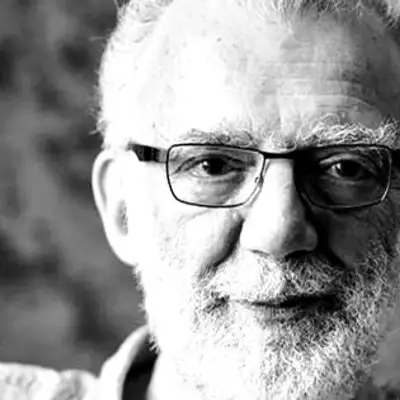
psychedelic use. took part in the first MDMA research project for PTSD in Canada through MAPS. He has mentored the next generation through the California Institute of Integral Studies. He's a Hungarian born psychotherapist who fled the 1956 revolution alone at the age of 16. And he spent a lot of his life refusing to pathologize normal human suffering. His new book, Radical Adventure,
an inquiry into psychedelic psychotherapy is a quiet act of resistance against the medicalization that is now coming for his work. If we're going to talk about psychedelics here in 2026, we need to talk someone with someone who's knew what they were before they become a venture capital endeavor. Welcome to the radically genuine podcast, Andrew Feldmier.
Andrew Feldmar (03:24.869)
Hello, thank you for inviting me.
Dr. McFillin (03:28.77)
Great to meet you. And I'm curious, before we go anywhere else, what your opinion is and what's happening in Washington right now. The president signed an executive order to fast track psychedelic drugs through the FDA. The commissioner is already talking about Ibogaine in ICU style treatment rooms and discussing these things in terms of two way serotonin agonists, approval in weeks. So after more than 50 years of doing this work, what is
it like for you to kind of observe where we are in our culture.
Andrew Feldmar (04:03.586)
first word that comes to mind is grotesque. And it would be actually very funny. I was tickled. I had to laugh. But in like the ancient Greeks, you either respond as it's comedy or it's tragedy. And it would be very funny if it wouldn't be tragic, because the problem is that when something potentially
healing is abused. It teaches people to turn away from it. People won't trust that which is trustworthy if it's abused or misused. So I think that if this continues, there will be again
It kind of...
backfiring of it will have to be shut down because it will lead to undesirable results. To use these medicines as if they were pharmaceuticals is a deep category mistake. It's like thinking that psychotherapy is a science like medicine. Already 2000 years ago,
Aristotle knew that medicine and architecture is not like ethics and politics. Because for ethics and politics, which I think primarily psychotherapy is, there is no theory and there is no method because you have to do it by the seat of your pants. It's never the same twice.
Andrew Feldmar (06:09.742)
If I am with you, the us that is developing even as we start talking is unique. There never has been an us like this before. It's totally personal. It's very unique. And so what I learned in my apprenticeship with RD Lang, if there is one thing that he
discovered that is worth not forgetting is that there is no us and there is no them there is only us and that if i am suffering i'm suffering because of the situation i am in or the relationship that i am in or the relationships i have been in nobody suffers as if it were an illness
just in me, it's always between us. Whatever is great is between us. Whatever is terrible is between us. So especially my experience with psychedelics, basically that they allow you to have an insight, they allow you to have an experience that being separate, the sensation that we are separate skin encapsulated egos,
is an illusion. It's true, but not only. are that and also, if I'm pointing to my fingers where we are separate at my fingertips, at my palm, we are one. And that oneness is every bit as much real as the separateness is.
and touching on realizing that there is only one life living us all makes enormous differences and it is introduced through the person who attends you when you are going into an altered state of consciousness. So going into an altered state of consciousness, that's easy, but it can be devastating if there is no one to hold on to, if there is no relationship.
Andrew Feldmar (08:30.94)
After the announcement in Washington, my nightmare was that they are going to assign artificial intelligence therapists, that there is no need for a human being. There is just the drug, some time, and maybe AI for...
for an attendant. And that would be, in my mind, it would open up hell, discovering that when you're moving towards finding us where we are one, you will be isolated. And that would be a vision of hell, of total isolation, being cut off from. And I'm not being religious here. It's...
A religion has the vocabulary for the phenomena that open up when you use psychedelics appropriately. A commonality. You know, the discovery, now I would talk about it, that I realize that I'm not living by my own wits. Something lives in me. I don't know how to liver my liver. I don't know how to kidney my kidney. Something lives in me. That's obvious.
And that which lives me, psychedelics help you to realize lives everything. There isn't a different something living you and me. And if actually we experience that we are branches of the same thing, why would we hurt each other? Why would we teach each other? Why would we cheat each other? Why would we exploit each other?
The present system of capitalism absolutely wouldn't make any sense. So that's why I think originally these medicines were put on a list of taboo, absolutely dangerous medicines, because those who are in power
Andrew Feldmar (10:51.142)
don't want people to open up to a state of consciousness where there is love. Where there is love, there is no power. Where there is power, there is no love. Except one can discover that power can be used in the service of love. But power without love is sheer cruelty. Love without power is sheer sentimentality. So psychedelics open up this whole
existential field. They are not medicines like an aspirin.
That's why, for example, just give you one example. In my book, I talk about that really it makes a difference if the therapist also enters an altered state of consciousness with the patient rather than like a doctor. I don't have to take an antidepressant because you are taking one. But if you are going to take a large dose of LSD,
Why shouldn't I enter into the same realm that you're entering in? Otherwise, you might get paranoid and think I'm just observing you, I'm objectifying you, I'm looking at you, which is why you are suffering perhaps in the first place, because you have always been objectified. You don't need one more person to objectify you. You want somebody to be with. So in a nutshell,
What's happening, the possibility of medicalizing these medicines is a nightmare.
Dr. McFillin (12:34.177)
Andrew, I did a psychedelic journey of psilocybin and my experience is just eerily similar to what you just described as health. was brought to a lower dimensional field or experience where I realized that my reality wasn't mine and there was no meaning attached to it. And I kind of woke up.
in a AI technological transhumanist nightmare where I was attached to a computer. And the level of distress that I experienced in that moment can only be described as hell because it was a life without meaning. Now, the journey allowed me to move beyond it because I had to surrender and
I just surrendered to that experience and asked God to walk me through this. And what I did is I was then lovingly escorted to observing that interconnectedness of all of nature and reality almost as a projection of our own inner experiences and our own inner world, which was a completely different way of understanding my own experience.
as if it was a learning module in some ways, right? So I was, what I was experiencing inside was being projected out into a field that would be returned back to me. So if I was in fear, if I was in separation or paranoia, like you said, then a world was going to be brought to me where those things were experienced. On the other end, if I saw love and an interconnection, a purpose, a meaning, then I was
broad back situations that almost presented itself like heaven on earth. And so that dichotomy was very clear. And the question I want to ask you is regarding the nature of reality. I'm interested, you know, here, I think you're probably around 80 years old. Am I accurate on that?
Andrew Feldmar (14:44.398)
I'm in my 86th year at the moment.
Dr. McFillin (14:47.184)
you're 86 year and what a life. I guess I want to explore at this point in your 86 year, the meaning that you attached to your journey, your life journey. What do you think is the purpose of our lives and what can you share with us about the nature of reality?
Andrew Feldmar (15:08.058)
On one level, absolutely nothing. One of the first conversations face to face with Leng when I arrived in England to study with him was I told him some of my psychedelic experiences. He told me some of his. And at certain point, he said, OK, so I believe you. I have no doubt that you had those experiences.
and I'm sure you have no doubt that I had the experiences I described. The real question is what does it mean? And very shortly we have arrived at being fairly certain that in this lifetime neither of us, nobody will ever know what our experience actually means. And that refers back to Plato's
parable of the cave where people locked into a cave only see shadows on the walls and if they go out where the light is it it blinds them so all we have is some kind of transformation of reality I sometimes think that you know a worm has a universe a worm has a world
in which it survives. Now, my world compared to the worm's world clearly is of a different order. But why wouldn't I imagine a creature in this sequence to whom I would be like for me, a worm is? Like there may be an expanded being in the world
Andrew Feldmar (17:06.246)
who sees far more refined details than the shadows I see. So what does psychedelic experience means? What it means to wake up or feeling like waking up? It actually happens in real dreaming that I dream that I wake up and then I'm surprised that I wake up out of waking up because even when I thought I was
awake. I was still dreaming. So there is no assurance. wrote a sonnet where he ends the sonnet five or ten minutes after your last breath. You'll know or not because there isn't even any assurance that there will be such a thing as you. There will be something but I doubt that my Andrewness is going to continue. Something might
So there is, you know, to answer your question, I don't know and I think it's impossible to know. However, again, using religious vocabulary, was born a Scottish Presbyterian and he as a child had to learn a Catholicism, so to speak, very quick questions and answers. And it went like this. Why did God put us on earth?
praise the Lord. How can we praise the Lord? By singing hallelujah. How can you sing hallelujah? By achieving beatitude, which the meaning of the word beatitude is supreme happiness. So actually, if you are not supremely happy, you are
You offend God, you offend creation. So, here are fairly conservative Christians who answer your question, why am I here? What's the purpose of my life? What am I here for? They say to achieve supreme happiness, to enjoy yourself. Like I'm thinking of Leonard Cohen singing Hallelujah.
Andrew Feldmar (19:31.226)
Like he does sing it from the heart.
And it's not like he was a happy-go-lucky man. He suffered a lot. But suffering is not antithetical to still being deeply grateful for being alive and having consciousness at all. So that rejoicing and that curiosity of what's going on and what... I thought apple trees, apple.
Clearly, the universe peoples. So I'm a fruit of the universe. What does that mean? Like that question alone, I am fascinated with and I'm not going to be bored till my last breath. And even having my last breath, I will be very curious as to what's next, if anything. So that's what I would say.
Andrew Feldmar (20:37.147)
heartache in the sacrament of every living moment. There is the Zen coin of the only thing that's for sure, that's certain is death. The time of death is uncertain. How am I to live? I contemplated that a lot because I believe it's true. Not just that my own dying, the time of death is uncertain, yours, my wife's, my children's, anyone I love, any moment, any one of us can die.
How am I to live? I mean, it's an impossible situation we've been thrown into. And yet, the only answer I could find is, OK, well, then there is only the present moment. And then I want to partake in the sacrament of every living moment so that if you die five minutes from now or I, I didn't leave anything out. I didn't just pretend to be here. I am here.
Dr. McFillin (21:36.732)
That might be the best answer I've ever heard. and I think it clearly speaks to your wisdom. So let me tap more into your wisdom over your lifetime of 85 years. think you were born during world war two and you fled your home country of Hungary. And now we're, in this culture where we've medicalized the human experience to such an extent where we have.
an astronomical amount of people taking antidepressant drugs, identifying with psychiatric illnesses and adopting the idea that if you experience emotional pain, distress, fear, anxiety, uncertainty, low periods, the dark night of the soul, that it is a medical condition to be treated by medical professionals. I want to get your sense of what you have observed over the course of your lifetime and where do you think we're going?
under those type of premises, just as a collective, as a human being.
Andrew Feldmar (22:41.125)
So Western medicine, Western psychiatry, in my opinion, is in dark ages. Like there's no other branch of medicine that's as resistant to reality as psychiatry or psychology is. There are pseudosciences and they are in the service of power.
There are a couple of novels telling stories about first World War soldiers who were shell-shocked. That was the first concern about trauma, so-called. Shell-shocked soldiers. And the thinking of a loving, decent psychiatrist when he was faced with
that as a doctor, as a psychiatrist, his job was to fix these people up and send them back into the battlefield to be killed or maimed or hurt further. And so he decided to protect these people by saying they are not fit to go back. Now, that's where he became a decent human being, not the servant of a
murderous system. what's happening is, Western psychiatry and Western psychology by and large says, if you're suffering, it's your fault and we'll fix you. Implying that you shouldn't be suffering no matter where you are, that you should somehow be resilient to your environment and we'll fix you up that you are going to be happy no matter what's going on around you. That's insane.
Dr. McFillin (24:41.179)
Mm.
Andrew Feldmar (24:41.475)
Western psychology for thousands of years said exactly the opposite. They said
Get to know yourself, accept yourself, don't try to change yourself, no self-improvement, that's violent actually.
totally accept yourself, love yourself and put all your energy into creating an environment that compensates you for who you are. Now that I can get behind. If I am unhappy, it's because of my environment. People do say they try to discourage that insight by saying, oh, you take yourself with you wherever you go. What makes you think that you'll be happier here or there?
It's you who is unhappy. That's totally in the service of an exploiting society where believing that if you're unhappy, it's your fault, you're going to serve the interests of power longer. So genuine other-centered therapy has to look at... Like, if I find a plant
or one of my favorite metaphors, I find a fish in tall grass. It's going to be a very unhappy fish. I'm not going to prescribe psychotherapy, I'm not going to give it antidepressants, I'm not going to medicate it, I'm going to pick it up and run with it to the next body of water and drop it in, and it's going to be a happy fish. Find the right environment. It's so simple.
Andrew Feldmar (26:32.869)
But human beings, I'm stunned because I don't know if you know, but actually the first person who said, guys, it's the earth that rotates around the sun, not the sun around the earth. It took over a thousand years before that was actually accepted as fact. Took us a thousand years to allow that truth to penetrate.
because the system that was in power, religion, wanted Earth to be the center, wanted us to be at the center of creation. It had no room for...
reality. So actually, I think that to medicalize existential possibilities, like I would say despair is part of being alive.
And to make out of despair depression puts millions of dollars in somebody's pocket, but it doesn't help anybody. And you get more and more isolated and you actually believe that somehow there is something wrong with you rather than
Andrew Feldmar (27:56.724)
You have to work on finding an environment that suits you. Like there was a polar bear in the Vancouver Zoo, and it was just walking up and down, totally depressed, clearly. I'm sure the veterinarian was giving it antidepressants. But what it needed was freedom and an airlift back towards the north. It didn't need
it needed a change of environment. To me, it's so simple, but we are resistant. We suffer from a hatred of reality. We suffer from a hatred of truth. Len used to call a phenomenon psychophobia. And he actually thought that most psychiatrists and psychologists go into the business because they are terrified of what the psyche
can do and they figure the best way to allay their fears is to learn how to control the psyche rather than how to surrender to the psyche and the spirit. So just like politics, it seems like the kind of person who will fight for leadership is not the kind of person we want in leadership.
The same way anybody who would go through the degradation and stultification of becoming a psychiatrist is not the kind of person we want to consult when we are suffering.
Dr. McFillin (29:43.624)
Well, Sal, let me ask you a question because there's a couple points you're making regarding the nature of reality again, as well as power, which I think is fascinating. So there's a biblical passage in Ephesians. It says, for we wrestle not against flesh and blood, but against principalities, against powers, against the rulers of the darkness of this world, against spiritual wickedness in high places. So one of the things you're referring to is the polarity that exists in this human experience that
despair in itself, it's not a disease, it is a aspect of the human experience. And so if it is, I'm also interested in to know about just kind of this nature of spirituality, about what might exist outside the limitations of the five senses. Do you approach the world with a spiritual understanding and an energetic understanding and that we are going to face
principles of darkness or aspects of darkness in the human experience. And if so, why?
Andrew Feldmar (30:48.795)
Well, no, I wouldn't qualify myself. I'm not qualified to talk about that. I have vague suspicions, but don't have to go there. I think it's a question of vocabulary. Language, we have to be careful with the language we use. If there is no us and them.
there's only us, then how do I know that I'm not going to commit acts that will interfere with other people's freedom, that will hurt other people? Because there are people who hurt other people, there are people who interfere with other people's freedom. Why don't I?
By the way, that question came up in an LSD session that Lang and I had together, where I was sitting close to him on the floor, looking at him in the eye, and suddenly I heard myself say, why don't I tear your eyes out?
And he was a bit surprised. And he said, well, do you? And I said, not really. Well, he said, if you did, why would you want to?
And very quickly we got to revenge or avenge that because he hurt me or because he hurt someone I loved. Revenge or avenge. And then he smiled at me and he said, but I didn't hurt you or your mother or anybody you love. And I heard myself say, but you are at hand. You're here. Those who did aren't here. So I'll take it out on you.
Andrew Feldmar (32:51.419)
So very quickly, this dialogue opened up, I think, a lot of the structure of why we hurt each other.
Andrew Feldmar (33:06.235)
It's always a possibility. One definition of love, by the way, that works for me is I could hurt you and I won't. Because if I said I couldn't hurt you, I'm a liar. I could hurt you. I could hurt everybody. But the decision is that I'll protect you from the worst in me rather than you have to protect yourself from the worst in me is what constitutes love.
Now, why I would want to protect you from the worst in me? I think that's a miracle. But it is a decision. love, it's not like you were born loving or not. You have to decide. Love is work. Love is a carefulness, a vigilance.
No, like I would in my work, I support and encourage everybody to not give up their freedom, to fight for their freedom all the way to the grave at any moment. Don't let anybody take away your freedom. Don't pay the loss of freedom for connection.
But it's hard work and you have to really be awake to be free but not interfere with anyone's freedom. The word for it or the expression is taking license. I want to be free but I don't want to take license. teaching children how to be in the world, it would be
like A.S. Neal did in his school, for very wayward children who nobody else could handle. That was the only rule. Everybody was free, but you weren't allowed to interfere with anyone else's freedom.
Andrew Feldmar (35:05.923)
It's a serious decision. And theologically, when God asked all the archangels, will you serve me? And all the archangels said, yes, I will. Yes, I will. And Lucifer said, I won't.
It's a never-solved theological question. Why did God allow Lucifer to continue, just send him to hell? You operate from there. So that's where duality occurred. There were religions before good and evil were separate. Abraxas was the name of a divinity that included both the devil and God, both evil and good.
So it's already a human distinction. Len used to say on some level, be glad you have experience at all. I read his last diaries before he died. And out of 24 hours near the end, he was in pain at least 20 hours. He was still grateful for the two, three or four hours.
that he could actually think and could actually enjoy being. And even having the experience of pain is a miracle because it's still an experience and we still don't know what is experience. So that's how it goes.
Dr. McFillin (36:41.445)
If you're willing, I'm interested about your early life. You fled Hungary at 16 and you were alone. I just want to get a sense of just what life was like for you, your decision to flee Hungary. And I think that opens the door for us to understand more about your career path and your life after that.
Andrew Feldmar (37:05.55)
My mother and father separated after the war, so I was born in 1940. I was three and a half, my mother was taken to Auschwitz, my father to forced labor camp, my grandmother to the ghetto, and a young Catholic woman took me in and pretended I was her child, so I was a hidden child of the Holocaust.
When my mother returned, my father returned, my grandmother returned, they all survived, but of course impacted by the inhumanity of the times. Their marriage didn't survive, so I stayed with my mother and grandmother and just visited my father. But my father, when I was 16, after the Hungarian Revolution, there was a breath of fresh air.
There was a moment of freedom from Russian oppression in 1956. We had 10, 15 days of independence and freedom. And then the Russians came in and bombed and machine gunned their way back and reinstated the oppression that existed before. That was enough for my father to put a question to me. And he said,
Do you want a Western education? And without hesitation, I said, yes. I had talk about informed consent. I write about it in my book that would you like to take LSD? Well, we make a big deal out of you have to have informed consent. It's impossible. When my father said, do you want to go out into the world on your own? Because
I'm not going to go with you. Your mother is not going to go with you. So there you are 16. Do you want to go out into the world and see what's beyond the Iron Curtain? I immediately said yes. No matter, once I was in it, I was terrified. But there was, and it wasn't informed consent. Who could have informed me? What did I say yes to? And then when later in 1967,
Andrew Feldmar (39:27.906)
My thesis supervisor in psychology said, I have some send us LSD from the experiments, legal experiments in Saskatchewan. I was in Ontario with him. He says, would you like a large dose of LSD? Because I had enough, thank you very much. It was like passing it on. I immediately said, yes, no hesitation. I didn't say.
absolutely didn't know what I was saying yes to. It's impossible to know what you say yes to. So these were magical moments why I would say yes to those things and others didn't. When I was 16, I was in love with a girl who was maybe a year older than I was. I said, come with me. Let's escape together. She wasn't up for it. She didn't say yes to it like I did.
It's a mystery to me. That's where I suspect that I'm a small part of something much larger and whatever is that larger thing is doing with me as it wishes. So that takes us to the will. And again, how will is used in psychedelic therapy or how will is used in therapy at all or between us.
I have come to the conclusion that the only proper function of the will is to will not to will, is to surrender. I never want to give in to another human being, but I hope I can always surrender to a situation which is very different. So I want to surrender to the us, but I don't want to do what you want me to do.
That's totally different. And I think in these moments where I said yes to something that I didn't know what I was saying yes to, I was moved by something, by the situation that's too complex for me to explain. By the way, more and more as I worked, I think that all explanations are stories. That's why I would call myself a phenomenologist, that it's trouble, it's...
Andrew Feldmar (41:49.423)
difficult enough to describe and depict what is the case without even trying to go to explanations of why.
Dr. McFillin (42:02.837)
You remind me of a great book by Michael Singer called The Surrender Experiment that speaks to a life of surrendering to whatever that higher force is guiding us to do. And what I've seen from clients that I've worked with and friends and family in my life is
There is often a resistance to that surrender process, a desire to control, to map out every aspect of one's life for predictability. And I see that as a source of a lot of suffering and hate. Do you agree with that?
Andrew Feldmar (42:48.206)
Absolutely. But there is a... Whenever I have looked at or read or was told about the story of God saying, kill your one and only son, sacrifice your one and only son to me, how did the guy know that it was God and not the devil? How did he know he wasn't psychotic?
How did he know that sometimes it's not so easy to know what am I surrendering to?
So rather than deal with the uncertainty, people tend to adapt some kind of system, some kind of belief, some kind of politics, some kind of religion, that temporarily, like a suitor, gives you a false sense of, know what I'm doing. The tolerance for uncertainty
I think is predictive of human creativity. The poet Coleridge, for example, called it negative capability of how long can we sustain uncertainty before we come to a conclusion. The longer we can live in uncertainty, the more surprises life can hold for us.
Because to be efficient and to be quick, you obviously have to trod the trodden path. You will do conventional things. So anything creative could only come from meandering and uncertainty. But to sustain uncertainty can be nerve wracking for people.
Andrew Feldmar (44:56.922)
So among the ancient Greeks, by the way, the skeptics were supposed to be the therapists. The dogmatics were the ones who suffered. The dogmatics were people who knew everything. They knew. They knew what's what. And the skeptics had one question, a cure-all, they thought, which was, are you sure?
That's all. Not very aggressive, just seriously. Are you sure? And by God, you know, when I am asking myself, am I sure? Mostly I'm not.
Dr. McFillin (45:36.809)
There's a book called A Course in Miracles, which is a channeled text believed to be of Jesus, Jesua, returning. it's a complex text. I don't know if you've ever read it. Have you read it?
Andrew Feldmar (45:51.96)
No, somehow, there was an instinctive avoidance of it. I don't know.
Dr. McFillin (45:58.295)
It's a difficult text to read, but there's a follow-up called A Way of Mastery, which is what I find to be an easier digestion of the same principles. And one of those principles in both those texts is that only love is real. That fear is an illusion and it is representation of the egoic mind, the survival mind, that the soul descends into this body for this human experience.
which reflects that the purpose of our lives is for unconditional love and love as an energetic force that guides our lives. And it is a opportunity to learn this in the polarity of this three-dimensional world where we do experience pain. And my sense is that in order to live a life of the soul's highest good is to
surrender to love in its entirety and not let fear interfere and get you off your soul's path.
Andrew Feldmar (47:05.294)
I think that's absolutely true. It's easy to say and hard to live it because recently, Ram Dass, Baba Ram Dass, who used to be Richard Alpert, suffered a stroke. And then he recovered enough that he made a recording about his experience when he thought he was going to die.
And he said he was disappointed in himself. He said, back to the drawing board, decades of meditating in India, all the work with psychedelics, he actually thought that when death will come, he will not be afraid. And he was afraid. He confessed that he was terrified. If I could have spoken with him.
I would have said, Tim, don't be naive. It's not about fearlessness. It's about feel the fear and not be disturbed by it. I don't expect not to be afraid when I'm going to die. Under many psychedelics, different ones, but especially LSD, at the moment of dying, it felt like dying.
There wasn't one occasion, even though I practiced dying, if I didn't feel the fear, it fizzled away because there was still the ego saying, goody, I'm going to have a death experience. And then it didn't happen. The actual death experience only happened when I got through and through scared that this is it. I overdosed, there is something wrong, I am dying.
This is not a death rebirth experience. I'm dying. So I would have said to him, the best I can hope for.
Andrew Feldmar (49:13.076)
is, and actually that is the essence of meditative practices, it's just Westerners misunderstand it, that the aim is not getting rid of all extreme emotions. A fully realized human being is not going to be without anger, it's not going to be without fear, not going to be without all sorts of negative emotions, but will be able to detach enough
to say, now there is fear. And on that level, there would be equanimity, not on the level of actual experiencing. I actually had Lang in my kitchen here in Vancouver sobbing, tears coming out of his eyes, not coming out of his nose, sobbing about the human tragedy of two boxers being trapped in a situation.
where one wouldn't lie down and the other knew that he is beating this human being beyond he's going to maim this guy or kill him. And the terribleness of their situation, Leng was very upset by. He was recalling having witnessed this. And yet he was capable of seeing and yet there is an aspect of him.
that's up on top of Mount Olympus, then says, now there is this, there is the sobbing. But his awareness of himself didn't interfere with the grief, with the terror, the horror of experiencing what is. I think Westerners misunderstand that you meditate in order to free yourself. I think even Ram Dass made that mistake. And I was surprised because I always looked up to him.
Dr. McFillin (51:16.055)
That's fascinating. Let's talk about the role of psychedelics in a culture. I have you here, in your 85th year, there may not be many people on earth who have the experience that you do with these spirit molecules and through guiding people through such journeys. What is the role of these substances? How can they play a role in
improving humanity, the human experience. Let's move away from the medicalization of it. We both agree that that's hugely problematic. What role do they play?
Andrew Feldmar (51:52.782)
Well, if my fear of you, if my desire to dominate you, if my desire to exploit you comes from
a deep belief that we are separate, that it's either you or I, that there isn't enough for both of us, that if you survive, I have to die. If I survive, you have to die. This world is too small for all of us. If I believe that, I will act in the world according to my beliefs.
If I have a deep, convincing realization, not thought, but full realization, my God, that isn't how it is. We are one. And if you hurt, I hurt. And the only way I can feel good is if somehow you also feel good, which is really the Bodhisattva idea of you can't be enlightened as long as
Not everybody is enlightened. So love is an all inclusiveness. It's a full realization that separateness is an illusion. I give you two examples. Ant hill. Looks like there are individual ants. But actually, the unit of antness is the ant hill. It looks like there are bees, but the unit of bee-ness
is the beehive. It looks like separate organisms, but really the beehive is the unit of bee-ness. Now, we could say the unit of human-ness is the family. That the family is like an amoeba with pseudopods, like mother, father, children. If one hurts, they all hurt. In the early LSD experiments in Saskatchewan,
Andrew Feldmar (54:03.201)
Duncan Blewett, who was there, told me that in a group experiment, were a dozen of them, all have taken LSD, and they all felt nauseated. They were all turned towards the wall. They didn't even face each other. They were nauseated and in pain and felt very badly. And one of them said, will somebody stand up and go and vomit, please?
And one of them stood up and went vomiting, and everybody felt better. So these are experiences of realizing that we flow in and through each other, that we are not skin-encapsulated egos. So one result of using any psychedelic
whether it's natural or synthetic or whatever, in company of those who have already realized that we are one and not separate, is to wake up to our oneness without... not either or, but to be able to see the duality to...
Ram Dass gave an example in his lectures of being stopped for speeding by a policeman, and he was driving and the policeman stopped him and started speaking to him through the car window. And Ram Dass said, on one level, he was continuing meditating, he was continuing with his mantra, and he saw himself, he saw two aspects of life talking to each other.
But at the same time, he had to behave like a guy who speeded and talking to a policeman. So it was a dual awareness. Well, psychedelics open you up to the complexity of on how many levels things are happening and not to restrict our attention to one thin level, ignoring everything else. That's one thing. But more than that, I would say.
Andrew Feldmar (56:24.779)
After every psychedelic trip, I have found myself more relaxed than I was before. And that alone, that in the company of another human being, becoming totally transparent and vulnerable.
One experience is unconditional acceptance. Like that was also one of Ram Dass's experiences when he first met his guru in India. He couldn't even speak the same language. The old man was under an old blanket and they sat down facing each other about six feet apart. And the old man was just looking at him and Ram Dass found himself sobbing because he had the experience of this man loved him and knew him.
Like totally accepted. There wasn't any, can't love you because you did this and that and I hate you for what you did and I don't like you. There was unconditional love and knowing.
Andrew Feldmar (57:33.506)
So if that can happen, by the way, one of the questions that often comes up when one does psychedelic therapy is my patient looks me in the eyes and says, do you really love me? And it's a crucial question because if I was doing that out of business to make money, that's my livelihood.
and I'm faking, caring and said, no, I really love you, I would drive the person crazy because the person knows whether I'm loving him or her or not. And if I don't say what is, so it would be better to say, no, I don't, I'm heading that way, but I'm not. That would be better than to say yes when it's not actually true.
So that would be also an example of why you have to be really selective as to who you are going to do psychedelics with. Because any falseness pushes you to the edge of madness. Because madness is not knowing who to believe, not knowing whether to believe your experience or what someone else tells you.
Dr. McFillin (59:03.008)
Well said. You brought up so many interesting points here and what you're talking about is unity consciousness, breaking down the illusion of separation and returning to unity consciousness. And you've reminded me of some prophecies. The Hopi prophecy for one is their teaching holds that humanity has been here before. They describe the current one as the fourth world.
a time called, I believe it's called Kojana, Kojana Natsuki or something of that nature. It's a word that's meaning a life out of balance, a world in moral corruption and turmoil. And what they described was that humanity's own choices, the accumulation of greed, violence, a sense of separation from the creator and each other creates a world out of balance.
but they say there's an emergence of a fifth world and it's already begun. And that is the movement towards this unity of consciousness. The illusion of separation begins to dissolve. And it's not just the Hopi Indians. I mean, we're talking about the Hindu tradition, the Kali Yuga is an age of spiritual darkness to see dominance of the material world over the spiritual truth. And then they speak to
what follows is the Satayuga, the golden age of truth, an era of unity and the full flowering of human consciousness that's been waiting beneath the surface of every age for its moments to emerge. One can also talk about the Book of Revelations in a similar way. Christian mystics have talked about this. Yogananda, Meister Eckhart, you you can go back into areas of literature and faith-based traditions and cultures
the entire globe and they speak to the same exact phenomenon.
Andrew Feldmar (01:01:02.553)
Aldous Huxley wrote a book called Perennial Philosophy, where he goes through all time and all cultures and picks out wisdoms which are identical, which actually point to the very same thing, which he did in order to argue on the side that there must be a truth, even if these are not accurate, each in its own.
But since all of them are pointing through different times, different cultures, they are all pointing to the same thing. There must be something there.
And I agree, I suspect there is.
Dr. McFillin (01:01:46.54)
One of the things that's driving psychedelics back into the cultural consciousness and the discussion among mainstream medical specialties is the global war on terror and the victims of that, this generation of American soldiers who have returned to the United States suffering trauma reactions, really
a loss of meaning and connection and purpose, and then thrown in to the VA system in the United States, the medicalization of what they went through. And they have sought out healing on their own. I want to get a sense, I'm sure you have worked with countless people who have seen some of the atrocities of life and bearing witness or contributing to these atrocities has a dark stain, possibly like this soul.
this, this soul conflict, that has just created so much human suffering and a lot of difficulty in reintegrating back into their lives. I want to get your opinion on how psychedelics are helpful in being able to help somebody heal through such atrocities.
Andrew Feldmar (01:03:03.939)
Well, so here again where language comes in. Recently, I've been trying to clarify that even the word trauma is a misnomer. Trauma is a medical word, and it means wound. When actually, what we are talking about is not wound. Wound misleads, because a wound will heal. I remember when I was a child, one of my first traumas.
Was that an older boy who I thought was my friend? Said I can blow smoke out of my ears watch my ears And he put his cigarette out on my hand while I was focusing on his ears Now the wound that was made by the burning cigarette that healed I I my hand has no trace of that burn But my soul
my my conception, my innocence was destroyed. There was an innocence in me that couldn't conceive of the fact that possibly a human being could do that to another human being. It was inconceivable and suddenly it was a reality. I lost my innocence. So I had to work through whether to avoid Hungarian shepherds, whether to avoid men,
whether to avoid everybody, what am I going to do if this is the world, if this is reality? So rather than talk about wounds and healing, totally misleading, like when my mother came home after a year and a half from Auschwitz, she wasn't traumatized, she wasn't wounded.
She lost her innocence. She was witness to what human beings could do to other human beings. A natural response could be, I don't want to play. I want out. Jean Amery was a French resistance worker during the Second World War who wrote a book called Suicide. The title of the book is Suicide. And basically, it was a book rationally saying why he was going to kill himself after he
Andrew Feldmar (01:05:24.587)
finished the book, he killed himself. And he wrote the book so that nobody thinks it was mental illness that he killed him. It was a decision. He didn't want to play in a world where he couldn't trust anyone, because behind every face there could be somebody who is going to hurt him. Because the person who hurt him, there was no mark that this one beware of this one. So he said, I can't trust anyone.
After the war, he saw two of the people who tortured him while he was captured, who were having fun in a Paris cafe, outdoors. Nobody called them to task. There was no justice in the world. So basically, he said, there is no justice in the world. I can't trust anyone. Goodbye. This is ridiculous. I don't want to play.
I thought what could I do or what could psychedelics do for Jean Amery to change his mind? And I don't know. I don't know what I could have done for my mother. The question is not healing. The question is how to live after a disaster and not after a natural disaster. That's easier. Like if a volcano erupts and I'm caught in the lava or I'm in an earthquake or a tsunami.
At least it's not personal. But when my parents betray me, when people, my neighbors, are coming after me with a knife.
Andrew Feldmar (01:07:03.865)
How to live after a disaster? That's the question. What is there to say? What is there to do after I lost my innocence? Well, the only thing I could think of that I would say to Ameri is maybe I can teach you a fast way to check out who to trust and who not to trust.
but it won't be 100%. And maybe justice is a messianic concept. Maybe justice is to come. Justice is never here. And maybe you could find meaning in leaving the world more of a just place when you died than when you came into it. So somehow, although there is no justice, we can work for justice. I don't know if it would have made a difference to him.
entering into psychedelics and the states of consciousness that open up make these sufferings more bearable because it's about us, not just about me. Generally, women who give birth can testify to it.
Leary had an experiment with LSD. He went into a terminal cancer patient's ward and gave LSD to people who were pushing for painkillers, self-medicating. And those people who had a unity consciousness as a result of the LSD experience, they never asked for a painkiller again. They died. It's not like they didn't die, but they're...
subjective sense of pain diminished because they felt connected. isolates and isolation hurts and psychedelics connect you in a way that it reduces the amount of pain that you're suffering. So that's how possibly Ameri could have come into a realization of connection
Dr. McFillin (01:09:05.37)
Mm.
Andrew Feldmar (01:09:27.231)
in spite of the awful separateness that was foisted on him by people who hurt him.
Dr. McFillin (01:09:37.436)
There's a couple of points I want to get clarification on so we really understand the role of psychotherapy and psychedelics together. One, said we have to be, you really have to use discernment in who you choose. Actually, scratch that, you were referring to something else. Let me ask you this question. Can psychedelics be used in any situation?
where human suffering exists, is it something that can globally or generally be applied or are there groups of people, whether it be personalities or histories or presenting problems that you personally would be against using these plant-based medicines as a form of healing?
Andrew Feldmar (01:10:28.608)
One point of separation between Lange and Leary was that Leary actually visited Lange in England, offering him unlimited amount of LSD to put into the water system, to actually put LSD into everyone's drinking water. And Lange refused.
Lang said, go to hell. So my answer to that is I found self-selection the only criteria. Somehow I have learned never to offer, never to advise, never to say you should or it would be good for you. If someone approaches me that I'm going to do this and I want you to keep me safe.
but I'm going to do it whether you say yes or no, then I might be saying, yes, I'll do it with you. But it's never my... I don't think it's something one can recommend. And I think that was Lang's reticence about putting it into the drinking water, that that takes choice away from people. I think there is something wise about people who say, no, no, not for me. I don't want that. Fine.
If they were forced to do it or somebody talked them into it, possibly it would be a very difficult experience for them. So I think it has to be chosen. Like I said yes to it without questioning. I have done LSD therapy with people that officially no one would have.
The woman I'm thinking of was already hospitalized when mental hospital was still in operation. She was in a locked ward where she was given major antipsychotics and antidepressants. And she had attempted suicide about four or five times before she was hospitalized. And she came to me that she wanted to do LSD.
Andrew Feldmar (01:12:54.966)
I said, sure, I'll be with you. And the first time that she did, she came out even darker, in a darker space than before. And it was her idea, having read Grof, that if you come out in a dark place, do it again. She said, I want to do it again. I said, Absolutely didn't work. She came out in a dark place.
She said, third and last time, if it doesn't work, I'll kill myself. We did it the third time. And that was over 10 years ago. And she has never had even a minor depression. That liberates. She found her way into a state of consciousness where everything fell into place, basically to do with never playing any roles. She realized she didn't have to be the good wife.
of her husband, she didn't have to be the good daughter of her parents, she didn't have to be the good mother of her children, she could be herself. That was the insight and she still, once a year, she says, God damn you, God bless you. I get a message from
Dr. McFillin (01:14:08.603)
Do you use psychedelics every time you guide somebody through a journey?
Andrew Feldmar (01:14:19.392)
Myself? No, especially the older I have gotten, the less frequently I take it. But in the beginning, I felt honor bound. It would be like I invite you to climb Machu Picchu, but I'm not going to go with you.
I mean, it's the common experience that's healing. It's not the drug. It's never the drug. It's never the substance. The substance is an occasion for communion.
Dr. McFillin (01:15:00.079)
Now let's talk about if you still have time. I'm curious to know the different types of psychedelics that you have had experience with and if you do have just any thoughts on how they differ and how valuable they may be.
Andrew Feldmar (01:15:15.666)
Andrew Feldmar (01:15:19.608)
I'm not a connoisseur of wines. And I know that there are the taste for different years and varieties can be highly evolved. And that's fine. Where I am,
I basically see there are minor differences. I would say masculine is warm and deep and the feeling is like velvet, whereas LSD is sharp and a little more geometric and can be almost plastic.
harsh and cutting. there are these, could, phenomenologically, I can tell you that one wine is different from another wine. But basically, it's getting drunk that matters. And so that's what I think about psychedelics. Anything
Dr. McFillin (01:16:38.043)
Okay.
Andrew Feldmar (01:16:45.852)
anything that gets you out of the illusion that you're controlling things, anything that allows you to lose control, to go to pieces without falling apart, is a learning experience that you don't need to control anything.
And once you learn that you don't need to control anything, you are going to start relaxing. And I think enlightenment and everything that's good is through relaxation. The Buddha basically said, what do you need me for? Everything I told you, I found within. Be a lamp unto yourself and go within. Everything is already there. You're all Buddhas. You just got frightened. You contracted because of
people doing this and that to you. So every negative experience makes us contract and want to control. Well, find your way back to your original innocent relaxation and everything will open up for you. So I think it doesn't matter what cycle, anything that allows you. So the healing moment, I would say the healing moment is where you know that somebody or something could kill you.
and it doesn't, which is a big example of I could kill you and I won't.
Dr. McFillin (01:18:17.786)
Mmm.
Andrew Feldmar (01:18:18.304)
Like even a faith healer, I had a friend who one of his legs was shorter than the other and Western medicine was going to operate, cut some bone out of his longer leg. But before he went to a faith healer who was a large overweight woman in a neglected hut somewhere in the Philippines. And she was thumbing through an old copy of Grey's Anatomy.
running her hand through his spine, checking in the book of what's totally not trust-inspiring. The next thing he knew is she was up in the air. She jumped up and landed on the small of his back with both knees. And he had a flash of lightning, and he thought, I'll never walk again. She broke my back. And yet,
The next minute he could stand up and it looked like he's like sort of equal length. But even that was a moment where he thought that this woman could kill him, but didn't. So even that was a moment, I would say that's a kind of psychedelic moment without the use of actual psychedelics, because he allowed himself to be totally out of control at the mercy of a stranger.
And miracle of miracles, it helped. So I think that's where the conundrum is. This business of I'm not alive because I'm so smart. I'm alive in spite of the fact that I'm so smart. Something lives me. And the feeling of safety and security comes from surrendering to that which lives me, which is the essence of martial arts.
Dr. McFillin (01:19:52.666)
Mm.
Dr. McFillin (01:20:08.281)
Hmph.
Andrew Feldmar (01:20:19.032)
Bruce Lee used to yell at his students, stop anticipating. Let the life that lifts you fight. Don't you move. Allow yourself to be moved. Well, that's the psychedelic lesson.
Dr. McFillin (01:20:37.72)
One final question. We are in a chronic disease epidemic here in Western societies. One of the things that we're noticing is that people are living shorter lives on healthier lives. One of the things I've always noted on this podcast is that we kind of have become more more isolated, more separate from elders in our communities. Traditionally speaking,
I think a thriving culture and thriving communities have this reverence and respect for those who have lived longer lives because the nature of the experience and going through the journey and coming out the other end. And so much of that is communicated through wisdom and stories. And that guidance is just so necessary for young people who are on their own path. It's kind of like the metaphor for me is that, you're kind of walking up a mountain and then you see people
you know, walking the path backwards and you kind of, you know, be insane to not ask them about the safety of that journey or how to navigate certain passages because it could enhance your experience and you don't have to seem to make the same mistakes over and over again. One of the things that I've just noticing here in this conversation with you, you're in your 85th year, how sharp, how wise you are, how vibrant, you just seem so healthy and so present. What do you think the secrets are?
to a long life where you get to contribute and you continue to contribute throughout your entire life, whether instead of falling into this again, and what I believe is an illusion that you age and then as you age, deteriorate.
Andrew Feldmar (01:22:23.32)
What comes to my mind is it's reputed that someone asked Leonardo da Vinci to teach him painting. And Leonardo was surprised and said, why does this man come to me to teach him to paint? Why doesn't he go to the source like I do? Like nobody taught me, I go to the source. The source is there for everybody.
Why come to me?
Andrew Feldmar (01:22:59.464)
I'm saying that because the source is there. I would say even intelligence is a group phenomenon. Leng used to say, you're responsible for the company you keep. You can only be as smart as the company you keep. In kindergarten, where teachers start sorting children through
who is stupid and who is smart. They make the same category mistake thinking that it's within the child, the intelligence. Whereas the intelligence is there. The universe is intelligent. If an apple is smart, it can't come from a stupid tree. The intelligence that the apple partakes in is the trees. So the intelligence is there. So if a child looks stupid,
It's because the child is distracted, because the child has to survive under circumstances that don't give him the leisure to tune into the source. So it's not even intelligence is not a characteristic of the individual. Now, you are asking me what keeps me alive? Well, I think
There is an interesting religious text again, I'm saying I'm not religious at all. Where Christ was reputed to have said, where two or more gathered together in my name, I will be there and and I in the name of the truth, the way and the life. So there are certain energies
that the Source only gives you when you go to the Source with someone, not on your own. Christ is not going to show Himself to me, but Christ might come between us.
Andrew Feldmar (01:25:14.826)
the truth may appear between people. So I think as long as I cultivate relationship, as long as I'm not bored to death by being alone, having real connection, opening up to the mystery and the constant novelty,
of what the next moment brings between.
I and another.
Andrew Feldmar (01:25:54.454)
my curiosity will keep me here and the nourishment because, for example, if I have a psychedelic or even just a therapeutic session, if at the end I don't feel better than in the beginning, I don't believe that my patient can. So either both of us feel better or neither of us. It just doesn't happen that...
my patient feels better and I feel worse or I feel better and my patient feels worse. If something really happens between us, it happens to both of us because the source opens up because we haven't approached it alone, not in isolation. So the source doesn't open up when you are on your iPhone. The source doesn't open up when you're on the internet. The source doesn't open up when you masturbate. The source opens up when you're making love.
Dr. McFillin (01:26:50.915)
Mm.
Well, I am more intelligent from participating in this conversation with you and
Andrew Feldmar (01:26:57.943)
Good. Me too. I appreciate your question.
Dr. McFillin (01:27:03.349)
I enjoyed it and you've opened something up, I think within me, just by the nature of how you answered the questions. And I'm sure that everybody listening right now is pausing and paying attention to the shift that might've taken place from absorbing this wisdom and thinking about their lives potentially differently. And I...
feel very grateful for the opportunity to have this time with you. But I know that you're somebody who contributes a lot to the field, to knowledge, and you've written a number of books. Can you share a little bit about your latest works and anywhere, for anyone who's listening right now, where they can be directed to find more about you or the work that you're doing?
Andrew Feldmar (01:27:54.806)
Well, everything is available and listed on Wikipedia under my name. It's all accessible. My own web page is very simple, andrewfeldmarwonward.ca for Canada. And in English, because most of my work is published in Hungarian, but in English, it's Karnak.
a British publisher who published my basically cradle which is what I believe in. It's kind of an intellectual history of how I have come to believe what I believe and the radical adventure which is kind of I got it together in case I die I wanted to leave something
as a reminder, hoping that we are not going to lose the genuine direction that it can take us in and be distracted by the false attempts by, the US government.
Dr. McFillin (01:29:12.825)
Andrew Feldmier, I want to thank you for a radically genuine conversation.
Andrew Feldmar (01:29:19.809)
Thank you for inviting me. I enjoyed it.
Creators and Guests