226. Awakening to Higher States of Consciousness with Dr. Mauro Zappaterra
Dr. McFillin (00:02.134)
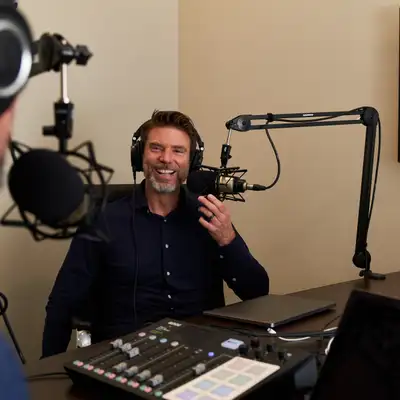
Welcome to the radically genuine podcast. I'm Dr. Roger McFillin. There is a fluid bathing your brain right now. It surrounds your brain, your brain stem, your spinal cord. It pulses with every heartbeat. It cleanses your brain of toxins while you sleep. And mainstream medicine has spent the better part of a century treating it as a passive afterthought. Present noted.
and largely ignored while building an entire model of brain health and mental illness around everything except the fluid at the center of the brain. What makes that remarkable is what is being ignored alongside it. Hindu yogic traditions map the flow of energy through the spinal canal thousands of years ago. Taoist medicine called the space at the center of the brain the crystal palace. Tibetan Buddhism.
developed precise practices around the movement of what they called inner nectar through the hollow core of the spine. Indigenous healing traditions across cultures have centered their understanding of life force on the same vertical channel running from the base of the spine to the crown of the head. Every major contemplative tradition on earth was pointing at the same anatomy and Western medicine looked at all of it and called it mythology.
or mysticism. Meanwhile, a growing body of post-materialist science, peer-reviewed, rigorously conducted research that does not fit neatly into the materialist assumption that the brain generates consciousness the way a furnace generates heat has been quietly building the case that these traditions were not describing metaphors, they were describing physiology.
We have a mental health crisis. Our current model cannot explain and cannot fix. have hundreds of millions of people on psychiatric drugs designed without any serious understanding of the brain's own internal signaling chemistry. We have ancient healing traditions that got the anatomy right millennia before we had MRI machines to confirm it. And we have an institution that has dismissed all of it while the evidence accumulated. My guest today holds an MD and a PhD from Harvard Medical School.
Dr. McFillin (02:19.662)
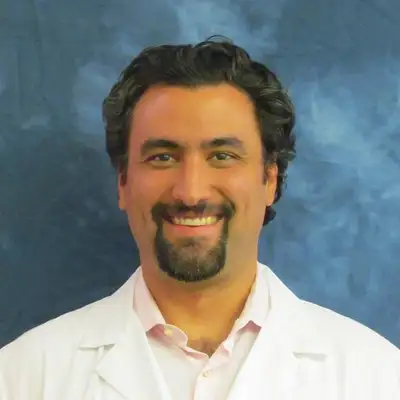
He's a board certified in physical medicine and rehabilitation, serves as a director of regenerative medicine and clinical research at Sunovation Medical Group and cares for veterans at the VA Greater Los Angeles Healthcare System. been featured a number of podcasts, New England Journal of Medicine, Psychology Today. He's trained in craniosacral therapy, polarity therapy, Reiki. And he does not think that is a contradiction with anything on the rest of that list.
His name is Mauro Zapatero and the conversation we are about to have may change the way you understand your own mind, health and experience. Dr. Zapatero, welcome to the Radically Genuine Podcast.
Mauro Zappaterra (03:04.508)
Thank you very much for the invitation. It's an honor to be here, truly.
Dr. McFillin (03:09.048)
Well, can you take me back to the Harvard lab? You went in studying one thing and something happened that clearly changed the direction of your entire life.
Mauro Zappaterra (03:19.484)
clearly changed. a great way of putting it. Some people would say I met my I met my then wife, to be honest with you. I was studying cancer cells and you know, I was always fascinated in how things developed or how things became physical forms and cancer cells were sort of things that had gone wrong. And she sort of looked at me and said, you know, doesn't sound like it doesn't seem like you're truly fulfilling your passion. You know, I can see you but
you know, how about we take some time off and and and go find some some things that you know, might spark your interest a little bit more and I was on the borderline of depression myself struggling with sort of the day in and day out of going into lab and and and you know not really finding a True purpose in the work that I was doing and she saw it immediately
And so we actually decided, much to my, not wanting, cause I didn't think it was actually possible to, to do it. But she said, you know, why don't we take some time off and travel. And, and I was actually able to take eight months off from medical school. was right in the middle of a medical school. was in the, at Harvard, what you do is you do two years of medical school and then you do a rotation in internal medicine. And then you, you leave.
the medicine part and you go off and you finish your PhD, can take three, four, five, six, seven, eight, nine years, however long that takes. And then you come back and you finish your medical school. And so I was right at the end of finishing my two years of medical school and she wanted to study holistic healing. And I was always interested in, in holistic healing. I was always interested in acupuncture, acupressure, meridians, energy channels. There was always this sense of, of something beyond the body.
You know my even in college we'd see how close we could actually get to each other and start to notice some sort of felt sense of bodily sensations without touching And so there was always a sense of like wow that you know, that's that's really cool And I'm go learn medicine and I'm gonna be able to integrate these things. But when I got to medical school It wasn't
Mauro Zappaterra (05:41.626)
It was it was great from the anatomy and physiology perspective, but it was lacking that other sense. And so when she said this, I was like, that's cool. You can go learn that, you know, like I'm going to take some time off and sort of sort of enjoy my time off because I just I don't really want to do anything. Right. And she's like, no, you're doing this with me. And that was really the start of this investigation. She found a school called the the new
the New Mexico Academy of Healing Arts. And this was back in 2004, mind you. So, so quite a number of years ago. And we went and studied what's called polarity therapy. And this is, it's a sort of a multi, it's a whole body holistic healthcare system that integrates Ayurvedic medicine, it integrates Chinese medicine, integrates Egyptian medicine, it integrates
Western medicine, it integrates naturopathy, integrates chiropractics, osteopath. He was a combination of an osteopath, chiropractic, naturopath, Dr. Stone. And, you know, his thing was always I go and I manipulate the body, I might do a chiropractic adjustment, and then two weeks they come back with the same patterns. And so the essential philosophy is body work, you know, so touch, healing touch.
movement, so how we move and exercise and get the, you know, flowing of fluids and strengthening the body parts, nutrition and detoxification, and then positive thinking. So there was a sort of a fourfold factor there in terms of how to treat the body. And it was very much in line with the way that I was, you know, let's say treating myself or the way that I was hoping to treat others. And so it worked quite well. And
One of the teachers there was a craniosacral therapist and we were able to learn and do these sessions on each other during anatomy class where we would just hold the skull. imagine where you know you're on a massage table and the only thing we were told was you know have your your client or there we were other there were other students and so you know it was the
Mauro Zappaterra (08:05.946)
it was each student working on on on each other. So we were learning. And it was just sort of, you know, have there you have your client or student lay on the table, and just hold the skull and see what you notice. And you know, I'm like, you got to, you got to understand me, I'm sort of a skeptic, right. So I was known as like, skeptic in the class, like people were talking about auras, and, you know, and even though I
felt it and sensed it, I was still a physician scientist at heart, right? Show me the evidence, show me the proof, show me this, show me that. So I was a big skeptic, right? And so when they said, you you're just gonna hold somebody's skull and you're gonna notice what happens, I'm like, oh my God, this is gonna be a waste of time, you know, but we didn't, it was sort of like, oh, well, we didn't have to look at anatomy because I already done two years of medical school. So it's sort of like, we didn't have to look at anatomy, so maybe it's a time for me to rest and take 20 minutes.
close my eyes and sort of refresh myself. And what started happening was essentially, like you said, the beginning of my new life in essence. Not only was I, as the practitioner, was I feeling things that I couldn't make up, as the client receiving the sessions, it was sort of like I instantaneously
there was sort of like an instantaneous tap into some sort of energy field. not, I didn't know what it was at the time, but I was coming from a perspective of, know, I had done five years of pretty intense research before that. had gone to two years of medical school. was, you know, I was designing experiments in the laboratory. We were publishing papers in very high end, peer review journals. You know, we were setting up experiments in terms of
how to design a hypothesis, how to test the hypothesis, et cetera, et cetera. And so there's a natural inclination of when you feel something in your body, if you felt your heart beat and you felt a slight palpitation in your heart or a slight arrhythmia or some sort of change in the beating of your heart, you would question it. You'd ask, what is that? it?
Mauro Zappaterra (10:14.098)
How long is it going on for? Do I need? Can I breathe? Can I get them? I get oxygen in my head, right? Like, and if you're not, you're going to pass out and probably somebody is going to call 911 and you're to go in and they're going to say, well, you have an arrhythmia, right? But you're going to notice it and you're going to question it. And so it was the same thing. It was sort of like I was noticing this energy, right? That was, it was, it was, it was a palpable felt sense in the body and it was outside of the body. And it was like sort of transformative, let's say.
And it was rising for me, the initial experience was sort of, was rising from my sacrum, from like sort of my pelvis area through my body and also outside of my body, but mostly localized in my body. And it was rising through the spinal cord up into the middle of my head, right? The middle of, essentially I would call it the middle of my head.
And was just really curious about it and it had this sort of rhythmic pulsation to it. And that was interesting as well. And at first what I did is I said, well, is this my heartbeat? Right? Am I noticing my heartbeat? So I put my, my, my, fingers on the carotid artery and, and, and my radial artery and I'm like, no, this is different than the heartbeat. was putting my, my hands on my chest. This is different than my breathing. For instance, what else could it, you know, my heart rate.
breathing, what other, what other rhythmic pulsations do you know in your body? and it was different than all of them. And so I just started paying attention to it. And when I started paying attention to it, it had this rhythmic pulsation, it was rising up my spine and it coalesced. It felt like there was like a gathering. was almost like if you're, if you're like a shepherd and you're gathering like the sheep in a field,
It was sort of like there was like a coalescing of energy that was happening right in the middle of my brain. And when I assess like, where is this in the middle of the brain, right? Like, and having a background in anatomy, having gone through medical school, you know, I could close my eyes and sort of visualize different
Mauro Zappaterra (12:31.546)
anatomic body parts, and it was absolutely clear that this was coalescing in the third ventricle. And for people that don't know the third ventricle is a it's it's a fluid filled space. It's a space essentially in the middle of your brain. It's right in the midline. So you have one, you have one third ventricle. So if you're to draw a line essentially from your brow center, directly into the middle of your brain at about the height of your of the top of your ears.
there's a fluid filled cavity and that's the cavity that you referred to as the as the cave of Brahma or the Crystal Palace. And this is a cavity that is filled with fluid and I was it was sort of like as soon as I said, wow, it feels like it's, it's the third ventricle that's this that this fluid is coalescing to. There was almost like a response. Like the fluid
or some some sort of energy was responding to the recognition that I was locating it to the third ventricle. And that might sound totally strange to people. But there's a big part of a lot of this work and the work that I've that I've that I've continued to do of not only understanding the basic anatomy and physiology of the body as we know it today, but also being open and curious about
what you're noticing yourself as a sensation. And also when you are curious about that, see what happens in terms of, know, prior to this, I'd be like, well, it's just the fluid. There's no, like, I'm not going to, it's not like I'm going to go out and have a relationship with this fluid or anything like that. But as soon as I recognized it, it like it, I'm going to say a woken it, it woke up.
It was like there was this dormancy, but it wasn't asleep. It was alive, but sort of quiet. And as soon as there was this sort of recognition, it woke. was like, hello. And that was honestly like, it was almost as if I could have a conversation with it, like a relationship with it. trust me,
Mauro Zappaterra (14:56.828)
You know, I don't I'm not like schizophrenic or anything like that. I have conversations with my with my body all the time. I have conversations with the energy in the body all the time. I have a relationship with it. Right. And that has developed since that moment. But then, right, as being a scientist, you say, well, that, you know, the first time that happened, that's cool. Second time that happens. Does it repeat itself? Right. Is this is this repetitive? Is it present in more than just one sort of one off? Was it because I had
some strange, you know, thing for breakfast in the morning, or I didn't get enough coffee, or I had too much coffee, you know, all those things, all those factors, those are all questions that went on in my head, right. And yet, it was reproducible. And it happened all the time. And I could, as I became more and more acquainted with it, it was it was
easier to be aware of its present, let's say. And so there therefore, I didn't need to go through so much preparation to say, there it is, if that makes any sense. And that was the start of questioning, what is this? You know, and and and the conversations that have led from there, which is, like you mentioned, there's this fluid in the third ventricle. And so I started asking, I just went on to PubMed.
What do we know about the cerebral spinal fluid? this was 2004, 2005, and there was very little known about this fluid. And I said, wow, this is incredible. I have to sort of sit down and do my PhD, right? If we don't know much about this fluid, let me learn a little bit about this fluid and possibly propose a PhD that I could do, go back to Harvard, find a
scientist if I could find a mentor that could mentor me in this find a lab that I could do this research in and that essentially took off, know this entire career of not only the cerebral spinal fluid but its implications in health and disease as well as consciousness and Regulating the nervous system and you know chronic pain and mental health etc, etc
Dr. McFillin (17:18.874)
So curious, as you started to experience this awakening, so we've heard people talk about this third eye opening or this experience when you draw energy there, were there any other gifts or spiritual metaphysical shifts or changes that you experienced alongside of that?
Mauro Zappaterra (17:39.524)
No, no, was nothing like, there was nothing like, you know, nothing that.
nothing that we would consider to be what you know the language or the you know people call supernatural or anything like that i would consider it to be supernatural in that
there was the initiation of the relationship with my true self, with myself beyond the body, with an energy that is ever present and everlasting. And if I was to describe that, it would be considered love. That to me,
is beyond any like supernatural talent that people think about when you're thinking about sort of some of these, know, you know, I don't levitate. don't disappear. I can't walk through walls yet. But I also haven't tried. Right. Like there wasn't anything. But but this sort of relationship with the self emerged. And that is
I'd say more supernatural than any sort of special ability.
Dr. McFillin (19:09.871)
Yeah. So you're talking about connecting with an energy field that existed when you were holding the skull of a patient, right? And now there's this emergence and this connection to what you called a true self. So then my next question, or at least where my mind goes, or do you develop the intuitive abilities to be able to tap into that person's energy field and then help you
as a practitioner in being able to understand what might be going on with your patient.
Mauro Zappaterra (19:45.958)
all of the above and yourself. so there's a right there's there's there's not only the intuitive there's the development of those intuitive capacities, but then there's also the the the development of your own self, the introspection that occurs from
just recognizing the energy within and then the energy that is dispersed beyond my body and the energy that is with you and all individuals, but not only all individuals, all plants, water, all material objects, everything. that, you know, and beyond even this this world. And so that to me,
That to me is like, you know, a greater gift than any other gift that somebody could give you, for instance. And the thing about intuiting somebody else's energy, I'm careful with that as well, because a lot of the things I do is, you know, actually run, you you kind of learn how to run the energy.
through your own body. And I sort of see it as this energy channel or these energy vessels that are present. And we have the capacity like a faucet on a hose to run these energy channels. And the closest thing that I would equate it to would be like Alex Gray's images, for instance, with all these sort of.
channels or lines that are going through but yet all connected to this matrix on the outside, right? And yet it's not separate from the self. so, you know, and it happens, let's say I'm shaying a patient and, you know, they're not happy with my treatment plan for whatever it might be. Maybe, you know, there's cocaine in the urine or something like that. And we can't continue prescribing the medications we're prescribing or we got to shift, right? And they're not happy.
Mauro Zappaterra (22:03.77)
And they yell at me, right? I what I do consciously is I actually open up those energy channels in myself. It's almost like I have the the the the faucet. Turn up the faucet. Turn on the faucet. Right. Let the energy flow. And then that flow, it's sort of like the words, language, anything. But the same is, you know, if you're palpating something and you feel something, it's like. I'm not there to fix it.
I'm there to simply observe it, witness it and allow the energy to flow. Like allow the innate and energy allow like the blueprint to come through. Right. And if we can do that, whether we do that for each other as a therapist or as a counselor, as a healer, you know, as a massage, whatever it might be, or if we can do that for ourselves,
then that to me is sort of like that's the essence, right? Is I'm connecting in and allowing the blueprint to reestablish itself and allowing the energy to flow as opposed to, I notice this sort of tension there. Let me go in there. Let me try to just get rid of that tension.
If we don't look at the entire system, right, that might not do anything, it might do something for one or two days. And I think that's what Dr. Stone was getting at is I was adjusting these necks and these backs, but then they were coming back because there was something in the field or something that they were eating or something that the you the way they were walking or whatever it is that was that was causing their energy system to have them go back to that same pattern. And so that's sort of that's to me is sort of like, like, can we get
so open and curious and can we increase the sensitivity of our own introspective ability to not only notice that for ourselves and be able to do that for ourselves, but also help others do that too. And so that's where that's kind of where where where I go with that.
Dr. McFillin (24:33.231)
So you returned to Harvard, and I think everyone who's listening would assume that these are two completely different worlds from the place that you were in New Mexico and what you were learning back into the mainstream, the pinnacle in the least Western society of medical training. How did you come to integrate this? And can you tell us what you ended up studying for your PhD?
How did you find an advisor that was aligned and where did it go from there?
Mauro Zappaterra (25:09.306)
Yeah, beautiful question. So for me, it wasn't a problem at all because, you know, when I go to sleep at night, these are the sorts of the things that I'm listening to that I'm paying attention to that I'm that I'm thinking about is what is this energy? Right? Like, that's the question. What is this energy? Right. Where could where could this energy right? Where could this energy be emanating from or coming from? Right. And so let's just take
an example, you know, we could take the example of the heart or the brain, or we could take an example of a nerve coming from the spinal cord, or we could take an example of a blood vessel, right? If I if if I palpate your radial artery on your wrist, I'm going to feel a pulsation boom, boom, right? If I have an instrument that's sensitive enough, how far away from that radial artery could I actually get a sense of energy that's coming off of that?
Right. And again, it comes down to the instruments that we have that are able to see or test objectively some of these quote unquote energies, you know, come back 2000 years from now, it's going to be incredible what we're going to be able to see. And that's part of the research that that that that we're proposing and doing is designing more sensitive technology that can actually assess these energetic fields. Right.
And so if you took the heart, for instance, right, the heart is not only is is is a muscle that is constricting and pumping blood that has that nobody would would would argue with you that it doesn't have some sort of energy that's right. I could if I you know, we measure blood pressure. It's got one hundred and twenty, know, one hundred and twenty over 60 millimeters of mercury. Right. That's that's a pressure that I'm feeling. If I put my hand over the aortic artery, right, when you're doing
I was lucky enough to do one of my rotations in open heart surgery and see the aorta, right? See the aorta, the aorta pulsate when the heart is pumping. The amount of electromagnetic energy that we can actually measure from the heart itself because it's got all these, it literally, not nerves, but electrical, you know,
Mauro Zappaterra (27:33.04)
wires around it that are emitting electrical energy from it. And so if you think of things like chakras, right, people, you know, I go back to Harvard and I'm like, you know, and, and, and my wife and I, actually did it. We, we, we, we taught polarity therapy. had a, you know, what they called it, a complimentary and alternative medicine day. And we taught polarity therapy and we did it together. And my thing was, how can we be, you know, what I would call spiritual anatomy.
let's say right, a chakra, you know the word solar plexus, you might know the word the solar plexus from the chakra, maybe when you get nervous, you have a tightening in your solar plexus, right. But if I was to open up your body, I could actually find your solar plexus anatomically, I could find a bundle, right? What is a plexus? A plexus is a bundle of nerve bodies, it's a bundle of
nerves where the DNA of the nerve is and then the the the axon or the dendrite gets sent off from the nerve body itself. Could you imagine right could you just imagine I could actually go in surgically and grab your solar plexus grab the body grab the the cell bodies that made up your solar plexus and I could move it around right
And this is the way that I talked about it, essentially. Could you imagine that this bundle of cell bodies, that this bundle of nerve bodies actually people could feel inside of them?
Like, could there be some people that have an ability to sense the energy that's associated with their solar plexus physically? And it's undoubtedly the answer to that question is yes. And when I would present it to even, you know, neurosurgeons, neurologists, cardiologists, even they would be like, I don't see why not. And so if you don't see why not, right, from a
Mauro Zappaterra (29:42.302)
I just showed you that this was a physical bundle of cell bodies that people actually looked at and said, there's something energetically going on in this location, right? And there's something energetically going on in the cardiac plexus, right? And we could go to all the different plexuses. It's amazing to take that, right? To take either the chakras or the meridians or whatever it might be, right? And sort of overlay it on
real anatomy, an anatomy that is present. And so that's sort of the way that I looked at it was
Could you take something that I'm showing you that somebody's saying that they feel something in their solar plexus and I could show you that this is actually cell bodies that are clumped together, right? Are there people that you think could actually feel that, could actually notice that when they have changes in those cell bodies that they can actually perceive that sense? And it was undoubtedly yes. And so that's where we started, right? Is the overlay, there's so much more overlay and
and union than there is separation, that it's absolutely crazy. And so my job, I saw it, was can we find the language and the way to communicate with each other that was unifying and not divisive? Could we find a way to communicate in ways that was harmonious and not, you're doing this over there, you're doing this over there, right?
And honestly, what I noticed is if you were really open and you really want somebody's health in their best interest, you are open to it. People were open to it. Right. And so it was really about learning. was really about finding the language and majority of people, unfortunately, who go to medical school don't learn the language that the craniosacral therapists are using. And the people that are studying to a craniosacral
Mauro Zappaterra (31:49.914)
sacred therapists don't learn the language that the surgeons are using. So I felt like I was in this really
I don't know what you want to call it, blessed sacred spot where I could actually communicate with both sides and help people come together as opposed to separate. so that's what we were doing. All my friends, when you're in the MD-PhD, all my friends loved what we were doing. They were like, that's really cool. My wife was giving sessions. mean, we had neurologists and
and anesthesiologist who found out what we were doing. I was still going to lab and so I didn't have the time, but they were being referred to my wife for care. Like they're like, you know, I'm feeling this or that. And they were going to my wife. There was this understanding. And so it really comes down to the language that we use that brings us, that tries to bring us together. And then the other thing is, you know, look,
I want the best for you. Right? I want to like if I really truly want to help you and decrease your suffering. Why would we ever limit what the possibility is of the care that we would actually consider for you? Why would I ever say no, that doesn't work? Why like, you know, why am I causing harm? Am I you know, it is the care that I'm providing.
cutting off your limb? No, it's not. It's not causing, you know, it's not causing harm.
Mauro Zappaterra (33:32.828)
I have to look at the dangers, right? But if something's like, if somebody proposes something and says, you know, hey, look, you know, I got this crystal and I'm going to hold in my pocket, you know, there's something, hey, go for it, right? If that works for you, go for it. I don't know. We don't have the studies to actually show whether or not that specific crystal does. Maybe now, you know, as we're gathering, gathering studies, but it costs a lot of money to do studies.
that are quote unquote evidence based. And even that term, you start to sort of, my goodness, what is evidence? Well, if you haven't done the study, then there's no evidence. But lack of evidence is not that there's no evidence, it's just nobody's done the study. So you can't use the, you can't say, well, there's no evidence. Well, nobody's ever done the study, so of course there's no evidence. Who's gonna fund a study on a?
on a rock, we don't have, you know, the the rock society that has billions of dollars to do these sorts of studies. And and and so, you know, being open to that and saying, hey, look, if if it doesn't cause harm, right, can we look at what they're actually offering you? And, know, if it's that doesn't cause harm, then go for it. And so the people were more open towards wanting. The best for you. We're, you know, great.
So I went back and I knew that I completely switched, right? sort of like I was going, was studying cancer and then said, got to study brain development. got something in brain development in regards to the cerebrospinal fluid. And Christopher Walsh, he was the head of the MD-PhD program. I was in communication with him quite a lot in terms of, because I was taking time off and I just had to organize.
And, I started just communicating with him more, more frequently and started asking him like, Hey, you know, I'm really becoming interested in the nervous system. I'm really becoming interested in this. And he essentially said, you know, why don't you, why don't you take a look at my lab? And I thought, wow, what an interesting, what an, what an, what an open character, right? Here's a guy who knows that I was struggling a bit, knows that I wasn't so happy in my other lab, knows that I was taking some time off and then offers me an opportunity in his lab.
Mauro Zappaterra (35:57.102)
It says, hey, why don't you come check it out? You might like some of the experiments we're doing. And one of the benefits of him that I didn't recognize a priori was that he was what's called an NIH. He was a Howard Hughes investigator. When you're a Howard Hughes investigator, so when you get a grant from the NIH, you have a grant, let's say it's a three or five year grant, you propose the experiments for that grant.
And then you do those experiments and you get funded essentially how based on how those experiments are going. When you're a Howard Hughes investigator, what happens is that Howard Hughes thinks that sort of, you know, in general terms, you're such a, you're such a great and amazing scientist that we're just going to give you funding and you can do whatever you want with that funding. And so he was a Howard Hughes investigator and, and what we were able to do with the
studies on the cerebrospinal fluid was, you know, essentially because he was a Howard Hughes and an investigator. And then it became, you know, and then people now at Harvard have labs that are studying the cerebrospinal fluid. But essentially one day I was studying, you know, and I was looking at these cross sections again of, of, um, they were anatomic cross sections. And in, and I show these on some of my, on some of my talks, it's a cross section of an eight week human embryo.
and the cortex, you know, what's going to become our brain is maybe about two or three millimeters thick. And in the middle, there's this space. And then in the middle of that, there's this like cauliflower like shape that's coming up, right. And I have no idea. like, what, what in the world is this cauliflower shape? And so I turned to my colleague who was a postdoc in neurology at MGH and I go, Hey, what's this here in the middle? He goes, well, that's a core and plexus. And I go with cord plexus. like,
Jesus, that's huge. you know, the choroid plexus is the anatomic part that makes the cerebrospinal fluid. The choroid plexus looked about a hundred times bigger than the, than the cortex itself. It was this huge cauliflower shape and the choroid plexus, essentially what it does is it releases cerebrospinal fluid into that cavity of the brain. call the ventricle. And then you get this tiny little cortex above, right? As the cortex then develops,
Mauro Zappaterra (38:23.364)
and becomes our brain, the ventricles become smaller, but the choroid plexus is still it's sort of like this, this, this curtain of a vascular tissue that hangs in in the in in the ventricle itself, and it continues to produce cerebrospinal fluid. But it was instantaneously clear here I was getting these sessions of craniosacral and having these experiences and in the embryo.
The cortex, what becomes the brain is, you know, two or three millimeters thick, but the choroid plexus, what makes the cerebrospinal fluid is huge. It was like, wait, not only is the cerebrospinal fluid doing something in me right now and I'm connecting with it, but developmentally, there is a huge role of the cerebrospinal fluid in development. And what are we always fixed to? Right?
When we walk into a room, you look at the walls, you look at the things on the walls, right? You look at the paintings and stuff like that. But do you ever pay attention to the space?
Mauro Zappaterra (39:32.752)
walk into the room, it's all it's actually the space is the room. It's actually more defined by this, by the space, you're in the space. But we forget about the space. Right. And this is actually very analogous to sort of awareness and consciousness and thoughts and things like that, we pay attention more to the thoughts than we do to awareness. Right. And so what we do is we go well, we go to the brain, right? Well, the brain is a tissue, you see the tissue, but you don't see the space.
So what we started doing is we started saying, wow, that space is the space that the fluid is held in. But we don't see this. We don't see the fluid when we dissect things because the fluid leaves instantaneously. And yet, when I grow cells in a Petri dish, I need those cells to grow in fluid. I can't take
you know, months and weeks of vacation when I'm in the lab, because I got to go and I got to replenish the fluid and add growth factors and add electrolytes and add sugar and add, you know, all this stuff. And we got to wash it out and take off the toxins and add more media. We call it media, right? Tissue culture media. OK. And it was just like it was just like, here I am, right. Getting this and instantaneously from that slide was, my God, this fluid is super important in brain development.
This is the endogenous tissue culture media for our brain during development. Right. And so instantaneous. So I remember sending an email being like, I'd like to, you know, I'd like to do my PhD on this. Here's this image. We're always focusing on the cells and the tissue. But can we actually do a study on the fluid? And it was like, boom, instantate. Like he jumped out of his office.
I actually went and got a cup of coffee, so I wasn't there. And he was pissed that I wasn't there because he was so excited. And he had to retroactively share his excitement with me because he was so excited. when you're grad student and you have an idea like that, that's based on not only your own experience and sort of...
Mauro Zappaterra (41:48.86)
thoughts of this fluid, also being able to tie it into something that can actually be studied and experiments could be done on it is pretty cool. And so I spent the rest, you know, I spent five years essentially studying the cerebrospinal fluid and brain development and what it does, you know, in Chris Walsh's lab, know, NIH, Howard Hughes funded. And now there's post, there's, you know, there's professors at Harvard who, you know, this is their, this is
doing the lab work has become their career.
Dr. McFillin (42:23.335)
So what is it actually doing?
Mauro Zappaterra (42:26.45)
great question.
So first of all, there's a couple things that it's doing and then there's a couple things that it's connected to. So first of all, when we develop, all of the stem cells, the neuronal stem cells at a very young age are bathed in this fluid. So when we are...
40 days old in the womb, right? You're like a hollow tube. You're essentially like a hollow tube. In the inside of that tube is the cerebrospinal fluid. Okay. Every cell that's contacting that cerebrospinal fluid is a neuronal stem cell. So that's going to go and make up your entire brain and your entire spinal cord. All right. So first of all, the fluid provides hydrostatic pressure.
So just having fluid in the canal provides hydrostatic pressure so that when your brain develops and when your spinal cord develops, there's sort of, keeps it, it keeps it up and open. If you just pierce it, the brain collapses and you actually altered, altered development. So you're getting rid of, you're not only getting rid of the fluid, but just the fact of having a hydrostatic, this sort of pressure in this cavity.
helps with the brain continuously developing. The fluid, right, it's not a static fluid. It's a very dynamic fluid. So you could imagine, right, every single stem cell is bathed by the fluid. If you wanted to change what the brain was doing, even developmentally, the body...
Mauro Zappaterra (44:19.782)
the embryo could deposit like a growth factor into the fluid itself. And now it gets distributed to all the neuronal stem cells that are bathed on this fluid. If it makes sense, it's sort of like the cells are the shore and the fluid is like the ocean. If I wanted to bathe the shore, I could put something in the ocean and the ocean takes care of it for me. Right. And so what we found was that growth, there's a ton of growth factors in the fluid and they are all
dynamically changing their concentrations based on what the brain is going through. Does the brain need do we need to make more cells? Right? If you think of like, here I am, I'm a tiny embryo. Well, what's the first thing I need to do if I take all those cells that are that are stem cells and develop them? Now I don't have enough stem cells. So I don't I can't make a big enough brain. I have to first make up make enough cells or, you know, have those stem cells
proliferate, like have a stem cell become another stem cell become another stem cell become another stem cell become another stem cell right and get enough stem cells, and then differentiate and become neurons, so that my head can be as big as it is in your head can be as big as it is in our brain can be developed. Right. So at some point in time, it actually is sending in factors into the fluid that are guiding this proliferation. So you get more proliferation, right at a very, very young age in the embryo.
And then it actually changes and it instructs those stem cells now to differentiate, to actually separate from being bathed by the fluid and go out and start making the brain. Right? So it's got factors in there for not only proliferation, but also differentiation of neuronal stem cells. It provides the perfect
fluid niche for neuronal stem cells. So we were actually able to take purified neuronal stem cells and grow them purely with cerebrospinal fluid without adding any other external culture media. And they maintained what we call stem cell-ness. They maintained their pluripotency. Okay, usually if you take a stem cell,
Mauro Zappaterra (46:45.17)
and you change the media, that if you take it out of its environment and you change its media, it differentiates quickly, spontaneously. It sort of becomes whatever, you if it's a cardiac cell, becomes a, if it's a cardiac stem cell, becomes a myocyte, et cetera, et cetera. We were actually able to maintain it as a stem cell, right? Indefinitely. And so it provides the perfect fluid niche for maintaining stem cells.
It provides developmental cues for the development for the developing brain. And then as we get more and more into sort of development, you know, it provides nutrients, growth factors, electrolytes. It provides now, you know, in us, it provides buoyancy to the brain. has, you know, it helps control appetite and sleep and diurnal cycles, et cetera, et cetera. So
It's got a whole bunch of different functions. And just recently, research has shown that at first, right, I've been talking about the fluid being in these ventricles. Well, just recently, this was just in 2013. So about 13 years ago was the first study that showed this was showing that
sleep can change where this fluid is located and allows the fluid to go from the ventricles into the brain tissue itself. So fascinating, right? We always thought that I kept on saying, right, it's located primarily in the ventricles, these hollow cavities in the brain that are filled with fluid. But now there was research that showed during points of sleep,
fluid actually went into the brain tissue itself. Why would it do that? Well, it's quite interesting that there's this rhythmic sort of flow. There's this rhythmic pulsation of when we sleep, neuronal activity slightly decreases.
Mauro Zappaterra (48:55.068)
When that happens, blood flow slightly decreases. And when that happens, you get this pulsation of cerebrospinal fluid into the brain tissue itself. So you're sleeping, neuronal activity decreases, brain flow decreases, pulse of CSF into the brain tissue. Brain activity decreases, blood activity, blood flow decreases, pulse of cerebrospinal fluid. Okay?
What they found is that this cerebrospinal fluid goes into the brain tissue to clean out the toxins that build up in the brain tissue throughout the day. And that's quite intelligent, right? So you're sleeping and then this, it's sort of like the dam opens up and the flow of fluid clears, goes into the brain tissue, goes into the space between the cells and cleans out the tissue.
for all the toxins, regular toxins that we build up throughout the day just by using our brain. So that was one of the first studies that has ever shown the importance of sleep. But then you've got to think, well, it can't only be sleep. that's always been the, it's sort of like, well, it can't only be sleep that allows the cerebrospinal fluid to flow in between the brain tissue. Because there's a lot of people who, let's say, don't need sleep but are still functioning.
quite well, they don't need as much sleep, right? And so now, right, we're looking at states of parasympathetic activity. So different states of parasympathetic activity can actually increase this cerebrospinal fluid flow through the brain tissue itself. We're looking at breathing.
Dr. McFillin (50:41.335)
Can I ask you a question first about sleep? Because in my field in clinical psychology, we have people with PTSD, chronic pain, people on so many different psychiatric medications that seem to also disrupt normal sleep patterns. So what happens to the brain's waste clearance system when sleep is chronically disrupted in this way?
Mauro Zappaterra (51:05.042)
So the hypothesis is that the brain clearance system also is disrupted. So you're not clearing the toxins that build up. And what's interesting is, as we learned those studies and we learned those results, you mentioned sleep medications, right? There was one study that actually looked at Ambien. And Ambien, even though you felt like you were sleeping, it did not clear the brain waste.
like sleep did. And so even though you're sleeping, the physiologic mechanism that's occurring at the fluid level is disrupted. Right. And so that's why, you know, if you can, of course, right, if we need sleep and you use those medications, but learning, trying to use techniques that decrease the use of medications as much as possible, especially for sleep or having other
things in your life that you are doing that can activate this brain cleansing mechanism that helps us cleanse the brain. And one of the studies that every, you everybody's looking at because, because they've actually seen these studies and you've talked about, you know, correlating this with yoga prep practices is breathing, right? Breathing practices, different types of breathing practices have been present for millennia.
And these are ways of actually not only not only altering our our our consciousness, we have used breathing practices for millennia to alter our consciousness, but also for regulating our nervous system. Right. And so when you're talking about a society that is chronically stressed, that that is is having difficulty sleeping. If we're not doing something that is looking at
helping balance our nervous system or bringing some increased resiliency to our nervous system so that when we need to trigger the stress response, when we need to trigger the fight or flight response, we can trigger it, but we can also trigger the parasympathetic, the rest and digest response when we need to trigger that. And most of us don't have the capacity. We're overstimulated. We're oversympathetically driven.
Mauro Zappaterra (53:26.63)
We can't relax. We're having problem digesting our food. We are constipated or we're having diarrhea, et cetera, et cetera, because it's, that's an overstimulation. It's an over sympathetic drive. We are in a constant fight or flight response. And so doing practices like breathing practices or meditation practices that help increase that flow of cerebrospinal fluid through the brain. And that also helps
balance the nervous system can let's say, you know, can they overcome? We don't exactly know because there aren't the studies done. But in my, you know, I don't have the time to wait for these studies, right? And so therefore would I recommend that if you need a medication to sleep and you need that to feel, um, to feel, uh, rested, great. You might be altering your brain clearance mechanism system through altering the flow of this fluid.
Let's find something else that you can do during the day consciously, right? That can get this fluid activated and that can help balance your nervous system so that maybe you can sleep better and you can come off those, those medications.
Dr. McFillin (54:40.576)
Okay, so help us now understand, there's various terms that I want the audience to understand. One is to know what the pineal gland is and what Kundalini is or that Kundalini energy. Can you explain that kind of connection and what this means for the everyday person?
Mauro Zappaterra (55:02.534)
Yeah.
I mean, there's a lot written about both these glands. The pineal gland is a really cool gland. It's in the middle of your... anatomically, it actually sits in the back of your third ventricle. if you were to... And I highly recommend people kind of go online and look at images of the third ventricle and then look at images of the pineal gland and where it is in relationship to the third ventricle.
And it's in sort of it sits in the back of the of the third ventricle. It's described essentially as a a as a pine cone shape the majority of function We're still trying to understand what the pineal gland does but the majority of its function is it's so it's a gland and it Releases melatonin Melatonin people think of as a you know as a sleep
hormone and it can help us, it can induce sleep. But it has very powerful properties of like antioxidant properties. It can help reduce oxidation and inflammation in the brain. And so for people with like brain injury or stroke, right, you can supplement with melatonin as an antioxidant hormone.
There's lots of studies done on melatonin in terms of how it actually functions. And melatonin is released from the pineal gland and is released into the third ventricle, into the C cerebrospinal fluid. And it is also released in the blood. But the concentrations in the cerebrospinal fluid are like a hundredfold more than what's in the blood. And so it's believed, right? So this theory of
Mauro Zappaterra (57:05.976)
releasing something into the cerebrospinal fluid and allowing the cerebrospinal fluid itself to sort of distribute it throughout your brain is consistent with the way that melatonin is thought to work from endogenous melatonin in that when the light, when we perceive less light exteriorly,
Our eyes are getting less light. There's a connection between our eyes, our actual eyes and the pineal gland. And the pineal gland, as the light starts to dim down, the pineal gland starts to release melatonin. All right. And as the lights get lower and lower, it releases a certain amount of melatonin from the pineal gland. And usually what happens is that most people should fall asleep during that time period. What we have done, though,
is we have artificially messed with this internal clock. We have used external lights and different types of lights, and we stay up and watch bright television and it activates our light. It activates our eyes. and and we're looking at the screen and we're looking at the screen way into the the the late hours of the night. And this increase in melatonin is never allowed to it never comes up because we're constantly stimulating.
And then we turn everything off and we're expecting to be able to go to sleep. And yet that hour or so or two of slowly increasing and having it diffuse through the, through the, through the, through the cerebrospinal fluid and affecting us hasn't happened. And so then you're sitting there and you're going to be up for two hours, right? Or more, and then you're going be frustrated and then your thoughts are going to go. And then that's going to probably generate more anxiety, which is going to lead you to sleep. And then that's another vicious cycle. Right? So,
The pineal gland, interestingly, so melatonin, that's the number one function that people are pretty aware of. The other one is actually believed to release dimethyltryptamine, DMT. DMT is found, it's a hallucinogenic, it's an entheogenic molecule. It's found in ayahuasca, it's found in the sacred toad.
Mauro Zappaterra (59:31.442)
People use Purified DMT to have very hallucinogenic and theogenic experiences. It's used for ritualistic practices in various religions. And it's very, it's one of the strongest hallucinogens that we know. And now people are doing studies on it in terms of studies for...
for PTSD or studies for anxiety and things like that. And I would encourage people to sort of pay attention to these studies because they're being done very rigorously. But the pineal gland releases DMT, dimethyltryptamine. So we have an endogenous DMT in our bodies. Cerebrospinal fluid has actually been found to carry one of the highest concentrations of DMT in our body.
Right? What is its function? We're still trying to understand its function. OK. But studies are starting to correlate it. It's very difficult to. Low, it's very difficult to isolate it. So, again, machines and systems need to be created that have the sensitivity of. You know, analyzing things like DMT, there was a study done that essentially looked at.
DMT, was done in rodents, but that, you know, when they had a cardiac arrest, that the DMT in the visual cortex of the rodent increased. Why would it be, why would you have an increase of a DMT in the visual cortex, in the area of the visual cortex, in rodents that were undergoing cardiac arrest, right? And so then the hypotheses are generated from that.
because of, let's say, stories from people who have had near-death experiences or visualizations that people have had in altered states, right? Is you close your eyes, but you still see something. You see shapes and you see colors and they're often very vivid. Or in people who have near-death experiences, they see, you know, like a white tunnel and they're replaying their entire life and they're seeing they're going towards this...
Mauro Zappaterra (01:01:50.768)
white tunnel and there's a choice that they get to make, you know, and all this stuff. These are real stories, right? And so the fact that DMT was increased at the time of cardiac arrest in the visual cortex was that, was that generating some sort of activity in the visual cortex that allowed the visual cortex to be more, active during that time period, right? But if we have, if we know we have endogenous DMT,
and it's coming from the pineal gland and it's possibly coming from the adrenals and it's been found in the lungs. What are we learning in terms of can we modulate it ourselves? Can we actually do practices that can learn how to modulate DMT from the pineal gland into our cerebrospinal fluid or from our lungs into our blood supply?
And these are ongoing studies that are going on right now. And so hopefully we'll have the results of those studies. But if it's such a powerful hallucinogenic entheogenic molecule, right, that we might actually have the capacity of modulating it ourselves, can we modulate it to help decrease our own suffering or help us?
have those visions of those entheogenic visions and bring us closer to God or our true self or some divinity or some sort of whatever we want to call it. And that, you know, that I think is is is is very powerful. So from my perspective, I like to look at the pineal gland as its relationship with the cerebral spinal fluid with its relationship with this fluid and not forgetting
the thalamus, the hypothalamus, and the pituitary gland that are all sort of making this wall around the third ventricle. And these are all major relay centers for the brain and for our entire nervous system. Every single sensory perception that we get goes into the thalamus. You talk about the hypothalamic-pituitary-adrenal axis regulating major body functions.
Mauro Zappaterra (01:04:07.26)
temperature, appetite, wake, sleep, you know, all these sorts of things. And so keeping in mind, right, that the pineal gland is in back, that hypothalamus and the thalamus are on the sides of this third ventricle and the pituitary gland is in front and how they're all orchestrating what's in the fluid and then how the fluid can orchestrate what it's actually
sending to the brain itself from the inside of the ventricle.
Dr. McFillin (01:04:39.524)
Doc, I have some questions that, and then regarding what you're talking about, decreasing suffering, and I've been following the use of psychedelics in my field for PTSD sufferers and people maybe you've been experiencing chronic depression. And this relates to something you said earlier, is I'm often interested in what is the mechanism? Like what's the mechanism of change? And when I, when I meet with somebody who seems to talk about the experience as being transcendent,
One of the things that they're sharing with me is this awareness of this unity consciousness, the interconnectedness of all things. And now there's a different meaning that's assigned to their suffering or their struggle, which seems to have the effect of decreasing suffering. So like there is a purpose, your soul has this purpose and even going through the challenges of your life, there's something much greater and
It seems to be this awakening that occurs. And I want to get your thoughts on what does DMT do or if somebody is taking psilocybin, what is happening that's allowing them to be able to reach those conclusions?
Mauro Zappaterra (01:05:58.182)
Yeah, I mean, there's a whole mechanistic, let's say, neuroscientific explanation to a lot of those. And I'm not sure we fully understand the whole spectrum, but from my understanding of looking at the studies, essentially, it's primarily decreasing the activation in the default mode network.
that seems to be a primarily, you know, the, the, the default mode network is, is, sort of beautifully named, I guess, as sort of like the default mode is sort of like in your default mode, what are you thinking about? And it's sort of the self referential network that is taking not only outside experiences, but also internal thoughts and sort of, and we are creating a self referential image of ourself in this, in this network. Right. And so.
Depending on your past experiences or depending on you know how you you have or have not been traumatized or anything like that there there are certain Activities in the default mode network and certain reference self-referential thought patterns that are creating an identity of who you are
When those are decreased, the blueprint emerges. And so it's again, connecting back to this blueprint, right? It's connecting back to your true nature that there are whatever pathways, right? And this is why, this is why yes, know, DMT and psychedelics can help in terms of a, you know, it's sort of like we need a major reboot, right? So we go in, you know, it's sort of like,
Person's having cardiac arrest and the heart's not beating good. Okay, what do we do? We shock the system Right. So you use electrical current on the outside and it and it restarts it restarts the whole system, right? Neutralizes it and then it can Rebeat right even if it was in a bad rhythm before I can shock it and try to get it into a good rhythm now right Especially if you're looking at you know single
Mauro Zappaterra (01:08:12.966)
you know, let's say a therapeutic dose of DMT or therapeutic dose of silo side, right? Is to me, what it, what it, what it is, is it's sort of like a, a reboot to the entire system. And in that reboot, you're allowing all the, all that external energy to just quiet down.
And what emerges for the majority of people, not everyone, right. But what emerges, there's such a strong sort of default mode network in some people, or it just doesn't allow them to get, or you know, whatever it is. But what emerges for most, for most people is that, is that blueprint. That
connection, right? The understanding of who I truly am. And from that, then it's then it then the heart is beating regularly again. Right. And can we go from that? Right. Can we go from that to maintaining that? Right. And what is that going to what is that going to include? Well, you're hopefully not going to.
expose yourself to more traumatic experiences, although it might happen and then we might need more, let's say, therapeutic doses. But I've coined a term, it's called riprap, right? Repetitive intentional practice, repetitive attentional practice. Riprap, right? Repetitive intention practice and repetitive attentional practice. Asking yourself, even after you go through that
Dr. McFillin (01:09:37.904)
Mm.
Mauro Zappaterra (01:09:57.65)
through that experience or even if you're in a state of meditation or you're getting a session of craniosacral or whatever it is, right? What is your riprap? What is your repetitive intentional practice or and repetitive attentional practice? Where are you placing your attention intentionally that is helping you orient towards that blueprint?
towards that sense of true self, towards that divinity. Because if the patterning, if your repetitive attentional practice...
is one of repeated trauma thoughts, trauma thoughts, trauma. That then is going to drive into that area, right? You're going to orient then towards trauma. Okay. The intentional practice then is, here's my intention, right? Whatever your intention is. And where is my attention? Attention, attention. Even as I come out of that, right? Even as I'm in it, right? Where am I paying attention?
What am I paying? And when I come out of that, now my default mode network is quieted. I can, with my own conscious ability,
Create a new network of connections in my brain Those new networks are going to be it might take time Right because i'm trying to relearn not only am I am I sort of am I i'm relearning something right? So there might be a memory that keeps on popping up and I recognize that memory and so I say okay Let me go to another Let me find another place to direct my attention to let me find another place a place that's safer with intention
Mauro Zappaterra (01:11:53.778)
Right. And reorienting constantly reorienting yourself to that because if you don't then it's pointless. You're going to get this sort of like OK yeah you know I had this experience but then you're back right. You're right back at it. You're right back at it. You're right back at it. You're right back at it. Right. So every day every moment of every day is asking yourself where is my attention going and what is my intention.
and having a practice that you could actually, you know, that, that, that, that, that you can, that you can riprap it. You have an intention of love or whatever it might be gratitude, right? But that you're choosing it. I have an intention of gratitude. Gratitude is usually a strong intention that people can go to joy, love, happiness might come later, but gratitude is sort of like, let's find something that I can be grateful for right now. And it might be this pizza paper or this water or this, know, whatever it might be.
Dr. McFillin (01:12:48.859)
I love all this, but it's bringing some more questions here about the nature of reality. So let's imagine there is this unity consciousness and there is this greater field. So when we are intentionally putting out energy in terms of thoughts or where our focus is into this field, are we receiving back like the ripples of that into our own...
field of reality? Are we active influencers in our experience?
Mauro Zappaterra (01:13:21.81)
Absolutely. That's where I started with, right? Is all of a sudden there was a relationship. There was a relationship with this energy. I didn't know any of this, right? It was just sort of like, was like, you know, hey, is that the third ventricle? Boom. It was like, yes, I am. And I'm like, whoa. I mean, I'm just saying this right now and I'm getting, I'm literally getting goosebumps going down my entire body.
Right? Because it's that it's that beautiful. It's that that that it that's a response. Right. And how simple is it? I just said it. All right. Yes.
Mauro Zappaterra (01:14:08.582)
Even the I am right where does that come from be still and know I am Right a lot of books talking about the I am the I am spontaneously arose Like the I am is that that is that the beam that is that like first you're talking about like this conscious sort of output right the way that I see the I am is there's prior to the I am and then the I am is
It's almost as if you have this, it's the first, first impression of any external output from the field.
So if you were to picture water coalescing on the bottom of a leaf, and all of a sudden you get enough water and then you start seeing the drip coming. First, it's just a plane of water and then all of a sudden the drip. When you start seeing the outward indentation, that's some expression.
that's coming and that and it absolutely, it's a relationship. It's a two way highway. It's not one way. It's a download and an upload and it's constantly happening. Right? And is it happening at the electron level? Is it happening at the, you know, that's what I'm still in the process of sort of investigating, but it's absolutely relational. And
This is the part where even in, you know, with my patients and stuff like that, it's like we try to get into is, is we as, as human beings, and some people are fortunate enough to be born with this and you know, they have an increased capacity to, to, to, to hear, they have an increased capacity to notice those, the most subtle of sensations.
Mauro Zappaterra (01:16:06.874)
And that introspective ability and having interoception, right? That felt sense. Some people are like, I don't feel anything. Well, what's that? Right? When we were in bodywork school, right? We would take a book and put a hair under one page and you'd feel it, two pages and you'd still feel it, three pages and then you wouldn't feel it anymore. But some people could feel it and then you'd get down and...
Some people could still feel 20 pages, you And then as time went on, you actually, you could increase the sense of feeling. And so even that, right? It's that if I say something, even a thought is an energetic outward. can choose, right? Is there an intention behind this? And what is that intention?
Then, do I want to pay attention to that?
Do I actually want to engage in the energy of that?
And now I say, yes, this is something that I'd like to manifest.
Mauro Zappaterra (01:17:28.54)
And then.
Mauro Zappaterra (01:17:32.678)
there's a response. And it's not linear. It's not linear in your time, but there will be a response. Now, most of us don't hear it.
We don't feel it. Does that mean it's not there?
No, I would actually say that, and this is why, you know, I started writing kids books, for instance, because the amount of time that we spend teaching kids how to write the letter A or the number one, right? No, you know, A, A, A, right? If we actually started teaching kids about this quality of, let's say, listening to yourself.
listening to the universe, having increased introspection. What would our word look like? so, absolutely, absolutely. And that to me is the brilliance, but the relationship.
Mauro Zappaterra (01:18:50.97)
relationship starts from when you send out that initial impulse. It starts from that pure field.
Mauro Zappaterra (01:19:07.666)
And so that to me, that to me was the practice is essentially dropping everything, everything, right? Dropping everything, everything and allowing.
Mauro Zappaterra (01:19:23.526)
finding, remembering whatever word you want to use, right? Remembering that true nature and resting in that, wherever you want to call it, divinity, God, prior to I am, awareness, consciousness, a lot of words that can be used.
Mauro Zappaterra (01:19:47.856)
Now when you're
When you feel like you have that space, you're in that space, right? Then it's the first thing for me is actually, what's your intention?
Is you create an intention. Then from your intention, right? So my intention, let's say my intention, right now, my peer, my intention is like, you know, and, and my wife and I, we've used this is, you know, what are we, when we say our vows, when we got married, what was our, what was the question that we had? Are we going towards love? That was it. In your choices, are you going towards love or not? And we vowed to continuously go towards love.
That then is the intention from this space of pure awareness. The intention for me is love. Now, right, then let's say a thought emerges, right? So it's sort of like, here's this white canvas. Love is my primary intention. So that's sort of like the outpouching of the I am. And then a thought, right? And it's just sort of like.
Mauro Zappaterra (01:21:06.492)
Right? Does that go towards love?
Mauro Zappaterra (01:21:11.076)
And look, if we are talking about the, the, the, the, if we are talking about reality, then it's not, my God, I can't believe I had that thought. You're to have every thought available to this, to, to, to every single, you can't even imagine the possibilities of thoughts that emerge because everything is possible. Right? So the thought comes up.
And it might be the worst possible thought that you had.
And what do you do with it? my God, I was coming from love and I had this horrible thought and that's just, that's who I am. And, right. now all of a sudden I'm shriveling back down into a little tiny self and that one thought has generated another thought. And there's my default mode network that's going right. As opposed to,
Mauro Zappaterra (01:22:12.538)
And what do you do? You rest back in awareness.
Right? Or back in pure, that pure level of total, the total potentiality, total, total potential space, where everything is potential. There's no filter. Right? What happens is that we, it's like, we think we're there and then all of sudden all these filters come on. You're like, whoa, whoa, whoa, whoa, you're putting a filter. There's already, there's already, you know, filters that are coming up. And, right.
All this, from my perspective, all this is, it's a practice. And it can be quite profound and it absolutely is relational. And the first time that this sort of opened up for me was...
paying attention to the cerebrospinal fluid in my third ventricle.
Mauro Zappaterra (01:23:15.68)
and meditating on that.
and then connecting that to the IM.
Dr. McFillin (01:23:19.832)
It's
Dr. McFillin (01:23:23.169)
So this is something that if we bring our awareness to it, our attention and focus, that we can generate that energy in that space.
Mauro Zappaterra (01:23:36.22)
That is my experience. And, you know, you mentioned Kundalini. I don't know how much time you have or anything like that. Okay. Yeah. So, right. So the first thing, you know, if you're interested in any of these practices that are sort of like body centric that are embodied, right. And even, even thought for me, thoughts, emotions, or feelings or anything like that.
Dr. McFillin (01:23:44.279)
No, I was going to follow up with that because I didn't get that answer.
Mauro Zappaterra (01:24:08.37)
When you notice something, first thing, right? if you can, right? So what I, the way that I sort of take people through it is first, before trying any practice, first find a resource. All What a resource is to me is a place that you can direct your attention to that feels safer. A lot of people, when they start doing any of these practices, they don't have a resource. And so things start happening and they don't really have a place to go to.
They don't have an orienting sort of principle. It's not a rudder. So find a resource first. And that might take you two days. It might take you 20 years. But find a resource. Right? It could be, you know, I have crystals here. Sometimes I hold the crystal, right? Because the resource for me might be having a hard time with bringing a resource into my body. So it's external. Maybe it's a plant. Maybe it's going out to the ocean. Right? And you slowly are
doing that riprap practice with a resource. And that might be putting your feet in the sand or putting your feet in the ocean or holding, you know, know, essences or holding a picture of your grandmother or something like that, right? Whatever it might be, but a place that you feel that you can actually, that whatever your default state is, that when you pay attention to this one thing, you actually feel safer.
So that's number one. If the resource is out of your body, slowly try to bring the resource into your body by doing like a titration practice, like a slight, I call it a titration practice. Essentially, you're shifting where your attention is from the external resource to a resource that you have internally. I was in the lab, I've been in lab a number of times.
If we all of a sudden, if we say, you need a resource, it's got to be internal. Well, what happens? Some people literally explode. They can't. They don't have the capacity to actually hold a resource in their body because of all the trauma that has happened to them in the work. Right. But just like in lab, if I took a one pH solution and a 15 pH solution,
Mauro Zappaterra (01:26:26.596)
and I combined and I had a gallon of each and I put a gallon of the one pH solution into the 15 pH solution. Do you know what would happen? Explosion. Right? Because the because it's too much energy at the same time reacting and I get an explosion. Right. Now, how do I titrate in the chemistry lab? I have my 15 pH solution. What do I do? I have a little pipette and I open it up. Right. And what do I get? A drop.
drop, drop, drop, drop, drop, drop, drop, drop, drop, drop, drop, drop, drop, drop, drop, drop, drop, drop,
making that analogy of that titration with our own body. How long does it does it take for me to titrate a resource into my own body? It could take you could already have it or you could actually it could be two years, 20 years, whatever might be. you where you where you shift your attention from a place that you feel safe to maybe it's your pinky, right? It's the the it's the outermost part of your pinky and you say, Okay, I can bring my attention here. And I could feel okay.
As soon as I don't feel okay because I'm paying attention to my body, I go out to my resource that I'm holding my crystal or whatever it is. And then I slowly come back to my pinky. And so that's a titration and that's actually a practice that people can do to start to increase the ability of their resourcing. Right. Then you bring it, you have a resource that's in the body and that's where we start from. Right. It's a place that we can actually in the body, whether it's your breath or whatever it might be that...
that we feel safer. Then when we do other practices, whatever it is, whether it's breathing practices or a meditation practice, you asked about Kundalini. Any time that you're trying to even experiment with anything or be curious about anything, there's a curiosity. There's a curiosity that's playful.
Mauro Zappaterra (01:28:47.588)
See if you can be curious about it playfully as if you're a two year old child like watching a butterfly fly for the first time. And you're totally curious about it.
And it's sort of like, wow, that's cool.
Mauro Zappaterra (01:29:06.854)
then all you gotta do, just like what you said, right, bringing your attention to it and say, I see you.
Mauro Zappaterra (01:29:19.889)
I see you.
Now, of sudden, what you're doing is you're saying whatever that is, right? Whatever, even if they unknown.
I see you.
and you just leave it at that. I'm not trying to change you. I'm trying to alter you in any way. I just see you. And so with people that are interested in Kundalini, in this energy,
This is kind of like one of those beginning practices, let's say. I mean, we're still learning about the theory of Kundalini, but essentially, theoretically, it's sort of a dormant energy that's dormant at the bottom of our spine in the sacrum, close to the sacrum, and that certain practices, Kundalini practices, various yogic practices, can awaken it. And it's depicted as a serpent.
Mauro Zappaterra (01:30:18.61)
And it's interesting, it's a serpent, but a serpent, you know, some sort of energy that arises up the spine and can activate comes through the brow center up the crown chakra. And it sort of opens us up to, you know, awakenings and, and like you were talking to me, you some in some people sort of supernatural abilities and things like that for some, for many people Kundalini awakenings can cause
Sort of psychiatric disturbances and you know, they go to the emergency room and I have an er doc who's very aware of these things And you know for the last 15 years he he he always he's now asking people, know Were you doing anything spiritually or anything like that? And instead of putting hal dal in them, which is an anti-psychotic and you know and and admitting him to the psych ward. He essentially puts him in a quiet room Creates an environment of safety
and helps them come down and essentially helps guide them back to safety, right? Again, back to that resource.
Dr. McFillin (01:31:25.227)
Doc, this has been a big part of my message and my platform recently because I've seen an increased amount of people who are going through spiritual awakenings, who are labeled in the psychiatric industry as bipolar or psychotic, something of that nature, when they just were having a spiritual awakening. And I'm attributing to this, and I want to know if you've heard about this, as to this rise in energy on the planet.
this movement, this transition to unity consciousness or a five dimensional reality. And then we're seeing this increase in these experiences where people don't necessarily have the container for it, the consciousness for it, and the medical system is mislabeling it.
Mauro Zappaterra (01:32:10.61)
Absolutely. Spot on. And I love how you use the word container. Right. So I that's why, you know, that's why I'm trying to write kids books, because I don't you don't know when it might occur. It could occur spontaneously. Right. All of a sudden, I'm walking down the street and all of a sudden it occurs and I'm not ready. Right. If you're in if you're going into it, then using the analogy, your analogy of container, assessing what is my container?
Dr. McFillin (01:32:29.057)
Yes.
Mauro Zappaterra (01:32:39.194)
If something like this happens, we are, you know, if collectively we're evolving consciously and this might actually occur to me, could I actually help kids increase the quote unquote size of their container to be able to hold it, but do it prior? Right. So that we're increasing the container for every, we're increasing that what I like to call the window of tolerance or, you know,
so that anything that arises we can actually hold. If you don't have the container for it, then yes, right? You might, it's gonna happen. And I get a lot of those questions too. I'm not a psychiatrist, right? But I get a lot of those questions. And essentially, right? What I do is I say, look, let's rule out X, Y, and Z. So let's rule out seizures, let's rule out.
tumors in your brain or anything like that, right? And let's rule out anything else. And then, right. And, and, and I will like sit with people for hours and sort of go through their stories and, and, know, sort of give them recommendations. don't practice medicine across state lines, but you're absolutely right. Right. So what can we do to actually increase the vessel, the chamber that they are using the, the, their, their window of tolerance.
that they can then, right? And that doesn't matter. Even if I'm sitting here and doing some meditation practice, I go to the Wim Hof convention or, you know, the holotropic breath convention or whatever it is, and I'm doing something and I don't have that container, something's going to happen. And, and, and I think that educating again, you know, that's what I like to do is go, go to ER doctors and educate them on, you know, not everything that you see is actually a psychotic.
experience. It's not a psychotic break. It's not schizophrenia. It's not bipolar, right? Ask him these questions. And and and my friend he's that's exactly what he's doing is he's actually designing protocols for er's to ask people questions. Right. And and and I would also if you have the mental capacity to do so. I know that when you're in that state, it's really difficult. And I totally get that. Even telling
Mauro Zappaterra (01:34:58.32)
the NER doc that you were doing a certain practice. Right? Like I was, you know, right before this happened, I was doing a lot of breath work and I was doing a lot of this and I was doing a lot of fasting or you know, whatever it might be, or, you know, I was on a, I was on a water cleanse for seven days and I was doing this, right? People are sort of doing these things. Tell them. Right. And that might lead the, hopefully that might lead them, you know, but, but I, I, I, I,
I love the fact that you're doing this and slowly, slowly it's also getting into the ER docs so that we don't have to just inject people with Haldol. But you could imagine that when this energy rises or awakens, that sometimes it has that container, sometimes it doesn't. And oftentimes, in my experience, when you have worked with
for instance, developing a resource. And when you have worked with having a resilient nervous system, when you have worked with being curious about things that are appearing in your mind, even outside of it, the more than you're able to contain that energy rising. And just like what you said, it's not an
It's not like an explosion, but now all of sudden it actually becomes a relationship. Right? Where just like I'm opening up a fountain. Could you imagine having the recognition, right? Where you start noticing it's like I'm opening up. I shake a bottle of fit of of carbonated water. Right. And now I just open it a bit. Could I open it all the way? Absolutely.
Right. But do I want to write your kids might do that. Right. Oh my God. OK. You got all over the place. Right. But this is an analogy for my own body. I don't want that to happen. Right. Can I open it. Right. I know I'm feeling I'm actually feeling the energy build. Build. It's. I'm feeling something build. Do I want to open up the cap instantaneously spontaneously just to have it explode. Probably not. Right. So that's why that's why the
Mauro Zappaterra (01:37:19.152)
the also the introspective abilities of saying, okay, I'm noticing something, right? What is that? Let me breathe. Let me balance my nervous system. I could freak out, right? And some people have, my God, I don't know what it is. you know, and now all of a sudden I'm anxious. I'm fearful. And, and, and that goes down one path, right? Or I could, I could really work on balancing my nervous system because I've done that, because I've worked on that. Now I'm saying,
Mauro Zappaterra (01:37:50.748)
You know, I'm doing the physiological side, double breaths. Maybe I'm doing a four, four breath. Maybe I'm doing a five, four breath or whatever it might be, right? Maybe I'm humming, right? Any tools that you know that sort of like, okay, feeling this energy.
Right, this is what I'm noticing, right? This is what I'm noticing. And I'm noticing, right? And you actually have the control of the valve.
that mentally, intentionally, attentionally, you actually have the control of the valve and you can let the valve go as much as you want to the degree that you actually want to. That comes from preparation. And that's what I think our role is for our children is to teach them to give them the tools that they are prepared to come into this world. And even with this evolutionary
consciousness that's occurring to give them the tools that they feel resilient enough that their container is wide open, they can hold this capacity. Wouldn't that be beautiful?
Dr. McFillin (01:38:56.816)
it's necessary.
Mauro Zappaterra (01:38:58.106)
It's necessary, right? So that's where, you know, I have three kids and that's where, you know, that's what we try to do is, you know, it's, it's a challenge, but that's where, you know, effort I think needs to go towards. And yet, and also in ourselves, right? And with, we are interested in experimenting, whether it's with meditation or breath work or, you know, psychedelics or anything like that, right? It's just, you know, simply ask yourself, okay, what's my resource?
If something happens that I feel totally unsafe about or totally uncomfortable with, where do I go to? Where do I go? And have that resource before you do it and then start the practices. With the cerebrospinal fluid then, right? So my theory is that the cerebrospinal fluid is the conduit for this energy to rise. It's anatomically...
Absolutely perfect. It's mechanistically absolutely perfect. And right. It's fluid. It's 99 percent water. And you know, if your if your audience is in, you know, the more keep out, you know, watch the research that's going to come out on water in the next 20 years, it's going to be it's going to be incredible. It's going to be amazing. We're to learn so many different things about water.
and and and
Mauro Zappaterra (01:40:32.198)
The ability for this energy to be housed and transmitted in this fluid, through this fluid, to our fascia, to the rest of the plasma in our body, is incredible. And learning then, right?
how to regulate the nervous system, how to balance the nervous system, how to bring resiliency to the nervous system so that we can open up those channels, we can open up that conduit, we can open up those things as we want, as we are wanting them, that we can actually do that consciously with intention in a controlled fashion within our vessel, within our container.
Dr. McFillin (01:41:19.857)
One final question because I could probably talk to you for hours, but it leads to this. This energy, love, is it a healing energy? Can we use it to heal ourselves and to heal others?
Mauro Zappaterra (01:41:45.618)
question.
Mauro Zappaterra (01:42:11.836)
Thank you.
Mauro Zappaterra (01:42:17.586)
The answer.
Mauro Zappaterra (01:42:23.27)
The question.
Mauro Zappaterra (01:42:27.938)
is sort of, it's getting at.
Mauro Zappaterra (01:42:50.386)
The energy.
Mauro Zappaterra (01:42:58.266)
isn't healing, but it can heal.
Mauro Zappaterra (01:43:07.066)
It's not like it goes out trying to heal.
Mauro Zappaterra (01:43:12.518)
but in its nature, it is healing.
Mauro Zappaterra (01:43:23.334)
I'm not sure that.
Mauro Zappaterra (01:43:31.792)
when we relate with it, it naturally heals.
But it's not.
Mauro Zappaterra (01:43:43.205)
I'm going out to heal. If that makes sense. It's sort of like.
Dr. McFillin (01:43:47.678)
It does.
Mauro Zappaterra (01:43:52.465)
If I put my hand in water, will my hand get wet? Or does the water want to get my hand wet?
And you go, well, the water's gonna wet your hand.
Mauro Zappaterra (01:44:19.974)
The water doesn't have an intention of wetting your hand, but it will wet your hand if you put your hand in the water.
Dr. McFillin (01:44:31.283)
Yeah. I mean, I think about disease as our bodies at dis-ease. And so when we're talking about being in this state of energy, it's this connection to source. It is where our body then naturally is in alignment and then it heals if it's in disease. A fascinating
Mauro Zappaterra (01:44:57.125)
Exactly.
Dr. McFillin (01:45:01.257)
conversation. Like I said, I could speak for hours on lot of the specifics of these topics. But for today's introductory conversation, I think it was necessary and builds off a lot of other conversations I've, I've had. want to give you the opportunity if there's anywhere that you're promoting your work or if you if people can get in touch with you, you might not want that. But if there's anywhere where you're promoting work, please let my audience know about you.
Mauro Zappaterra (01:45:31.664)
The best way to get in touch with me is through Instagram at Dr. Zapatera. D-R-Z-A-P-P-A-T-E-R-R-A. I do get a lot of responses. And so if I, if I don't respond, apologize. I do have a few people who sort of screen them. I get a lot of responses. So I really go with, I've really asked my screeners to sort of go with the people who seem authentic.
There's a lot that it just, I don't have enough time. My priorities are sort of my family and my kids and stuff like that. could spend the entire, I could spend 24 hours a day, seven days a week responding to people. And I usually do like pro bono talk.
people if they need it, mostly guidance. I don't practice medicine across state lines. But if you do have a question, you know, just like what you brought up of, know, hey, my, my doctor is thinking of putting me on psych, psych medications or something like that. And you want like a second opinion, not that it's not, you know, it's not official. I don't charge you or anything like that.
And then I got, you know, I got kids books on, on Amazon, just trying to sort of open up this conversation of, you know, one is called I am the only one's called all love, all one, is for awareness. It's a, it's instead of a is for Apple as you know, a dictionary book is for awareness and then close your eyes. What, what do you see? And we're coming out with another one on, on the interconnection of all, all beings, including
You know, it's stardust. so, know, if you're interested and then always, you know, if you get a book and, and like it going onto Amazon and, giving a rating always helps. But I, you know, I really do this out of the love of, um, of just trying to get this word out there and trying to get people to find a safer space to direct their attention to, and to connect with their true nature.
Dr. McFillin (01:47:44.935)
I love it. Dr. Maro Zapatero, I want to thank you for a radically genuine conversation.
Mauro Zappaterra (01:47:51.644)
Thank you very much for inviting me.
Creators and Guests