218. The Psychiatric Drug Complex and the War on the Human Soul
00;00;01;14 - 00;00;21;29
Speaker 1
Obviously, the pharmaceutical industry is going to benefit greatly by the pushing of these drugs. Think the more we expand the market to metabolizing and normalizing the range of human responses, then you can create customers for life. And that's exactly what these drugs do, because they do create a cascade of problems.
00;00;22;02 - 00;00;31;23
Speaker 2
These drugs are very dangerous because they do disconnect you from empathy. Oh yeah. But they disconnect you not just from your fellow humans. They disconnected from the divine.
00;00;31;26 - 00;00;38;05
Speaker 1
What they determined to be effective treatment is to, like, feel nothing. They want you to feel dead inside.
00;00;38;07 - 00;01;02;04
Unknown
The decentralized don't don't compromise the unauthorized, decentralized, decentralized, decentralized. You got to realize don't decarbonize decarbonized decentralized. Decentralized. Peace.
00;01;02;08 - 00;01;17;23
Speaker 4
Welcome to today's episode of decentralized TV. Here on the free speech video platform brighton.com. I'm Mike Adams, the founder of Brighton. And of course, I'm joined by my co-host Todd Bittner today. Welcome, Todd from the great state of Florida. How are you doing?
00;01;17;26 - 00;01;30;21
Speaker 5
I'm good. Mike. The, Mother Nature is coming to kick our butts here again. And I'm afraid my food force probably is going to get just burn out because it's going to touch, like, 28 degrees and.
00;01;30;28 - 00;01;32;14
Speaker 4
Oh, it's a free is coming.
00;01;32;14 - 00;01;43;24
Speaker 5
Yeah, yeah. On on the heels of one two weeks ago which, half decimated everything. So I think this one's just who knows. Who knows Mike. It'll bounce back. It it'll.
00;01;43;24 - 00;01;45;13
Speaker 4
Bounce back. Yeah.
00;01;45;15 - 00;01;48;08
Speaker 5
Well cold, cold out there.
00;01;48;10 - 00;01;53;15
Speaker 4
Well for for Florida it's cold. But we have we have viewers in Canada. They're laughing at us both. Right.
00;01;53;18 - 00;01;58;23
Speaker 5
No. No violins. They aren't kicking any violins out for.
00;01;58;26 - 00;02;27;14
Speaker 4
No, no. They're like, on a day that's like 15°F. They're like, it's summer. You know what? I was running around shirtless. Anyway, we have a great show today in a very important topic. Let me just sort of set it up. We've got two guests coming in studio who are going to talk about how well the the decentralization philosophy involving psychiatric drugging and the psychiatric drug complex.
00;02;27;16 - 00;02;40;29
Speaker 4
And we actually have a doctor with a clinic, joining us who's got a lot of experience in this area, plus an old friend of the show, Tracy Thurman joining us. So what do you say? Should we just jump right to it?
00;02;41;02 - 00;02;43;01
Speaker 5
Let's do it. I'm. I'm looking forward to it.
00;02;43;04 - 00;03;04;03
Speaker 4
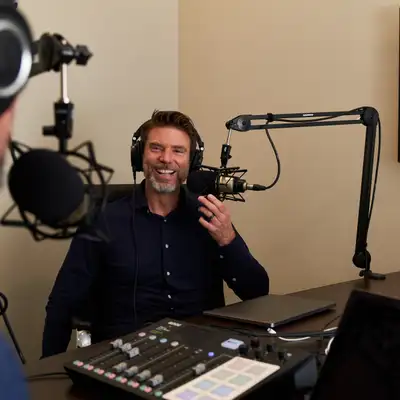
All right, there we go. Stay tuned. All right, so, Todd, here we go. I've got these two incredible guests in studio. It's doctor Roger McFarlane from the Radically Genuine podcast. And Tracy Thurman. Thank you both for joining us today in studio with very special day of decentralized TV. We've got Todd Remotely from Florida. You in studio. We're going to have a blast.
00;03;04;03 - 00;03;05;14
Speaker 4
So welcome.
00;03;05;16 - 00;03;06;07
Speaker 1
Thanks for having us.
00;03;06;13 - 00;03;07;12
Speaker 2
It's a pleasure.
00;03;07;15 - 00;03;12;07
Speaker 4
It's a it's a pleasure to have you here. Todd, when are you going to come?
00;03;12;10 - 00;03;13;19
Speaker 5
May.
00;03;13;21 - 00;03;20;05
Speaker 4
Okay. Okay, we'll be there. We'll we'll invite our guests back. It would be awesome to have all four of us in the same spot.
00;03;20;05 - 00;03;20;23
Speaker 2
It would be.
00;03;21;00 - 00;03;28;13
Speaker 4
But this will work, too. So this is the first time we've spoken. Doctor. Roger, can I just call you Roger only?
00;03;28;14 - 00;03;29;04
Speaker 1
Roger, please.
00;03;29;10 - 00;03;34;22
Speaker 4
Okay, I'll do that. Can you give us a little background of your work and your podcast?
00;03;34;25 - 00;03;53;24
Speaker 1
Yeah, I'm a clinical psychologist based out of Bethlehem, Pennsylvania, and I started a podcast back in 2021 called Radically Genuine. And really was response to a lot of what we were seeing with tyranny and, the Covid, pandemic. But I was coming from it from a different angle, which was the mental health epidemic that was occurring within our country.
00;03;53;27 - 00;04;24;11
Speaker 1
And what I was seeing and what we currently see is this mass prescribing of pharmaceutical drugs, XYZ, amongst others. In response to people having very normal and expected reactions to life events. And I've seen this over the course of my career in the mental health industrial complex, where it's this labeling and drugging model, which in itself has just created mass harm not only from just the collective consciousness and the way that we describe emotional pain, but the harm of these drugs.
00;04;24;11 - 00;05;01;15
Speaker 1
I did a deep dive on the background in the research of SSRI drugs to start, and really how they fraudulently were brought to market and how they're pushed on our primary care docs and the absolute dangers that these have on multiple levels. So I think in my own evolution, I just started with the science, but then I've kind of moved into a direction where, I really see this as very dark, a spiritual attack or weapon of war, really, because the drugs themselves, their prime effect is to really emotionally blunt and sedate the American population.
00;05;01;15 - 00;05;15;05
Speaker 1
Population of the Western world. And being able to look into what these drugs do as far as just mitochondrial poisons were now their main effect, I think, is really creating a, emotionally numb and sedated group of people.
00;05;15;09 - 00;05;15;20
Speaker 4
Which.
00;05;15;27 - 00;05;38;13
Speaker 1
Is going to lead what can be a transformational, episodic experience. Like life is hard, life brings about challenges. And we've manufactured a lot of these psychiatric illnesses. Oh, yeah. And the manufacturing of these illnesses has really impact the way that people view their own internal experience. It's like we've been sold on a lie. The American public has been sold a lie that life should be without pain.
00;05;38;16 - 00;06;08;12
Speaker 4
You've hit upon like ten big issues right there. But let me just say, I think Todd and I both agree with you. The over medicalization of normal human experiences and the range of emotions that used to be considered normal, like if your friend moved away down the street, you would be sad today. It's a disease. Yeah. You know, but just before we go on and I'm going to ask Todd to give you the first real question here, tell our audience how they can follow your your work, your podcast, your website.
00;06;08;14 - 00;06;28;18
Speaker 1
Sure. You can find me on X at Doctor Macmillan. You can go to doctor mcfarland.com just in my website. And the radically genuine podcast. And my Substack is what's really growing right now. That's radically genuine. Ken. Doctor mcfarland.substack.com where I'm writing on these issues, and it's, been a leading bestseller on on health politics on Substack.
00;06;28;18 - 00;06;32;13
Speaker 4
Let me just be clear. Your Substack prefix, is it radically genuine?
00;06;32;15 - 00;06;36;17
Speaker 1
It's radically genuine with, doctor Roger MC filmed by doctor Roger.
00;06;36;19 - 00;06;37;24
Speaker 4
It's kind of a lot of words there.
00;06;37;27 - 00;06;43;20
Speaker 1
If you just type in radically genuine. Okay, you know, you'll get me, but it's a doctor. Mcfarland.substack.com.
00;06;43;21 - 00;06;53;28
Speaker 4
Okay, so I might need drugs to type the whole. Yeah. No. I'm kidding. Yeah. And this is sometimes people don't know, should they spell out doctor or just use doctor this or that? You know what I mean?
00;06;53;28 - 00;06;55;00
Speaker 1
Yeah. ADR yeah.
00;06;55;01 - 00;06;57;28
Speaker 4
Like you say okay. If they just type in radically genuine. Yeah.
00;06;57;28 - 00;07;02;05
Speaker 1
And you can get from the radically genuine website, you can get to my Substack as well.
00;07;02;06 - 00;07;20;05
Speaker 4
Okay. And then, Todd, hold on your question. All right. I'm inviting Tracy to introduce yourself. Now, we've spoken before. You've done amazing advocacy work in many areas of liberty and freedom, but I understand there is some additional additional contacts you want to share with our audience today. So how would you like to introduce what you're about to cover?
00;07;20;11 - 00;07;41;07
Speaker 2
Sure. So yeah, I've been on this show before, huge fan and obviously Mike before, you know, we've talked about the Roger ver case, which I worked on. We've talked about the Amos Miller case, which I've worked on. So that's what I'm more known for. But I decided to start becoming public about the impact of SSRI drugs and, you know, the impact it had on my own life.
00;07;41;10 - 00;07;58;10
Speaker 2
And this is something a lot of people wouldn't want to talk about, but I'm watching. So many lives get ruined. So many young people destroyed, so many children drugged before they're old enough to think that. I've decided it's time to start being public about what I went through in hopes that others don't have to.
00;07;58;12 - 00;08;10;13
Speaker 4
So you're going to share some details with us today about your experience. I will, okay. And that's new information to me. I, I that's not something we've ever talked about. No. All right. So Todd.
00;08;10;15 - 00;08;11;04
Speaker 5
Yes, sir.
00;08;11;09 - 00;08;14;00
Speaker 4
We we have a full house here. We really do.
00;08;14;01 - 00;08;15;22
Speaker 5
So we really do.
00;08;15;22 - 00;08;17;06
Speaker 4
So where do you want to begin?
00;08;17;08 - 00;08;42;26
Speaker 5
Well, I'm. You know me, man. I my new strategy. Roger, doctor. Two part question. How do you define the psychiatric industrial complex? And who benefits most from it? And the second question is how much of what we call mental illness today is actually a rational response to a sick system?
00;08;42;28 - 00;08;43;29
Speaker 4
Oh, good question.
00;08;43;29 - 00;09;11;04
Speaker 1
Two great questions. Now I look at the psychiatric industrial complex from multiple perspectives. There's the therapy industrial complex. And there's psychiatry and corporate medicine. Obviously, the pharmaceutical industry is going to benefit greatly by the pushing of these drugs, right. The more we expand the market to metabolizing and normalizing the range of human responses, then you can create customers for life.
00;09;11;04 - 00;09;34;20
Speaker 1
And that's exactly what these drugs do, because they do create a cascade of problems, dependency being one of them. So when people try to get off these drugs, they experience, this withdrawal effect that gets mislabeled as, like, a return of your mental illness. Oh, so you have just millions of people who can't get off SSRI or a range of other psychiatric drugs?
00;09;34;22 - 00;09;56;11
Speaker 1
So it's corporate medicine is medical industrial complex benefits greatly. The insurance companies continue to, to benefit. I think it's, it's just a large machine and apparatus at this point. And I know I look at, you know, from any standpoint of a government that wants to have greater control over its people is you have to be able to create dependance on an authority.
00;09;56;13 - 00;10;16;26
Speaker 1
And that's exactly what you do. And you creating consciousness, this idea that there's something broken within you when you experience normal human emotions. And I think emotions are energy. I mean, they're what drive justifiable anger and revolution. I think when you're experiencing sadness, we don't even use the word sadness anymore. So the younger generation just labels it as depressed.
00;10;17;01 - 00;10;41;27
Speaker 1
So you can't even identify with the word being sad. It's not normalized in our culture anymore. And these are signals like these are primary signals that let us know that there's something in our life that we have to change. And instead, when you begin to internalize that as, oh no, there's something wrong with me, some biological abnormality, well, you just surrender yourself to the medical autonomy or to the medical authority, and you surrender your autonomy.
00;10;42;03 - 00;11;02;27
Speaker 1
And now you see your life completely different. See what's what's held in consciousness really matters to me. So obviously there's a huge industry. The therapy industry, in the same respect, is where you take these kind of normal and episodic conditions. You know, people are struggling in their in their life and now they just focus on it, you know?
00;11;02;27 - 00;11;03;20
Speaker 1
And I think if they.
00;11;03;20 - 00;11;04;15
Speaker 4
Identify, they.
00;11;04;15 - 00;11;28;05
Speaker 1
Identify with these with these labels. And that's a real concern with me. Abigail Schrier wrote a great book called Bad Therapy. And and what it does, it takes advantage of vulnerable people where you don't necessarily see problems in your life. That's just something to overcome. You actually, like deep dive and focus on every area of your life that is like causing some degree of of a problem.
00;11;28;10 - 00;11;41;28
Speaker 1
And so if you know anything about human flourishing, like the worst thing you can do is just focus on yourself all the time. Yeah. And the therapy industry has a way of doing it. So, you know, that's the that's the complex in itself. And I'm sorry. Now when you have these two part questions, then the second one, I did know.
00;11;41;28 - 00;11;50;13
Speaker 4
That that's okay. He's using that to stuff extra questions into the timeline. That's a trick he came up with about two episodes. Todd, we're on to you.
00;11;50;16 - 00;12;02;07
Speaker 5
I know you are. And everybody should know who's seeing this shot right now. I am also known as Big Head Todd and the monster. And you can buy my any anytime.
00;12;02;09 - 00;12;27;10
Speaker 4
Okay, but. But picking up on what you just said, I've heard many people say something like, quote, I'm bipolar. Yeah. I'm like, well, so is the planet. I mean, well, that sounds earthy to me, but, people identify as their disease, right? I'm A.D.D. or I'm ADHD. I just say, I mean, I'm creative. I'm curious. I have a lot of energy to explore the world, label it however the fuck you want.
00;12;27;10 - 00;12;40;10
Speaker 4
I'm I'm going to look at the world and have fun with it. I'm sorry about my profanity, but every emotion and every every benefit and trait and creativity of a kid is not some disease to be drugged into oblivion.
00;12;40;15 - 00;13;21;20
Speaker 1
Yeah, I argue against the idea. They're diseases at all. The DSM, the Diagnostic Statistical Manual, which is the psychiatric Bible, has the the worst right. Reliability and validity that you can imagine. Does it mean even like the big the minimum kind of standards for scientific efficacy at all. And so we have these descriptive labels which are just like which you can just continue to expand when you're talking about mood, for example, or you talk about mania or hypomania, you just continue to expand the definition of what that means to the point where if you live this very restricted life, where you hardly feel anything, that apparently is normal for the psychiatric industry.
00;13;21;26 - 00;13;34;10
Speaker 1
So these aren't diseases at all. There's no medical test, there's no bio biomedical test at all, although they've argued that there's this chemical imbalance. Obviously there's no scientific basis for that. There's no testing, there's.
00;13;34;10 - 00;13;36;08
Speaker 4
Just the opinion of the psychiatrist, typically.
00;13;36;10 - 00;13;51;06
Speaker 1
Which is so dangerous because in my line of work, I've seen people be psychiatric for psychiatric hospitals. And once you get in there, you're forced, drugged. And this can be from conditions of just like somebody was in a abusive relationship and they got out of it.
00;13;51;06 - 00;13;51;15
Speaker 5
Yeah.
00;13;51;16 - 00;14;11;23
Speaker 1
Or now what we're seeing is this rise in what they call spiritual delusions, because you can't talk about God in the psychiatric industrial complex because it's a pure materialist paradigm. So if you say, I found Jesus or I found God, or you know, I feel I'm praying over somebody or feel happy, they start automatically kind of evaluating the presence of a delusion.
00;14;11;28 - 00;14;15;07
Speaker 1
There's a huge uptick in these cases as well.
00;14;15;10 - 00;14;30;12
Speaker 4
Yeah, yeah. Wow. Okay. So, Tracy, you want to jump in on this, is that Roger? Open the book right there to a number of topics. And Todd, hold your question. Sure. You'll be up next. But Tracy, where do you want to jump in?
00;14;30;17 - 00;14;57;25
Speaker 2
This is interesting to me because, like, I'll go go into a little more of the story of how I landed up on these drugs in the first place. You know, I didn't. I'm a strange situation of having not landed up on them due to actual symptoms of sadness or worry, but the one thing I will say, you know, on on what Roger just mentioned, in terms of the spiritual aspect, my experience is that XYZ do the opposite of what psychedelics do.
00;14;57;27 - 00;15;19;20
Speaker 2
Psychedelics thinned the veil for good or bad. They thinned the veil to the experience of the other world. Psychiatric drugs thicken the veil and disconnect you entirely and the difference could not be stronger. I was a person of faith at the time that I was put on these drugs. Very shortly thereafter I became a full blown materialist atheist.
00;15;19;20 - 00;15;21;06
Speaker 2
My connection to the divine was severed.
00;15;21;09 - 00;15;21;21
Speaker 4
Really?
00;15;21;24 - 00;15;47;09
Speaker 2
Yes. And I continued in that for years. About seven years as a materialist atheist, you know, interacting with, you know, the American Atheist organization. Richard Dawkins, that whole crowd, until I used psychedelics and I did it to, to treat PTSD like self, you know, self treatment and ended up accidentally curing my atheism instead.
00;15;47;11 - 00;15;47;28
Speaker 2
But then.
00;15;47;28 - 00;15;48;22
Speaker 4
That thin, the.
00;15;48;22 - 00;15;50;07
Speaker 2
Veil of the veil.
00;15;50;09 - 00;15;51;12
Speaker 4
With the divine.
00;15;51;20 - 00;16;10;21
Speaker 2
Yes, it did. And, I learned from personal experience, what many other people have come to see as well, which is that these drugs are very dangerous because they do disconnect you from empathy. Oh, yeah, but they disconnect you not just from your fellow humans. They disconnect you from the divine.
00;16;10;21 - 00;16;14;07
Speaker 4
Well, that's why they're also associated with, you know, demonic mass shootings and school shootings.
00;16;14;07 - 00;16;14;24
Speaker 2
Exactly.
00;16;14;24 - 00;16;35;26
Speaker 4
Because the the person, as I understand it, maybe, Roger, you could explain more. But the young usually the young male kid who's been bullied in school, he gets put on SSRI and then he feels like he's no longer connected at all. And he's not even a real person in a real world. It's a simulation. And then the shooting has no, you know, moral and spiritual consequences.
00;16;35;29 - 00;16;38;23
Speaker 4
Is that a fair or how would you describe it?
00;16;38;25 - 00;17;02;13
Speaker 1
I just published an article on this, titled They Want You to Feel Dead Inside. And I think that's the best description of a victim of the psychiatric industry is what they determined to be. Effective treatment is to, like, feel nothing. And, you know, one of the things that's so important for a culture is this interconnectedness, between us and all of nature.
00;17;02;16 - 00;17;26;27
Speaker 1
And when you are disconnected and Tracy mentioned there's good scientific data regarding decreasing empathy, we see this in changing marriages where, a spouse started on an antidepressant and, and kind of rewrote their own history with their spouse and has a belief that, that marriage is broken up families. There's a large Facebook group around this. So I think I see this as an attack on life.
00;17;26;29 - 00;17;54;19
Speaker 1
I see it as a spiritual weapon of war just because of the consequences of taking these drugs. Once you once you get in the way of somebody kind of facing their darkness and understanding their life as a soul's journey, and you talk about yourself as kind of like a machine, machine like as if we're, you know, just a kind of in a meat suit here where you can you can intervene on a certain neurochemical in the brain and then improve the human experience.
00;17;54;22 - 00;18;27;04
Speaker 1
It's a very dangerous road because those consequences have been significant in our culture. And there's, without a doubt, an increase in violence against self and others. For people who take just one SSRI, you know, that's scientifically validated. Now, what happens then when you combine those with other mind and mood altering drugs? Well, they've never been evaluated, but you can only imagine when you begin to interfere with nature in that way, is that people feel like they are completely detached and disconnected.
00;18;27;11 - 00;18;42;05
Speaker 1
And I believe, vulnerable to messages, whether those are dark, demonic messages or if there's an intelligence agency or someone else who wants to institute a degree of control over the person. It's easy to plant things into a person's subconscious, which I think is part of it.
00;18;42;10 - 00;18;52;25
Speaker 4
The the MK ultra health care system. Hey, Todd Trump says he's he's going to revolutionize health care and make all these drugs less costly. Yeah. So anything about that?
00;18;52;27 - 00;18;58;08
Speaker 5
Well, yeah, he's on it, man. I mean, why I voted for him.
00;18;58;11 - 00;19;01;10
Speaker 4
Not just discount SSRI.
00;19;01;13 - 00;19;03;02
Speaker 5
Yeah, right.
00;19;03;04 - 00;19;04;07
Speaker 4
I buy him by the dozen.
00;19;04;07 - 00;19;09;13
Speaker 5
You know make SSRI is great again Mike.
00;19;09;15 - 00;19;11;02
Speaker 4
That's too many letters for the hat. Yeah.
00;19;11;02 - 00;19;43;01
Speaker 5
And it's way too many letters. Yeah. Tracy, first of all, thank you for, sharing and lifting the veil to your medical history. And, and it teed up tees up a question that I wrote that I'd like to ask you. Roger. How often is mental illness actually a crisis of meeting meaning or spiritual disconnection? And if it is, and suffering is rooted in lost meaning, can medication ever, ever be the answer?
00;19;43;03 - 00;20;04;09
Speaker 1
No, never. It's actually an impediment. And so what's interesting is we have this umbrella term called mental illness. And so when people think about that, they associate it with maybe someone who's homeless on the street and has schizophrenia. And that's actually quite rare condition, which we treat very poorly here in the United States with antipsychotic drugs which just create metabolic illness.
00;20;04;09 - 00;20;31;13
Speaker 1
And, a cascade of other problems where other countries who approach the condition differently have much better response rates. But what is under the umbrella now of mental illness? I guess mental illness is anything that causes some emotional distress at all. Any suffering. And what I see in my practice 15 years ago, you know, you have a percentage of people that came in on, like, one psychiatric drug.
00;20;31;13 - 00;21;02;23
Speaker 1
Now, it's rare for us to see anybody come into our center without it being on at least one psychiatric drug on all of these conditions. And nearly 100% of these conditions started with a very understandable life circumstances. And their response to the life circumstances can be problematic. Can either lead you to overcome it, or you can then go down a road in which you self-identify as being ill or broken, and it alters your own perception of who you are.
00;21;02;27 - 00;21;26;07
Speaker 1
But when we talk about these conditions that are on the rise, depression and anxiety for example, those labels, I really do believe it's a crisis of meaning. You know, we're more excluded, from each other. We're separated. We're in this illusion of separation. And the more you get disconnected and then you throw yourself into technology and you're living this virtual world under artificial lighting.
00;21;26;07 - 00;21;28;26
Speaker 4
I can't wait to ask you more about this. Yeah, we'll save that for later.
00;21;28;26 - 00;21;48;11
Speaker 1
I mean, you're basically eating poisons, right? You have this. You're detached from natural light. You're not connected to nature in the way that we used to be. You're not interacting together. You're creating this virtual world. And one of the things that I've done in every single evaluation is I tell ask somebody because they're often looking for some type of label or diagnosis for what they're feeling.
00;21;48;11 - 00;22;09;09
Speaker 1
I'll say, pull out your phone, let's look at your screen time. And I've seen this over the past 15 years. You know, it would start off with someone's like on their phone for like two hours a day. And I used to think that was, you know, way too much. And now I'm seeing 8 to 10 hours on that phone is typical for the younger generation.
00;22;09;09 - 00;22;21;22
Speaker 1
So younger generation, I'll say somewhere between 16 and 25. You know, that core group that's turning to these drugs, they're self labeling with these conditions. I have depression, I have experience, and they're looking for the chemical solution.
00;22;21;24 - 00;22;25;09
Speaker 4
And this phones eight hours a day. In many cases.
00;22;25;11 - 00;22;27;02
Speaker 1
They are if you've ever witnessed.
00;22;27;04 - 00;22;28;17
Speaker 4
That's just.
00;22;28;19 - 00;22;30;23
Speaker 1
If you ever witnessed the younger generation free.
00;22;30;23 - 00;22;31;27
Speaker 4
Time I mean.
00;22;31;29 - 00;22;39;09
Speaker 1
They interact with each other on the phone like they're in a group situation. They're on their phones interacting through social media.
00;22;39;11 - 00;22;43;13
Speaker 4
Whoa. Okay, so, Todd, are you going to jump in with something else there?
00;22;43;19 - 00;22;55;05
Speaker 5
Yeah, I just wanted to say, can you can you educate us, to what psychosomatic means. So when somebody does start to label self, label how that can manifest.
00;22;55;07 - 00;23;26;01
Speaker 1
Yeah. Psychosomatic is just what it was. Unidentified conditions that we believe are created by the mind, which I would argue there's probably a lot more than what we recognize that consciousness influences the physical body influences matter. Right. So we see this with the placebo effect and how powerful that is. It's not just a nuisance for the drug companies to compare their, their product to like, it is really that the mind has this powerful ability to self-heal, to relieve pain, especially in mental health.
00;23;26;01 - 00;23;58;03
Speaker 1
This is the challenges the pharmaceutical companies had with trying to get XYZ to market, is because the placebo had such a strong response, and so we don't create the conditions where people can self-heal again under the illusion of separation, believing that what they experience physically is some outside source. They don't even most people, I believe, you know, I was listening to one of your shows recently talking about the, the myth of like being able to catch a cold or viruses.
00;23;58;03 - 00;24;22;10
Speaker 1
Right? So people have this fear based consciousness which they enter into all relationships. What's the consequence, then, of being in fear? I think that we're it's it puts that as a disease state. Right. So the body's not aligned. And the nervous system isn't aligned. And what does that do to the the immune system. So I think we see this range of effects that people have that are termed psychosomatic.
00;24;22;13 - 00;24;32;28
Speaker 1
But they certainly are a representation of what the media provokes or what one is exposed to in our culture that leads them to like, adapt that. That's a.
00;24;32;28 - 00;24;54;19
Speaker 4
Critical point. I'm glad you brought that up, because we are trained by the media to believe certain narratives, like if you're sad, it's because of a brain chemistry imbalance that can be corrected with a pill. Now, for me personally, I've never taken any psychiatric drugs. Ever. Not once. I'm not saying that makes me a better person or whatever.
00;24;54;19 - 00;25;16;10
Speaker 4
I'm just saying I never thought that whatever I was feeling because I've felt the whole range of emotions sadness, frustration, anger, joy, happiness, whatever. But I never thought that the answer to regulating that was going to be found in the pill. Now, then again, I'm I'm pretty much at the very edge of the bell curve of like, resisting bullshit.
00;25;16;12 - 00;25;40;23
Speaker 4
And not everybody is there. But I have always known that these drugs are not going to help me be a better person. I've known that things that make me feel good are exercise, or today I actually exercise in a forest with sunshine and kettlebells on the forest floor. I refuse to exercise indoors regardless of the weather. I've been cold and wet out there and happy and joyful.
00;25;40;23 - 00;26;01;29
Speaker 4
Okay with kettlebells. But Tracy, the question to you what was the gateway that got you on to the psychiatric drugs? What were you working with a psychiatrist did? Was it a self decision? How how did you come to believe at that time that those would help you?
00;26;02;02 - 00;26;20;12
Speaker 2
So I suffered a vaccine injury when I was 20 years old, and it was the Gardasil vaccine. I was one of the first girls, you know, the first wave of girls given this vaccine. No, no. Informed consent. Didn't know really what it did. I just know doctors always know what they're doing. And if you know, if they tell you to take some that you definitely should.
00;26;20;14 - 00;26;38;16
Speaker 2
I was told it would, you know, keep me from getting cancer or not. What type of cancer or not, you know. Yeah, none of the real details. But so I took the vaccine and suffered a severe vaccine injury, where by the two weeks after the third of the three shots, I was in the hospital, they were trying to put in a pacemaker to keep my heart going.
00;26;38;16 - 00;26;39;12
Speaker 4
While.
00;26;39;15 - 00;26;56;29
Speaker 2
I was, you know, when I would stand up, my heart would stop. After a few minutes, I was in bad shape and then I was put out on social on, you know, I'm on disability. My student loans were written off. That doesn't even happen in bankruptcy. They wanted you for years and if they decide you are a permanent lost cost, they'll write off your student loans.
00;26;57;02 - 00;27;21;14
Speaker 2
So I was not in good shape. And about two years after that, I saw a doctor that wanted to put me on, Provigil to because I was provincial is a, you know, drug that it's an amphetamine to keep you awake. Oh, because I was suffering such severe brain fog and, hypersomnia and sleepiness where I was sleeping, you know, up to 16 hours a day.
00;27;21;17 - 00;27;37;13
Speaker 2
And so I wanted to put me on this, and I, I knew that that was an amphetamine. And so I said, no, that's I know that's habit forming. It's addictive. And they said, tell you what, there's this other drug we can put you on instead that will just give you energy. But it's been out for 30 some years.
00;27;37;13 - 00;27;43;23
Speaker 2
It's not habit forming at all. It's very safe. It'll just raise your energy a little. It's called Prozac.
00;27;43;25 - 00;27;44;26
Speaker 4
Okay. Wow.
00;27;44;29 - 00;27;54;22
Speaker 2
So, did they think I was anxious or depressed because I was sick? Who knows? But it was given to me by cardiologist, so it didn't even occur to me to look it up.
00;27;54;25 - 00;27;55;19
Speaker 4
It's bizarre.
00;27;55;19 - 00;27;59;17
Speaker 2
It didn't. It never occurred to me this was a psychiatric drug that I was being put on.
00;27;59;19 - 00;28;07;13
Speaker 4
And they do. They throw these pills at patients for everything. Yep. Need to control your mood, control your energy, control your sleep control.
00;28;07;15 - 00;28;08;06
Speaker 2
Exact blood.
00;28;08;06 - 00;28;10;23
Speaker 4
Pressure. I mean, it's just pill after pill after pill.
00;28;10;23 - 00;28;43;25
Speaker 2
Yeah. So I'm I'm put on this drug. Interestingly, the same day a friend is put on it by the same cardiologist, I have questions that were probably never be answered there, but then in tandem, we both witnessed our faith disappear, our connection to our partners disappear, our connection to other people disappear. Empathy. Thank both of us. You know, we're we're very young, married, young, you know, not to the right person, but still, and both of us left our marriages almost immediately.
00;28;43;27 - 00;28;49;06
Speaker 2
You know, I was 22 years old, I guess, at this point.
00;28;49;08 - 00;28;57;17
Speaker 2
And, yeah, my life was blown up, but I didn't realize it was blown up.
00;28;57;19 - 00;29;19;06
Speaker 2
And I think that is true of so many of the people put in these drugs. Because you are disconnected. You don't know how disconnected you are. And so it was years until I found psychedelics before I realized how disconnected I had become when the connection returned. That was when I knew. And so to me, that is one of the greatest dangers here, is that there are so many people.
00;29;19;10 - 00;29;26;24
Speaker 2
And my my heart hurts for the young women, especially going through this because you don't know what you're going through when you're going through it.
00;29;26;28 - 00;29;34;10
Speaker 4
And what what psychedelics did you explore? Were you doing microdosing psilocybin or what kinds of things.
00;29;34;10 - 00;29;55;05
Speaker 2
I had read? Michael Pollan's book How to Change Your Mind, and I was dealing with some PTSD issues related to childhood, and I couldn't find anyone to do it for me. Or, you know, with me as a, as a, as a guide. So I did what I, you know, full disclosure, I would not recommend this to anyone else, but I decided to do it for myself.
00;29;55;07 - 00;30;05;03
Speaker 2
And so I began meditating in a sensory deprivation tank three days a week for 90 minutes, and then eventually did a hero's journey dose of psilocybin in a sensory deprivation tank.
00;30;05;05 - 00;30;06;09
Speaker 4
Whoa. Wow.
00;30;06;09 - 00;30;33;29
Speaker 2
And I went into that tank, one person and came out a very different person, as anyone in my life will tell you. Like Tracy before that. Tracy after that. Not the same person. I have been disconnected from my family completely. I'd been been estranged from my family. I came out of that, that tank having had a equivalent to a near-death experience and having it connected to, source consciousness, the experience of being the drop in the ocean but indistinguishable from the ocean.
00;30;34;02 - 00;30;36;23
Speaker 2
And then I wrote a letter to my parents and reconnected.
00;30;36;23 - 00;30;40;20
Speaker 4
So your reality must have come flooding back into your consciousness? It did. In a way it did.
00;30;40;20 - 00;30;46;00
Speaker 2
I mean, I went through it was equivalent to a a life review where people in near-death experiences go through. Wow.
00;30;46;06 - 00;30;48;24
Speaker 4
And plus, the sensory deprivation must have made it really intense.
00;30;48;24 - 00;30;50;19
Speaker 2
Very intense. Yes.
00;30;50;22 - 00;31;12;18
Speaker 4
Have either of you heard of, ibogaine or I, Boga? Because I interviewed a woman who does, I guess I boga type of experience at leading people through those experiences, which are apparently quite profound, is that, either one of you is that of some therapeutic exploration for people. Does that have a role in healing?
00;31;12;20 - 00;31;40;17
Speaker 1
Now, a lot of that's anecdotal evidence. I think we need more scientific evaluation with with all these drugs, including, you know, psychedelics, for example. The question is always for whom? Under what conditions? For what? Yeah. And those things are really important to study. As a social scientist myself, I'm very interested because I've come across veterans and survivors of various trauma who their healing came through that experience.
00;31;40;19 - 00;32;21;21
Speaker 1
And it's really important because what they begin to realize is that there was some purpose for the challenge that they went through. Right. And so when we talk about the interconnectedness of all things, as you walk out of an experience like that in your perception of what happened to you, shifts dramatically, that comes from that experience. And if we can find a way to recreate that, in a therapeutic sense, yeah, I think that really changes our, our outcomes because the typical psychotherapy approach to treating PTSD is slow.
00;32;21;24 - 00;32;36;02
Speaker 1
The outcomes are moderately strong, you know, depending on the type of therapy that's provided. But a one session psilocybin treatment and it changes the life of, of a veteran, you know, those are things we have to pay attention to.
00;32;36;04 - 00;33;07;28
Speaker 4
Yeah. Well, exactly. And let me Todd, let me, let me ask the next question. Then it'll be back to you. But I, there's someone in my family who is a, counselor and a mental health counselor, and they tell me that in their whole experience of many decades of doing this, they've never seen people more stressed, more emotionally distraught and frustrated and so on.
00;33;07;28 - 00;33;28;17
Speaker 4
Is is there an external factor of just life being harder today for economic reasons, for political strife, reasons for social media, ie job replacement? You know, all these factors that come in, it's hard to afford a house, especially for younger generations. How much do these impact what you are seeing in your practice?
00;33;28;20 - 00;34;01;25
Speaker 1
Those are major factors as well. But I look back at human history and just our ancestors and what they've had to go through just to immigrate here, or the challenges with famine and war and disease through we are resilient people. But what happens when we separate and isolate ourselves from each other? We're no longer really tribal. And so I think it's a different type of condition that people are experiencing where there's a lot more, attachment to technology.
00;34;01;27 - 00;34;32;15
Speaker 1
There's not a not as many conscious beings. And what I mean by that is people come into my office and there's not a high level degree of self-awareness of their own internal world because they're in what I called drift. A great book, Outwitting the Devil by, Napoleon Hill introduced this concept called drift. Fascinating book, because the devil's discussing how they how he influences souls on on this earth and drift is anytime we're just not conscious.
00;34;32;22 - 00;35;07;17
Speaker 1
So at that point, radio, but then television and now the use of smartphones and technologies, we're not really mindful and present to the same extent. And so what we're doing is we're being heavily influenced then by propaganda. And that propaganda is defining the human experience. That's why it's so important for us to disconnect fully from technology, be able to be in stillness more often, be able to be in nature more often, and most importantly, have in person contact and connect with each other.
00;35;07;19 - 00;35;34;18
Speaker 1
So the more we become isolated and we're not in these real relationships anymore, we're in this virtual world, and you're numbing yourself out with alcohol and Netflix and XR eyes. To me, it's very clear that the natural consequence to that is to be miserable and to be sick. And that's what we we see now. There are other factors economically, of course, two parents having to work and then the challenges with their own kids is a whole nother issue.
00;35;34;24 - 00;35;44;03
Speaker 4
Let me ask Todd's AI avatar. Todd, the what a great guest, I mean, both of them to me, we haven't covered this topic on this show. This is a wake up call.
00;35;44;05 - 00;36;12;27
Speaker 5
We haven't. And and, Tracy, it's like, wow. From what I know about a hero's dose of shrooms. What are you, a 120 pounds? Wow. That's crazy. And your story connected with me. I have somebody very special in my life who just had a traumatic upbringing and really, really, tried to get themselves off the same drug that you did.
00;36;12;27 - 00;36;45;23
Speaker 5
And ultimately, they went through a similar journey, whether it be through, you know, shrooms or they did do Ebola and ayahuasca. And it wasn't until they tried. And I'm not endorsing this. I'm just sharing the story. Ketamine, the ketamine lozenges or whatever that to where she had an amazing breakthrough. So, really opens my mind up to, these the these, I don't know, natural, natural treatments, I guess.
00;36;45;25 - 00;37;13;00
Speaker 5
But my question is this, towards you, Tracy, is what happens because you referred to your atheism, and then, having a an experience that modified everything to you that lifted the veil. What happens when therapy removes God purpose and moral framework from healing? Tracy.
00;37;13;02 - 00;37;16;04
Speaker 2
I'm now unapologetically not an atheist.
00;37;16;06 - 00;37;16;29
Speaker 5
Nice.
00;37;17;02 - 00;37;24;19
Speaker 2
And I would say I don't know how one can truly heal without knowing who you truly are.
00;37;24;21 - 00;37;25;11
Speaker 5
Very good.
00;37;25;13 - 00;37;44;17
Speaker 2
We're souls that come here to have a human experience. I am not Tracy, right? I am a soul who came here to have a human experience. Tracy is a costume like Mike is a costume. Roger is the costume. But who we are are souls who came here to have an experience. We didn't come here to be numbed out.
00;37;44;20 - 00;38;12;09
Speaker 2
We didn't come here to be drugged. We came here to have the polarities, the highs, the lows, the joys, the sorrows of a human experience. And when I finally decided, when I finally realized what the accessories were and decided to take myself off them, I would not recommend people do this, you know, by themselves. There's a there's a great, gentleman called Anders Sorensen who has a Substack.
00;38;12;09 - 00;38;30;08
Speaker 2
People can go look up called Crossing Zero, who has a fantastic book again called Crossing Zero, which walks through Safe Tapering. And I recommend anyone who wants to get off these drugs. Go read that. Go read his writings before you go to a doctor and trust their advice on how to taper, because most doctors don't know how to do it correctly.
00;38;30;10 - 00;38;52;24
Speaker 2
But I did it myself because I didn't trust medical, authorities at this point, and I didn't do it right. I did it in a linear taper rather than a taper. I think it's very slow at the end. And so it was it was a difficult experience for me. But I started it two weeks before my mother was diagnosed with an aggressive stage four cancer.
00;38;52;24 - 00;39;01;01
Speaker 2
That was going to be terminal. So I'm experiencing coming back online emotionally.
00;39;01;04 - 00;39;05;21
Speaker 2
At the time that I am losing the person I love most in the world.
00;39;05;23 - 00;39;06;29
Speaker 5
Wow.
00;39;07;02 - 00;39;29;25
Speaker 2
And it was a crucible. If you asked your average psychiatrist, they would have absolutely told me, get back on that drug. You're feeling too much. This pain is going to be too deep. And it was deeply painful. It was searing. But how much worse would it have been for me to not feel that pain? For me to not experience it should hurt.
00;39;29;28 - 00;39;57;27
Speaker 2
I loved my mother. Pain is a price we pay for love. Grief is that price. And so for me, there was healing in the pain. There's healing in the grief. And to me, what is so broken about this idea of pain being bad, psychological, emotional, spiritual pain automatically being bad is it is often where we grow the most.
00;39;57;29 - 00;40;22;23
Speaker 2
When my mother died two years later, I spent much of the last week just sitting with her, holding her hand, singing to her. I was able to be present spiritually in a way I never could have been on the drugs. Did it hurt more? Of course it did, but it should have. And so to me, that's the biggest deal is the lie is don't feel.
00;40;22;26 - 00;40;27;25
Speaker 2
The reality is realize who you are, what you came here for. And pain is part of that experience.
00;40;27;25 - 00;40;54;20
Speaker 4
Right. And thank you for sharing that very intimate experience. By the way. And you hit upon so many critical points. You know, the modern day, so much of our society is are these numbing drugs. But speaking about religion and spirituality, the Christian community in America is on all kinds of social rows and they are so numb. And this is my opinion statement.
00;40;54;20 - 00;41;29;19
Speaker 4
But the vast majority of conservative Christians in America now endorse genocide. They have they feel nothing for fellow human beings. They think they are ambassadors of Jesus Christ who never would have committed genocide. While they are endorsing wars, attacks, bombing children, shooting doctors and hospitals in Gaza, etc. and I have to think, but the question to you, Roger, I have to think that that's more than just kind of a, like a religious thematic indoctrination.
00;41;29;19 - 00;41;53;09
Speaker 4
There's something really disconnected, especially in people who claim to know Christ and yet endorse violence against innocent children. That never made sense to me. And I didn't mean to make this, you know, political about the Middle East, but it is happening, and it is something that's going on in our world with the Christian community. Right now.
00;41;53;11 - 00;42;32;02
Speaker 1
We're clearly in a spiritual battle, there's no doubt about that. And one way the dark and the enemy can win this war is by shifting or altering the human experience. What makes us human is our shared empathy and our connection for others. The fact that we can become desensitized to images of homicide, genocide, and then try to rationalize it in some way as if it's of God, is one of the more confusing aspects of our modern time, for me personally.
00;42;32;05 - 00;42;56;28
Speaker 1
And that's where I'm really concerned about the psychiatric drugging of our population and the amount of Christians that are willing to take SSRI, because, as I mentioned earlier, and Tracy did such a great job of explaining this is it does sever us from that deep and depths of the emotional experience, the empathy that is necessary to protect one another, to really feel hurt for a fellow human being.
00;42;57;04 - 00;43;23;04
Speaker 1
We have these mirror neurons. It's part of the human experience to love one another, and that's a strong message throughout scriptures. And the more that the enemy attempts to sever that connection amongst each other, then that spiritual darkness is what wins in a time like this. And we have to wake up our fellow Christians to the love and connection and empathy, to one another.
00;43;23;04 - 00;43;32;27
Speaker 1
There's no justification for murder, in my opinion, at all. And it's, it's been a sad state of affairs.
00;43;32;29 - 00;43;35;08
Speaker 4
Todd, your comments.
00;43;35;10 - 00;43;42;06
Speaker 5
Well, yeah, I think I kind of want to talk about, technology. I and I.
00;43;42;09 - 00;43;45;19
Speaker 4
Do want to get to that. Yeah. Let's go ahead and pivot. Go ahead.
00;43;45;21 - 00;44;15;01
Speaker 5
Yeah. I believe we're witnessing mass psychological conditioning through digital platforms. And I believe I concur with you. I believe there is spiritual warfare going on right now. I happen to believe it rewinds back to Genesis six and the people behind all of it, they've been at it for a long time, eons. And I believe these disembodied spirits that their food is fear, is outrage.
00;44;15;01 - 00;44;24;15
Speaker 5
And so my question to you, doctor, is how damaging are algorithms built on fear and outrage in our digital platforms?
00;44;24;18 - 00;44;30;08
Speaker 4
Like social media, algorithms amplify the crisis like clickbait.
00;44;30;10 - 00;44;57;04
Speaker 1
Yeah, Very damaging. I've been publishing a series on brainwashing for my Substack. Going into these psychological techniques, these psyops, and the way that they influence us. And so, obviously, because we have these ancestral scripts where we are built to survive, number one. So what's going to garner our attention is anything that can provoke that fear. And it's, script breaking, right?
00;44;57;09 - 00;45;15;15
Speaker 1
Oh. That's dangerous. I have to pay attention to it. And then the second thing is, from an ancestral perspective, if we did not pay attention to the authority within our tribe, then we would be outside the tribe and we'd be vulnerable to death. So it's like in our brain stem, right? That's so biologic.
00;45;15;15 - 00;45;16;25
Speaker 4
Audience is hard wired.
00;45;16;29 - 00;45;43;00
Speaker 1
Yep. Hard wired in there. And so these algorithms, of course, they're going to be able to measure everything about your attention because your attention is the commodity. And so if you just pause on, a certain, real or something on your feed, right. They're measuring that. And that's why you're pushed especially young, you know, young men are pushed these bodies of girls.
00;45;43;00 - 00;46;03;02
Speaker 1
So you pause and you get more and more porn or violence at the same time. You get more and more of these images. You know, there's a reason Charlie Kirk's assassination was pushed out into the field in that way. And it's what happens. We're in that drift again. So we're in this like alpha state, and we're ingesting this into our subconscious.
00;46;03;04 - 00;46;32;00
Speaker 1
And then our automatic reactions to a lot of life events are then that same fear provocation, where we're more likely just to fall in line to whatever the authority tells us to do. We're mask conditioned in that way. And that's why you isolate people, too. Because what's interesting in the Milgram experiments, the obedience, experiment experiments, what they don't publish, what they haven't posted was that there were further, research evaluations into what happens under various conditions.
00;46;32;02 - 00;47;01;08
Speaker 1
And if the person observed someone resisting. So the Milgram experiments was the electric shock experiments, where we saw that 67% of human beings would continue to follow the authority to provide an innocent person an electric shock that would kill them. So that means 67% of people can be pushed to murder a fellow human being if the authority tells them to continue to do it.
00;47;01;08 - 00;47;09;08
Speaker 1
Yes. However, if somebody resisted a head that went down to 10% so you could so him.
00;47;09;08 - 00;47;12;04
Speaker 4
That's us. We are the resistors who show others.
00;47;12;04 - 00;47;35;06
Speaker 1
Yes. Yeah. So that's why it is so important to understand who your authority is. You have one authority and that is God. And that's the moral authority. And that is how we should be making decisions. And we should be connecting with each other to understand that we have a God given right to resist authority that oppresses and harms other people.
00;47;35;08 - 00;47;59;29
Speaker 4
And what's really I'm glad you brought out the Milgram experiments, because one of the critical aspects of that was, as I recall from reading some of the because it was reproduced so many times and so many labs all over the world, but when the study subject would verbally offer resistance, I don't want to shock the person. The the authority figure would say, but the protocol requires you to continue.
00;48;00;03 - 00;48;24;18
Speaker 4
Yeah. See, here it is on the clipboard. And the person. Okay. It's required. That's the way people comply with the IRS with any kind of government survey forms, which I just throw in the trash. You know, everything the government's telling you. Oh, you have to register this. You have to do that. ATF register your your, what, arm brace Ar15.
00;48;24;18 - 00;48;40;20
Speaker 4
I'm like, I don't think so. No, I'm not going to do that. And then that got overturned anyway. So no longer a felon. But it's all the same authority bullshit, isn't it? And it's all fiction. It's a fiction that people make real in their mind, isn't it?
00;48;40;27 - 00;49;03;00
Speaker 1
It's also rooted in our educational system. So you look at the public school system is what are you conditioned to do from such a young age, is that you are to follow the authority, which is that teacher. Right. Sit in your rows. The bells are the factory bells. Raise your hand. Do not speak unless your hand is is raised.
00;49;03;07 - 00;49;06;17
Speaker 1
And God forbid, you act like a child. You know you want to actually.
00;49;06;19 - 00;49;07;08
Speaker 4
Be truth.
00;49;07;13 - 00;49;22;29
Speaker 1
Right? You're going to now, you know they're going to get that referral for these made up conditions like ADHD. So your condition at a very young age to have to follow the rules. And so people are so scared of getting back to those ancestral scripts to step outside of, you know, what they view to be as, as the tribe.
00;49;23;06 - 00;49;42;10
Speaker 1
And there's always usually only a small group of, of people, percentage wise, who are willing to fully resist and they get labeled, you know, in the suburb, make them troublemakers. And of course, this is where the psychiatric industrial complex comes into play. How easy now it is to view that there's something wrong with you, when really there's everything right with you.
00;49;42;15 - 00;49;43;12
Speaker 4
Right.
00;49;43;14 - 00;49;53;05
Speaker 5
And I might I would think it's appropriate for you to to share with doctor McFarland the very first book that you ever wrote, with your eye.
00;49;53;10 - 00;50;14;20
Speaker 4
That's true. Yeah. So you know, I built the book engine, and bright learned I. And actually, I announced on the show with Todd, I said the very first book that I want to produce with this is called Awaken Your Inner Middle Finger. And the author is Fu Koff. And that was actually the first book that was published with the new engine.
00;50;14;20 - 00;50;36;13
Speaker 4
Now it's 20,000 books, but number one starts with it's, it's actually it's the symbol is a middle finger with a happy face. Yep. Awesome. And it was like the perfect symbolism for the message here. Awaken your inner middle finger. Yes. So I mean, Tracy talks. Is that you said no to the the psychiatric industrial complex at some point.
00;50;36;20 - 00;50;57;25
Speaker 4
I did. And you've been saying no to these false authorities the entire time. How empowering has that been for you to to just say no where it's appropriate? Not that you're you're not a you're not a difficult person. You're very pleasant person to be around you. You offer great gifts to humanity, but you also hold your boundaries and say f off where appropriate.
00;50;58;01 - 00;50;58;18
Speaker 4
Talk about.
00;50;58;18 - 00;51;17;04
Speaker 2
That. I do, and you know, I wouldn't have had the ability, the health to take on the fights. I've been here on the show before to talk about, if I hadn't stopped listening to the medical complex and decided to heal myself. So that was not just from the psychiatric drugs, it was from the the vaccine injury, you know?
00;51;17;04 - 00;51;35;00
Speaker 2
So for me, that was the first step in that was, raw milk. Yeah. Which, you know, at the time, someone told me to try it, I was skeptical. I knew nothing about it. Other than it was very dangerous. And, but if you told me, you know, cut off a limb and you might, you know, you might heal, I would have considered that as well.
00;51;35;03 - 00;51;54;14
Speaker 2
So I decided to try it, you know, wouldn't have been at all surprised to, you know, catch some terrible listeria or something. But instead, within weeks, I started to improve and feel better. And it was one of those moments of, oh, I see. Okay, so the thing that I'm told could kill me is the thing that's healing me and deliberate.
00;51;54;14 - 00;51;55;28
Speaker 4
It's an engineered paradigm.
00;51;55;28 - 00;52;15;00
Speaker 2
Exactly. You know, and so from there, might one of my first, activities might one of my first acts of, of, of resistance was to begin helping with the Amos Miller case. At the time I got involved there, you know, he was facing, arrest his farm, being seized, his wife potentially being arrested as well. And you know what?
00;52;15;00 - 00;52;44;18
Speaker 2
The case isn't over. Before I moved on to working on other projects, we'd gotten him to the point where he was open. He was working in the government and more or less backed off in a standoff position. You know, and from there I moved on to, to helping the Roger ver case. So I would say that in, in general, listening to my own inner compass, listening to my own intuition has served me far better to listening that to any authority figure, because, you know, God reaches us through our intuition.
00;52;44;18 - 00;52;55;06
Speaker 2
That is the still small voice. And so I it has been the greatest joy of my life to have my health back so that I can use it to devote to human freedom.
00;52;55;08 - 00;53;07;13
Speaker 4
Wow. Well said. And we're all we're all blessed to have you focus on human freedom. And you've been very, very effective. Todd, you I know you've got more questions, so go for it.
00;53;07;15 - 00;53;22;13
Speaker 5
Yeah, well, I think just kind of on the heels of awaken your internal middle finger. Roger, question for you. If if healing requires sovereignty, what's the first act of rebellion that people should take?
00;53;22;15 - 00;53;44;17
Speaker 1
Everything is happening for you, not to you. So the moment that you begin to approach your life, knowing that even the challenges, even the struggles are there for your own benefit, for your souls, the growth, you start pulling yourself outside of this psychiatric drug model, this mental illness model, and you see the human experience for what it is.
00;53;44;17 - 00;54;09;15
Speaker 1
We spoke about. The the hero journey is more than just taking a large dose of, psilocybin. It's also that process that you're on in your life to, to struggle and then find your purpose. And I see that as also like the resurrection. You know, there's parts of us that are supposed to die and then be reborn, and there's parts of us that are supposed to die are the ones where we've made mistakes, where we've hurt ourselves, where we've hurt others.
00;54;09;17 - 00;54;31;17
Speaker 1
And I think we get closer to God in that, in that process. So I think he's you say, you know, fuck off to this, this label that's going to limit and restrict our human potential and at worst is going to put you in a vulnerable position to be drugged and numbed, and you start seeing your life for what it is, that it is purposeful and it is meaningful.
00;54;31;17 - 00;54;38;07
Speaker 1
It's meaningful beyond, just your day to day trials and tribulations. It's greater lessons here. And I think that's the first part.
00;54;38;12 - 00;55;08;14
Speaker 4
So the the let me jump in on this. Todd. Okay, sure. There's a there's a the pattern of what you're describing. Tracy and Roger is, and, you know, this is way beyond a conspiracy. This is an engineered pattern where the authorities ban access to anything that helps people heal raw milk, psilocybin. Many different herbs have been banned, such as mahjong and Chinese medicine or ephedra, as it's known.
00;55;08;15 - 00;55;31;16
Speaker 4
Western. And then it's banned for anyone to tell the truth about things. Simple things like vitamin C cures scurvy or tart cherry extract, cures gout or vitamin D cures rickets. Even though these are well-established, known facts, you're not allowed to say any of these things at all. If you sell those products, you can't put it on a label.
00;55;31;18 - 00;55;56;12
Speaker 4
So there and I guess my question, I mean, clearly there's a deliberate effort to dehumanize people because what's pushed are the things that cloud your mind, that confuse you or that thicken that barrier that you were talking about, that isolate you from reality and from your connection to society and the cosmos? So how do we not conclude that this is a deliberate effort?
00;55;56;12 - 00;55;59;03
Speaker 4
It's so obvious at this point?
00;55;59;05 - 00;56;30;27
Speaker 1
Well, it's an anti-human transhumanist agenda. It's the roots are in eugenics. I mean, you can look back, you know, pre-World War Two. I mean, it's it's the same idea. It's just evolved. And so when you push, when you push, birth control on populations where you want to limit reproduction, there's a certain attack on life when you poison the food source, when you ban medicines that are, you know, designed to heal and work with the body.
00;56;31;01 - 00;56;42;11
Speaker 1
So there's no doubt that it's deliberate. You're creating sickness and you're creating dependance. And when they are pretty open, about their contempt for human beings.
00;56;42;13 - 00;56;42;29
Speaker 4
Yeah. True.
00;56;43;00 - 00;57;10;00
Speaker 1
The transhumanists are very open. They believe the population of the world needs to be decreased. You know, we're certain like there's a large percentage of the populations are nothing but parasites. And that's how they view you, and that the human beings need to be upgraded with technology and AI and that human consciousness can live forever. It really is a agenda that is anti-God or anti Antichrist, and we have to see it for what it is.
00;57;10;00 - 00;57;18;09
Speaker 1
And human potential. And being in alignment with that greater source is, is much more powerful than any technology that can ever be created.
00;57;18;11 - 00;57;22;10
Speaker 4
Yeah, I did want to ask you about AI, but Todd, you have you have a question or comment?
00;57;22;13 - 00;57;28;15
Speaker 5
Yeah. Roger. So where should someone begin if they want to detox from the mental health system?
00;57;28;18 - 00;57;29;18
Speaker 4
That's a big question.
00;57;29;18 - 00;57;33;04
Speaker 1
Well, you have to start with radically genuine Substack and podcast. Of course.
00;57;33;11 - 00;57;35;17
Speaker 4
You know, it's excellent.
00;57;35;17 - 00;57;56;14
Speaker 1
Yeah. I think, you know, a lot of people are just kind of red pilled right now because they've been harmed by the allopathic medical model. And so what you're starting to see is this becoming a little bit more mainstream. To what extent? I don't know, because of that algorithm that we've discussed previously, is we end up getting stuck in an algorithm.
00;57;56;17 - 00;58;38;12
Speaker 1
When I first started talking out against the psychiatric industrial complex and the harms of XYZ, I was vilified, absolutely vilified. And what's kind of scary for me right now is that's not happening, because now I only get the crowd that that approves of my message. But when I go out into the real world and I have these conversations, you know, I'm branded a conspiracy theorist still, despite all the range of, of evidence that we that we have, it's still a relatively new topic, you know, thank God for for podcasts like you, when you go out into what people are exposed to in the public school system and academia, you know, they still
00;58;38;12 - 00;58;40;29
Speaker 1
talk about these drugs as if they're lifesaving.
00;58;41;01 - 00;58;46;11
Speaker 4
I did a rap song in 2007 called SSR lies.
00;58;46;13 - 00;58;47;03
Speaker 1
You're ahead of the game.
00;58;47;03 - 00;59;10;24
Speaker 4
That was. Yeah. And that was considered pretty radical, or maybe the 2008. But anyway, it was a long time ago and but but the thing that I found over the years is that almost everything that I used to talk about that was considered fringe or radical, like even about the Federal Reserve or how gold and silver are real money, but fiat currencies are not.
00;59;10;26 - 00;59;38;05
Speaker 4
Or dangers of vaccines, etc. almost all these things are now accepted by a very large portion of society. And I think the Covid years really taught a lot of people some lessons. I think the outcomes of recent elections, the last 3 or 4 elections have taught people a lot about the lies of politics and promises and so on, but is it's hard to not call this some kind of mass awakening.
00;59;38;05 - 00;59;44;06
Speaker 4
And Tracy, speak to this. Do you think there's a mass awake? Is this real? Is this going to continue to accelerate?
00;59;44;10 - 01;00;21;15
Speaker 2
I do I do believe it's going to accelerate. And, I see so many people in my own circles who previously were perhaps materialist atheists, perhaps just agnostic, perhaps just hadn't engaged at all, coming to a realization that there is something more. It's as if some piece of them is beginning to remember. Remember who they are and what I think we need to, to be aware of and be vigilant of is that as, Roger referred, you know, referred to earlier in this in this conversation, some of these people are being drugged as they awaken.
01;00;21;17 - 01;00;55;09
Speaker 2
Right. You know, the young woman who has a religious awakening, you know, goes out, goes out into the street and, like, asks people like, how can I pray for you? Which any of us who you know, who have experienced, that that divine love flowing through us understand that feeling. And, you know, a woman like this who then ends up being reported for a wellness check by a family member who's a materialist, who's concerned for her well-being, you know, and ends up being forcibly drugged and held against her will in a psychiatric hospital.
01;00;55;11 - 01;01;04;15
Speaker 2
These things are happening. And so there, I believe an awakening is happening. But I believe that we need to be here to support the people who do awaken.
01;01;04;17 - 01;01;05;06
Speaker 4
Yeah.
01;01;05;08 - 01;01;13;22
Speaker 2
And that they need to have a framework to understand it when it happens, so that when it happens, they are protected from these type of outcomes.
01;01;13;24 - 01;01;43;05
Speaker 4
Well, that's what this show teaches. That very principle is helping people on their journey to awakening. And decentralization is the term that Todd and I came up with. It's coming up, three years for this show is almost three years old. But it applies to everything. It's about decentralizing your reliance on false, authority. Decentralizing from your reliance on fake currency or fake messaging, fake news or fake science or whatever the case may be.
01;01;43;07 - 01;01;49;00
Speaker 4
Fake medicine? Yeah, exactly. That hurt you? A lot of fake medicine out there. Yeah.
01;01;49;02 - 01;01;50;29
Speaker 5
Station fake text. Yeah.
01;01;51;02 - 01;02;16;24
Speaker 4
Right. Right. But what's amazing to me is how much how much of all of this is self-inflicted with consent because people go along with it. Right. And it's as if if I could reach everybody in the world with one message, it would be to trust in yourself and your creator, rather than your government and your authorities. Very good.
01;02;16;24 - 01;02;20;20
Speaker 4
That would change the world. Just that one switch right there. Roger. You want to or.
01;02;20;28 - 01;02;38;21
Speaker 2
I mean, and the one thing that I think about often is that when people are in drift, when people are scrolling, when people are watching TV, when they're stuck on social media, you can't hear the still small voice. That's the voice that is God. That is your intuition. To hear that, you need to be alone with your thoughts.
01;02;38;23 - 01;02;57;13
Speaker 2
You need to be quiet. And so much is teaching us. Don't be alone with your thoughts. Whatever you do, God forbid you would just be for a few minutes. Yeah, you know, we have if we're not scrolling, we have music, we have a podcast, we have something we're so rarely quiet. And when we're, you know, we're also in the grind culture here in America.
01;02;57;13 - 01;03;24;22
Speaker 2
You know, I just spent a year in Europe where it's people have a much more balanced life. But here where it's just, it's it's we're somehow morally failing if we ever stop striving. True for two minutes. But that's where we connect. And if we connect and listen, start with just five minutes a day of just silence, observing your thoughts, not trying to force them, just observing them.
01;03;24;25 - 01;03;39;00
Speaker 2
And if you do that, you will find eventually you start to hear your intuition again. I thing you've probably, you may have even forgotten exists. And that to me is where healing begins. It's where sovereignty begins. It's where remembering who we really are begins.
01;03;39;03 - 01;03;58;18
Speaker 4
How many inner voices is okay? No. What if they argue with each other? No. I'm kidding. Project. We're we're coming up on the hour here. I would like to invite each of you to put an end cap on this sort of, what's the takeaway for our audience? Because we always want to make this practical.
01;03;58;18 - 01;04;23;06
Speaker 4
Right, Todd? Make it practical. This isn't about theory or philosophy. As much as we want to help people literally navigate this very challenging reality so that they can survive with their freedom intact, with their souls intact, with and also with joyfulness and abundance. That's critical. And we've helped we've helped so many of our listeners in so many ways why they love this show.
01;04;23;12 - 01;04;29;28
Speaker 4
Their lives are improved because of what they've learned here. So with that as the context, what would you like to add? Roger.
01;04;30;00 - 01;05;06;21
Speaker 1
Well, if you wanted to manufacture mental illness, if you wanted to create a portion of the population to feel completely disconnected from purpose and meaning, what you would do is you would create through propaganda, through the use of commercials, direct to consumer advertising, mass messaging around this idea of mental illness. And you would lead people to have an internal judgment and struggle with their own experience that would lead them to go talk to a doctor about it, and then to be placed on harmful pharmaceuticals that are going to damage your mind.
01;05;06;23 - 01;05;31;08
Speaker 1
I'm going to disconnect you from your soul and create metabolic dysfunction where you can't get off the drugs. And when you try to, then they'll talk about those symptoms of being a relapse of a mental illness that they never medically or biologically can observe anyway. So that's exactly what's happened. We've no longer we've moved further away from this idea of normalizing the pain and struggle of, the human experience.
01;05;31;14 - 01;06;08;06
Speaker 1
We've tried to disconnect our culture from God. God is a bad word, for therapists in the way that they're trained. It's mass indoctrination. So the waking up that we spoke about today is pulling ourselves out of a system that's designed to harm us, and there needs to be parallel systems, like we have to recreate systems and communities where we can bring these messages back, where there's mentors and elders and stories, you know, things that have been passed down for generations from thriving cultures, that has been purposely, you know, we've been disconnected from them.
01;06;08;06 - 01;06;44;18
Speaker 1
And what has been replaced by that is the expert authority that's been pushed on us or the state. And so I think it's a return to some ancestral roots and understanding how human beings flourish and thrive. To me, it's absurd the way that we're we're living. And I think for a lot of people, it is, especially if you're if you're older, if you've been in this transition state that you've gone from, you know, the 70s or 80s, and then you started to see how these, psychiatric drugs, illnesses and then the technology boom has shifted our culture.
01;06;44;20 - 01;07;05;07
Speaker 1
And so I think it's it's back to some common sense approaches and if I can plug one thing is I recently started a nonprofit called the Conscious Clinician Collective, and that's where we try to unite mental health, professionals as well as physicians who are going to oppose the label and drug model that's being pushed on our population.
01;07;05;14 - 01;07;25;15
Speaker 1
And people have to have somebody to turn to. And that's what the challenge is that exists. I get so many emails, where do I turn to? We're having legitimate struggles in our family with a family member, and we need some guidance. But where do we go to? And there's not many options. So we have to create a community and we have to create alternative healing centers.
01;07;25;17 - 01;07;37;07
Speaker 1
And we have to, open up conversations that I think are just more, common sense and based on just kind of the, the roots of what it takes to, to live.
01;07;37;07 - 01;07;53;10
Speaker 4
Well, well said. And I would say the, the good news is the current system probably can't continue much longer because it's so self-destructive. Either it will fall or be reformed. One of the other. Tracy, your your take your final thoughts.
01;07;53;11 - 01;08;26;10
Speaker 2
To me, it's pretty simple. Remember who you are. Listen to the the voice inside you. That is the source of wisdom. That's the source of sovereignty. That's where God reaches you. There is no authority in your life above God. There is no authority in your life above yourself and God. And I hope that I'm an inspiration to someone who's out there right now who's on these drugs or has a family member who's on these drugs, or has suffered a vaccine injury or is otherwise chronically ill, who's seeing right now that there is a possibility there is hope?
01;08;26;10 - 01;08;44;27
Speaker 2
This isn't a death sentence. This isn't the reality you have to accept for the rest of your life. Because I think it was Henry Ford that said, you know, if you believe you can or you believe you can't, you're right. And step one is is knowing it's possible. And for me, that was step one. I you know, you know me, Mike.
01;08;44;27 - 01;08;58;29
Speaker 2
Like I'm here today. I'm like a picture of health. And I used to be completely disabled. And so I hope there are other people out there today that hear this, that receive a spark of hope. And it's the beginning of their healing journey.
01;08;59;02 - 01;09;04;20
Speaker 4
How can people follow your work? I mean, you don't really publish on your website.
01;09;04;23 - 01;09;22;09
Speaker 2
I'm, No, I'm I've been pretty, pretty private. I'll be coming out a little more over the next year or so. Okay. But I'm on set. Tracy Thurman, I don't post often right now. I've been writing at the Brownstone Institute, but I, you know, I haven't written there that much recently, but I you will see more from me in the next year or so.
01;09;22;09 - 01;09;33;09
Speaker 4
Okay. We welcome that. Thank you both. Todd. Let me ask for your final thoughts here before we go to the after party.
01;09;33;11 - 01;09;42;06
Speaker 5
My final thought is I don't want to take any spin off of the message Tracy just gave. I'm good. Yeah, that was awesome.
01;09;42;12 - 01;10;07;11
Speaker 4
That was. Yeah. Fantastic. Well, we're we're really humbled to have you both here to share this. I think really critical message. Thank you for taking the time to travel here, to be here to share, in many cases, very intimate experiences that you've been through, struggles and so on, because they're they're common. I mean, many people can benefit from what you've just offered.
01;10;07;14 - 01;10;08;24
Speaker 4
We appreciate you both.
01;10;08;27 - 01;10;09;16
Speaker 1
Thank you.
01;10;09;18 - 01;10;11;03
Speaker 2
Thank you Mike. Thanks God.
01;10;11;06 - 01;10;12;28
Speaker 5
Yeah. Here's.
01;10;13;01 - 01;10;25;21
Speaker 4
All right. So, folks, with that, we're going to take a break and then we'll be back with the after party. And I have no idea how that's going to go today, but I think it will start with voices in our heads. What do you think, Todd?
01;10;25;24 - 01;10;27;15
Speaker 5
I know how it's going to go.
01;10;27;18 - 01;10;28;09
Speaker 4
You know, I.
01;10;28;09 - 01;10;32;25
Speaker 5
Think it's how they always go. It just gets off the rails.
01;10;32;28 - 01;10;53;18
Speaker 4
No way. You know? Hey, before we go to the after party, I have a quiz for our guests here today. Okay. All right, let me let me let me grab this. Hold on. Sure. Yeah. Okay. This this is just a little pop quiz about the nature of our consumer society. So here is a product called Log Cabin sirup.
01;10;53;20 - 01;11;15;16
Speaker 4
And I just bought this at retail. This isn't a trick. The the large text on the front says no high fructose corn sirup. Okay, you see it, right? It's right there. No high fructose corn sirup. Can either of you guess what the first and most prominent ingredient is in log cabin sirup?
01;11;15;16 - 01;11;19;01
Speaker 2
I'm going to guess a, another form of corn sirup.
01;11;19;03 - 01;11;43;26
Speaker 4
Oh, you nailed it. It's corn sirup. Oh, yes. Tracy nailed it. Todd, we have a winner. Craig, you win a free bottle of Log Cabin. No high fructose corn sirup. Yeah. So the number one ingredient corn sirup. So, I mean, think about this, Roger. The level of deception in society where they can say, well, there's no high fructose corn sirup.
01;11;43;28 - 01;11;53;02
Speaker 4
It's just corn sirup. It's like, are you. Are you kidding me? But this isn't this a great model for kind of what we're told by the medical industry.
01;11;53;04 - 01;11;53;16
Speaker 5
Right?
01;11;53;17 - 01;11;54;21
Speaker 4
Psychiatric industry?
01;11;54;27 - 01;12;03;21
Speaker 1
Well, I'm sure they feed that at school lunches. Yeah. And kids go back to school and they fall asleep or they can't focus, and we'll give them another label.
01;12;03;23 - 01;12;05;12
Speaker 5
Yeah. Oh, right.
01;12;05;15 - 01;12;24;05
Speaker 4
Right. But it's it's it's incredible. And and yet the FDA will harass makers of herbs or homeopathy or nutritional supplements or raw milk. Yeah, but not these companies not are deceiving, in my view, deceiving their customers with this kind of misleading labeling.
01;12;24;07 - 01;12;27;09
Speaker 1
Exactly. It's criminal.
01;12;27;12 - 01;12;46;03
Speaker 4
It's the FDA. It's a government, of course, is criminal. Okay. Anyway, you pass the quiz with flying colors. So good job, good job. All right. And by the way, I have our store products over here with actually no corn sirup at all. And you're welcome. Both of you are welcome to our freeze dried fruit selection.
01;12;46;10 - 01;12;46;29
Speaker 2
Oh, I can't wait.
01;12;47;00 - 01;13;18;03
Speaker 4
Everything that we have. Yeah, we'll do that. All right. So thank you again for joining us and having fun with us with this format. All right. So to our viewers, we're going to take a break and Todd and I will be back with an unpredictable afterparty. So stay tuned. Join the official discussion channel for this show on telegram at TMC slash decentralized TV, where you can ask questions or offer suggestions of who we should interview next.
01;13;18;05 - 01;13;46;06
Speaker 4
Also, be sure to subscribe to the email newsletter on decentralized TV, where you'll be alerted about one day in advance of each new upcoming episode before it gets published on decentralized TV. You'll also find links to our video channels and social media channels across all platforms, including Bright Yarn, Rumble, Bitch Shoot, Twitter, Truth Social and more. Check it all out at decentralized TV.
01;13;46;08 - 01;13;53;29
Speaker 4
All right, welcome back. This is the after party. Todd yeah, that was that was that was, that deep.
01;13;54;01 - 01;14;23;17
Speaker 5
Deep subject that was really, really deep. And it it triggered something like that. Probably the most transformational, thing in my life from a personal standpoint. And my life changed when I began to take a real deep dive, and it was referenced in the show. But when I took a real deep dive and began to study, the writings of Doctor Fu cough like,
01;14;23;20 - 01;14;25;03
Speaker 4
Doctor Fu.
01;14;25;06 - 01;14;25;29
Speaker 5
Yeah.
01;14;25;29 - 01;14;27;17
Speaker 4
He's got it nailed.
01;14;27;19 - 01;14;45;29
Speaker 5
Yes, he does, but, you know, we were talking about false authorities and and such and how people kind of genuflect and bend down to the white coats and those they think are in authority. And, man, look where this world is today. After we've followed all of those false authorities. Mike, it's a mess.
01;14;46;01 - 01;15;08;20
Speaker 4
Yeah, yeah, absolutely. That is the reason why there's so much human suffering in the world. Because believe in false authority. And I do want to just give a tip to our audience that, it's it's very important, you know, how, for example, if you're in a company and you're on a board of directors or some kind of counsel, like nothing gets done because there's too many people.
01;15;08;22 - 01;15;24;25
Speaker 4
Yep. And, you know, it's sort of like the more people you gather together at once, the lower the aggregate intelligence becomes. And it's easier to be an entrepreneur or just do your own thing and, you know, make the decision and get it done. I just want to give a tip. Same thing is true for voices in your head.
01;15;24;25 - 01;15;34;10
Speaker 4
So you should fire the board of directors in your head and reduce the number of voices to just one. The entrepreneurial voice in your head.
01;15;34;13 - 01;15;39;19
Speaker 5
Well, to the entrepreneur, your voice. And then let's let's include God at the table. Well, I.
01;15;39;19 - 01;15;46;23
Speaker 4
Just figured God is behind the entrepreneurial voice. You know, that's what I was thinking. That was a divinely inspired voice.
01;15;46;25 - 01;15;47;15
Speaker 5
Perfect.
01;15;47;18 - 01;15;53;16
Speaker 4
But simplify the voices in your head to have more success in life.
01;15;53;18 - 01;15;54;08
Speaker 5
Yeah. You don't want.
01;15;54;08 - 01;15;55;20
Speaker 4
Them arguing with each other, you.
01;15;55;20 - 01;16;17;20
Speaker 5
Know. No, you don't, you know, but but I especially think. And I'm being dead serious here. I especially think people need to suppress the voice of fear in their mind. Right. Because I think that that destroys more people than anything. And believe it or not, you can shut it off. You can just, like, draw a line in the sand and say, fear.
01;16;17;20 - 01;16;29;04
Speaker 5
No, you move. I'm not budging. Right. Yeah. And and and pursue positive. I mean, it really is life changing when you do that, Mike.
01;16;29;07 - 01;16;47;22
Speaker 4
And, you know, fear is something that, that's up to an individual's interpretation. So I, I've done podcast before where I talk about, hey, you know, maybe a quarter of the world's population will be exterminated, but you can you can easily survive that because they. Right. Get people who are prepared. And I've had reactions like that was so fearful when you said that.
01;16;47;22 - 01;17;07;09
Speaker 4
Like you mean you made it fearful? I wasn't pushing fear at all. I was just telling you there's going to be more parking spaces available, and it's pretty easy to be in the top 1% of prepared people since nobody else is prepared. So you're going to be the hardest to kill of all. That's actually good news.
01;17;07;11 - 01;17;40;03
Speaker 5
Yeah, yeah. Well, I guess when I think of fear, I'm thinking of the fear of standing up to false authorities. And I think there are so many paper tigers out there and, just that whole segment, right? These self-imposed authorities or whatnot, when you challenge them at all, you know, it's empowering, right? It's like when when, John Jay Singleton and I filed that three count lawsuit against Costco.
01;17;40;05 - 01;17;59;12
Speaker 5
We didn't get a judgment because we didn't ask for a judgment, but we got them to change their policy at the third appellate court level. It took a while, but but, you know, it was just kind of a I'm I'm one guy, but screw it. You know, I'm not going to bend the knee.
01;17;59;14 - 01;18;00;11
Speaker 4
Yeah. Yeah.
01;18;00;13 - 01;18;10;21
Speaker 5
I just think that if we all exercise that muscle, you're just going to find it empowering and you'll live life. And guess what? The boogeyman really doesn't come knocking.
01;18;10;23 - 01;18;35;29
Speaker 4
Yeah I mean you're right. I mean my company we filed suit against the US State Department. And the courts finally forced the DOJ to respond, which they just did. Wow. Just yeah, just in the last couple of days. And it's so funny. I mean, we're going to do a whole show with our counsel about that response. But the the short version is that the DOJ majorly goofed up.
01;18;36;01 - 01;18;57;15
Speaker 4
They assigned the case to clearly a junior attorney who had no idea what she was doing. And cited the wrong precedent and everything, that the DOJ totally screwed it up, which gives us such a leg up. Wow. The next step? It's wild. It's almost like they handed us a gift of incompetence. That's great. Yeah. But yeah, we sued the government.
01;18;57;16 - 01;19;05;08
Speaker 4
We sued Google. We sued them all. And we actually, have a good shot at winning this whole thing.
01;19;05;11 - 01;19;06;20
Speaker 5
I think you will.
01;19;06;23 - 01;19;22;22
Speaker 4
Well, we're going to take it to the Supreme Court if necessary, whatever it takes, you know. But at least at the end of the day, we didn't cower in fear. Yeah, exactly. And say, oh, well, they they rule our existence and we, you know, they can control what we're allowed to speak. I screw that, I don't live in that world.
01;19;22;25 - 01;19;28;20
Speaker 5
Yeah. You you didn't read those self-help books by Ben Dover?
01;19;28;23 - 01;19;33;18
Speaker 4
Mr. Dover had a hard life.
01;19;33;21 - 01;19;50;26
Speaker 5
But I do want to tell you, you know, when we took our break from the show to the after party, I did go sit down. And you know what I did, Mike? This is what I love about our guests. They give us gems, and, you know, we should all kind of, pick up those gems every once in a while.
01;19;50;26 - 01;20;03;26
Speaker 5
I am an audiobook guy. I like listening when I'm getting in my steps. And I just downloaded Outwitting the Devil, and I can't wait to start listening to it. Doctor, I'm Macmillan referenced.
01;20;03;29 - 01;20;11;12
Speaker 4
Okay. Very cool. Outwitting the devil. He did mention a book by a Napoleon.
01;20;11;14 - 01;20;12;16
Speaker 5
Yeah, that one. So,
01;20;12;18 - 01;20;20;06
Speaker 4
Yeah. Oh, but I was thinking there's a there's a much more philosophical author called Napoleon Dynamite.
01;20;20;08 - 01;20;23;10
Speaker 4
That's just. Don't forget about Napoleon Dynamite books.
01;20;23;10 - 01;20;25;12
Speaker 5
Yeah, yeah, he's a must.
01;20;25;13 - 01;20;26;23
Speaker 4
There's also fun. Yes.
01;20;26;24 - 01;20;33;12
Speaker 5
Yeah, yeah, yeah. You should. You should read that first thing in the morning. Right. Can I, can I share some with you, make.
01;20;33;15 - 01;20;34;02
Speaker 4
Sure.
01;20;34;05 - 01;20;36;00
Speaker 5
About you changing lives.
01;20;36;02 - 01;20;36;26
Speaker 4
Okay? Please.
01;20;37;03 - 01;20;48;25
Speaker 5
You know, you know, I've ever since your April 2nd, broadcast on the tax revolt. I've been a very busy man, you know, with over 60 consultations for that.
01;20;48;25 - 01;20;50;06
Speaker 4
Wait. January 2nd.
01;20;50;12 - 01;21;16;11
Speaker 5
January 2nd. I'm shocked. I'm sorry. January 2nd. Yeah. Just like, you know. Right. Yesterday. Oh, yeah. But anyway, anyway, you stirred up the souls of many and and. Thank you. But so I have heard so many people want or ask me to share with you how you've changed their lives. Really? I want to give you one, one example.
01;21;16;13 - 01;21;43;27
Speaker 5
And he'll know that I'm talking about him. And I'm going to call him out by name, but it's Ken Cartier, okay? And he's a gentleman who is, I believe, 62 years old. And he used to be in, he used to make music, and he used to be a producer and such. And, he listened to our last episode where at the end, I told the story about meeting my wife and her voice and everything.
01;21;44;02 - 01;22;18;07
Speaker 5
Right? And you know what he said? My wife in me yesterday, he said a, a music, a song that he made based on that story with snow. Really? That included that touched on everything from a Catherine Berg meeting halfway across the world. She had doodled, I mean, it was everything that I talked about there, and he said I could only write that because of Mike, because he opened my eyes to snow and that I could do that.
01;22;18;07 - 01;22;44;05
Speaker 5
He said it used to be that I would never, ever be able to get anything accomplished, because I couldn't get all the musicians on the same page. Nobody could schedule it on the same time in studio. And he said, this is just magical. And I mean, and I have to tell you, I played it for my wife, yesterday, and she started crying.
01;22;44;05 - 01;22;56;21
Speaker 5
It was so beautiful. I'll send it to you so you can listen to it. He is amazing. So, Ken. Thank you. Thank you for doing that. That was very special. It is very special to us. You are amazing.
01;22;56;27 - 01;23;02;03
Speaker 4
Your wife, she has such a great voice, I bet. I bet it's even cute when she's crying.
01;23;02;05 - 01;23;14;06
Speaker 5
I. Well, yeah, well, you know what? I decided to call Ken. Yeah, with Jana there, and, and and, sure enough, he agreed with me that her her voice is pretty amazing.
01;23;14;06 - 01;23;32;02
Speaker 4
Yeah, she has a pretty amazing voice. That was funny because we should update the audience because, until just a few days ago, I had never seen a picture of your wife. Right. And, because I've only heard her voice when you and I are on calls or whatever, or she would say something in the background and Todd stopped doing.
01;23;32;02 - 01;23;58;08
Speaker 4
No, no, no, I'm kidding. And I was just commenting because I'm, I actually, I have this weird skill where I can voice people, like, I can instantly recognize voices without seeing faces. Like, if a famous actor is, you know, doing a voice over of, of an ad or something like, oh, that's Morgan Freeman or that's whoever you know, for me, the voice is the most real sensory experience anyway.
01;23;58;11 - 01;24;13;21
Speaker 4
So I'd heard your wife's voice. I like wow, I love the way that she pronounces, English. And then in the last week, you sent me a picture of you and her as the a younger couple, I guess, right after your wedding or something. Yeah. That what that was, right?
01;24;13;21 - 01;24;15;29
Speaker 5
That was. That was at our wedding. That's.
01;24;15;29 - 01;24;33;15
Speaker 4
That's amazing. You both are so beautiful there together. Thank you. Thanks for sending that picture. Now, I do have a face to attach to her voice. Right. And I've heard your voice for a long time, but I'm not as enamored with it. Todd. Honestly, I'm just saying.
01;24;33;17 - 01;24;45;02
Speaker 5
Well, everybody, this was this went a long way for us to make a special announcement that on future DTV episodes, I won't be here. My wife will be. Oh, yeah.
01;24;45;04 - 01;24;47;24
Speaker 4
That's hilarious. Yeah.
01;24;47;26 - 01;24;49;18
Speaker 5
But I'll walk the dogs and.
01;24;49;18 - 01;24;52;29
Speaker 4
You'll walk the dogs. Yeah. It's just going to put her in.
01;24;53;02 - 01;25;12;11
Speaker 5
Yes. When she heard the story of of what I was doing, and I was surprising her with a a new sheep, a doodle puppy and everything, and everybody should know, and I sent you a video. This puppy is enroute from California right now. And after we get through recording, John and I are going to the airport to pick up little Cami.
01;25;12;12 - 01;25;56;04
Speaker 5
See, am I? We are, we're really, really excited about that. But, Yeah, I mean, it's just, can you don't need to to to write a video about little Cami coming out. Thank you for the blessing that you gave us for for how we met. But, you know, it's just you have done such amazing things, Mike, to be able to expose people to the technologies that are out there that can actually fuel our entrepreneurial spirits and and, you know, whether it's snow or now being able to write a book, the, the, the research that you allow us to do based upon the good, beautiful and true, you know, instead
01;25;56;04 - 01;26;04;18
Speaker 5
of just what the, pharmaceutical industry wants, most people's lord and savior to GPT two regurgitate.
01;26;04;18 - 01;26;30;01
Speaker 4
So let let me mention, I'll show my screen. We now have 21,000 books that have been published. They're all free, and they're here at Brite Learning AI. And since last week, we've added, Bright Answers for AI, which is our new AI engine, and bright newsy AI, which is news, trends and analysis using our AI engine. So these three are all free.
01;26;30;04 - 01;26;45;21
Speaker 4
They're all decentralized. And and the best thing about our books is you can you can write books about any, any topics you want. I mean look at oh, look, the power of not knowing that that actually sounds like a good fit show today. The power of not knowing if there is a.
01;26;45;21 - 01;26;47;18
Speaker 5
True.
01;26;47;20 - 01;27;13;19
Speaker 4
Look. The seven vials, echoes of the forgotten deluge, timeless truths, geranium, the natto kinase revolution, the survival, Fisherman's Handbook, Fractured Legacy, adamantine particles. Is that. What is that? Anyway, it just goes on and on, and there's 21,000 of these books, and they're all available for free and Todd, we're just about to start launching free full length audio books.
01;27;13;26 - 01;27;29;18
Speaker 4
Now, I know you love to listen to audiobooks and what I'm struggling with right now. I'm going to need your help. I'm struggling with creating audio books that don't sound like boring, monotonous audiobooks. So I'm working with a text to speech engine, which allows us to have emotional control over the voice.
01;27;29;21 - 01;27;30;06
Speaker 5
Love it.
01;27;30;06 - 01;27;43;26
Speaker 4
And we're we're doing a paragraph by paragraph, classification prompt to try to find out what's the dominant emotion for this paragraph or the next paragraph. And as I put that together, I'm going to send you a sample and yeah, awesome feedback.
01;27;43;28 - 01;28;02;01
Speaker 5
Please do. Please do. Yeah. You know, the, the the books that I listen to that I love most, are the ones to where there there's not he said, she said, you know, it's just you have two voices that are talking to each other, you know? So there's no need that now I wait.
01;28;02;01 - 01;28;05;03
Speaker 4
I mean, like characters performing character parts.
01;28;05;05 - 01;28;11;15
Speaker 5
Yes. Except I know that that your engine is, is is, more how would you.
01;28;11;15 - 01;28;14;07
Speaker 4
Describe more instructional books or knowledge books.
01;28;14;09 - 01;28;26;07
Speaker 5
Really that. Yeah. Yeah. So it wouldn't be as relevant there. But I do definitely like, having a, having a nice voice in my head. That's not one that sounds, like a robot.
01;28;26;12 - 01;28;32;24
Speaker 4
Yeah, absolutely. And this is going to be the challenge, but I guess. Right. Yeah. We we should clone your wife's voice for the.
01;28;32;24 - 01;28;34;25
Speaker 5
All the audio books. That's all.
01;28;34;27 - 01;28;40;00
Speaker 4
That's. Yeah, really. I mean, she's got talent. She she's got the best talent. So.
01;28;40;02 - 01;28;46;11
Speaker 5
That is funny. Yeah, I bet you I bet you there is. There is the technology out there where.
01;28;46;15 - 01;28;47;07
Speaker 4
She can read a.
01;28;47;07 - 01;28;47;27
Speaker 5
Book and let.
01;28;47;27 - 01;29;11;02
Speaker 4
Her labs do that. Yeah, but what's at 11 labs? There's also another, company called replicate AI. Okay, you can clone voices, but then again, not all the listeners want a sort of Russian accent for the books, and so. But it's a it's a big struggle to try to get audio books to, to be, you know, pleasant to listen to when they're AI generated.
01;29;11;02 - 01;29;12;29
Speaker 4
But we'll figure it out now.
01;29;12;29 - 01;29;16;08
Speaker 5
Oh, I know you'll figure it out. That's what you do.
01;29;16;11 - 01;29;19;11
Speaker 4
We'll do our best. Yeah. It's coming.
01;29;19;13 - 01;29;21;10
Speaker 5
It'll probably do it by midnight tomorrow.
01;29;21;10 - 01;29;39;17
Speaker 4
No, no, this is going to take some time. This this is a real challenge. Anyway, we'll get there. And I can't wait for the the AI avatar to try to pronounce all the numbers in a table. Oh, right. Yeah. It's like it's going to get to a table. It's just going to start reading column names and numbers.
01;29;39;17 - 01;29;47;20
Speaker 4
Numbers like what? Why is it reading the whole table. Because it's in the chapter. You know because it's AI. It's going to read it.
01;29;47;23 - 01;29;48;14
Speaker 5
That's funny.
01;29;48;14 - 01;29;50;21
Speaker 4
So we have to have like table skipping logic.
01;29;50;22 - 01;29;56;15
Speaker 5
Right? Right. Sir. Shall I shoot you now or would you like to press pass.
01;29;56;17 - 01;29;56;29
Speaker 4
Yeah.
01;29;56;29 - 01;30;00;29
Speaker 5
All over the table. We have an upcoming plan.
01;30;01;01 - 01;30;30;12
Speaker 4
Well, anyway, speaking speaking of important technology, you know, of course, there's also a technology to protect more of what you earn. Now, Trump was talking about he's going to have, I don't know, something he's talking about maybe ending the federal income tax. I, I think that's just hyperbole. I don't think they're going to end it. But there's a better option instead of waiting around for Trump to end the federal income tax, there's a there's a way you can do something starting right now to keep more of what you earn.
01;30;30;12 - 01;30;35;10
Speaker 4
And that's what you bring to the table. So I'll bring up your website. You want to tell our listeners what this is.
01;30;35;12 - 01;31;07;02
Speaker 5
Yeah. Well, first of all, what I would invite people to do is go to, your broadcast mic from January 2nd and just listen to it, because you talk about the tax revolt and yes, the people who listen to that responded. Ever since then, I've had well over 60 private consultations because in that, broadcast, you basically said, you know, just stopping filing as a revolt.
01;31;07;02 - 01;31;39;05
Speaker 5
Bad idea. There is a better way. And you teed up my 575 ecom and my, helping people acquire these unincorporated nonprofit associations and keeping more of what they earn, protecting their assets and decreasing their personal liability. And you made a comment in there that, hey, guys, you know, listen to this, study the website. And then by all means, just simply book a one on one converse.
01;31;39;08 - 01;32;03;13
Speaker 5
A consultation with Todd. And if people move forward with the you and a and most do frankly Mike. Then then you get the 150 back the consultation feedback. The only reason why I charge it is because when I didn't, people didn't show up. So the 150 remedied, that with a little bit of skin in the game, but it allows me to speak to so many amazing people.
01;32;03;15 - 01;32;25;21
Speaker 5
And I will help you. I will help you identify based on your own operating reality. If there are use cases, one use case, multiple use cases to where you may benefit you, but, you know, it's just it's it's just been a whirlwind. The last two weeks. Mike. So thank you for stirring up the souls of many.
01;32;25;23 - 01;32;28;24
Speaker 5
Again, you're making a huge difference.
01;32;28;27 - 01;32;54;18
Speaker 4
Well, we're we're all doing it together. You and I and our audience, who are truly amazing people, too, along the way, we do all this together. But I do advocate that people educate themselves about what you're offering at your website. So that website is my 575e.com, with just the caveat that probably if you have a conventional accountant or tax attorney, they will have never heard of this.
01;32;54;20 - 01;32;58;29
Speaker 4
Right? Right. But that's fine. Like your doctor has never heard of cancer cures either.
01;32;59;01 - 01;33;08;10
Speaker 5
Yeah, I like this. I like to tell people, just like they don't teach nutrition in medical school. They don't teach you and A's and and, accounting or law school.
01;33;08;15 - 01;33;09;21
Speaker 4
That is. Absolutely.
01;33;09;23 - 01;33;31;13
Speaker 5
And that's okay. That's okay. But that's all part of the, the learning process. And when you hit, let's go on the landing page and put in your name and email address, then please, please. There's a video right there. Everything is free to learn. It's a 90 minute video interview of Dennis Gray, who has been helping people for 38 years.
01;33;31;13 - 01;33;55;06
Speaker 5
He's an 82 year old gentleman who is like the youngest 82 year old I've ever met. He's amazing. He's a he was a great interview and you can listen to it and then download the PDF that we have right there, multiple page PDF, and follow along because the interview pretty much follows that PDF. And then many people just say this, this is good.
01;33;55;07 - 01;34;08;28
Speaker 5
This is Gucci. Yeah. And they'll move forward and place an order right there in the site. You know, scroll down from the video and you'll be it's self evident where to place an order. But a lot of people want to have that one on one consultation. And I really enjoy those. Mike.
01;34;08;28 - 01;34;11;18
Speaker 4
Oh yeah. Yeah I'm sure you mentioned some really fascinating people.
01;34;11;25 - 01;34;36;10
Speaker 5
Yeah, absolutely. Yeah. Like I like I remember the I vividly remember the consultation I had probably a year ago with Ken Cartier. Oh yeah. Yeah. And I learned that he was a musician back then. And I remember he was that was just when you started really talking about the, you know, and you were launching your first songs and everything, and it's just amazing what a year makes, you know?
01;34;36;10 - 01;34;41;29
Speaker 5
And now this guy is turning around songs that are so beautiful and amazing. It's just awesome.
01;34;42;06 - 01;35;03;04
Speaker 4
Now. And this year, and we love our fans for all the things they contribute. This is going to be a great year together, you folks. You're going to enjoy a lot of shows with us. This year, silver has hit $92, right? I've per ounce. I've predicted it's going to hit 100 this year, but I made that prediction when it was much lower than 90.
01;35;03;07 - 01;35;24;02
Speaker 4
Yeah. So probably to hit 100 within, you know, a couple of weeks or something. But I want to mention, you know, our gold and silver sponsor for this show is found at Ranger deals.com. It's right here. It's Battalion Metals. You can click on that or you can go to metals with mike.com. And, I just had a guest on for another interview.
01;35;24;04 - 01;35;50;05
Speaker 4
Dale Whitaker who's a whistle blower. Yeah. He's blowing the whistle on these gold and silver retail companies that he says are committing, fraud. And they are taking the life savings of the people they target who are older Christian conservatives. Yep. And some pretty famous influencers and some famous company names. I'm not going to mention them here, but Dale Whittaker has thousands of victims who have been taken.
01;35;50;08 - 01;36;01;25
Speaker 4
They paid sometimes 3 or 4 times more than what the gold is worth. And I want to assure yeah, I mean that they like they should have had, you know, 100oz and they ended up with only 25.
01;36;01;28 - 01;36;02;19
Speaker 5
GS.
01;36;02;22 - 01;36;24;28
Speaker 4
And and the money's gone. You know, this is happening. So I want you to understand if you want to buy gold and silver, and it's still, I think, the best way to convert fiat currency to something that holds value. Make sure you do it through a trusted source. And for us, that's Battalion Metals, because we've worked with them for many, many years.
01;36;24;28 - 01;36;46;07
Speaker 4
And you have to time and there is a discount code you can use Ranger if you order on their website, and then they waive the shipping insurance fee, and then they know the sale came from us because they're our sponsor. So perfect. Go to metals with mike.com. Or you can go to Ranger deals and you can see all the different special affiliate deals we have with different providers on that website.
01;36;46;09 - 01;36;54;23
Speaker 4
So check it out. And you know, be safe everybody. This is going to be a wild year. It is. Yeah. Go ahead.
01;36;54;25 - 01;37;18;15
Speaker 5
You know, I might add, speaking of nice voice, my wife, we have made the decision. We met and we made the decision that we are going to, literally every month, dollar cost average. We don't care what the price is from here through the end of the end of the the year. Just that is our commitment. And, and I'm really excited about it.
01;37;18;15 - 01;37;22;14
Speaker 5
And, and self-custody, as far as I'm concerned is where it's at. Mike.
01;37;22;16 - 01;37;25;08
Speaker 4
Yeah. And you're talking about into metals.
01;37;25;11 - 01;37;27;23
Speaker 5
Yes. I'm sorry. Yes. Into metals.
01;37;27;23 - 01;37;30;11
Speaker 4
And are you doing more gold or silver? I'm curious.
01;37;30;11 - 01;37;35;10
Speaker 5
I'm do I'm, I'm currently right now doing 80, 20 silver gold.
01;37;35;12 - 01;37;38;17
Speaker 4
Ounces or dollars.
01;37;38;19 - 01;37;40;24
Speaker 5
Into from a dollar.
01;37;40;24 - 01;37;47;27
Speaker 4
Standpoint. From a dollar standpoint. Yeah. Oh. Oh. So you're going to have a lot of silver, a lot of silver. Silver compared to. Well, I.
01;37;47;27 - 01;37;58;04
Speaker 5
It's because the last interview we did in 2025 with Andy Schekman, yeah, I did the research and I'm like, there's just no supply for the industrial demand.
01;37;58;06 - 01;37;59;01
Speaker 4
That's true.
01;37;59;03 - 01;38;12;04
Speaker 5
Today. I'm just like, this is all math. I mean, it's it's it's crazy. I think this is the year to, you know, buy silver and gold is nice, nice to have. But I think silver is I have to have.
01;38;12;07 - 01;38;16;20
Speaker 4
Yes. Well the last time I bought silver it was $30.
01;38;16;21 - 01;38;17;18
Speaker 5
I think it's crazy.
01;38;17;24 - 01;38;33;15
Speaker 4
But I bought a lot at $30. And so I feel happy about that. The fact that it's tripled. Right. But just just goes to show you to our audience, if you, if you pay attention to the show. Yeah, if you follow what we teach you, you're going to be better off. I mean.
01;38;33;16 - 01;38;34;14
Speaker 5
Absolutely.
01;38;34;16 - 01;38;35;20
Speaker 4
You're going to think.
01;38;35;20 - 01;38;42;06
Speaker 5
About it, Mike. Think about how much glue you can now afford to buy to repair my shoes.
01;38;42;08 - 01;38;46;10
Speaker 4
Yeah, I still haven't I still haven't repaired that flip flop shoe I'm wearing.
01;38;46;10 - 01;38;52;16
Speaker 5
You know, you know, when I come out in May, I am absolutely bringing as a gift some glue.
01;38;52;18 - 01;38;57;03
Speaker 4
You know, there's something called shoe glue. Which is the best glue for shoe?
01;38;57;10 - 01;39;03;21
Speaker 5
Shoe girl. Sugar. Yeah, it's sponsored by Doctor Who. Cough.
01;39;03;24 - 01;39;28;01
Speaker 4
That's sugar from food. Cough. Well, it's better than, you know, FOMO for crypto or whatever, you know? Right. Oh my God. Okay, well, let's wrap it up here. All right, I think I think that our audience had a great time today. We had great guests, and we've we put in some good information. So, Todd, thank you for joining me today.
01;39;28;01 - 01;39;28;21
Speaker 4
It's been a pleasure.
01;39;28;27 - 01;39;37;24
Speaker 5
Thank you, Mike, and thank you for our wonderful guests today. And thank you everyone watching. We couldn't do it without you.
01;39;37;26 - 01;39;59;19
Speaker 4
Yeah. Thank you for your support. And check out all the other episodes that decentralized TV and use all of our AI tools as well. They're all free, like right learned AI, right answers, AI, etc. and did you know that every episode of decentralized TV is actually built into the engines? The AI engines? So all this knowledge goes into the answers that you get at right answer.
01;39;59;19 - 01;40;05;21
Speaker 4
ASI so check it out. Thanks for watching today I'm Mike Adams and take care everybody.
01;40;05;23 - 01;40;20;04
Speaker 5
Cheers.
01;40;20;07 - 01;40;26;11
Speaker 6
You.
01;40;26;14 - 01;40;38;15
Speaker 6
Stock up on health rangers. Nascent iodine. Highly bioavailable, shelf stable, non-GMO and lab tested for purity a bug out bag. Essential only. Health Ranger store ecom.
Displaying TRANSCRIPT - EP218 - My Interview with Health Ranger Report.txt.
Creators and Guests