215. This is What Happens When You "Medicate" Grief with Mary Ann Kenny
Dr. McFillin (00:02.084)
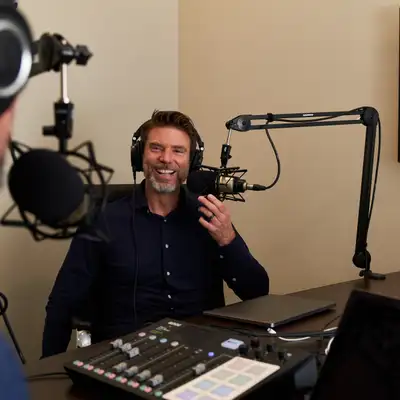
Welcome to the Radically Genuine Podcast. I'm Dr. Roger McFillin. When does sadness become a disease? That question sits at the heart of one of the most consequential mistakes modern medicine has made. Somewhere along the way, we decided that the darkest and most difficult passages of human life needed to be reclassified. Grief became complicated.
grief disorder. Despair became major depressive disorder. The anguish of losing someone you love became a checklist of symptoms to be managed with pharmaceuticals. The DSM once protected grieving people from being labeled mentally ill. It was called the bereavement exclusion. If you'd lost a loved one,
You couldn't be diagnosed with a major depressive disorder for like at least two months. I mean, even that is arbitrary and short. The reasoning was obvious. Of course you're devastated. Of course you can't sleep. Of course you've lost your appetite and your will to function. You're grieving. You're not a malfunction. You're not a robot. That's being human.
2013, the American Psychiatric Association published the DSM-5 and eliminated that protection. It's one of the most controversial changes in the manual's history. Critics warned it would medicalize ordinary grief and encourage overprescription of anti-depressant drugs. And it did just that. The change went through. Now the two-week minimum duration for diagnosing major depression
applies to even the recently bereaved. 14 days after burying your spouse or your child even, if you meet symptom criteria, you can walk out with a diagnosis and a prescription. Think about what that means two weeks, 14 days after the worst loss of your life and the system is ready to tell you. Your brain is broken. You need a chemical intervention. This isn't just philosophical debate. This has real consequences
Dr. McFillin (02:24.004)
for real people. When we medicalize grief, we change the trajectory of somebody's life. We tell them that their natural responses to loss is a disease to be managed under the medical system. We hand them drugs that alter their brain chemistry in unpredictable ways. And when those drugs cause problems, we don't investigate, we add more drugs.
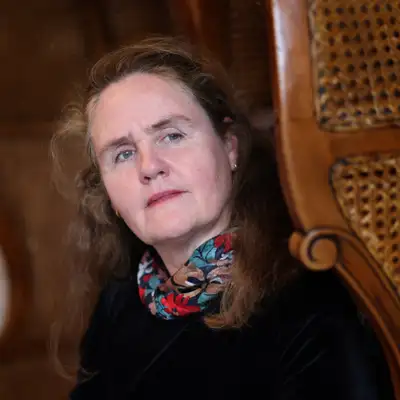
The person who walked in suffering from the pain of being a human can walk out a psychiatric patient. Their credibility question, their agency stripped, their identity redefined by a system that sees symptoms to manage rather than a human being to understand. My guests today live this story. Mary Ann Kenney. She's a lecturer, a mother of two, and the author of The Episode, A True Story of Loss.
madness and healing. Ten years ago, her husband went out for a morning run, didn't come home. What followed was grief and then a collision with the psychiatric system that would change her life in ways she never could have anticipated. Her memoir is built from two sources, her own memories and over 13 pages of institutional records she obtained through freedom of information requests. With those files,
reveal and what they leave out tells us something important about how we treat people in emotional crises. Marianne, welcome to the Radically Genuine Podcast.
Mary Ann Kenny (04:02.552)
Thank you, Roger. It's really nice to be here. I've been following you for quite a while, so it's quite a privilege to be invited onto your program.
Dr. McFillin (04:10.786)
It's great to have you here. I'm so feel so blessed for you reaching out to me and providing me the opportunity to read your memoir. Obviously it's very painful just as a human being to connect and understand what you went through. I think the first step for us is just to tell a bit of the story initially about what happened to the audience so they can understand how easily something like this could happen and also could happen to them.
Mary Ann Kenny (04:17.582)
Mm-hmm. Mm.
Mary Ann Kenny (04:38.574)
Okay, well it all started in April 2015, so just over 10 years ago now. I was happily married at the time and had two small children with my husband. He went out, I went off to work on the 21st of April 2015 and John, my husband, went out for a jog and...
I went into a meeting at work and when I came out of that meeting I glanced at my phone and saw that I'd missed a couple of calls, six calls in fact, which was a lot of calls to miss ten years ago. And I started to investigate and I found myself after a couple of calls I found myself talking to a guard, what we call guards in Ireland, the police, a policeman.
who had answered John's phone when I called it and he told me to come to one of the Dublin hospitals and to bring somebody with me and he told me that something had happened to John and I asked him to tell me over the phone what had happened to John and he repeated his instructions to me he said come to this hospital bring somebody with you and I knew immediately what that meant
I turned around to my colleague at work and I said, I need you to drive me to the hospital. Something's happened to John. I think he's dead. And he was dead. He, as it turned out, had gone out for his jog and had dropped dead on the spot from a heart attack. No warning, completely unexpected. Very healthy man as far as
we knew at the time. So that's what happened. That's how it started. Thank you. you. Yeah. Yeah.
Dr. McFillin (06:37.957)
So sorry for your loss. I lost a father of mine at age 50, very similar. No idea that he had a heart condition and passed away suddenly. And it's that sudden loss, I think that hits us a little bit differently than maybe somebody who gets to say goodbye to a loved one. The suddenness of something like this is really devastating, very traumatic. And to have two young children at that time.
How old were your kids and how did they handle such news and how did you explain that to them?
Mary Ann Kenny (07:07.886)
So my kids were my two boys were aged eight, aged eight and six at the time. identified his body in the hospital, my next task that day was to go home and tell them what had happened. And I described that in the first scene, the first
chapter of the book what that was like telling my two sons that their father had died and it was absolutely the most traumatic part of not only that day and that year but of my entire life telling my two children that their father had died. Naturally they were completely devastated as I was.
They did react slightly differently. mean, I was given information even at the time about how young children react to grief and it does depend a little bit on their age. The older boy reacted as any adult would. He was just beside himself with grief and anguish. The younger boy, I think, didn't really understand what had happened.
He asked to go straight back to school, for example, the next day and it would take him, it took him a couple of years really to come to terms with the finality of his father's death, but the older boy got it immediately. So complete devastation all around. Yeah.
Dr. McFillin (08:42.395)
So Mary Ann, the predictable consequences for such a traumatic event is going to be extreme pain and grief for an extended period of time. think culturally previously, we would actually least a year, right? Like I know that first year, because everything is new. It's such an adaptation to life again without your husband. And the challenges are significant.
Mary Ann Kenny (08:53.326)
Mm hmm. Mm hmm. Mm hmm. Yeah.
Mary Ann Kenny (09:05.922)
Mm-hmm. Mm.
Dr. McFillin (09:12.389)
But I'm curious to know as you related with the system, your therapist, your general practitioner, how were they communicating to you about what you were feeling?
Mary Ann Kenny (09:19.202)
Hmm.
Mary Ann Kenny (09:26.67)
So when I look back, I would say that for the first two to three months, what I was experiencing was normal, if extreme and excruciating grief. And I did seek the help of the professionals. For the first time in my life, I went to a therapist. I found him very helpful.
He helped me, I suppose, with day-to-day tasks, just simply getting through from one day to the next. I also sought out my doctor, my GP, a couple of times and I did ask her about, because it had been suggested to me from a few other people, about the advisability of
taking an antidepressant or taking a benzodiazepine and both my GP and the therapist who I was seeing at the time in the early months advised against that. So I do think it's important to say that given the whole context of my story and what happened afterwards, initially the advice I received was not to go down the medical route and
Instinctively, I would say that was my own preference as well. I had never taken any type of psychiatric drug before. I was completely new to the medical, to the mental health system. But I was finding it very hard to accept my own, I suppose, capabilities, my diminished enjoyment of life. was
impatient with myself to improve, not least for my children's sake. You mentioned there a moment ago a year, I would say that's very realistic, that it would have taken me a year if things had gone the normal course to start to feel better. But after two, three, four months, I was starting to be impatient myself. I wanted to
Mary Ann Kenny (11:47.882)
start to feel this improvement which just simply wasn't happening. Not surprisingly, in retrospect, I had lost my greatest love. I had lost him suddenly and it has to be said as well that I was carrying the grief of my two children which was a huge burden as well. I was carrying the grief of three people and trying to make things as normal as possible for them. So no wonder I was diminished.
and impaired. But that was my initial experience of the professionals at that time. Grief is something that you have to work through, which would be my normal opinion and is absolutely my opinion today as well. I did.
Dr. McFillin (12:34.809)
You eventually took an SSRI. What led you to making that decision?
Mary Ann Kenny (12:39.71)
Well, it was probably that impatience that I was feeling. was trying everything. I was going for long walks. I was visiting a therapist. I was reading any of the self-help books I could get my hands on about grief. And as I said a moment ago, the suggestion, it was in the air. And might you be depressed? A couple of people were asking me.
might have been an idea to try an antidepressant drug. So I thought to myself eventually, I thought, well, OK, I've tried everything else. I'll try this. And so I went back to my doctor, back to my GP and asked to be prescribed some antidepressants. And I was prescribed an SSRI, Sertraline. I know it goes by a different name in the States.
All these drugs have different names on one side of the Atlantic and the other. And sometimes I think that's also part of the confusion. anyway, an SSRI, I was very anxious about taking it. I was very unsure that it was a good idea. I'd never, as I said, I'd never taken a psychiatric drug before. I had no idea what to expect. And I waited, I waited a day and then I took
the first couple of doses. And that's what brought about, I suppose, the change in my story. That's when my experience changed from normal grief into something else.
Dr. McFillin (14:13.985)
And for the audience in the United States, sertraline is Zoloft. It goes by the brand name Zoloft here in the United States. How did you respond to taking an SSRI? What was happening within your body?
Mary Ann Kenny (14:16.398)
That's it. So loved. Yeah.
So I took the first dose before I went to bed and I woke in the night in a sweat, I mean sweating, prickling, burning throughout my body in a state of terror, extreme agitation. I had no idea what was happening to me or why it was happening.
During the next day, I struggled. I struggled to concentrate on anything else other than this burning and prickling. I took the next two doses of the drug. I know my doctor had said to me about antidepressants, you might feel worse before you start to feel better. I thought maybe that's what he meant, hoping that that was what he meant. But that prickling and burning throughout my body didn't subside.
Even though I stopped the drug so I actually only ever took three doses of sertraline. Yeah.
Dr. McFillin (15:34.353)
I just feel like I have to jump in there because that is such a dangerous statement that your GP told you that you might feel worse before you feel better. Because let's imagine what that does. When somebody has an adverse drug reaction, which can be very typical with SSRIs, instead of understanding it as an adverse drug reaction with potentially severe consequences,
Mary Ann Kenny (15:40.814)
Yeah. Yeah.
Mary Ann Kenny (15:56.686)
Hmm.
Dr. McFillin (16:00.709)
him making that statement leads you to believe what you are experiencing is normal. That is a trap, folks. Any doctor who says that is making a huge, huge error, one that is not evidence-based nor safe. So I think it's important to make that distinction.
Mary Ann Kenny (16:04.206)
Mm.
Mary Ann Kenny (16:20.946)
Yeah, and in fact, the pharmacist had said the same thing. The two of them had said it to me. So I went back to the doctor then and we agreed that I would stop the drug, that I was clearly having some kind of a reaction. And the doctor said to me, you know, it should subside, it'll subside in two or three days. It could be out of your system. But this sensation, this adverse reaction,
that I experienced continued. So burning, prickling, excruciating sensations right throughout my limbs, my torso, my forehead actually continued on for several weeks to the extent, yes, now I understand. I've read about it. But at the time, I consulted several doctors. I I went to an emergency department.
Dr. McFillin (17:02.501)
back at Physio.
Mary Ann Kenny (17:16.396)
I had a home visit from a doctor. I went back to my own medical practice and every doctor I talked to at the time looked at me blankly when I tried to describe what was happening to me and more or less, well certainly conveyed to me, more or less said to me, this is in your head. We need to change your medication. We need to put you on more medication. And that's what happened. I was put on a different
Dr. McFillin (17:37.061)
Mm.
Mary Ann Kenny (17:46.342)
antidepressant on an SNRI, venlafaxine, afexor, and told this also works on anxiety as well as depression, it should work for you, and it didn't work. And all the time I was getting more and more and more panicked about what was happening to me.
Dr. McFillin (18:08.153)
At some point during this year, thinking began to change. You developed a belief you couldn't shake. You said that belief had meaning, that it wasn't random. Can you explain what you mean by that?
Mary Ann Kenny (18:14.942)
Yeah.
Mary Ann Kenny (18:19.558)
Yeah, well, so what happened, I would say, let's say three to four weeks after this whole prickling adverse akathisia began, I was in such a state of agitation, I went back to my medical center again and had a conversation with my doctor, with my original GP, and she asked me, do you have thoughts of harm? Are you?
considering harming yourself? And my answer to her was no. But with this burning throughout my body, it's very hard for me to see a future for myself. And on the basis of that response, I was referred for the first time to psychiatric services. I started to attend a day hospital there, a day center where I would go in daily for group sessions.
I attended it for a week this day centre and during that week my symptoms deteriorated further. So the burning continued, the prickling continued, my panic, my agitation and my inability I felt to be heard. Every time I brought it up about the agitation, about the burning, they talked to me about medication, they talked to me about my mental health.
And in the middle of all of that, yes, I suddenly developed what I now and what I subsequently understood to be a delusional conviction of guilt. And that delusional conviction that took hold of me, the content of that was that something had happened to my children, that my children had been harmed by my medication and that was my fault. So it was a delusion of guilt.
It had to do with my children, the belief that they had been harmed and that they had been harmed by my medication so that somehow they had got their hands on my medication and that it had affected their brains, that it had affected their minds. Yes, I believe now, if you'd like me to talk about that further, I can see the meaning in all of that. I can see where it came from.
Mary Ann Kenny (20:42.944)
It came from a number of different things that were to the forefront of my mind at that time. My agitation over the medication, my belief that it had harmed me. I mean, it had harmed me. Like I was suffering terribly. Also my concern about my children, my very deep concern about my children since their father had died. And that feeling of guilt that I had held since the day
John had died when I was the one who had to tell my children that their father had died. I felt enormous guilt at that moment, misplaced guilt, but still that in some way I was responsible for their suffering. All of these things came together in my confused state and became a fierce conviction that took hold of me that my children had been harmed by my medication and it was my fault.
Yeah. Mm. Mm-hmm. Mm. Mm. Yeah, so as I said, at that time I was attending a day hospital, so I was interacting with psychiatric staff.
Dr. McFillin (21:43.473)
And these drugs alter thinking, clearly. These are known effects of taking the drug. Curious to know how the doctors in the psychiatric system responded to those kind of thoughts.
Mary Ann Kenny (22:04.994)
And one of the features of that conviction that I had was a very strong compulsion to share it. Like normally you might think, well, if you're convinced that you've ruined your children's lives, you might just keep that to yourself. But no, part of my illness or part of my symptoms was a compulsion to share it with the psychiatric staff. mean, I was trying to keep it.
hidden from anybody who knew me, this belief that I had that I was guilty of a terrible crime, but I did share it with the psychiatric staff. To begin with, they said to me, look, this is a symptom. They don't believe that this has happened, that this is a symptom of my illness. I became agitated by that. became adamant.
that I was guilty of a terrible crime. And after a couple of days of this, I mean, they were clearly very worried about my situation, about me and my young children. I can totally understand that. You know, I was out of touch with reality. I believed I was guilty of a crime towards my children. I was living on my own with two small children at home. And it was put to me that it would be a good idea to go into a psychiatric hospital.
That's what happened. I was hospitalized. Now I wasn't sectioned, but you know, it was made very clear that honestly, I knew myself. I had to be hospitalized. That was clear enough to me. I needed sanctuary. I needed to be taken out of the situation I was in.
Dr. McFillin (23:46.489)
And for my listeners, this is a very familiar story where there's drug induced hospitalization. And so you probably asked certain questions every day being evaluated, needed psychiatrically. What were those questions? And then what was never asked that really needed to be asked that probably would have saved a lot of struggle and suffering.
Mary Ann Kenny (23:49.518)
Yeah. Well, look, this is the central message of my whole book. My book, would say at the very heart of it is my experience of psychiatric treatment and
What I was asked perpetually, continuously, especially after my initial hospitalization, was whether I had thoughts of harm. So I was asked multiple times a day by multiple professionals, nurses on the ward, different professionals in multiple multidisciplinary team meetings, whether I had thoughts of harm, whether I was thinking of harming myself, whether I was thinking of harming anybody else.
I was asked this to the extent that it only reinforced my belief in my own guilt. only made matters much, much worse for me. Eventually, as I describe in the book, I actually made a false confession after weeks of this kind of questioning. I eventually threw in the towel and said, you know what, guys, you're right. I'm wrong. I didn't say it like this.
Yes, I have thoughts of harm. Yes, whatever it is you want me to say, I'm going to say it to you. OK, so that's what did happen. And what didn't happen is I was never offered any form of talk therapy throughout the 12 weeks that I spent in hospital. In the latter half of 2015, I was never asked to talk about the day my husband died.
There was no attempt made to excavate with me where those feelings of guilt might have come from. I mean, I was also, I was asked nothing about my prior history, nevermind about the trigger to this entire episode. You know, before my husband died, I had no history of mental ill health.
Mary Ann Kenny (26:13.678)
I've been carrying along happily with my life. A terrible thing happened to me and my family. I became mentally ill. I was hospitalized. Nobody ever asked me about the terrible thing that happened. Yeah. Yeah, yeah, it does.
Dr. McFillin (26:27.695)
which sounds so ludicrous actually, to understand that somebody is experiencing grief and then to provide a drug. And the moment you start providing the drug at drugs, actually, you start having like severe reactions, your entire mood changes, your thought process changes, you have, and you have pretty intense physical discomfort and symptoms that reach the level of akathisia. You start developing like obsessive thoughts around.
Mary Ann Kenny (26:35.054)
Yeah.
Mm.
Mary Ann Kenny (26:54.51)
No. Yeah.
Dr. McFillin (26:54.629)
fear of harm and so forth, all these things that are normal drug reactions and then no one really ties it back to the drug, let alone just being some very basic investigative work to understand, okay, what is the trajectory here? Mary Ann has no history of mental health problems. All of a sudden she's prescribed Zoloft and affects her and now she's in a hospital. It seems so logical and reasonable. I struggle to understand why.
Psychiatric medical professionals, therapists can't see this clearly. There's a chapter in your book called False Confession. Can you tell us about that?
Mary Ann Kenny (27:26.366)
Yeah, Yeah, I mean, that chapter and that incident, I guess, is the midpoint of my story or the peak of my episode. So I mentioned, you know, the incessant questioning. Did I have thoughts of harm?
multiple times a day, multiple professionals. You know, I have to say as well that as well as my very difficult position in the hospital, I don't have a lot of worries about what was going on in the real world out there, like who was minding my children. In the end, was my mother, my heroic 90 year old mother moved in with my children and we set up a roster.
of childminders to support her. But before, you know, that roster was set up, was a great lack of clarity about what was going to happen. Child protection services had been alerted to our family situation. There was a question of foster care in the air as well. I had been introduced to social workers from child protection services in the hospital while I was at the peak of my
delusions of guilt and in the middle of all of that I just have to provide this very briefly I think as background. I absconded from the hospital yeah like not a clever idea but I was so beside myself with worry about the children that I just spotted an opportunity it wasn't even that I planned to but I I spotted an opportunity to leave you know the doors were open I was on an open ward
drifted down, drifted out of the hospital, went home, checked that the boys were okay, checked that they hadn't been taken into care, they hadn't been. At that point, you know, I actually achieved my aim, but I'm caused an awful lot of, you know, worry and concern and ructions in the hospital. When I came back into the hospital and I came back in voluntarily, I have to say as well, was escorted by my friend, but I didn't resist, you know, I had actually ascertained what I wanted to ascertain, that the children were okay.
Mary Ann Kenny (29:47.33)
came back into hospital and I was met with a very heavy handed response. I was transferred into a locked ward. You know, the usual, all my, you know, the laces of my shoes were taken off me. I mean, they really couldn't find anything much to confiscate. But anyway, my phone as well, everything taken off me.
And when I woke up the next day after that happening, I just felt like the greatest failure on the face of the earth. I just wanted to crawl under my bedclothes and stay there for the whole day. I felt I'd let the entire world down. I had caused so much trouble for my poor mother, for my siblings on the phone, for my friends, for everybody who'd heard about me leaving the hospital. And my symptoms in that context
actually deteriorated even further. So if I was at a low ebb before that, I literally started to almost, I would say I describe it in great detail in the book, to visual hallucination. I mean, I thought there was a skeleton in the bed beside me. I was terrified. I was terrified to get up. I was terrified to move. And still in that context, kept interrogating me. Even still, why did you leave the hospital? I left because I wanted to check on my children.
completely true. Do you now have thoughts of harm? Did you have thoughts of harm then? What were you doing when, you know, I walked home over the hill, past a disused quarry? It's just the way you get home from the train station. What were you doing when you were at that quarry? What were you thinking about? Are you hiding medication? This was another thing that had come into the mix. Are you hiding? It didn't occur to me to hide medication. It wasn't on my...
horizon at all. So in the context of being completely vulnerable and filled with, I suppose, self-loathing and hatred for what I had done and the inconvenience I had caused everybody, that was when I made this false confession. So what I said a little bit earlier about, I just simply gave into their questioning at that moment. I just said, fine. They said, yes, I have thoughts of harm.
Mary Ann Kenny (32:09.358)
Are you hiding a weapon? Yes, I'm hiding a weapon. There was no weapon. yes, and about the medication, I'd been asked a couple of times, are you hiding medication? So I did, I hid two pills. I took two pills, hid them away, asked again, are you hiding medication? Yes, I'm hiding medication. Straight away I told them, where is your medication? And I pointed straight away to where I'd left it.
And do you have thoughts of killing yourself occasionally even use that word, you know, killing yourself here in the world? Yes, I do. How would you do it? I jump out the window. Have you checked the window? Yes, I've checked the window. All made up, all fabricated because I wanted to stop the incessant questioning. And I do analyze that in my book, you know, because afterwards, you know, as I was recovering on even years later, I was like, why? Why did I say this stuff?
when even at the time I knew that it wasn't true. And, you know, I went off subsequently later when I was writing the book, research, the literature on false confessions. And it's very clear to me now why I did it. I mean, I did it to get them to shut up and to stop asking me. But of course, doing that had very severe consequences for me because I told them, said, yes, thoughts of harm, thoughts of killing myself, thoughts killing my children.
Dr. McFillin (33:18.673)
Yeah.
Mary Ann Kenny (33:30.572)
Whatever you're having yourself, whatever it is you want me to say to you, I will say to you. That's what happened. Yeah, it was an interrogation. Yeah. Yeah. Yeah, I was. Mm hmm. Yeah. Yeah. Yeah. Yeah.
Dr. McFillin (33:36.624)
Yeah, Marianne, it's an interrogation. You're being treated like a prisoner. And you're under the same degree of pressure that a prisoner would be a prisoner of war even that's being interrogated by the intelligence services. And you actually respond in a very similar way that we see that those who are under such interrogation, that type of stress would respond. What were you told about access to your own children? I know you mentioned that
Mary Ann Kenny (34:00.782)
Well, when I found myself in that locked ward and once I made that false confession, I wasn't allowed to see my children.
Dr. McFillin (34:05.012)
like child protective services became involved. This is a point of caution here for all of us is how quickly your freedom can be taken away after the response to a psychiatric drug and how the psychiatric system responds.
Mary Ann Kenny (34:30.67)
I asked, I asked every day, can I see my children? Every time I asked my consultant, she said to me, that's now in the hands of TUSLA, they're called, the Child Protection Services. It's up over to them to decide. It was absolutely agonizing. I really even at the time couldn't imagine what it was that
the medics thought was going to happen on their locked ward under observation if my children came in to visit, but no, no children weren't allowed to visit. And it ended up being four weeks before I was able to see them again. It was absolutely devastating, devastating, especially because I knew even in the depths of my illness that that had been a false confession.
I didn't have the words even to myself to call it that, but I knew that I had never intended to harm my children in any way. But it was four weeks, four weeks we were apart and it was just excruciating, devastating.
Dr. McFillin (35:40.778)
Yeah.
Dr. McFillin (35:47.734)
You attained over 1,300 pages of records about yourself. What did you learn from reading the systems version of your story?
Mary Ann Kenny (35:51.566)
Yeah, was it? Yeah, sorry. 1300, that's right. Yeah. I was asked that question recently as well. In some ways, I wasn't surprised by what I read because it was very obvious at the time what their interpretation of my breakdown was, especially because the whole thing culminated.
in a child protection conference before I was discharged from hospital. And at that child protection conference, a five page report was read out about me and my case. So it was very, very clear to me at that moment how everything had been interpreted. So when I read my files, so I got two sets of files. I got my medical files and I got my social work from the child protection services, those files. There wasn't a lot in there.
That surprised me. I thought it was very interesting to compare the two sets of files. What had been redacted maybe in one of the files and not in the other. It was really like investigative work piecing it all together. What was I going to say? What I thought was quite interesting was how much discordance there was amongst the doctors.
and between the doctors and social services. I felt, it helped me to understand, I felt that I was caught in the crossfire between them. And whatever about the way I was treated by psychiatric services, it was really the social services that kicked the boot in. That took whatever information was
passed on to them and there was contradictory information passed on to them and skewed it completely against me. That's what I learned. And it was, well, I mean, it's something that I wasn't able to completely cover in my book, how I was treated by
Dr. McFillin (38:02.336)
How did they do that?
Mary Ann Kenny (38:16.622)
child protection services. when I say that, I tried to, but my editor, to get that book over the line, I needed very much to focus on the psychiatric story. And my editor was right that it was primarily a psychiatric story, but the child protection services part of the story, that was the part I suppose that to this day I find
hardest to accept because every little detail that they got, it seemed to me anyway, that every little detail that the social workers got from the psychiatric staff was used to concoct or to shape a story about me that I was non-compliant with medication because I had hid these two pills away.
that I held thoughts of homicide and infanticide, which I didn't, by the way, that I couldn't be trusted to take my medication, that I couldn't be trusted to engage with the services. And this was the picture that was painted of me at the Child Protection Conference. And it's the aspect of my story that I probably find hardest to...
accept if that's our not to get angry about, not to get very angry about, not to keep obsessing over because I wouldn't have minded if Child Protection Services had come in and said, look, here's a woman who lives on her own with her small children. She's just gone through a very severe episode of mental ill health. She appears to be better now. We're concerned. We feel we'd like to keep an eye on things. All of that.
would have been accurate and true, but no, it was all the, know, she's non-compliant, she's disengaged, she can't be trusted. It was an attack on my entire personality and utterly devastating. My identity, my personality was torn to shreds at that child protection conference. It was attended by eight professionals and me in the room. I said,
Mary Ann Kenny (40:42.838)
a total of two things. mean, talk about a modern day witch trial. It was just the most humiliating, terrifying, devastating thing that has ever happened to me. And the psychiatrist stood by and let it happen.
Dr. McFillin (41:02.782)
You've said that you're a success story from the systems perspective, that your symptoms were resolved. But you also say your identity was torn to shreds. How do you reconcile those two things?
Mary Ann Kenny (41:07.342)
Yes. Yes.
Well, because what counts as success for the system is not what counts as success for me as a human being who was annihilated. Annihilated. They tried to annihilate me. I'm not saying they did it deliberately. And again, it's something I had long debates with my editor about. They didn't attempt to do it deliberately. Let's give them that much. But a lesser person or a person with less...
resources, less fortunate background to me would have been annihilated by that experience of the Child Protection Conference. yes, I'm maybe a success story for the psychiatric service because I haven't represented ever since then. I've never. That's all I mean. I've never had another another episode. But by God, today. Almost achieve in destroying me as a person.
as a human being who is mustn't be forgotten and was clearly forgotten had suffered a devastating loss. And all I've been trying to do for months on end was hold it together and get myself back up and running for my two poor children. And that's what was done to me. you know, again, a word I debated or argued with my editor over was
I mean, he didn't want me to use the word punished. I felt punished. I felt utterly punished by the system. For what? What had I done wrong? I'd suffered a loss. I suffered an adverse reaction to medication. I did my level best under horrendously difficult circumstances to survive. And all they can do is punish me.
Mary Ann Kenny (43:11.062)
So that's what I mean by all of that.
Dr. McFillin (43:14.799)
Marianne, I'm actually quite in admiration about your resilience, as I often am with human beings, what we're capable of in such trying and difficult times. So I'm curious to know more about your rebounding from all of this to where you are right now. How were you able to just recover from what happened to you?
Mary Ann Kenny (43:23.81)
Hmm. Yes. Yes, I agree. Yeah. Hmm. Well, by the end of my hospital stay, by the end of those 12 weeks, what I should say is I had recovered from my
psychiatric systems, symptoms. So I no longer had any, was laboring under any psychotic delusion. I was no longer depressed. And I knew that because I had energy again. And I was no longer really even grieving in a strange kind of way. I, you know, I was clearly, you know, John's absence was, was there all the time.
And that child protection conference, when I was brought in there, when I was hauled in there and led before those professionals and when that report was read out, I just felt a very strong sense of injustice and a little flame of self-belief started to make itself.
noticeable to me. And when I when I was discharged from the hospital then just a few days later, I just focused. They hadn't destroyed, they hadn't destroyed that self belief. I knew that something appalling had been done to me. And I just focused on that little flame of self belief. And I turned all my energies inwards, not just
towards myself, but to my little family, to my sons, I was reunited with them. I was reunited with my mother. I was back home. I went back to work remarkably quickly. I went back to work within a few weeks. I was back in my lecturing job. I had my life back.
Mary Ann Kenny (45:31.886)
It took me another few months to really trust that I was physically well again because I had been suffering from a very distressing physical ailment as well when I was in hospital and to trust that I was mentally well. And it was almost like I'd come back from the dead and I had survived. had actually got
out. I had escaped. I had got out of their clutches. Now I was still attending. I was still on very heavy medication. But it was that feeling of having got my life back, of having survived. And more than that, you know, of having had this injustice done to me that just brought out the fighting spirit in me. And in many ways, it's never left me. You know, just, it was like I was reborn and it took a while.
for, you know, and for it all to come together again. But it just started in a very small way. I had escaped. I had my life back, my kids back, you know, for a while in hospital. I didn't know if I was ever going to be reunited with my children, partly because of what social workers from child protection services said to me. I also didn't know, you know, I had this physical ailment. didn't know how that was going to resolve itself. And
whether my mental health would be fully restored. didn't know any of that. When it turned out that it all was, I just savored, you know, every second of every day and took it from there. But I went, I've been on a very, very, very long journey since, since then that has led, well, to us talking, to me publishing my book, all part of my recovery, all part of the journey I've been on.
Dr. McFillin (47:21.128)
I admire your fighting spirit. And as often this occurs in the face of injustice. And this is one of my greatest concerns about trying to numb out emotions is because we are numbing the emotional states that are actually sometimes required for transformation. And I think at little fire in you what happened to you and the energy that that produces leads to your memoirs being published. It leads to this
Mary Ann Kenny (47:23.246)
Thank you.
Mary Ann Kenny (47:27.34)
Yeah, it does. Yeah. Yeah, yeah, does.
Dr. McFillin (47:50.07)
podcast right here where you know, we're talking to thousands of people. And this is when we have we look back, obviously, it's such such trying times so traumatic. Do you ever feel like maybe that there's something beyond you can a connection to a greater loving force, even maybe your late husband spiritually is still kind of involved with guiding something like this, because there's there's a meaningful, beautiful story.
Mary Ann Kenny (47:56.526)
Hmm.
Mary Ann Kenny (48:13.772)
Hmm. Hmm. Yeah, I probably wouldn't describe myself as a spiritual person as such, but I absolutely do believe that something beautiful has come out of the greatest devastation that
Dr. McFillin (48:18.032)
of resilience and facing against injustice that comes from the ashes of this.
Mary Ann Kenny (48:43.022)
that I suffered, that I have been able to turn that around and make it into something that transcends. So yes, you know, I probably wouldn't use the word spiritual, but I absolutely do believe that, that I have transcended the terrible suffering and
I've made it, especially by publishing my book and by talking about my story, I have been able to make it into something beautiful because I have been told that it's a beautiful book. It's beautifully written. It's beautifully produced. mean, I was so fortunate to land with Penguin and their art department. mean, the whole production of that book is just beyond beautiful, as far as I'm concerned.
and make it into something that can benefit other people. That's what's so important to me, that can give other people a voice. I think as well by writing in the process of writing that story, came to certain insights that I'm not sure are very widely held or available the way I was able.
to interpret my breakdown and my psychosis and give it meaning. It was absolutely meaningful. And to recognize and demonstrate the power of the brain and the sick brain to come up with something so extraordinary as that belief that I had that actually meant that I got the help that I needed, even if the help itself was completely.
misinformed, if you like, but I was taken out of my environment. I was given sanctuary, terrible as it was. I recovered during that period. And that was all because of my delusional beliefs. So there's many ways in which I can see how that suffering gave birth to something wonderful and beautiful and transcendent. Yeah.
Mary Ann Kenny (50:57.406)
And sorry, there was just one more thought I had about that. Just the way I feel today, I just feel when you have survived something like that and come out the other side, it gives you incredible strength and calmness. It's extraordinary. It is fascinating.
Dr. McFillin (51:17.29)
fascinating. That is such an important part about the role of trials and tribulations in our journey. The hardest thing that's ever happened to somebody is always their most difficult thing. So for somebody who hasn't gone through the loss of their spouse and has to tell their young elementary school children that their father has died, can't even begin to understand how traumatic and painful
Mary Ann Kenny (51:30.735)
Yeah. No. Yeah. Yeah.
Dr. McFillin (51:45.492)
that is, that's like the worst case scenario for a mother. One of them, of course. And then, you know, other people, I think struggle sometimes and just day to day nuisances, you know, like your, you know, your car needs a new transmission or, you know, meeting a deadline at work. And those things tend to overwhelm us. And it requires us to step back with perspective. And I think when you go through something that you've been,
Mary Ann Kenny (51:56.044)
Yeah.
Mary Ann Kenny (52:05.398)
Yeah.
Dr. McFillin (52:11.988)
Maybe the little things are never really going to bother you in the same way because it's just a shift in perspective. And that change in consciousness is something that always I think deeply about is like, what is our understanding of reality? How do we think about the life that we live and how powerful that is in who we become and the manner in which we choose to live our life either in love or within fear. And there's something very loving about
Mary Ann Kenny (52:12.43)
Yeah.
Mary Ann Kenny (52:27.51)
Yeah. Yeah.
Dr. McFillin (52:41.374)
your story because it's a story of, I think it's injustice and it's very meaningful for the work that I do, but it's also a story of redemption and you being able to return to your kids safely and so forth. So the final question I have is, obviously we don't want to create systems in our environments, in our countries that
would require somebody to have to go through those trials and tribulations if they do not have to. So let's think about a helping system. What do you think you actually required? Because you did, you sought out the help of other professionals and we can now go back and dissect that. Like there's an autopsy here to say, if this happened at this particular time, then I would have avoided going down this direction. What do think you really needed at that time if we can go back?
Mary Ann Kenny (53:19.33)
Yeah.
Mary Ann Kenny (53:35.532)
Look, I mean, I needed was rest. needed. I was unfortunate in my circumstances in that I explain in the book how my family, my entire family lives abroad, a typical story of Irish diaspora, how John didn't have any siblings. I needed somebody to take me in their arms.
to move into my house and take care of me and my children while I recovered from this devastating blow. I didn't need anything more than that. I just needed care and time to get myself back together again. I didn't need to go anywhere near the medical system. But sadly, in our society, many of us live
fairly isolated lonely lives when it comes down to it. It's not that I didn't have friends, but they weren't to hand and nobody really, there was nobody who could step into that breach. And, you know, I've heard of other people and I know other people in situations like mine, they've been able to just move in with their sister or their, you know, their mother has come and the mother would have been younger and literally taken them into their arms and take care of them.
I need to be taken care of. It's as simple as that.
Dr. McFillin (55:08.096)
Yeah, as we move away from this shared tribal communities in which we've evolved and we become more separate under this machine that has overtaken capitalistic Western societies where we spend actually more time with our faces in a screen than we do face to face connecting with our family or our neighbors. We have to take a real look at where we're going. know, where we're going as a species.
Mary Ann Kenny (55:13.294)
Yeah. Yeah. Yeah.
Mary Ann Kenny (55:26.184)
Yeah.
Dr. McFillin (55:36.776)
And are we happy with that? We've become consumers, we're living in an illusion of separation. And the consequences have been devastating to our health, to our mental health. It's a painful time to live for many. And we've moved away from practices, cultural practices, in which we supported those who've lost loved ones. know, other cultures would wear black for a year.
Mary Ann Kenny (55:48.43)
Yeah. It is.
Mary Ann Kenny (55:59.714)
Yeah. Yes. Yeah.
Dr. McFillin (56:06.388)
you know, really the community would come in to protect that family and to make sure that you would have received exactly what you required so you can regain your strength and your purpose to be there for your kids. But we've lost those practices. Now we've medicalized it. We've created major depressive disorder and prolonged grief disorder, and we're so much worse off because of
Mary Ann Kenny (56:15.778)
Yes. Yeah. Yeah. Yeah.
Yeah. Yeah. Yes, I agree.
Dr. McFillin (56:34.806)
Where can people find your book?
Mary Ann Kenny (56:38.37)
Well, my book is widely available. Certainly this side of the Atlantic. Your side of the Atlantic, you'd have to Google it. I mean, I know it's available on amazon.com. There are other American US booksellers selling it. That's all I can say. I'm not able to actually Google it from an American perspective. So maybe you, I'm not sure if you've tried, but it's widely available. It's published by Penguin. So.
Everybody knows Penguin. is only published this side of the Atlantic, but it's absolutely possible. And friends of mine, acquaintances, family in North America have ordered it and received it by post. That's it, basically. The name of the book is The Episode, A True Story of Loss, Madness and Healing, published by Penguin 2025. And there's a new paperback edition coming out in May of this year.
Dr. McFillin (57:20.446)
And then the name of the book again.
Mary Ann Kenny (57:36.404)
So far it's available in hardback.
Dr. McFillin (57:39.934)
It is beautifully written. The story is meaningful. think it's meaningful for this revolution that's taking place that I'm going to be a part of, which is to shift the way that we think about human suffering and the way we've responded to it. Mary and Kenny, I'm just so grateful for your willingness to tell the story. And I hope it was a meaningful episode for other people to understand today on multiple levels, the dangers of our mental health system and
Mary Ann Kenny (57:42.062)
Thank you.
Mary Ann Kenny (57:52.905)
Hmm.
Mary Ann Kenny (58:02.222)
.
Dr. McFillin (58:08.192)
how our GPs are responding to people who are in emotional pain. It really was a radically genuine conversation.
Mary Ann Kenny (58:16.92)
Thank you, Roger.
Creators and Guests